







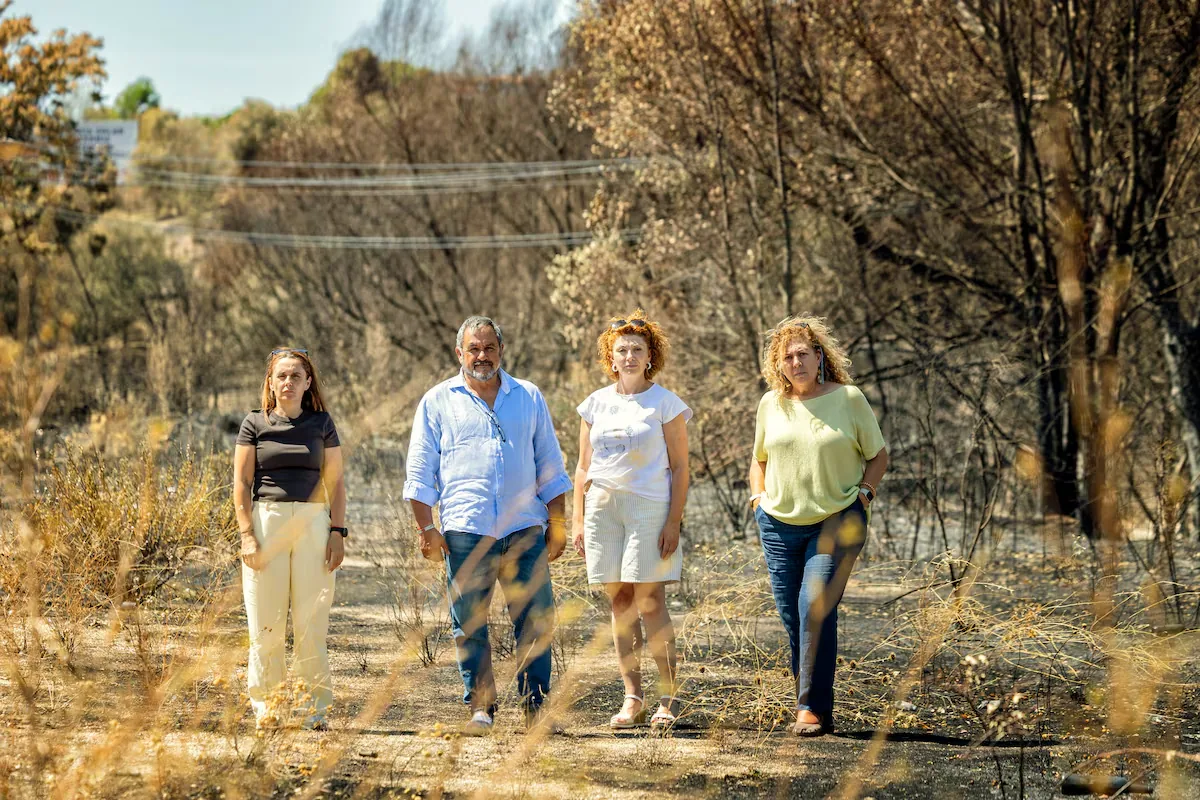
The four ran for mayor of their town to work for their neighbors and for the streets where they grew up as children. The four have just experienced — and suffered — one of the most terrible episodes at the helm of their respective town halls, none of which have more than 3,000 inhabitants. Two of the mayors come from their last meeting at Cecopi about the most serious fire in Spain’s history, the one in Burgohondo in Ávila. Another of the mayors got out of the car just minutes after attending a new outbreak in the Sierra del Oeste, in Madrid. The fourth steps on the scorched earth anxiously, pleading with a trembling voice that the fire does not ignite again. Full of rage, the four mayors call on the two major political forces, PSOE and PP, and demand that their top leaders, Pedro Sánchez and Alberto Núñez Feijóo, put aside the abyss that separates them and negotiate a state pact. “They need to take off their party shirts now. Either we sit down, or we will disappear,” summarizes Vanessa Muñoz, a 47-year-old socialist councilor leading the town hall of Casavieja in Ávila, one of the towns most besieged by the recent inferno.
Read more Spain will reproach the European reaction to the Ceuta crisis in Brussels
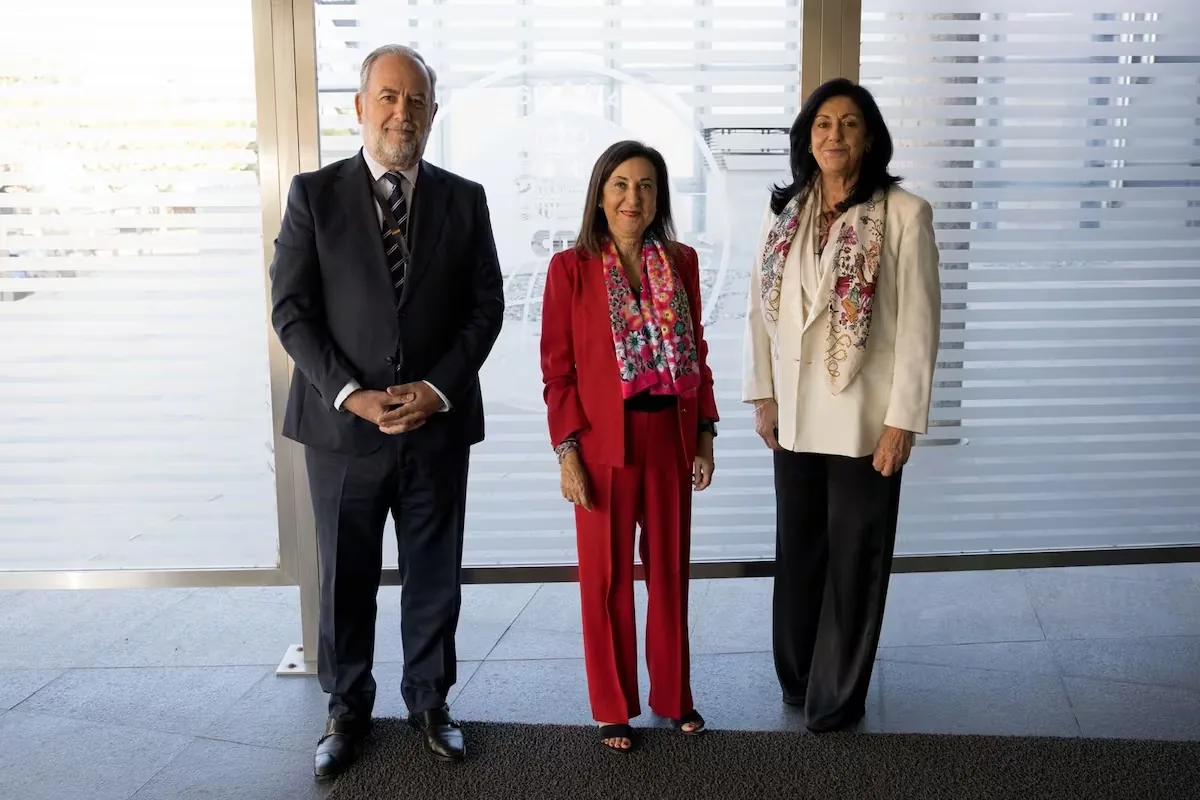
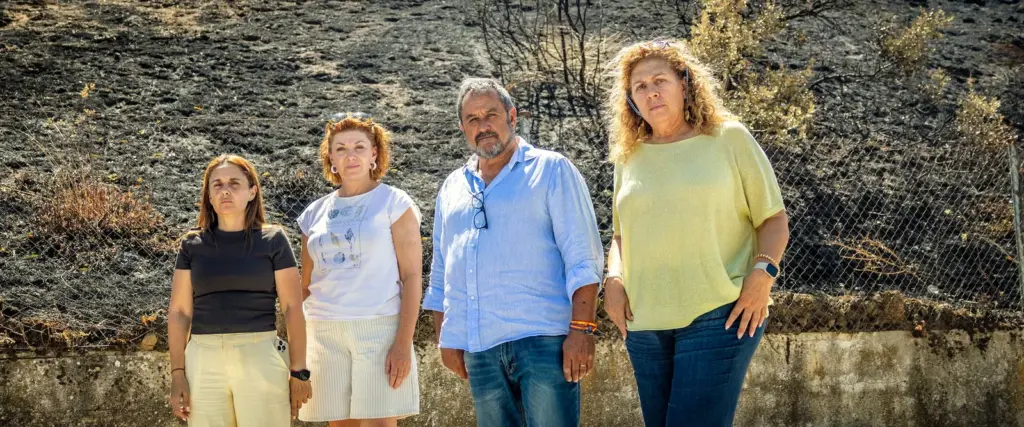
This four-voice interview took place last Friday, a week after the central government declared a national emergency in Ávila and the Community due to four simultaneous fires in an unprecedented decision. At the spot where a vehicle burned next to the M-501 road in San Martín de Valdeiglesias, marking the worst fire in the Sierra Oeste and Madrid, EL PAÍS gathered four mayors from the affected municipalities of different political affiliations for a joint photo. The councilors recall the horror and demand solutions in a national agreement. They are Vanessa Muñoz, mayor of Casavieja (Ávila), for the PSOE; Jerónimo López, from Cenicientos (Madrid), for the PP; Lucía Moya, from Chapinería (Madrid), for an independent party; and Soraya Blázquez, from Mijares (Ávila), for the PSOE.
The nearly two-hour-long winding road separating the four municipalities was engulfed by flames for days, devastating about 70,000 hectares. The four were the emergency chiefs in each of their localities; all had to collaborate in the largest evacuation ever recorded due to a simultaneous fire, refusing to leave their town until everyone was alerted. “I’m the last one to leave the ship,” says Jerónimo López, 64 years old. And the four have had to shoulder the lamentations of the returning neighbors. This newspaper also hoped to speak with Aránzazu Povedano, from the PP and mayor of San Martín de Valdeiglesias itself, where the top photo was taken. But the enormous work caused by the fires prevented her from responding to the appointment. While this conversation was taking place, a new fire reignited in her municipality.
“When we fall, we will fall all at once,” sighs Muñoz, 47 years old. Adrenaline has kept the mayors standing, whose main concern at one point was to save the municipalities and then provide basic services to their people, from mobile coverage to sandwiches for the firefighters. The mayor of Casavieja initially resisted evacuating because about 90 neighbors, including her husband and her 18-year-old son, stayed to fight the flames while waiting for the emergency teams. With tears in her eyes, Muñoz recounts that she was nearby when the pyrocumulus — a massive cloud of smoke, gases, and water vapor generated by the extreme heat of a fire that creates its own climate, resulting in unpredictable and dangerous fire behavior — broke out, threatening to consume Casavieja and triggering the evacuation of several more towns on the other side of the Castilla y León border, in Madrid, such as Cenicientos.
56% of Spain’s surface is forested, and fifth- and sixth-generation fires become unmanageable. Like the other mayors, the socialist councilor unequivocally demands that PSOE and PP find common ground in their approaches to sign a state pact against fires. They also demand that mayors themselves, along with other non-political actors, be included at the negotiation table. Sánchez offers an agreement against the “climate emergency,” and Feijóo counters with his own fire plan without signs of understanding. Especially in a year with general elections on the horizon. “Politics should be about changing things. Politics cannot be based on egos,” Muñoz concludes.
Climate change
Regarding what weighs more, whether climate change or the commonly known forest cleaning, the three mayors agree that both causes concur. “Before, the heat was from one saint’s day to another,” says Lucía Moya, 66 years old. The mayor of Chapinería thus refers to the respective feast days of July 16 and August 15, the period during which the heatwave was concentrated, according to her memories. “Now, the heat lasts longer,” adds the councilor from an independent party.
On the other hand, López, from the PP, does not give as much importance to global warming and attributes the worsening problem more to depopulation and poor forest management. “A big problem in our towns is that there is no generational replacement in livestock or agriculture,” says the mayor of Cenicientos. “Ecological politics fail because laws are imposed on towns, but no budget is provided to comply with those laws,” emphasizes the councilor from the Madrid municipality, who also considers that there is a lot of “prohibition” in the regulations of protected areas and too many requirements when submitting pruning projects. They all agree that the resolution of certain administrative files to carry out improvements is usually slow.
Cleaning of properties
A good part of forest management is under regional authority. Regarding the cleaning of the space that corresponds to them, small town halls beg for more resources because they lack logistical and economic “capacity.” However, more than 70% of Spain’s forest surface is privately owned. This is where the mayors come up against the neglect of some, as they denounce, because town halls cannot enter to clean neighbors’ properties. “You come to demand the town hall because your neighbor’s property is not cleaned. And that the regional government cleans the forest because it’s not cleaned, but that property is yours, why don’t you clean it first? Justice, but not just for my house,” says Soraya Blázquez, from Mijares, 56 years old. “Citizens are focused on ‘what about mine,’ and they have to be aware that it starts with oneself,” adds Muñoz.
There is the possibility of fining, but in some cases, they don’t know who owns the property because they live elsewhere, because there are several heirs, or because they are not identified, they add. “I tell the neighbor to clear the brush, and if they don’t, I will do it as the town hall and fine them. What judge authorizes me to invade private property?” points out the mayor of Chapinería. The mayor of Mijares even says her town hall has a lawsuit open with a neighbor who complained because they cleared brush on his land.
Still, the mayor of Cenicientos has taken charge of the matter after what happened and in anticipation of what may come for the rest of the summer. “Today I ordered my people to clean all the lots, no matter what they say, and if they want to sue me, let them sue me,” says López.
Read more The Bank of the Republic begins the strategy of buying dollars and the peso falls by 2%
—They’re going to sue you! —the three mayors shout in unison.
The four councilors also criticize that, on many occasions, neighbors request a license for a tool shed to build on their properties in the middle of the forest and that, once the license is granted, they then build “a house that makes the Vatican Palace look small.” With the consequent danger this entails, being surrounded by vegetation without the proper margin to act as a firebreak. “If the fire comes and burns it down, it turns out that the state father wasn’t there and there were no resources,” censures the mayor of Mijares. “Now state father has to pay for it, you’ll see the mess now… and who will they go to? You,” Blázquez exasperates.
Regarding regional management, opinions vary by neighborhood, or rather by communities and parties. The socialist mayors of Casavieja and Mijares state that the Junta of Castilla y León, led by the popular Alfonso Fernández Mañueco, does not clean as it should. “The forest is very neglected,” says Muñoz. The mayor of Cenicientos, in Madrid, from the PP, does not share the same opinion about the Community of Isabel Díaz Ayuso, where most municipalities in the Sierra Oeste have mayors from the Popular Party. They also differ on the resources during emergency management. The first complain that they were practically alone, according to their account. Not so the mayors of Cenicientos and Chapinería, who have maintained constant communication with higher authorities, they indicate.
Social networks
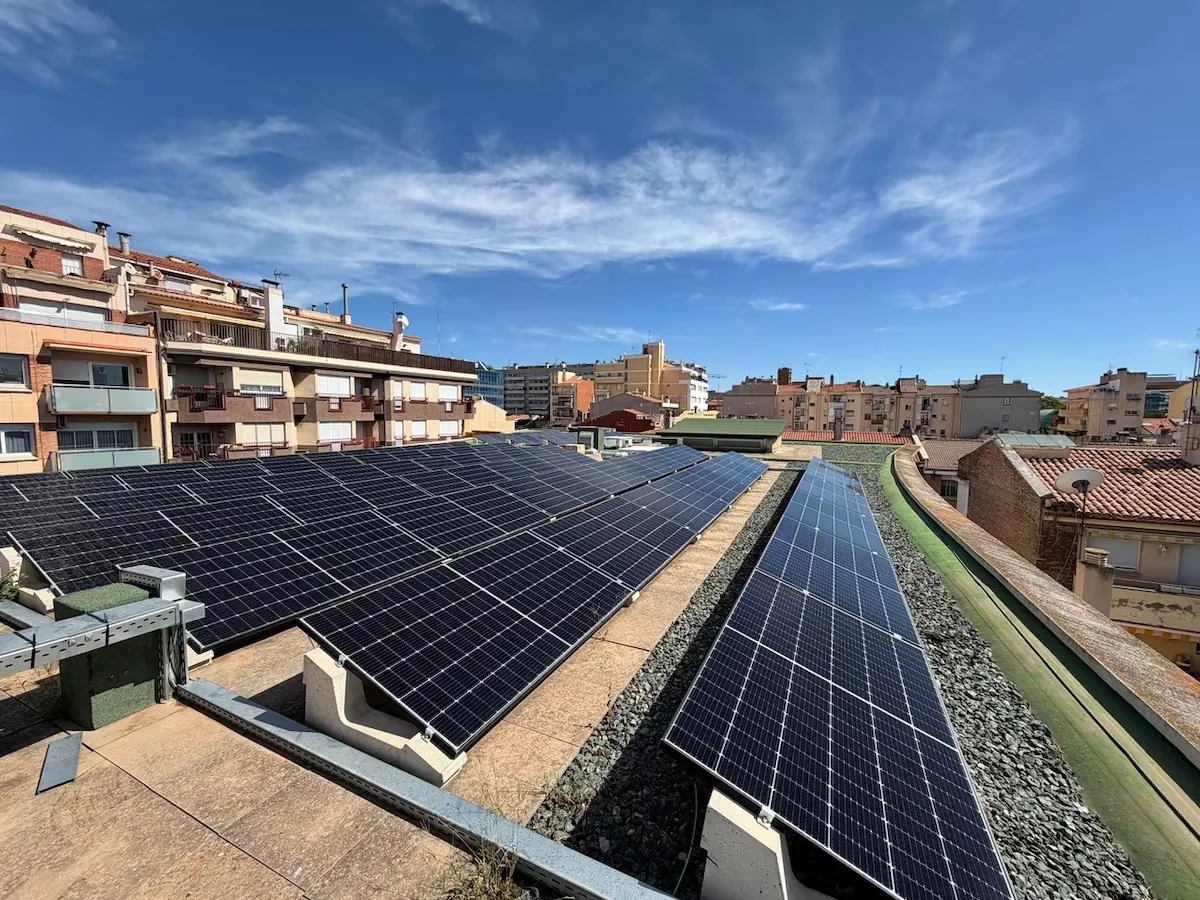
Another obstacle the councilors have encountered is social media. First, because they had to combat rumors such as the one circulating about burning forests to install solar panels that, “even if you put it in front of a notary,” people didn’t believe, or messages spread about the state of the municipality while the registered residents were evacuated and sheltered in hostels and improvised centers in other towns, of which they have nothing but good words as a sign of gratitude. Quite the opposite of the complaints directed at those who spread images.
“I want to make a harsh criticism of the people who stayed in the municipality, who had the audacity to record burned homes and burned parts of the town and were capable of posting those images,” the mayor of Chapinería says angrily, where the flames entered a couple of properties in the town. “And the owners of those homes didn’t know and found out through social media. I found a person crying, devastated because they had seen it on social media,” Moya recounts. The councilor from an independent party warns of another digital danger: calls to break the rules. “Social media has only done harm; they have encouraged people to go to the evacuated town with the shamelessness of saying ‘there’s no police at the roundabout.’”
Restoring supplies
The mayors are now trying to guide their municipalities back to normality. In some, like the two towns in Ávila, there are still coverage problems. Although, according to their mayors, this was something that happened occasionally before. There has also been a lack of water supply in some localities, and they have to manage in parallel the emotional shock of their neighbors, with homes surrounded by ash. For the mayor of Chapinería, for example, the worst part was returning after the evacuation with her neighbors mourning what they would find: a scorched environment she had already inspected beforehand.
During the emergency, the mayors were the key interlocutors for their neighbors. “One day I received 1,003 calls,” recalls the mayor of Cenicientos, who constantly recommends to his colleagues to acquire satellite internet service, just in case it happens again. Now, the councilors have set up citizen service offices and put their own vacations on hold to attend to emerging needs. Among other headaches is the complex decision of whether or not to hold the upcoming patron saint festivals. “We’re not in the mood for parties,” sighs Muñoz, from Casavieja. “If I could disconnect, I would disconnect.
But the main headache, above all, is that the fire does not break out again. “This is not going to stop,” laments Blázquez, from Mijares. While they speak, a column of smoke suddenly appears in the distance. The mayor of Chapinería jumps up and shouts.
—It’s my town!
The mayor of Cenicientos grabs his phone and keeps making calls, sending WhatsApps. To other mayors, to acquaintances in the area. Finally, the verdict: the fire is not in Chapinería, but in the municipality of San Martín de Valdeiglesias itself, where this conversation takes place and whose mayor could not respond to this conversation due to the enormous work caused by the fire. Shortly after, a water bomber appears on the scene. Moya sits down and calms down. But for how long.