



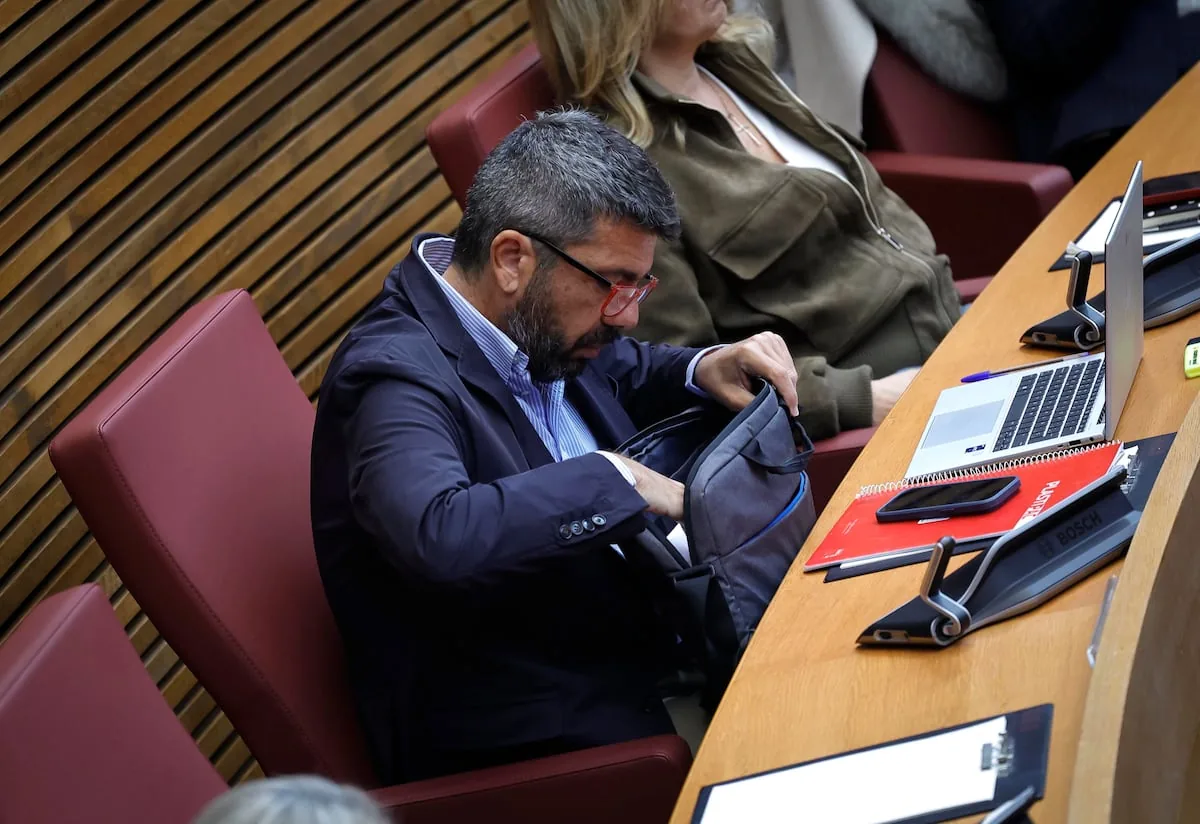
The former president of the Generalitat Carlos Mazón has appealed the refusal of the judge investigating the management of the DANA, Nuria Ruiz Tobarra, to designate specific documents -to indicate which specific documents, minutes or pieces of an original file should be copied- to support the appeal before the Provincial Court in which she rejected his appearance in the case. The head of the Consell until last December understands that this decision is contrary to law and causes him helplessness.
Read more Bruce, the disabled parrot who ended up dominating his flock
The judge of Catarroja recently rejected Mazón’s request to appear in the case in which she is investigating what happened in the management of the floods that on October 29, 2024, left 230 fatalities in the province of Valencia, a decision that the former president appealed before the Court. Subsequently, the court, in a procedural order dated April 15, gave the parties five days to make allegations regarding that appeal and agreed that there was no room for the designation of specific documents given that he does not have access to the proceedings because he is not under investigation in the case.
Now, Mazón’s defense has filed an appeal for reconsideration against this last decision, understanding that it is contrary to law and causes “effective defenselessness”. In their opinion, this procedural order incurs a “manifest internal contradiction” because “if the resolution itself recognizes this representation sufficient procedural legitimacy to file an appeal and gives it the corresponding legal course, it cannot, at the same time, deprive it of one of the legal prerequisites” to properly process that appeal, such as the designation of specific documents to substantiate that brief and for the Court to rule.
“In order for the appeal not to be illusory, the designation of known and sufficiently identified specific documents should have been allowed, even if this party does not yet have full access to the procedure,” argues Mazón’s defense, which claims that this designation “did not depend on a full examination of the proceedings” but rather identified “the resolutions and actions that were intended to be certified, their content and their functionality for the resolution of the appeal.”
Read more Chilean police arrest three university students for the assault against Minister Ximena Lincolao
Along these lines, it insists that the law configures the designation of specific documents “not as a merely ornamental or dispensable faculty, but as a structural element of the processing of the appeal in preliminary proceedings.” “Admitting the appeal and, at the same time, denying the incorporation into the testimony of the specific documents designated by the appellant means deviating from the legal design of the appeal and frustrating its review purpose,” questions the defense.
In this regard, it argues that if it has sufficient legitimacy to challenge the order that denied Mazón’s appearance, “the full extent of the necessary powers for the appeal to be real and effective must also be recognized, at least within the scope of that challenging incident, including the designation of specific documents to be certified.” “Denying that possibility does not constitute a mere innocuous irregularity. It means preventing the Court of Appeal from directly verifying the accuracy of the allegations made in the appeal, artificially reducing the procedural material on which it must rule,” it states and emphasizes that this generates “effective defenselessness, because it curtails this party’s right to obtain a full and useful review of the appealed resolution.”
Furthermore, it maintains that it incurs an “unreasonable and disproportionate” formalism that leads to a “procedurally unacceptable result: the resolution formally admits the appeal, but deprives it of the minimum documentary basis for it to succeed or even be examined in its entirety by the higher Court.”
Read more The ‘pescaito’ dinner and the ‘alumbrao’ kick off the most expensive Seville Fair