







Only 19 forest firefighters out of the 121 available on the day of the DANA in the province of Valencia were mobilized on the fateful October 29, 2024. Only 15% of the professionals expert in fires and emergency rescues from the Generalitat and the Provincial Consortium acted that day to rescue and observe and alert of the risks of possible flash floods in the ravines. The rest were sent home at 7:30 PM, when the dead were already counted by the dozens and hundreds of people were trapped in their homes, in their cars, in their garages or in the streets. The emergency was directed from the Cecopi, convened at the Emergency Center in l’Eliana of the Generalitat.
Read more Trump’s popularity falls to its worst level due to the economy and the war in Iran
This information is part of the content of the report that the forest firefighters have delivered to Nuria Ruiz Tobarra, the judge of Catarroja investigating the DANA case, which claimed 230 lives. The report reflects that the five units that worked – two of them self-mobilized – rescued around 40 people and moved more than 150 to safe areas, numbers that increased significantly in the following days.
The document also points out that only six of the 26 Forest Firefighter units in the province of Valencia were fully staffed and that most of them did not have the necessary material to intervene in floods. The Helitransported unit from Siete Aguas was not mobilized on October 29, 30, and 31, and the one from Enguera was mobilized on October 31; that on the 30th, ten ground units and two helitransported units continued all day without being mobilized, and that Castellón mobilized the first two units on the night of the 30th and Alicante mobilized five on the 31st.
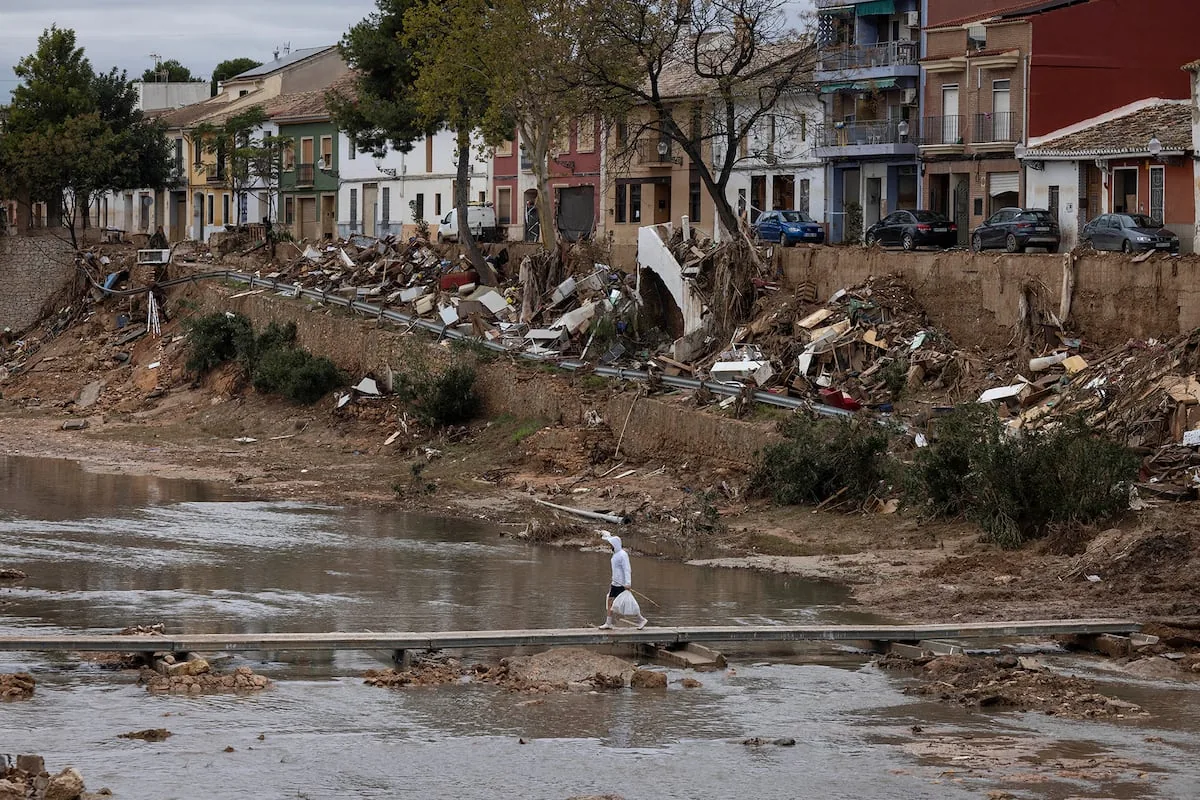
Regarding the work of each unit, the reports detail actions by those from Pedralba, Alzira, Font de la Figuera, Requena, Yátova, Chelva, or Buñol, which was the one that moved to monitor the flow of the Poyo ravine in Chiva until it was withdrawn at 2:40 PM, according to the report. It is still not known for sure who gave the order to withdraw. From 4 PM, water began to enter the homes of residents of Chiva who lived next to the ravine. The floods from Chiva and the Horteta and Gallego ravines left the l’Horta Sud region strewn with dead.
This last unit, from Buñol, explains that at approximately 12:50 PM, they were mobilized to monitor the scale of the Poyo ravine in Chiva, when “it was raining with low intensity and traffic on the roads was normal, nothing alarming.” Upon arriving there, about forty minutes later, the reading showed “about eighty cm out of the five meters that the scale has, it was already carrying a large amount of water, as there the ravine will be approximately one hundred meters wide and under normal conditions it is completely dry.”
Two colleagues stayed and three others went to Chiva where “at that moment, there was barely a trickle of water that didn’t even reach the measurement scale markings.” They reported this fact to the Fire Consortium Central and returned to the first measurement point, with a stop at a supermarket to buy food because they thought they “would spend the afternoon there.”
Read more From one year to the next, doubts once again surround Iga Swiatek. Her plan? Nadal’s «inspiration»
At that first point, the flow “had decreased slightly, about ten cm,” a fact they communicated to the central office. “To our surprise, we were withdrawn around 2:40 PM. Since then, we have wondered what would have happened if they had kept us there,” the report states.
At 7:30 PM, they were given permission to withdraw, although several colleagues stayed at the base, others stayed at the gas station, and others were those who were trapped on the highway. The flow began to decrease near eleven at night; they returned to the base around one and then, “without any order,” changed to “go lend a hand on the highway.”
The Chelva Unit was operating in Utiel where they collaborated in transferring people affected by the floods to the medical center and rescuing people with the help of a tractor and moving them to a safe area. At 2:00 AM, they were told they could return to Chelva, but all accesses were cut off, so they decided to stay and rest in Requena park.
The Alzira unit reports rescues of around 15 people and eight dogs from a chalet with water up to their necks in l’Alcúdia; the Requena unit was mobilized, for the first time, at 2:00 PM for the rescue of an elderly person trapped in the home who was found lying on the floor, and they continued rescuing people with reduced mobility and transferring them to the health center, and located a couple with reduced mobility, both deceased, in a home.
The Yátova unit explains that when it was time to withdraw, some stayed at the base, others ended up at a gas station, and those who continued to the A-3 were trapped when the Gallo ravine, which becomes the Poyo ravine, overflowed onto the A-3, leaving them with a “wave of water over the car.” The unit describes the situation as a “war scenario” in which the voluntary service, with agents from Buñol, carried out around 20 rescues and helped extract more than 150 people from the highway.
Read more The Barcelona Chamber urges the Government not to forget about drought infrastructure