








The Government of Mexico City has begun installing smart public bathrooms at various points in the capital in anticipation of the expected increase in tourism for the 2026 FIFA World Cup. For now, the service is free, equipped with water, soap, hand dryer, and toilet paper; the system cleans itself after a certain number of uses, and a guide posted at the entrance explains step by step how to use them. Even so, few people dare to enter.
Read more United States and Iran admit a preliminary agreement, but disagree on its terms
Access with the Integrated Mobility Card will soon be enabled automatically for a cost of seven pesos, but during these first weeks, workers from a private security company are responsible for opening them manually each time someone requests it. The guards have also become a kind of instructors. They explain how the mechanism works, answer questions, and observe the reactions of those who approach out of curiosity. Several stay watching from outside, others feel shy, while some hesitate for a few seconds but finally dare to enter. “We came out of curiosity. For me, it’s a good idea, but now it remains to be seen if they work well in the long term. It seems easy, but like everything… things can fail,” María Eugenia, a woman who approached to learn about the service, told EL PAÍS.
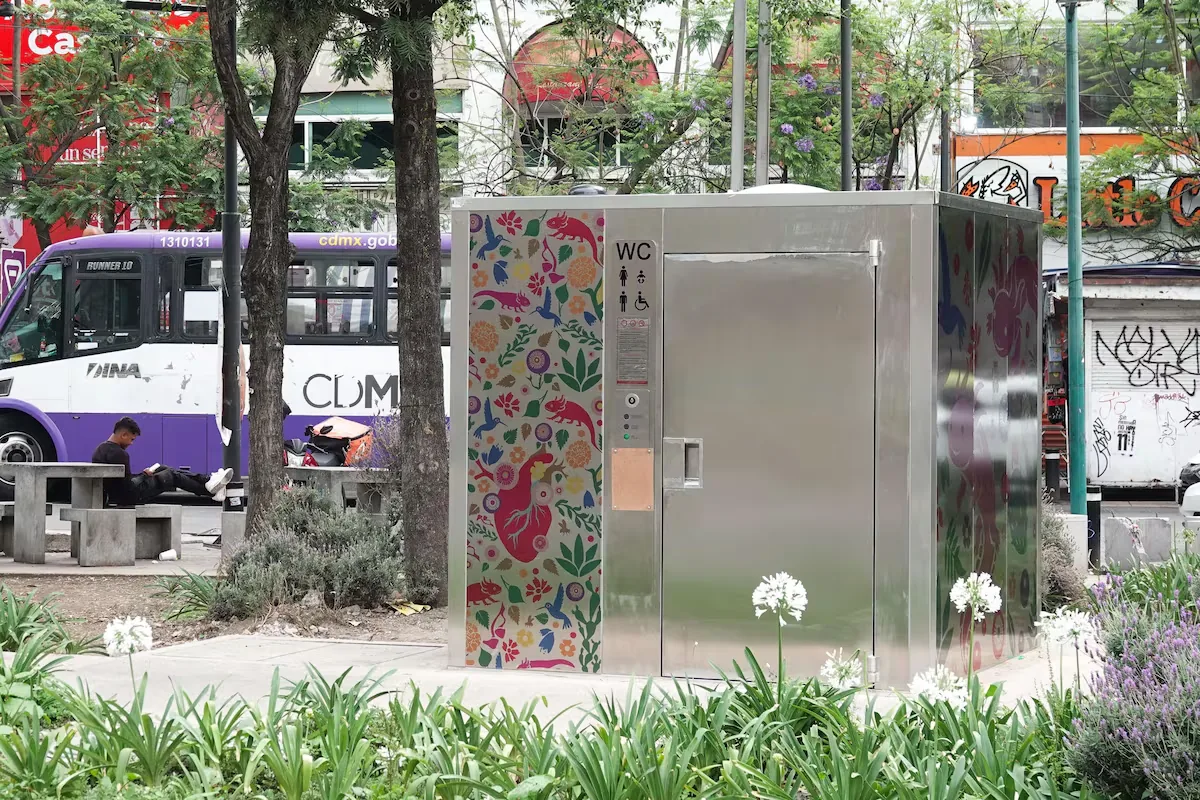
The bathrooms can be identified on the street as a metal structure decorated with flowers and axolotl figures, one of the symbols that the city government has incorporated into the city’s graphic identity. Inside, they have an automated toilet, sink, and diaper changer. So far, they have been installed in busy spots such as Zona Rosa, the Monument to the Revolution, the Sevilla station of Metro line 1, the Mexico Library, and the Art Garden in Sullivan, although authorities plan to place 26 modules at different points in the capital before the end of the year.
Meanwhile, their use is timed. Users have nine minutes before an alert announces the end of the session. After each use, the bowl cleans itself automatically, and after five people, the system performs a deeper sanitization. Although they currently operate on limited hours, the plan is for them to eventually remain open until midnight.
Read more Aznar strikes back against Sánchez: “The only possible way out is a new election”
Among the main doubts surrounding the smart bathrooms is whether they will really be able to stay clean. The city already has other public bathrooms, but deterioration and lack of hygiene are often among the main complaints from users. In this case, a private company is planned to carry out periodic inspections to supply paper and soap and verify cleanliness. There is also concern about what will happen if someone gets trapped or needs help when there are no guards on site. For these cases, each module has an emergency button connected directly to the Citizen Security Secretariat, designed to report malfunctions or request assistance. During the tour conducted on Thursday by this newspaper, low attendance was observed, and those who approached did so because they saw it on social media or in the news.
The initiative has arisen as part of modernization efforts for the World Cup. The goal, according to city authorities, is to offer a more dignified, clean, and safe alternative to tourists and city residents. “I live around here and I think it’s good because there are public bathrooms around here and they are unsanitary. It’s a good initiative, nothing like these bathrooms compared to the ones they put up during races, for example,” said Enrique Bautista, another user interviewed.
Subscribe to EL PAÍS México’s newsletter and to the WhatsApp channel and receive all the key news updates about this country.
Read more Carreño and Jódar in the Paris round of 16: a comeback and another dose of resilience