





Iran and the United States seem to be slowly but gradually approaching the signing of some kind of pact that allows them to consider this phase of the war resolved, at least. The President of the United States, Donald Trump, has announced that he will decide this Friday, during a meeting in the White House crisis room, whether to accept the content of a supposed preliminary agreement with Iran. On Thursday, a senior official from his Administration had assured that the two countries had reached that preliminary pact and that it involved extending the ceasefire by 60 days and opening talks on the Iranian nuclear program, the major stumbling block in contacts throughout the three months of war. But that source clarified that the president’s approval was still pending.
Read more Aznar strikes back against Sánchez: “The only possible way out is a new election”
Iran confirmed this Friday the existence of that preliminary agreement through its Fars agency, which emphasizes that the pact still needs to be ratified by the authorities in Tehran.
“I am going to meet right now in the White House Crisis Room to make a final decision,” the Republican states in a message posted on his social network, Truth.
That the preliminary agreement exists seems to be the only thing on which the versions of Iran and the United States agree. When describing its content, both parties offer very different — even opposing — interpretations, which indicates the great distrust between them, the difficulty of the negotiations, and how complicated it will be to implement if the two enemies sign it. According to Fars, Trump’s version mixes “truths and falsehoods” aimed at presenting a “fictitious victory.”
But the mere fact that both parties acknowledge they are very close to achieving results already represents progress compared to the situation just a couple of weeks ago. “They are already negotiating some of the most difficult variables, such as what will happen with nuclear material and other aspects of the Iranian nuclear program. But it is important to understand that there is always a certain level of nervousness in the moments immediately before signing, so there may still be surprises,” assesses Trita Parsi, co-founder of the Quincy Institute for Responsible Statecraft think tank.
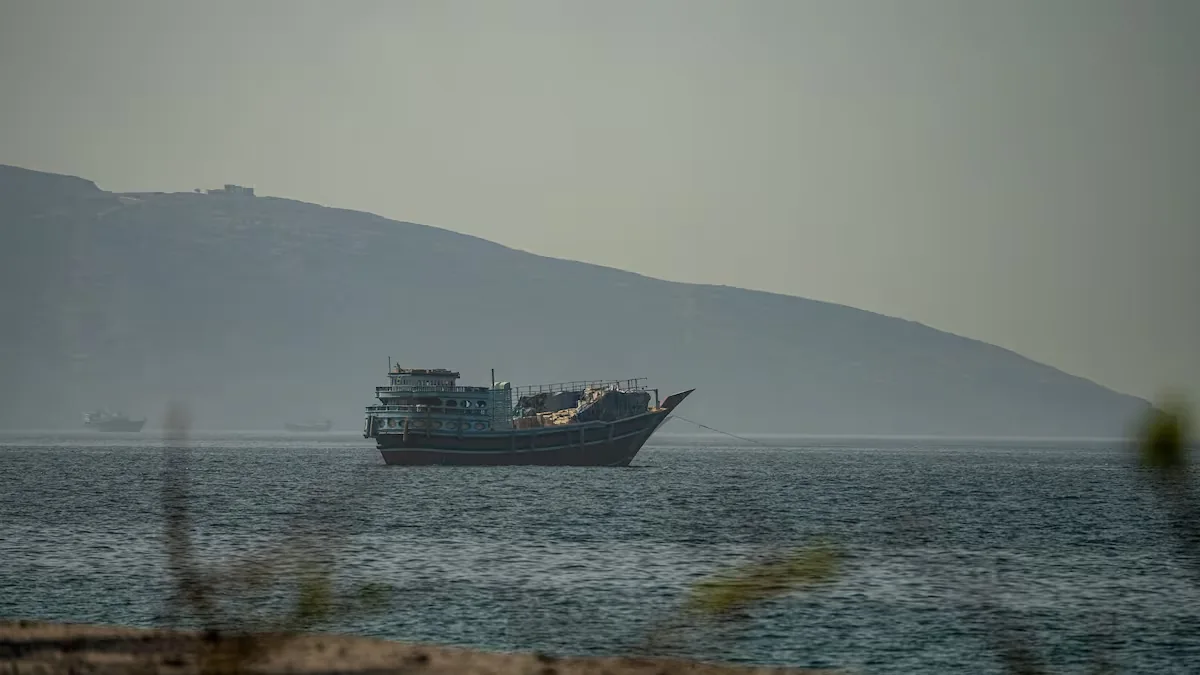
The U.S. leader indicated in his message the conditions that must be included in the agreement, including the opening of the Strait of Hormuz, “without tolls” and without restrictions on maritime traffic in any direction. Additionally, the Islamic Republic must remove any mines that may still remain in the waters of the strait that it placed to block access during the war. Iran “will complete the immediate removal and/or detonation of any remaining mines, which will not be many!” writes the Republican.
In turn, Trump says in the message, U.S. forces will lift the blockade they maintain on Iranian ports to allow the departure of merchant ships trapped in the waters of the Persian Gulf due to the war and the closure of the strait.
But Iran, according to Fars, has emphasized that it will only reopen the strait once the United States has lifted its blockade. It also denies that the memorandum of understanding between the two adversaries prohibits the implementation of toll mechanisms and assures, on the contrary, that Iran plans to apply inspections to ships, provide services, and have security measures in the bottleneck.
Esmail Baghaí, spokesperson for the Iranian Ministry of Foreign Affairs, also insists that a definitive understanding with the United States has not yet been reached. “What the Americans describe as a naval blockade was, from the beginning, an illegal measure; it not only constituted a violation of the ceasefire but also a disruption of international navigation freedom. We will have to see in practice whether they really comply with what they say or if it is simply a propaganda statement,” the spokesperson said.
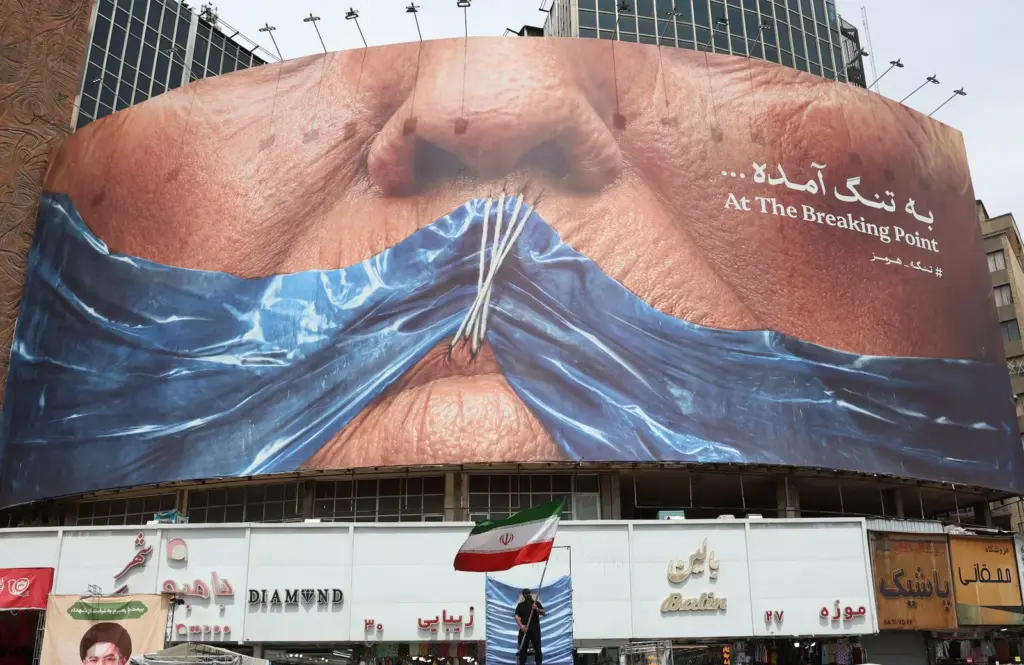
According to the conditions listed by Trump, Iran must also “accept that it will never have a nuclear weapon or bomb.” Tehran’s nuclear activities, real or potential, and the highly enriched uranium that the ayatollah regime possesses have been one of the major concerns of the U.S. president since the beginning of the war, one of the few constants in a position that has shifted erratically throughout the three months of conflict, sometimes even within the same day.
Read more Carreño and Jódar in the Paris round of 16: a comeback and another dose of resilience
Uranium recovery
In his message, the U.S. president assures that Washington will take charge of recovering the highly enriched uranium buried under the rubble of the Iranian nuclear facilities destroyed in the U.S.-Israeli attack last June.
That radioactive material rescue operation, he states, will be carried out “in close and joint coordination with the Islamic Republic and the International Atomic Energy Agency.” “We are, along with China, the only country with the mechanical capacity to achieve this,” he emphasizes. Once recovered, that uranium will be destroyed, the leader has specified.
Iran, however, denies this claim. The Fars agency cites “informed sources” who reject that the memorandum includes a provision to destroy Tehran’s nuclear material. Trump’s statement in this regard, it says, “is basically unfounded.”
“Additionally, other terms have been agreed upon,” the U.S. president indicates in his message, although he considers them “much less important” and does not list them. He makes no mention of the possibility of easing sanctions against Iran, Tehran’s top priority throughout the negotiation process since before the war. But it is, on the U.S. side, one of the most thorny issues and one that faces the most opposition among Trump’s political allies.
“Some people who criticize Trump for being willing to lift sanctions are basically saying they don’t want those sanctions to be used as a tool in the negotiation. And as a result, they don’t want a deal. But if you don’t want a deal, the only other options are war and regime change. Those are what we have been trying these last three months, and they don’t work,” Parsi points out.
The senior Republican Administration official who revealed the preliminary agreement had indicated that this issue would be addressed in the nuclear negotiations. Also, according to the official, the unfreezing of Iranian funds from oil sales frozen due to those punitive measures would be discussed. In his social media message, Trump emphasizes that “no money will be exchanged” between the two adversaries.
Here too, Iran offers a very different version. According to Fars, the memorandum of understanding includes the payment of 12 billion dollars from the frozen Iranian funds. The agency claims this provision is the most important in the entire document.
Moments before the U.S. president published his message on social media, his Secretary of State, Marco Rubio, met with Pakistan’s Foreign Minister, Ishaq Dhar, to discuss the negotiations between the United States and Iran, in which Islamabad acts as the main mediator. “The Secretary thanked the minister for the constructive role Pakistan continues to play in making President Trump’s vision of peace in the Middle East a reality and its mediation efforts with Iran,” said State Department spokesperson Tommy Pigott.
Read more Municipalities and the private sector address solutions to Chile’s water crisis