







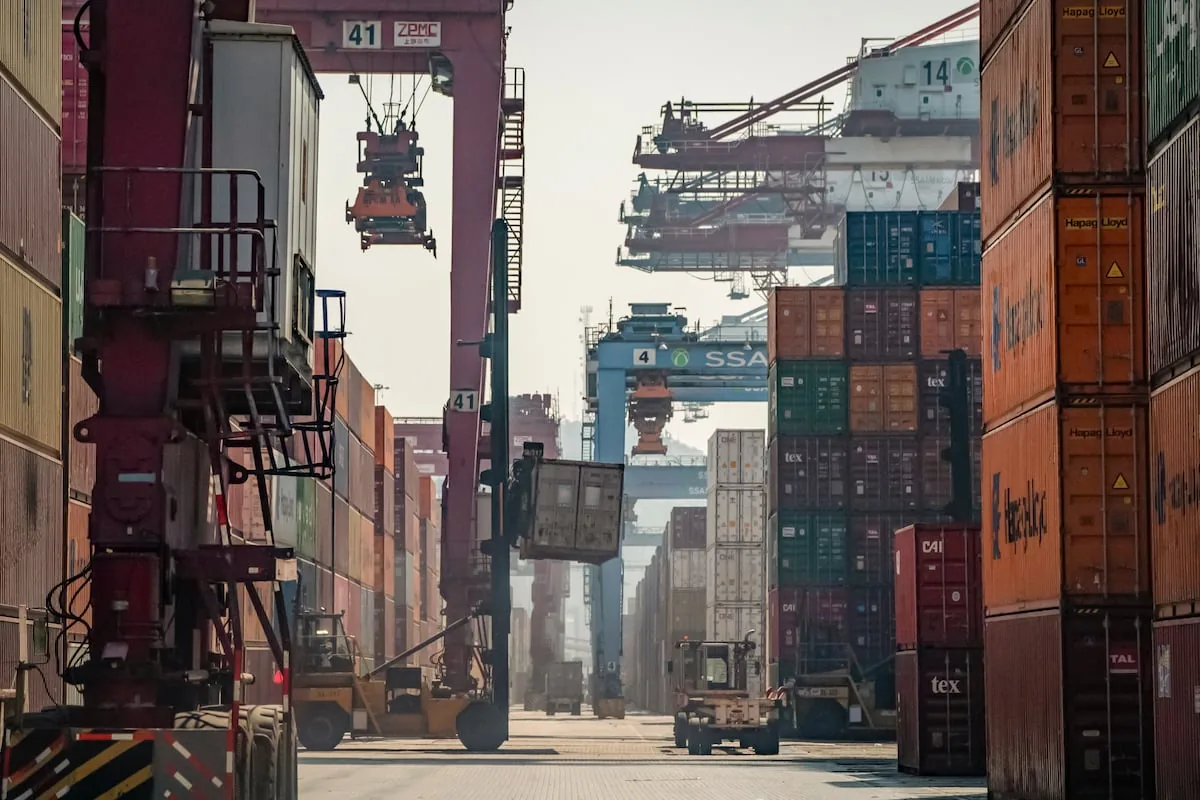
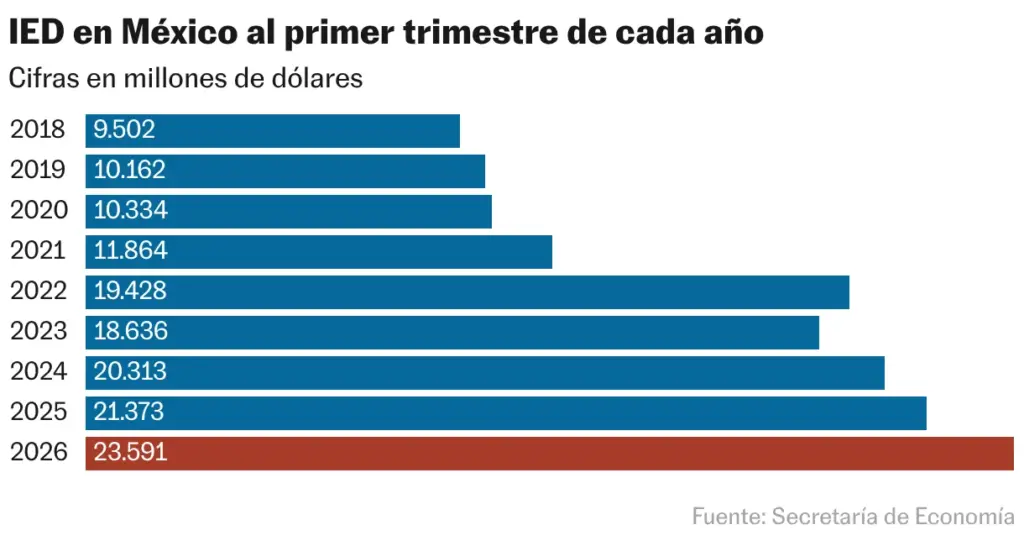
Foreign direct investment in Mexico in the first quarter of the year reached a new record, despite geopolitical uncertainties and Donald Trump’s tariff wall. From January to March, the country landed 23.591 billion dollars in foreign disbursements, representing an increase of 10.4% compared to the same period of the previous year and the highest amount since official records exist. New investments rose in the first part of the year to 1.705 billion dollars, an increase of 7.5%, and reinvestment of earnings increased by 33.5%, rising from 16.647 billion dollars to 22.222 billion dollars in one year.
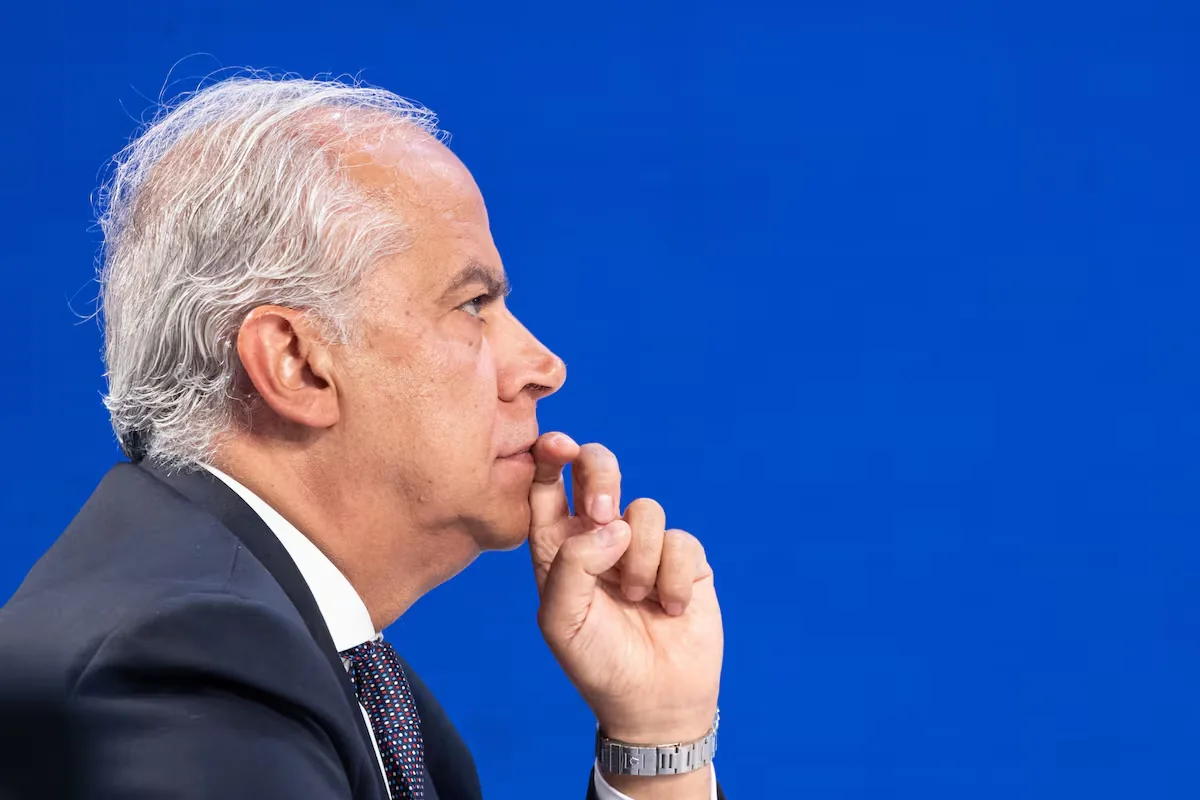
The foreign investments with the greatest dynamism in the first three months of the year were: financial services and insurance with an increase of 28%; vehicle manufacturing, which increased by 20%, and mining, which had an increase of more than 90%. “This dynamism reflects that global investors continue to perceive Mexico as a platform for manufacturing expansion and regional integration,” said the Secretary of Economy this Monday during the presentation of the figures.
Despite Trump’s threats to inhibit investment from his companies in Mexico, the US was the main foreign investor in this period with a disbursement of 10.210 billion dollars. Spain ranked second with 3.804 billion dollars, followed by Australia, Japan, and Canada. “The largest foreign direct investment from the United States evidences certainty in the long-term trade relationship under the USMCA and the good performance of FDI sends signals of economic strength and generates a favorable outlook for the country’s growth,” Ebrard said in a press conference.
The foreign projects that have bet on Mexico mainly correspond to the automotive industry, technology for financial services, medical devices, highways, artificial intelligence, and home appliances. As in previous years, Mexico City was the main recipient of this investment, followed by Nuevo León, the State of Mexico, Baja California, and Jalisco.
Less than two months before the USMCA review begins, one of the cornerstones on which Mexico has based its investments with the US, Ebrard acknowledged that talks with Washington are “complex” and “difficult,” however, he trusted that the Latin American country will achieve the best possible position in this global trade rearrangement. Next week, Claudia Sheinbaum’s economic cabinet will receive the head of the United States Trade Representative (USTR), Jamieson Greer, to continue bilateral dialogue. The table will discuss sectoral tariffs weighing on Mexican steel and automotive exports, as well as rules of origin, one of the issues that most concerns Washington.
In the final stretch toward this crucial meeting, the federal official acknowledged that the review could extend for several weeks due to the complexity of the agreement. “We are not in a hurry, but we also cannot drag our feet because not advancing could generate a lot of uncertainty, which is why we proposed that there be formal talks before July 1,” he added.
Mexico achieved a record in FDI despite the 0.6% contraction of the Mexican economy during the first quarter of the year. Latin America’s second-largest economy has been on the front line of pressures from Donald Trump’s tariffs, and this has begun to reflect in various indicators. The slowdown in private and public national investment and in formal employment growth have been the first signs of clouds on the horizon. The Ministry of Finance forecasts economic growth of 2.3% in 2026, although market consensus outlines more conservative targets, between 0.5% and 1.5% this year.