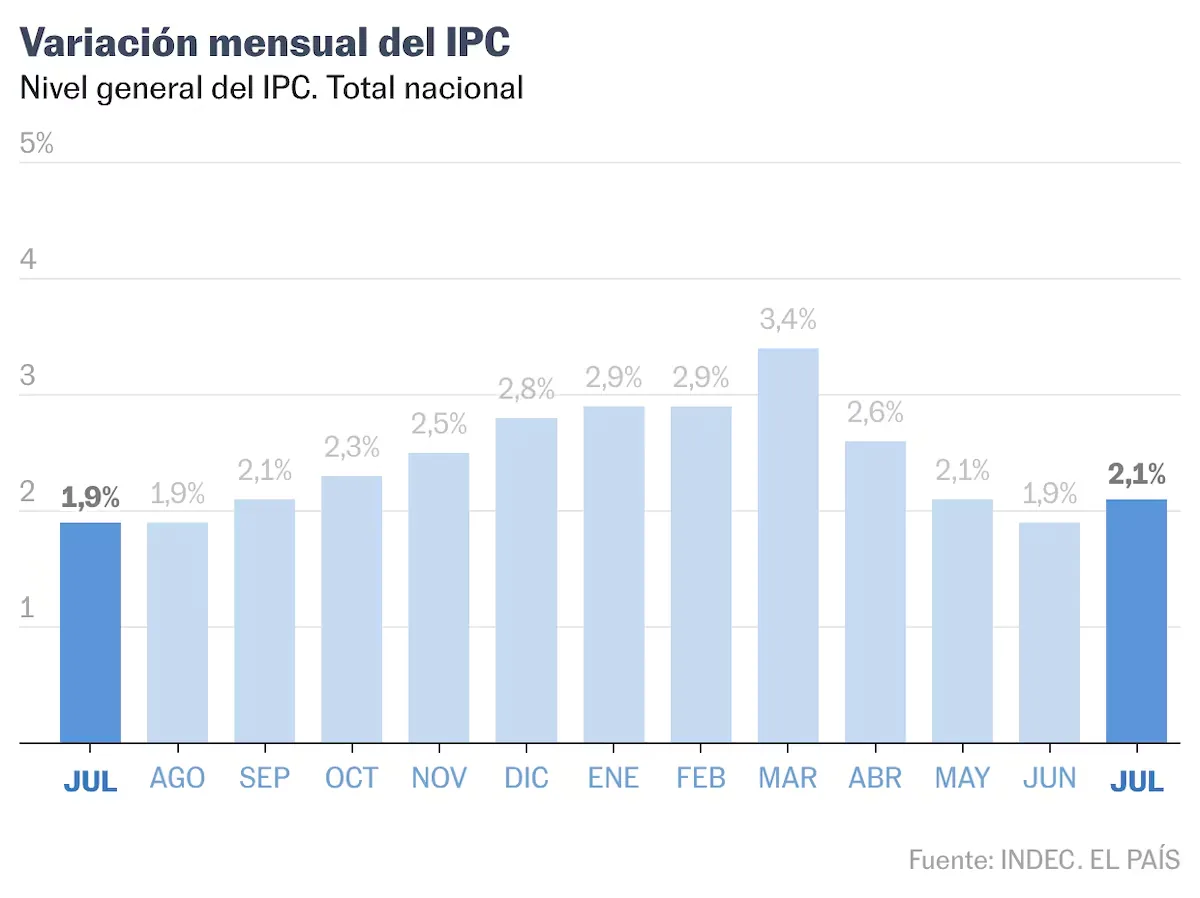
The slowdown in inflation is presented by Javier Milei as one of the greatest achievements of his economic adjustment program, after taking office in 2023 with a year-on-year inflation of 211%. The Argentine president has obsessively pursued this goal, even ignoring warnings from friendly voices who draw his attention to the decline in activity and the reduction in the population’s income resulting from the fiscal and monetary tightening. But, even with that sacrifice, the process driven by the ultra does not manage to consolidate. In July, the indicator marked 2.1%, taking a step back compared to the previous three months in which it had slowed down.
Read more Daily ONCE coupon: check the draw for Thursday, August 13
The widespread price increase is partly explained by the rise in tourism services related to winter vacations in Argentina: the recreation and culture category increased by 5% in the month, while the restaurants and hotels division rose by 2.8%. At the other end, prices in the clothing and footwear sector — one of the sectors most affected by the reduction in activity — fell by -1.3%.
“We are getting closer every day to inflation being little more than a bad memory,” Milei said in December 2024, when the first anniversary of his presidency was celebrated. At that time, optimism was still possible. Monthly inflation records began to decline during his term until reaching their lowest level in May 2025, when they marked 1.5%, a point from which they resumed a slow but steady climb. Last March, the consumer price index reached 3.4% monthly — one of the highest records of the libertarian administration — and from that peak began a new downward path, which is now interrupted.
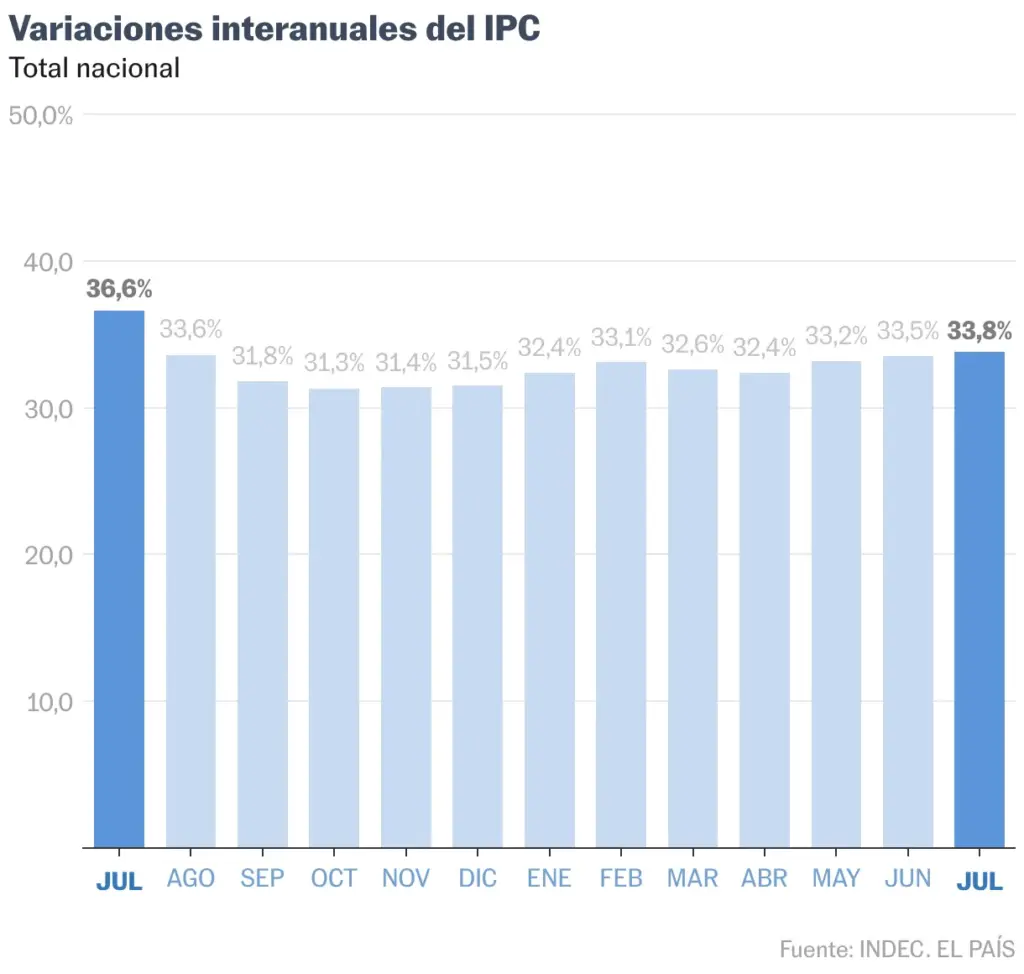
Although the numbers are considerably lower compared to those of the Alberto Fernández government (2019-2023), they are far from what the libertarian promised. The possibility of reaching August with an index starting with the number zero, as he had anticipated, is already ruled out, and it will also not be possible to meet the annual inflation projected in the 2026 Budget, of 10.1%. In the first seven months of the year, prices have already accumulated an increase of 19.3%. In the year-on-year comparison, inflation is 33.8%.
The data reported by the National Institute of Statistics and Censuses (Indec) this Thursday is even slightly higher than anticipated by the market. According to the average of private estimates prepared by the Central Bank, inflation of 2% was expected for July. Projections anticipate a deceleration process going forward, although at a slow pace and not without ups and downs.
Read more Eurodreams: check draw for Thursday, August 13
Hours before the new official report was released, Economy Minister Luis Caputo had tried to soften the news. “The important thing is that we continue deepening the disinflation process. We feel comfortable with the fiscal and monetary policy we are carrying out and inevitably we will converge to an international inflation. We must stay the course,” he said in a speech at the Córdoba Stock Exchange.
Dollar loans for companies
Minister Caputo also announced this Thursday a regulatory change that will allow banks to offer dollar loans to companies, with the aim of promoting private investment and boosting the economy. Entities will be able to lend up to 15% of their dollar deposits and must have more stringent criteria regarding other financing, to safeguard “the solvency and liquidity of the financial system” and limit risks associated with the potential currency mismatch of borrowers, who operate in a peso-based market.
Caputo linked the initiative to the “fiscal innocence” project, sent to Congress by the Executive, which seeks for people to bring informal savings into the banking system. “The goal is to have more credit. The savings [which are the flip side of credit] are already there, but they are under people’s mattresses,” the minister specified. According to his logic, from the possibility of lending dollars, banks will offer better rates to depositors, which will encourage the legalization of their holdings.
Read more Sara Curtis shatters the 50m backstroke world record