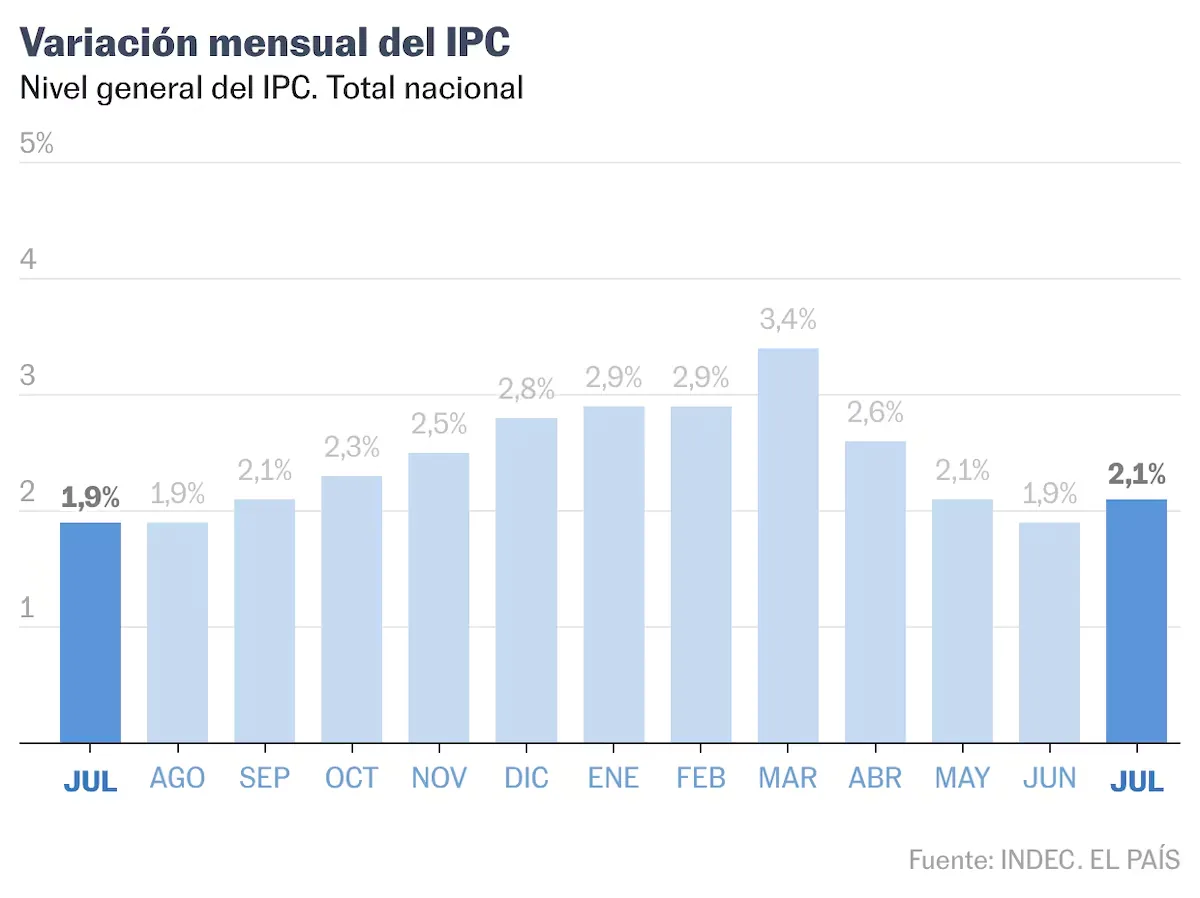
The shopping basket continues to become more expensive in the United States at a faster pace than desired by the authorities. The consumer price index (CPI) grew last month to 3.4% year-on-year, which is just one-tenth less than the previous month, according to data published this Wednesday by the Bureau of Labor Statistics (BLS), responsible for collecting this information.
Core inflation, which excludes the most volatile elements such as energy and food, increased by 2.5% compared to the previous year, one-tenth less than in June. Energy has accumulated a rise of 14.7% in the last 12 months, driven by the energy crisis triggered by the war of the United States and Israel against Iran. Even so, the intermittent truces of recent weeks have eased the pressure on fuels. And this translates into a slight moderation of energy prices by 1.5% during the last month.
Inflation in the US remains above target
The year-on-year variation of the consumer price index (CPI) fell to 3.4% in July 2026, after the spring surge. The peak of this price crisis was 9.1% in June 2022
Year-on-year inflation · July 2026
It fell almost two-tenths from 3.5% in June. It remains above the Federal Reserve’s 2% target
Read more Nahuel Molina leaves Atlético de Madrid and signs for AS Roma
Year-on-year inflation in the US
CPI variation over the last 12 months, in percentage · 2015–2026
Fed target (2%)
Source: U.S. Bureau of Labor Statistics (BLS), series CUUR0000SA0 (CPI-U, not seasonally adjusted). Inflation is calculated as the year-on-year variation of the consumer price index. Most recent data: July 2026. · Chart: EL PAÍS
Read more The minefield of Kast’s security agenda
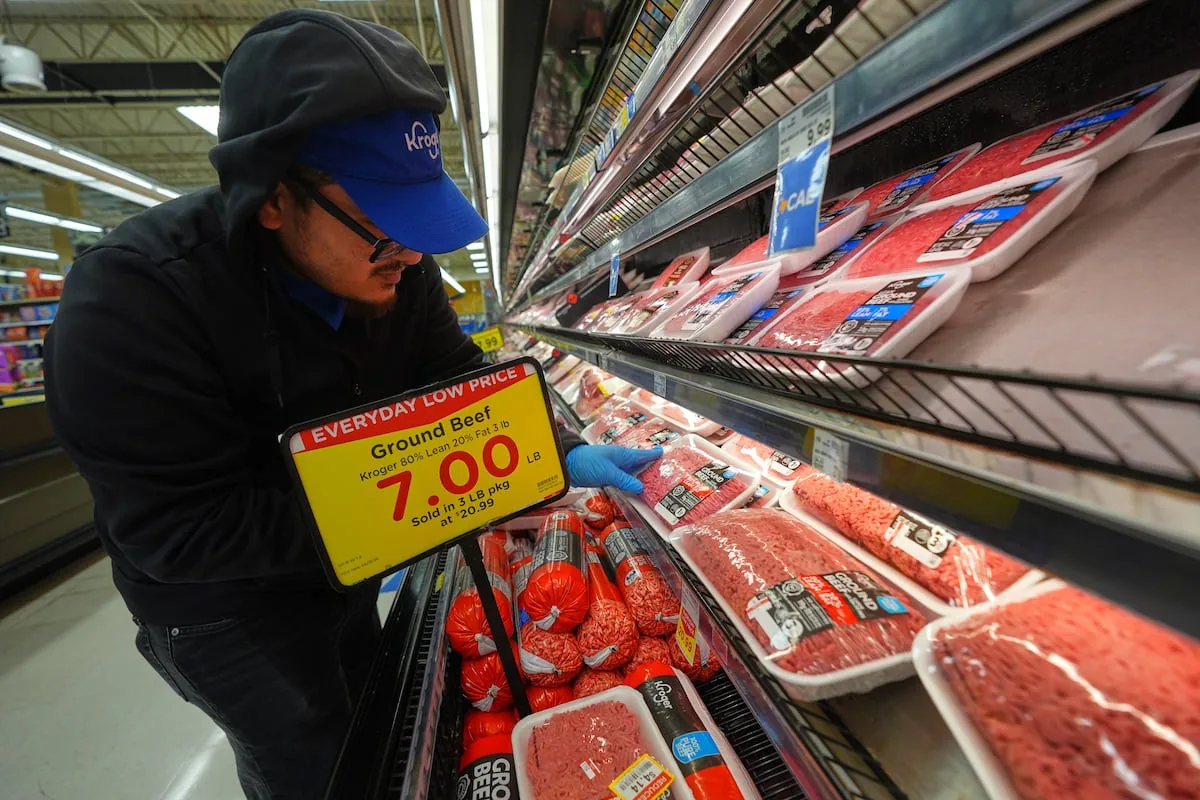
Food prices have risen by 3% in the last year, after a 0.1% increase in July, the seventh consecutive rise so far this year. But they are beginning to show signs of slowing down. “Three of the six main supermarket food group indices decreased in July. In addition, meats, poultry, fish, and eggs fell by 0.7% during the month, while pork dropped by 1.5%,” the statistical office notes.
As a curiosity, lettuce prices fell by 16.4% last month due to the outbreak of cyclospora, a bacteria that causes explosive diarrhea, which has infected thousands of Americans in 15 states.
The price evolution recorded in July slightly eases inflationary pressures but does not clear the way for Federal Reserve officials who, on one hand, are unable to bring prices closer to the 2% target; and on the other, see the labor market beginning to show signs of slowing down, with the loss of 23,000 jobs during last July. The Fed has preferred to wait until September before making a decision on interest rates.
Fed Governor Kevin Warsh will be able to thoroughly analyze the employment and inflation data for July at the central bank governors’ meeting in Jackson Hole at the end of August, an event that promises to be decisive in determining the course of the Federal Reserve’s monetary policy.
“The CPI data published today, along with the drop in payrolls in July, should reduce expectations of a rate hike in September, but does not completely rule it out,” says Seema Shah, chief global strategist at Principal Asset Management, in statements collected by Bloomberg. “Unless the August inflation data also shows moderate inflationary pressure, a hike in September represents a clear risk. With the Strait of Hormuz still closed, the risks of upward inflation will remain a primary concern in the foreseeable future.” However, Shah explains that she does not foresee “rate changes this year.” And she concludes: “We cannot rule out the high risk of a hike at the end of the year if energy supply disruptions persist, while the threat of inflation increase caused by AI cannot be ignored either.”
On a monthly basis, prices rose 0.1% in July after a 0.4% drop the previous month. The statistical office, dependent on the Department of Labor, explains that the price surge is explained by the rise in housing, which increased by 0.1% last month, “representing approximately two-thirds of the monthly increase of all items.”
Food prices also rose 0.1% in the month and dining out increased by 0.3%, showing that the price pressure caused by the energy crisis is spreading to other products in the shopping basket.