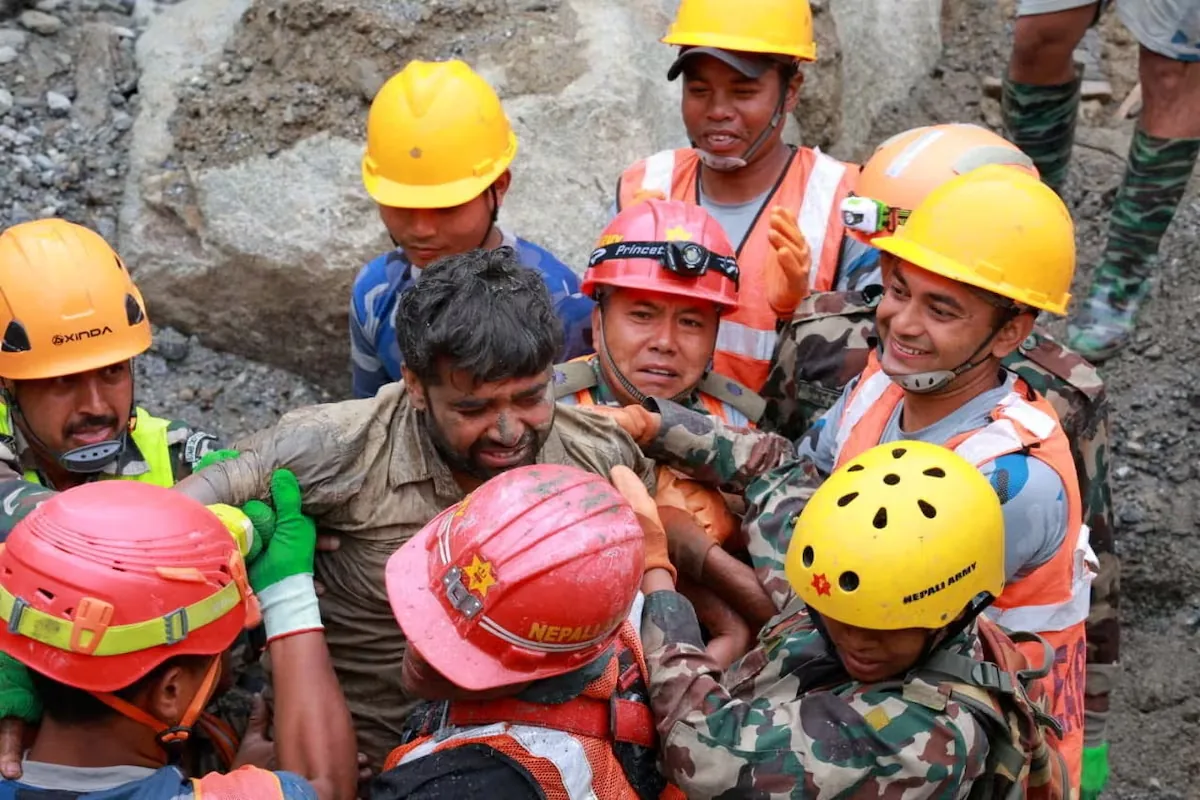
When hopes of finding any of the victims alive from the catastrophic flood in the Himalayas had almost faded, this Friday, nine days later, two men were rescued alive in Nepal. They are two workers from a hydroelectric plant on the Trishuli River who managed to take refuge in one of its tunnels just before a huge mass of ice, rocks, and mud swept everything in its path. A third worker, still unidentified, was found dead in the same passage.
Read more The deals of the week on Amazon: discounts of up to 61% on technology, fashion, and much more
Identified as Sanjaya Shah and Kabir Maharjan, these two men are the first workers extracted from tunnels of the Trishuli 3A plant where authorities are racing against time to find at least 42 people who, like them, could still be alive in the underground passages of the plant, official sources told the British BBC network in Nepal. This morning rescuers heard the voices of some of them.
They are not the only ones. Nepal estimates that the flood trapped around 900 workers from six hydroelectric plants in tunnels. It is unknown how many are still alive, but according to the BBC, Nepalese authorities are searching for about 150 survivors in those facilities.
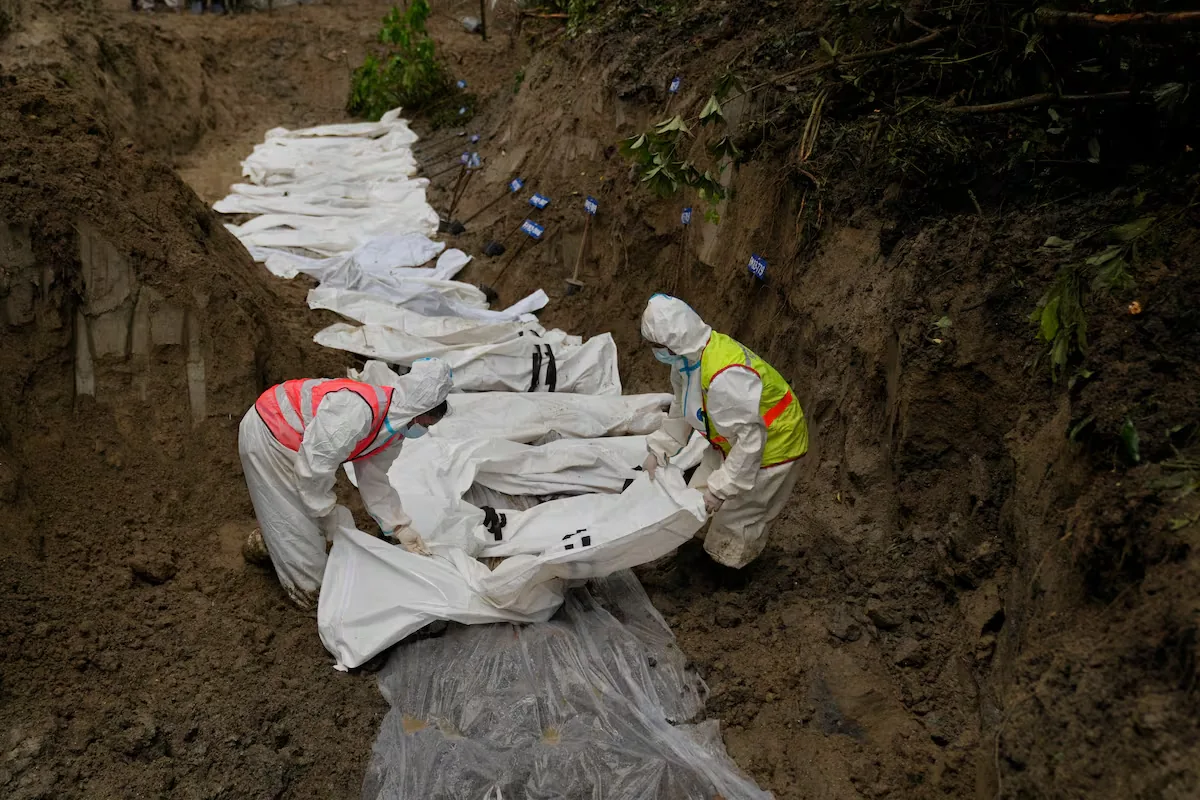
In total, at least 1,301 people died due to the flood and 5,339 remain missing, according to the latest figures provided by the Nepalese police this Friday, when they raised the number of bodies recovered in their territory to 1,290, while the missing are 4,788, including 601 foreigners. To this count are added the 21 deceased and around 550 missing on the Tibetan side of the border and three bodies recovered in India.
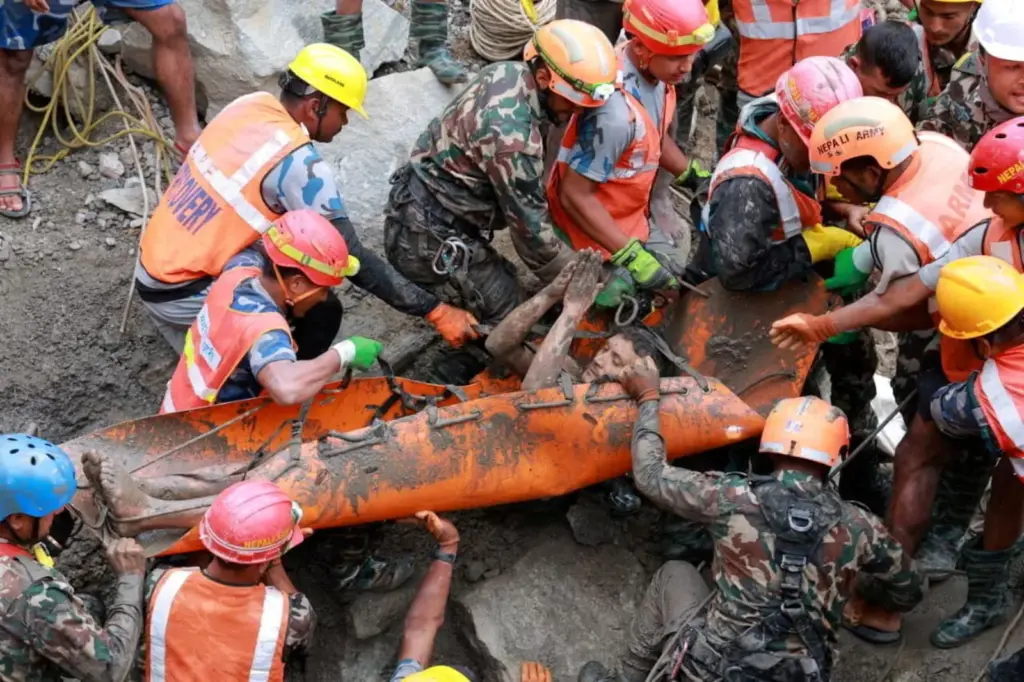
Sanjaya Shah, mechanical foreman at the power plant, and Kabir Maharjan, mechanical supervisor, according to the office of Nepal’s Energy Minister, Biraj Bhakta Shrestha, were rescued with injuries to their legs and hands, probably from crawling through the tunnels and digging the earth to try to reach the surface, authorities specified.
Rescue videos show how the two men were extracted from the tunnel by rescuers, covered in mud, with vacant stares and practically defenseless, amid cheers from those present. Rescue teams then transported the first worker, Maharjan, on a stretcher.
The other man, Shah, was rescued shortly after and carried to a rescue services tent, where he was treated by military doctors who placed an oxygen mask on him and checked his vital signs. Both workers were then evacuated by helicopter to a hospital in Kathmandu.
One of these two survivors, Maharjan, cannot move his hands or legs and is in critical condition, Nepalese authorities later reported. The injuries of the other, Shah, are not serious, an assistant to the Energy Minister told Reuters.
“I couldn’t just run away alone,” Shah recounted in his first statements after the rescue. This worker said he could not escape because he stayed in the plant’s control room alerting his colleagues. “I told everyone that there had been an accident at the main dam and asked them to escape. By the time I finished doing that, I lost my chance to get out. In the end, I couldn’t escape,” Shah told a Nepalese Army team after being rescued.
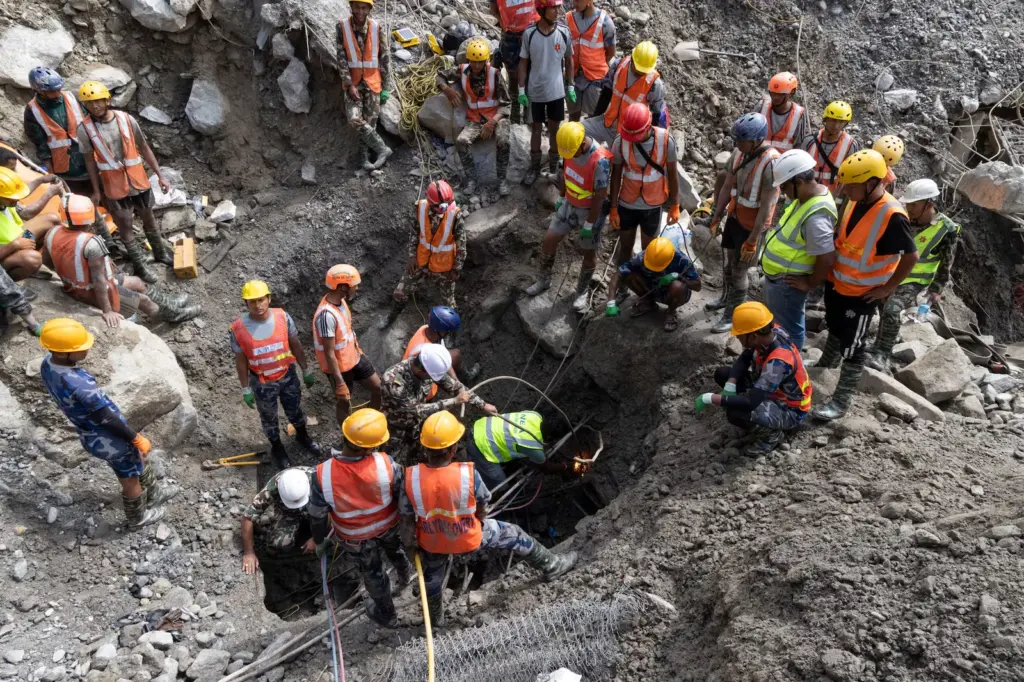
“My responsibility was to save everyone’s life,” said the worker, who claims to have spent the nine days underground praying. He also said he heard the voices of other trapped people, with whom he kept contact by shouting.
“We could hear them when we shouted. That’s how we communicated with the people nearby,” explained Shah, who said he had contact that way with “three or four people.”
For days, Nepalese teams, reinforced by specialists from India and China, have been working to reach the people who could still be alive inside the galleries of the hydroelectric plants. In one of the tunnels of the Upper Trishuli hydroelectric complex, the military managed to reach the entrance on Monday to remove the debris. The operation is progressing slowly because the mud and rocks have blocked the accesses and the risk of new collapses requires caution when using explosives, which could definitively bury those believed to still be alive there.
A team of hydroelectric plant experts is guiding rescuers in the search through a WhatsApp group. The mud and rock flood not only blocked the tunnel entrances but also covered them, so in some cases, passages that were previously at surface level are now buried several meters under the mud tide. Nepal has had to resort to locating them using drones and satellite images to find the places where the tunnel accesses were before.
Arnold Dix, president of the International Tunneling and Underground Space Association, is one of the experts advising the Nepalese government on the rescue. Cited by BBC Nepal, this expert emphasized never having “known before” a rescue operation where one has to “search for the entrance of a tunnel that was previously at the top of the hill and is now underground.”
“You can imagine the magnitude of the avalanche; it completely buried the entrance,” he told the television network. Thanks to satellite data, Dix assured, rescuers were able to identify the entrance. Then they began searching for survivors of whom “they didn’t know where they were.” The rescue of the two survivors has been possible, this specialist rejoiced, thanks to “a series of miracles.”
Nepalese authorities have also deployed helicopters and heavy machinery to dig and move large rocks in the race to find survivors. Meanwhile, Nepalese engineers pump air into the tunnels to try to prevent survivors still inside from suffocating due to lack of oxygen. In images broadcast by BBC Nepal earlier this week, rescuers were seen navigating flooded tunnels in rafts.
Read more Matchday 4 of the League: schedules, match results, and summary