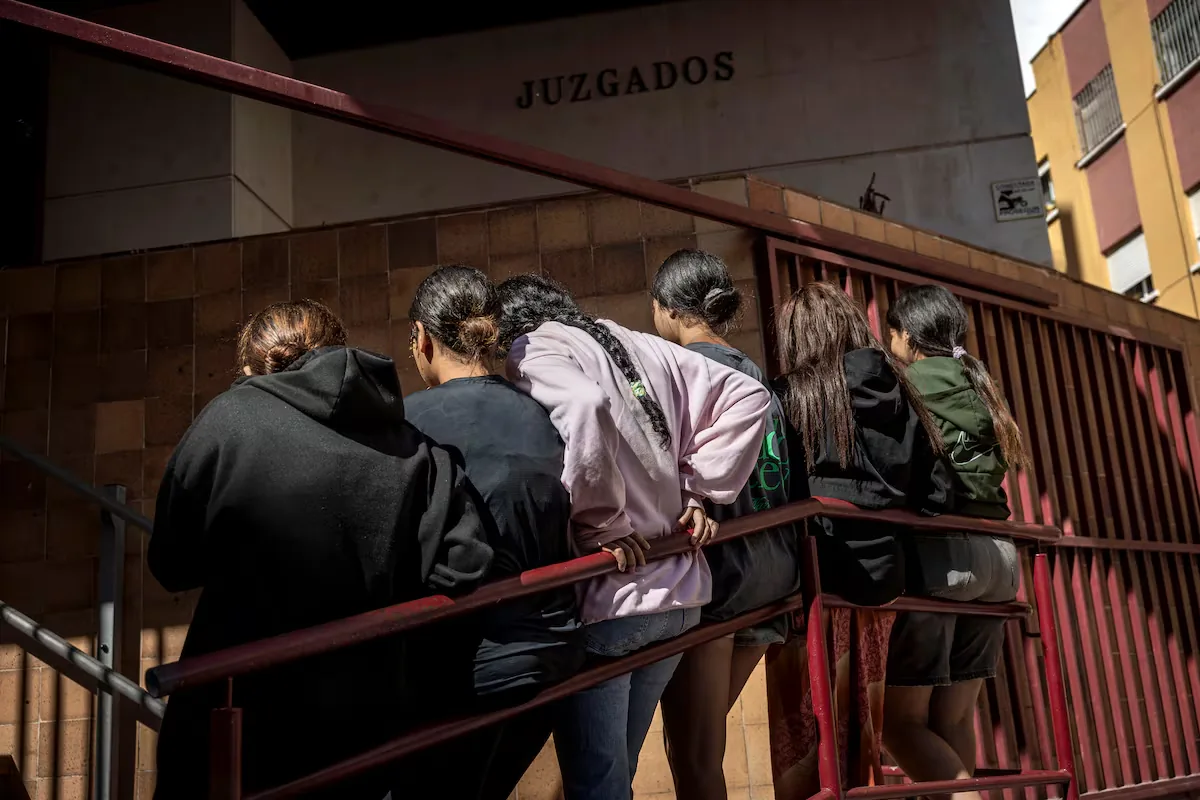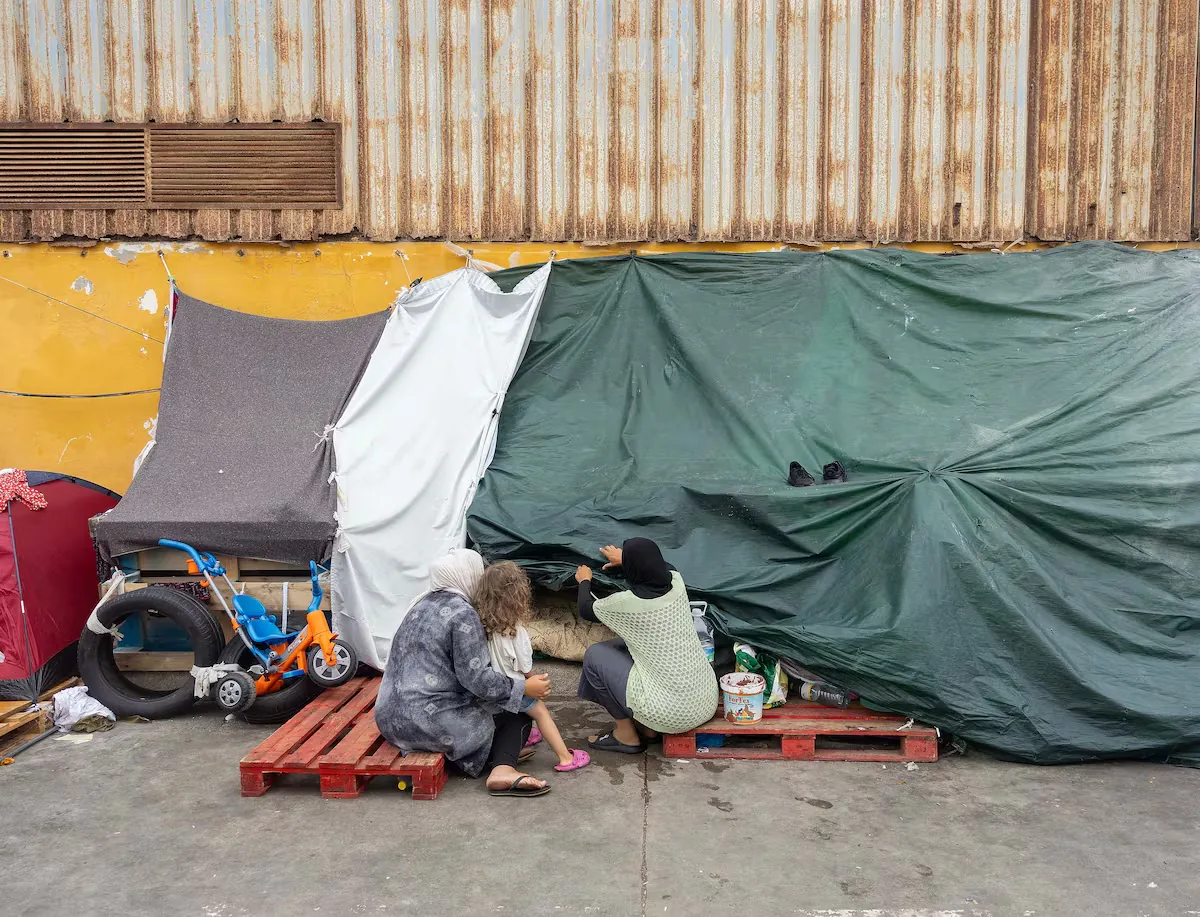
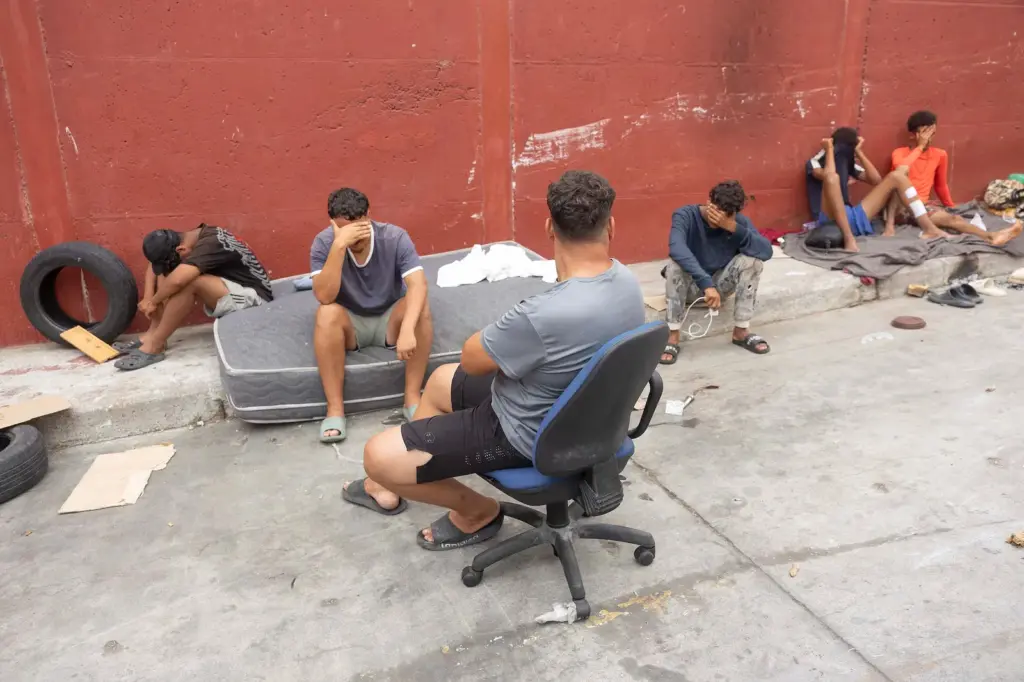
“I wish they hadn’t told us.” On Tuesday at seven in the morning, a group of migrant women showed up at one of the warehouses in the El Tarajal Industrial Estate in Ceuta where National Police officers were working to tell them that a security employee had warned them that by Thursday at noon they could no longer remain camped in their streets. They were told to calm down and sit, but they claim they were not given any explanation. When they saw they were not being attended to, they started wandering around the autonomous city to see where they could settle. Farah Dayay and Nihad, two Moroccan migrant women aged 40 and 26 with children aged 14 and four years in their care, were among them. “We have been wandering around looking for somewhere to sleep, we asked in Príncipe, in Sidi Embarek [where neighbors have camps for women and children] but nothing, we are afraid of what will happen to us,” said Dayay. Government sources assured EL PAÍS that there is no record of any eviction operation planned in this area for that day.
Read more Salomé Pradas changes lawyer in the dana case and hires Francisco Martínez’s defender in ‘Kitchen’
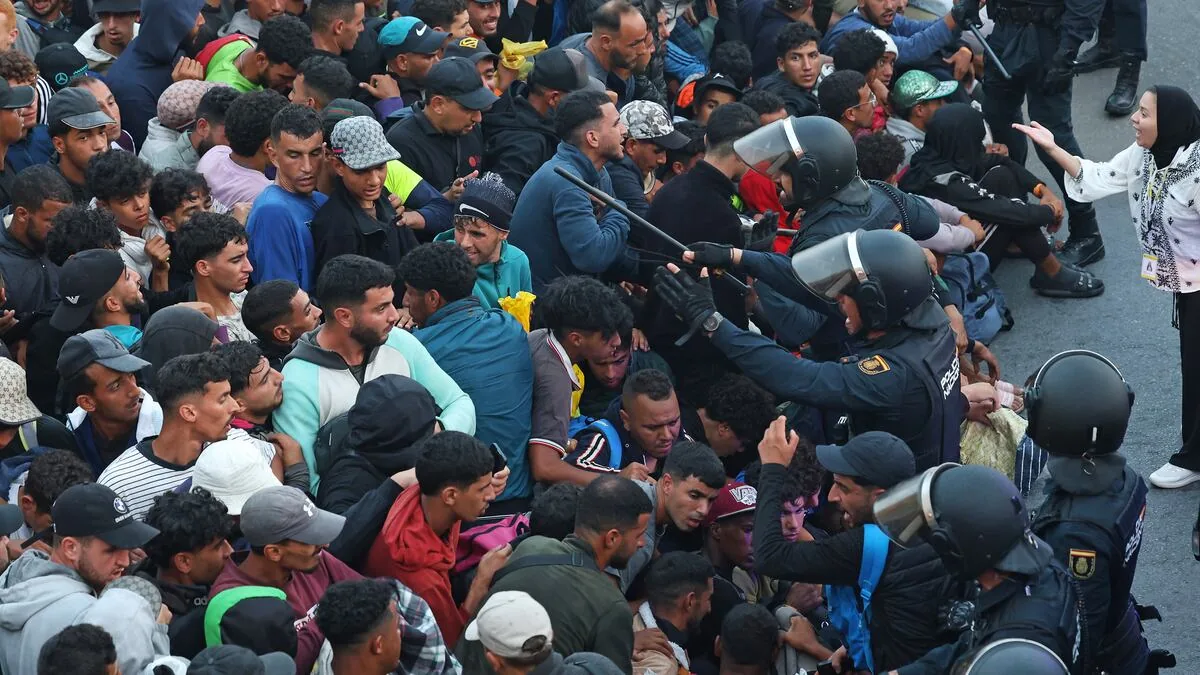
The ground of this industrial estate, very close to the border with Morocco, has become in this migration crisis one of the largest informal settlements in the city, along with the one at El Trampolín beach. A week ago, the NGO Luna Blanca distributed 850 meals in this industrial area, where shacks made of tires, pallets, and plastics have been growing for a month. At El Trampolín beach, which was already evacuated on August 20 to take 1,400 people who spent the night there to two temporary reception centers of the Ministry of Migrations, dozens of handmade tents have sprouted again. Unofficial estimates suggest that about 1,000 people sleep there, although many more come at the time when the Red Cross distributes food. The estimated number of migrants in the city ranges from 6,000 to 12,000, depending on the sources. It is very difficult to have a fixed picture because the main people involved keep moving and many still live on the streets or hidden in mountain areas.
The fear and nerves of the migrants in the El Tarajal industrial estate have been triggered in a week in which the Government has opened new temporary reception places. These resources have been created for humanitarian reasons. They provide basic services such as shelter, hygiene, and food while their legal situation in the country is studied. They will also allow an approximation of the number of people still in the city. In the case of unaccompanied minors, whose guardianship must be assumed by the Autonomous City, the Minister of Territorial Policy, Ángel Víctor Torres, has reported that 1,612 have been registered who arrived between July 30 and 31, but the exact number is still unknown.
On Monday, 800 people entered these Government centers: 500 adults who entered the containment area (an open-air parking lot with tents with expanded capacity thanks to the placement of large marquees) and 300 women and children who have settled in a provisional enclosure located at the Ceuta Equestrian Center, known as La Hípica. About 70 unaccompanied minors who were watched over by the neighbors of Sidi Embarek were taken in on Tuesday in one of the warehouses that the autonomous city has prepared in the city. The Government assures that it already has 3,400 places and that the number will rise to 6,000 “in the coming days,” when the new enclosures on plots in the Port of Ceuta or in the K-8 barracks are ready.
Alongside these efforts runs the fear and uncertainty of migrants who resist abandoning their dream of a future despite the Government having said that most will likely be returned to Morocco because they entered for economic reasons and it is not one of the grounds for granting asylum. Both Farah Dayay and Nihad, as well as Yennet, 37 years old, who arrived weeks before the large influx at the end of July with her 17-year-old daughter, did not understand how it was possible that there were already women with children in Government enclosures and that they were still in those streets. “The news has driven us crazy, we don’t know where to go,” said Farah distressed.
As one walked through the streets of El Tarajal, several groups of young people said that the municipality’s cleaning brigades were throwing away their belongings. Ayoub, 18 years old, was one of them. “I slept with these guys because I lost the pallet and the tarp I used to shelter myself, as well as my clothes and phone. The truth is I didn’t see who did it.” About 50 meters ahead, Ussama, 23 years old, says that the Police came at noon on Monday and moved them away from the area so that some workers could take everything away. “I don’t want to return to Morocco, I have two children aged five and three and I want them to live here. Living there is like being in a country at war, the Government doesn’t help,” says Ussama. The young people, about twenty, say they are afraid of falling asleep at night, of being forcibly removed.
Read more Judeline becomes the first Spanish woman to reach number one worldwide on Spotify
The people of Ceuta also suffer their fears. This same Tuesday, at 1:00 p.m., about fifty teachers and parents of students from the Nuestra Señora de África nursery school gathered on a plot behind the old Los Rosales prison to protest the opening of a migrant reception space next to the daycare. Shouting “safety for our children,” they asked for the decision to be reconsidered. “We are supposed to bring the children to a safe place. This could become an area with riots, police charges, like what happened yesterday in the containment area, where there were shots fired into the air, arguments among them, fights,” argued one of the mothers.
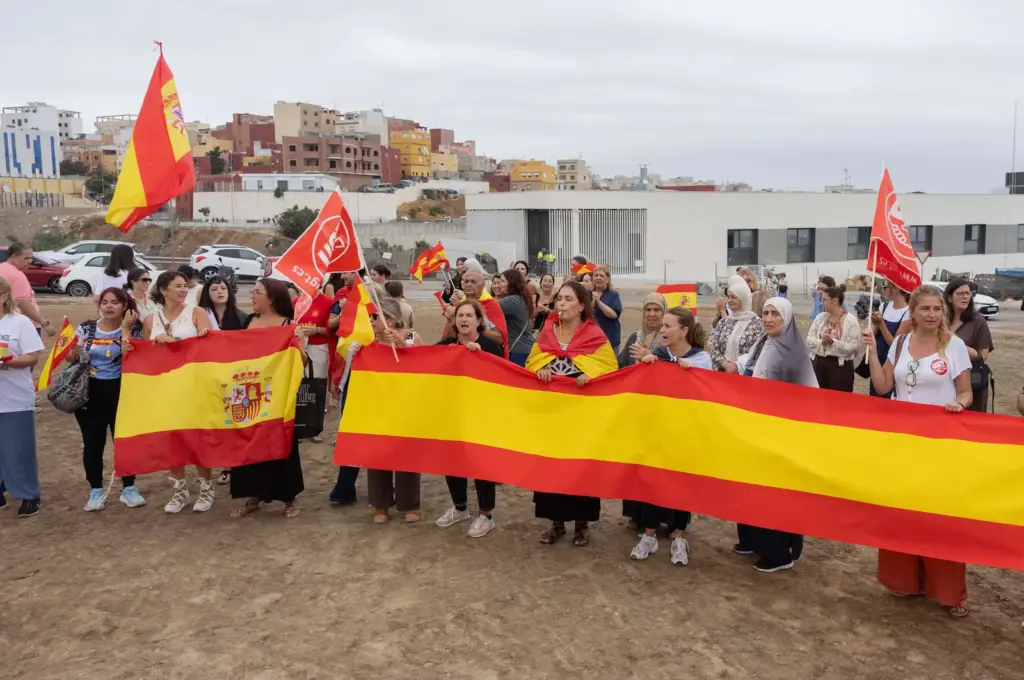
At the beginning of the gathering, at 1:00 p.m., an excavator was working in the area, but half an hour later it had withdrawn. The protesters spent nearly an hour showing their rejection. “We are not against reception centers, but this is not the right place,” added one of the teachers who asked not to have her name mentioned. “It’s common sense,” added another mother.
Ceuta celebrates City Day tomorrow, Tuesday, September 2, with institutional events in which the migration crisis will mark the speech of President Juan Jesús Vivas (PP). In the afternoon, a very symbolic demonstration has been called to focus attention on the situation facing its population and to gather support and solidarity from hundreds of towns on the Peninsula, where demonstrations are also planned. Behind it are the civil organization Foro Ceuta Siglo XXI and the Federation of Neighbors. “It will be peaceful and apolitical,” specifies Jesús Bollit, a member of Foro Ceuta Siglo XXI.
The people of Ceuta have been gearing up for more than a week, especially since they took to the streets upon learning that the Government intended to use sports centers as temporary reception centers for migrants. On the streets, indignation is palpable for the summer of horror they have endured, in which many children have been locked up, unable to enjoy their parks, or their long-awaited fair, which was canceled because the city was taken over by the massive entry of more than 70,000 migrants. “What we want, simply, is to live like those who live in Cuenca, Albacete, or Guadalajara. Here there are 85,000 people who have the same hopes as you might have, the same problems, and the same need for a stable future,” sums up Bollit.