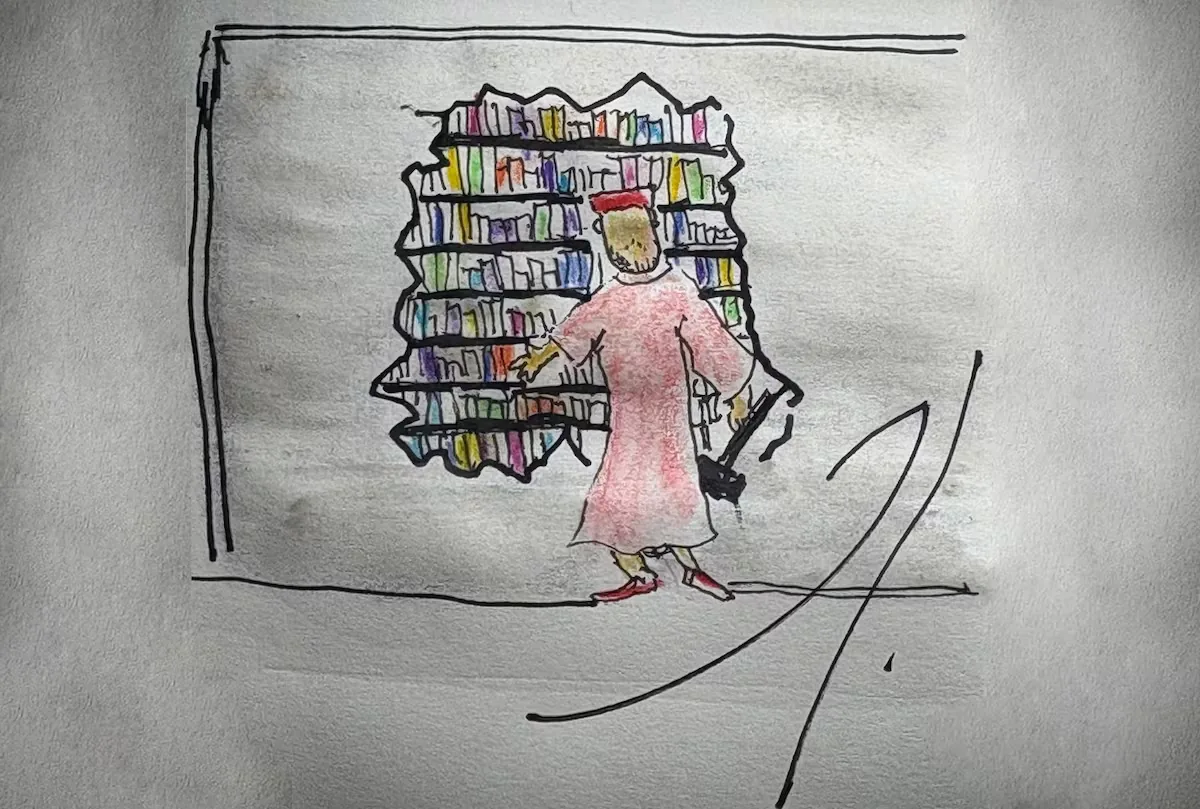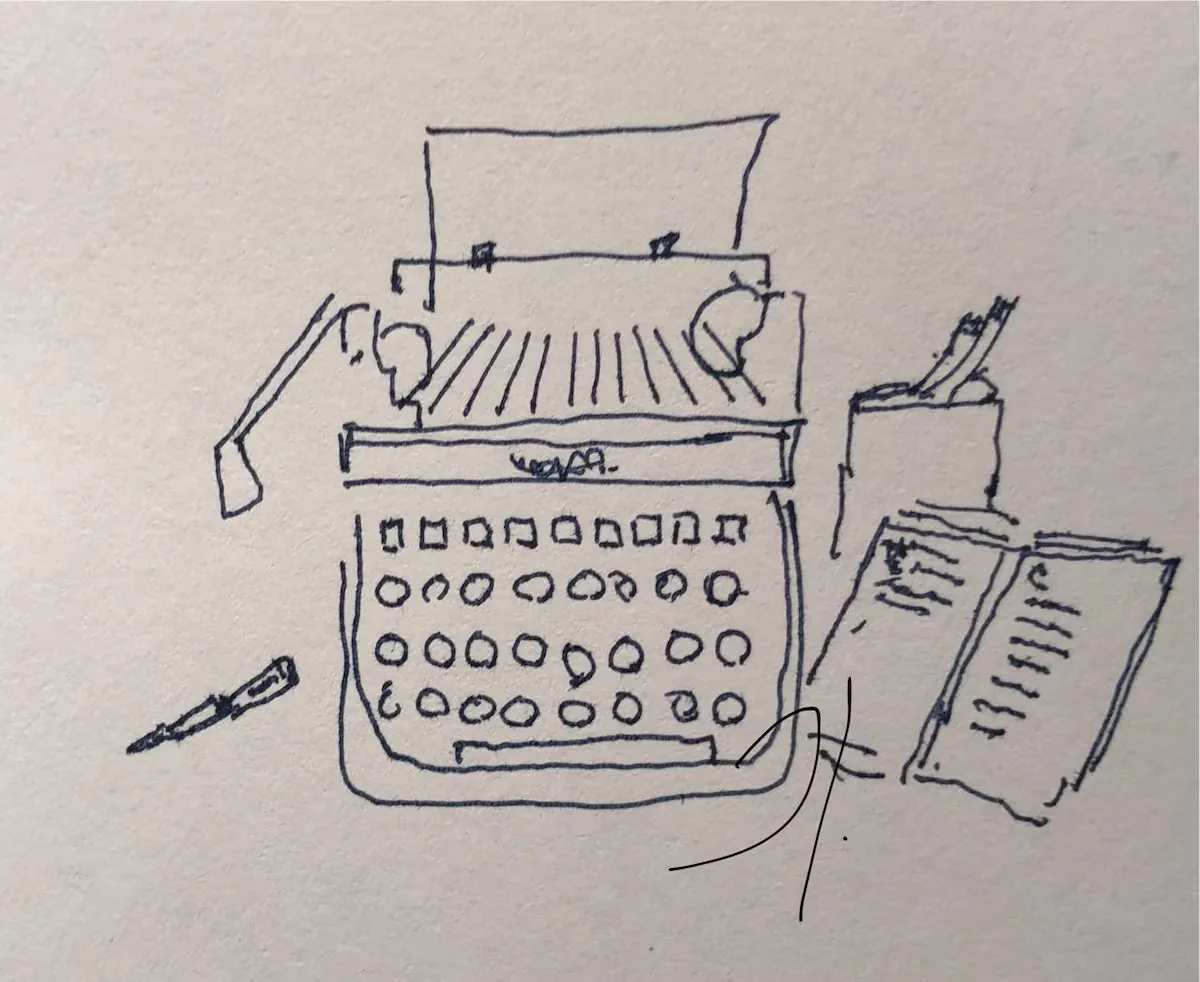
I have a craving —not without eagerness— to recover the Olivetti Lettera 22 typewriter that my father gave me for my last year of high school in Room 22 (soon to be novelized). I have three other antiques that I turned into table lamps, but the Olivetti that helped me get into two universities, rewrite who knows how many stories, and write the undergraduate thesis that became my first book has been on loan to a great poet for just over a decade.
Read more The mass assault on Ceuta was «an organized operation and not a spontaneous movement»
It won’t be the first time I return to its keys since I started replacing it with what was called a “word processor,” then computer, PC, laptop, tablet, and even smartphone as various versions of screens of different sizes or urgency to try to weave stories. In fact, when my children were little, I took out of a trunk the turquoise cover where the Lettera 22 sleeps, wrapped it again with a blank sheet, and recovered without much concentration the intimate way of typing that has nothing to do with the official secretarial method imposed on me in middle school and confirmed that my brain is still more or less programmed with the syllabic duration of the lines, as if the little bell rang, and something of the invisible breath of writing remains tuned to the clatter. On that occasion, Bastián thought he was trying out a very modern gadget because of the magic of seeing that you could write at the same time as printing… without cables or ink cartridges.
Until recently, I used to highlight as a table pearl the fact that in his 1905 essay, titled The First Typing Machine, Mark Twain boasts of being the first human to “apply the typewriter to literature” and, therefore, The Adventures of Tom Sawyer would be the first novel typed with the tips of his fingers.
Now I discover in a book of seemingly ephemeral curiosities that the great Samuel Clemens got his memory wires crossed, since it is most likely that his keyboard feat was to navigate his book Life on the Mississippi from 1883 and not the Sawyer saga, which was published in 1876, before he bought the first spell with two-tone ribbon, although it is recorded in reliable gossip that when he began to write his prose like a river, there was a day when the machine’s metal rods got tangled and he sent for a technician at the store where it was sold to return to the undulating rhythm of his flow.
It turns out that Friedrich Nietzsche is actually the first notable author to use the vehicle of verbs, since it is recorded that he bought a “writing toy,” “writing ball” or schreibkügel in 1882. It cost him 375 German marks and he wrote a testimony à la Zarathustra where he states that “the writing ball is a thing made of iron, like me. However, it twists with travel and requires a lot of patience and abundant tact, as well as delicate fingers to use us both.” In the end, Nietzsche abandoned the invention and returned to the fountain pen.
Read more Rufián calls Puigdemont «ridiculous» in the claim of his escape from Barcelona
I have never abandoned the pen called fountain, the rolling ball pen we call Bic and Birome in Buenos Aires, and I go daily to the electronic screen for various urgencies, but I have a craving to return to the intact romance with my Olivetti Lettera 22 more than half a century after the first courtship, with the illusion of recovering innocent freshness of imagination without harmful ambiguities, returning to foolish verses woven in prose and accumulating the pile of pages populated by ants in a row, choreographed with the very noise they make as they are laid down towards the abyss of the pre-established margins announced by the little bell, that sonatina that had to be declared before the owners of the floors in Madrid who rented rooms on the edge of the Complutense.
There, when there were neurotic retirees and desperate widows who imposed writing schedules or charged a little more rent for the double-glazed windows in the room so as not to disturb those sleeping on other floors of the building or alter those inevitable shouts of improvised zarzuela accompanied by the sizzle of olive oil in pans at dawn from the inner courtyards hung with laundry.
Perhaps the Lettera 22 will help me travel to a silence between paragraphs, a roll of null hypothesis or a resounding full stop that helps me evade this little world so inclined to things being narrated by themselves, not in a gathering, but in the deceptive chat of so much lying.
Read more This is how the anonymous army of ‘patrons’ works in Spain: when (financial) unity makes strength