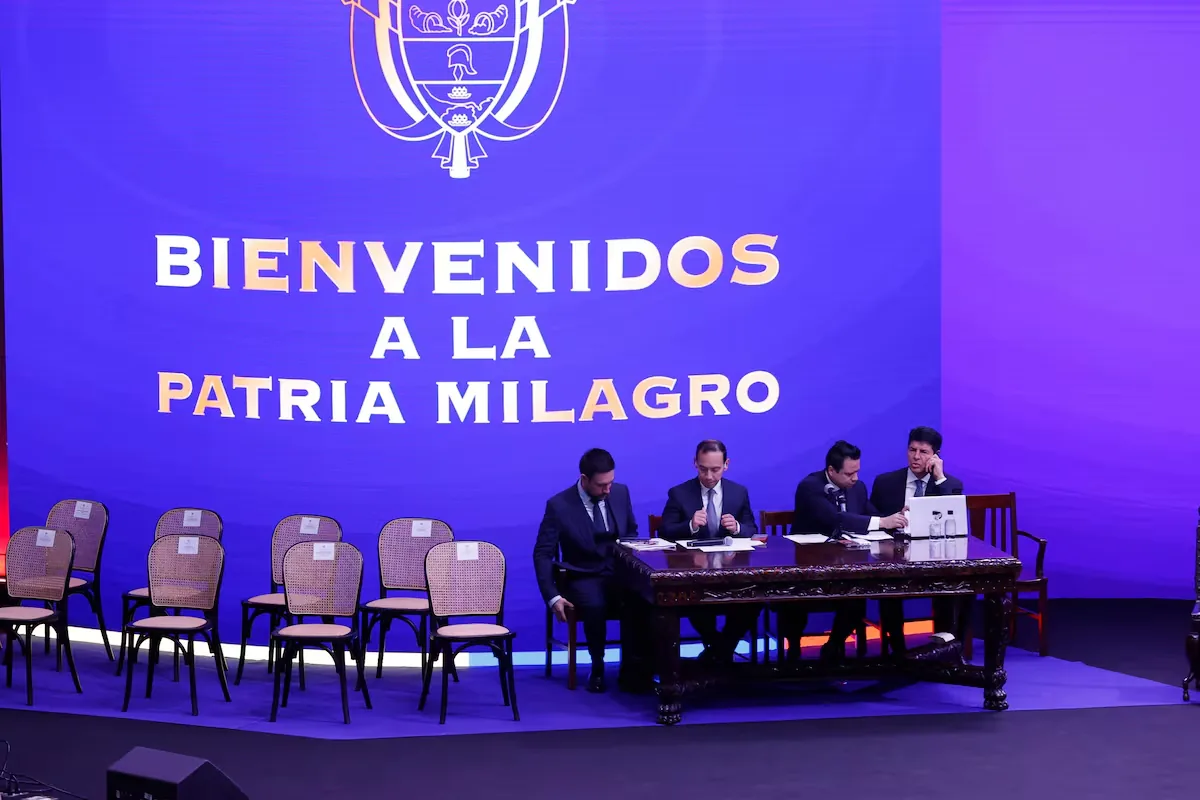

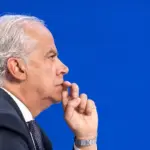

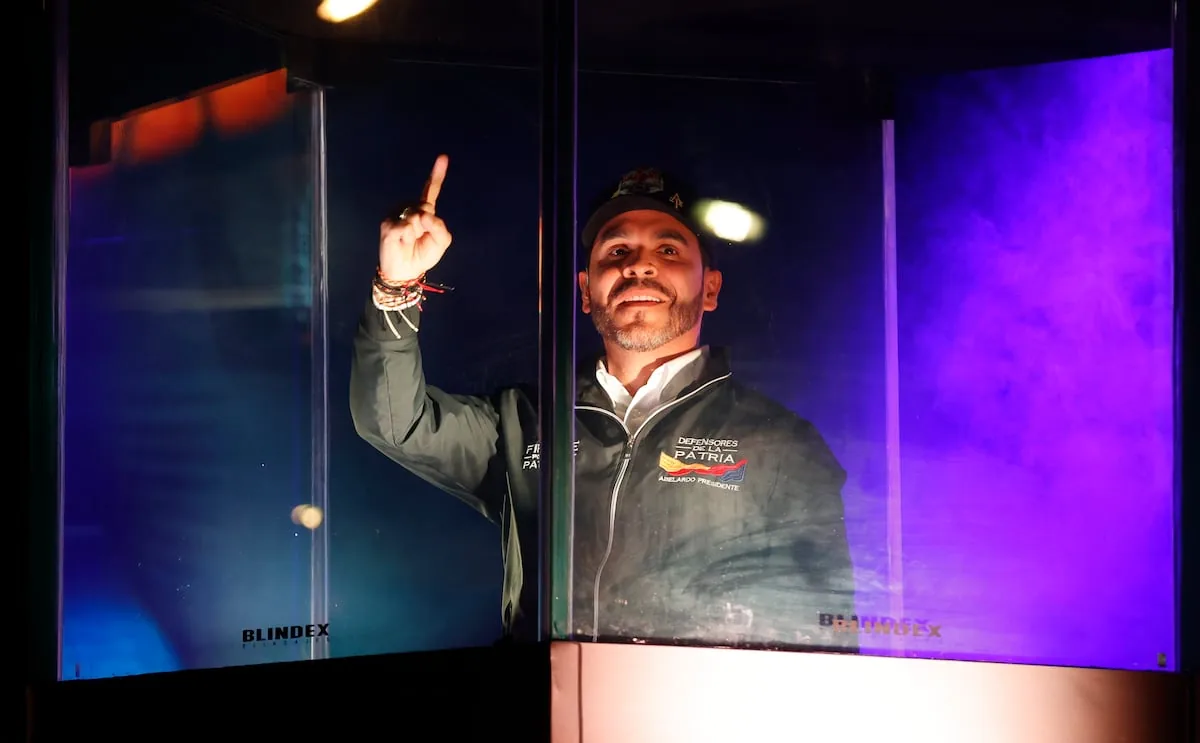
Paloma Valencia, traditional right-wing presidential candidate, and Sergio Fajardo, the centrist candidate. They kept a visible appointment: they had coffee at 8 a.m. this Saturday at the Hotel Prado in Barranquilla. The image of the two together, talking eight days before the elections, shows a demeanor and creates a political fact. But it was neither an alliance nor a proposal from her. Valencia insisted that she understands and respects the differences and that she would like to keep talking. Fajardo took advantage to ask for the vote for him and his political proposal several times, while reiterating that this will be his last campaign.
Read more National Lottery: results of the draw on Saturday, May 23
The meeting comes after the results of several of the latest polls became known, which will enter a blackout this Sunday. The Invamer measurement does not leave Valencia in a good position. According to that study, the Colombian left-wing presidential candidate, Senator Iván Cepeda, would win the Presidency. In the first round, the official candidate maintains the lead with 44% of the voting intention, well above not only Valencia but also the other right-wing candidate, Abelardo de la Espriella. In a possible second round against either of the two, according to Invamer, Cepeda would also win.
The Centro Democrático candidate has described those results as implausible. For her, it is false both that Cepeda is close to winning in the first round and that he could win in the second, whether facing her or Abelardo de la Espriella. Another poll, by the firm Guarumo, points to another scenario, that in a possible second round, either of the two right-wing presidential candidates, Abelardo de la Espriella or Paloma Valencia, would defeat the official candidate. A third opinion poll, by AtlasIntel for Semana magazine, shoots the far-right candidate (37.3%) up to close behind Cepeda (38.7%), in a technical tie.

A review of the latest polls: Cepeda first, De la Espriella second, and Valencia third
Senator Iván Cepeda, the Colombian left-wing candidate, maintains his first place in the latest wave of polls for the first round on May 31, followed by the far-right Abelardo de la Espriella, who holds the second position, and the Uribista Paloma Valencia in third place. Between Thursday and Friday, the latest voting intention measurements from Invamer, Guarumo, and AtlasIntel were published. All agree on the order of the top three, although they differ in the distances between them. The two centrist candidates, Sergio Fajardo and Claudia López, appear further behind. A fourth polling firm, the National Consulting Center, will publish its latest opinion study this weekend before the blackout begins this Sunday. Here is a graphic review of the latest polls:
Fajardo says the coffee was an opportunity “to explain to Colombia why we represent what we represent”
After the coffee with Paloma Valencia, broadcast on social media, the centrist candidate reiterates his message: he has no fundamental differences with the way the right-wing candidate campaigns. “Yesterday, when Paloma Valencia filled a square, on a stage surrounded by many people – some of whom, I told her, would never be by my side in life – we were handing out flyers with a world of young people, at a traffic light.”
There was no agreement between Valencia and Fajardo
Candidate Paloma Valencia confirms upon leaving the meeting that there was no agreement but that she will continue seeking a coalition: “this story will continue”
Paloma Valencia and Sergio Fajardo have coffee
The established right-wing presidential candidate and the centrist contender meet, in front of cameras, at the Hotel Prado in Barranquilla.
Iván Cepeda at his campaign closing: “Uribe is fascist”
Senator Iván Cepeda, the Colombian left-wing presidential candidate, harshly criticized former President Álvaro Uribe in the speech he delivered this Friday at his campaign closing event in Bolívar Square, in the heart of Bogotá. “Uribismo is fascist, it represents the ideology of contempt,” said the Historic Pact candidate about the political current of the former president, with whom he has been facing justice for over a decade. “Neither centrist nor democratic,” he said about the party founded by the former president. “Uribe is fascist, let’s say it clearly and once and for all,” he added in the speech still being delivered in the Colombian capital center.
AtlasIntel shoots Abelardo de la Espriella, who approaches Iván Cepeda to a technical tie
The polling firm AtlasIntel, surrounded by controversies over its role and methodology in Colombia, publishes its latest measurement in the edition of Semana magazine circulating from this Saturday. Left-wing Senator Iván Cepeda remains in the lead with 38.7% voting intention, but the biggest news is the far-right Abelardo de la Espriella, who is close behind and shoots up to 37.3%, a technical tie. The Uribista Paloma Valencia, in third place, falls to 14.3%. The two centrist candidates, Sergio Fajardo (3.8%) and Claudia López (1.1%), appear further behind.
This is the third poll published this weekend, a few days before the first round on May 31. All agree on the order of the top three but differ in the distances between them. In Invamer’s, published by Noticias Caracol, Cepeda has 44.6% voting intention, De la Espriella 31.6%, and Paloma 14%. In Guarumo’s, published by El Tiempo, the Colombian left-wing candidate would win the first round with 37.1% of the votes, followed by De la Espriella (27.5%) and Valencia (21.7%).
Sergio Fajardo, after accepting coffee with Paloma Valencia: “I will explain why what Colombia needs is a serious and secure change”
Centrist presidential candidate Sergio Fajardo elaborated this Friday, in a brief statement to EL PAÍS, on the details of the coffee invitation made earlier by Uribista candidate Paloma Valencia. “For me, it was a surprising invitation,” said Fajardo from Barranquilla, reiterating that his condition for such a meeting is that it be public. “I will listen carefully to what she has to say. I will explain why Colombia needs a serious and secure change that ends this polarization associated with President Petro and former President Uribe,” said the former mayor of Medellín. Fajardo proposed to Valencia that the meeting take place this Saturday at eight in the morning at the El Prado hotel in Barranquilla.
Fajardo agrees to meet with Valencia but remains a candidate “against extreme positions”
Centrist presidential candidate Sergio Fajardo has agreed to meet for the coffee proposed earlier by Uribista candidate Paloma Valencia, aiming for a possible alliance. Although the former mayor of Medellín has shown receptiveness to the proposal and invited her to make the conversation public to the whole country — this Saturday at eight in the morning at the El Prado hotel in Barranquilla — he insisted that his aspiration is “what Colombia needs now, against extreme positions,” in a message that hints at an apparent decline of the proposal. Several weeks ago, Fajardo had met with the also centrist Claudia López, but no alliance was finalized between them either.

Senator elected in De La Espriella’s campaign apologizes for insulting Uribismo
Far-right influencer Alejandro Bermeo, elected senator in March for the Salvación Nacional party that supports candidate Abelardo De La Espriella, has apologized for insulting the other, more traditional right-wing represented by former President Álvaro Uribe. When the former president said that one of De La Espriella’s influencers, Santiago Giraldo, is part of the group that “destroys democracy, poses as Milei’s advisors, believes slander is valid in politics,” Bermeo said that sounded like a threat.
“It is serious that the old patriarch of Uribismo wants to kill Santiago Giraldo,” Bermeo wrote on his X account. “Today, seeing his political grave, in his desperation he activates the chainsaw one last time against the free people.” That is, he not only called him a possible murderer but one who would use a chainsaw, as paramilitaries did. The accusation that Uribe is a partner of paramilitaries is usually made from the left, not the far right.
Bermeo apologized after Abelardo de la Espriella wrote on his social media that he condemns “any attack against President @AlvaroUribeVel, whom I appreciate and admire.” “I regret that in the heat of the second-round race, my opinions were unfair and disproportionate,” Bermeo wrote in his apology. “Apologies to Mr. Uribe and his followers who felt addressed,” he added.
Before the apologies, several Uribista politicians immediately criticized Bermeo and De La Espriella, especially Uribismo candidate Paloma Valencia, who competes for the right-wing vote absorbed by the penalist’s campaign. “This is the senator of the ‘Tiger’ mistreating President Uribe,” she said about Bermeo. “There are limits that should never have been crossed and were crossed,” said Bogotá’s elected representative Daniel Briceño. “It is alarming that a senator elected by Salvación Nacional shamelessly replicates the mendacious and hateful narratives of Petrismo against Uribe thinking it favors his candidate,” said Senator Andrés Forero.
But the most upset was one of Álvaro Uribe’s sons, Tomás, who rejected that De La Espriella’s campaign accuses Uribismo of “killing Miguel Uribe,” he says in a video referring to the Uribista senator murdered last year. He especially criticizes that they use left-wing language: “now they talk about ending the ‘paraquiza’ and the ‘uribato,’ in the best Petrismo style. They accuse Paloma of wanting to kill Abelardo. And they accuse Uribe of wanting to kill an influencer.” Then he issued a warning for the second round. “They believe that in the second round Abelardo and Paloma will hug and Cepeda will be defeated. Four years ago, we all thought the five million people who voted for Fico in the first round would vote for Rodolfo in the second. And it was not so,” he said. While some Uribistas support De La Espriella, Tomás Uribe admits, “these people are making many other Uribistas feel anger and indignation. The way they are acting, again, in the best Petrismo style, will lead us to lose the country.”

Paloma Valencia schedules her campaign closings in Barranquilla, Antioquia, and Bogotá
Despite the setback in the polls, Paloma Valencia maintains her agenda in the final stretch of the campaign. The first stop is this Friday in Barranquilla, at Plaza de la Paz. The Caribbean is one of the most contested regions due to the number of votes it adds. Her contenders, Iván Cepeda and Abelardo de la Espriella, will also be in the Atlantic capital this weekend.
On Saturday, Valencia will be in Antioquia, the main stronghold of Uribismo and will very likely be accompanied by former President Álvaro Uribe. First, she will have an event at Belén Park in Medellín, and then she will go to the municipalities of Envigado and Rionegro.
The official campaign closing will be at the Movistar Arena in Bogotá. She is the only frontrunner who ends her events in the Colombian capital, a setting that in presidential elections has always leaned more to the left. With this closing, she hopes to mark her more moderate discourse and appeal to undecided and centrist voters in the capital.
Iván Cepeda closes his campaign with a concert in Bolívar Square, Bogotá
After more than a hundred events in public squares throughout Colombia, Historic Pact candidate, left-wing Senator Iván Cepeda, closes his campaign this Friday in Bogotá with a concert in Bolívar Square, in the heart of the capital, where he will be accompanied by his vice-presidential running mate, indigenous Senator Aida Quilcué. Other members of the Alliance for Life, the electoral coalition that also includes the Green Alliance and En Marcha parties, as well as grassroots liberal movements dissatisfied with the party leadership – which supports Paloma Valencia’s candidacy – will also be present. Senator Cepeda, leading the polls for the first round on May 31, has already had several territorial closings and will have two more when he visits Cartagena on Saturday and Barranquilla on Sunday, the last day public campaign events are allowed.
Paloma Valencia suggests an alliance with Fajardo: “Doctor Sergio, I need to have coffee with you”
Although the message is subtle, an invitation to have coffee, the message is clear: Paloma Valencia is considering the possibility of allying with centrist candidate Sergio Fajardo. Eight days before the first round, with ballots prepared, an alliance is impossible. However, Valencia’s proposal echoes with a view to the runoff. “There are people who are so valuable, who have contributed so much to this country like Sergio Fajardo, that I immediately think, Doctor Sergio, I need to have coffee with you, because this is the moment to think about the country and where that need to build the future must lead us to unity,” she said in a video released on her social media, recorded from the Corabastos market square in Bogotá.
The candidate’s campaign explained that the tweet was made in the sense of “adding wills to face the continuity that Iván Cepeda represents.” The Uribista candidate’s proposal comes after the results of the latest polls became known. Invamer’s does not leave her in a good position. According to that survey, the Colombian left-wing presidential candidate, Senator Iván Cepeda, would win the Presidency. In the first round, the official candidate maintains the lead with 44% of the voting intention, well above not only Valencia but also the other right-wing candidate, Abelardo de la Espriella. In a possible second round against either of the two, the poll says, Cepeda would also win: 52.4% for him over 45.3% for De la Espriella; and 52.8% over 44.3% for Valencia. The Centro Democrático candidate has described those results as implausible.
Iván Cepeda presents seven social programs
Candidate Iván Cepeda, who promises to deepen social transformations with a government of continuity compared to Gustavo Petro’s, presented this Thursday his strategies focused on eliminating poverty and overcoming social inequality. Specifically, a set of seven programs for social welfare. His proposal, explained in a press conference in Bogotá, includes strengthening and expanding the Colombia Mayor, Renta Joven, and Renta Ciudadana programs, as well as creating Income for people with disabilities, Income for social leaders, Direct purchase of food from farmers, and Purchase of school supplies for low-income families. He also proposed to agree with entrepreneurs on a plan of social programs for taxes and plans to meet next week with the Business Council. The cost of this set of social programs, the campaign points out, will be 3 trillion pesos. “It is not a statist or nationalization program; on the contrary, it stimulates business production and micro-entrepreneurship,” defended the left-wing candidate.
Paloma Valencia assures that the Invamer poll is “implausible”
Centro Democrático candidate Paloma Valencia has stated this Friday via a tweet that the results of the Invamer poll, which do not favor her, are implausible. For her, it is false both that Cepeda is close to winning in the first round and that he could win in the second round, whether facing her or Abelardo de la Espriella.
According to the latest poll published by Invamer this Thursday, just a week and a half before the first round on May 31, the left-wing candidate, Senator Iván Cepeda, would win the presidency of Colombia. The survey indicates that in a possible second round against either of the two (Valencia or De la Espriella), Cepeda would also win: 52.4% for him, above 45.3% for De la Espriella; and 52.8% above 44.3% for Valencia.
The figures of this poll, with a margin of error of 2.4%, do not favor Valencia. Her voting intention dropped from 19% to 14% compared to the previous measurement in April, and her argument that she is the only one who can beat Cepeda in a second round by capturing centrist votes loses strength.
See more information: Iván Cepeda wins in the second round against Paloma Valencia or Abelardo de la Espriella, according to the Invamer poll
Bogotá’s mayor accuses President Petro of encouraging attacks against Paloma Valencia’s headquarters
Bogotá Mayor Carlos Fernando Galán held President Gustavo Petro responsible for the attacks a group of protesters made today against the headquarters in the capital of Uribista candidate Paloma Valencia. “The acts of vandalism today in Bogotá are not social protest, they are violence,” said the mayor. “And what is even more serious, it is violence encouraged by statements from President Petro himself,” he added. “Saying that the facades of private property are public and can be graffitied, as the president did, encourages attacks like today’s against the headquarters of candidate Paloma Valencia and the MIRA party,” he stated. For the mayor, these attacks are “attacks on democracy,” and therefore he says the response must be “to go out and vote massively. Democracy is defended with the vote.” Galán also asks the National Government to issue a written order so that the police can accompany protesters to ensure peaceful elections. “Mr. President, it is your constitutional duty to do everything necessary to prevent violent acts like today’s, and even worse, from happening again before the elections. Act responsibly, as the president of all Colombians.”
Invamer predicts Iván Cepeda’s victory in all scenarios
Invamer, the country’s main polling firm, published this Thursday its final measurement before the first round on May 31 and predicts Iván Cepeda’s victory in any second-round scenario. The left-wing candidate remains solid with 44.6% voting intention, barely growing 0.3% compared to the April measurement. The second favorite is Abelardo de la Espriella, the far-right candidate who grew ten points compared to the previous measurement and stands at 31.6%, closing the gap and consolidating as Cepeda’s main rival. Uribista Paloma Valencia, on the other hand, lost almost six points and falls to 14%, complicating her passage to a possible second round.
If the dispute reaches June, the left-wing candidate also wins in any scenario. In a possible election with De la Espriella, the progressive candidate would obtain 52.4% of the votes, against 45.3% for the far-right candidate. The margin remains almost the same if the opponent is Paloma Valencia: Cepeda would win with 52.8%, against 44.3% for the Uribista candidate.
The poll reflects responses from 3,800 respondents, representing 79.9% urban and 20.1% rural respondents. Most of these come from the country’s poorest social classes, with 22.8% of respondents from stratum 1, and 31.0% from stratum 2.
Valencia and De la Espriella would defeat Cepeda in the second round, according to Guarumo poll
Paloma Valencia and Abelardo de la Espriella, the right-wing presidential candidates, would defeat official candidate Iván Cepeda in the second round, according to the Guarumo poll released this Thursday. The survey is one of the few that puts Cepeda in an unfavorable position, who has led all polls for months, even in second-round scenarios.
According to Guarumo, Cepeda would win the first round with 37.1% of the votes, followed by De la Espriella (27.5%) and Valencia (21.7%). The centrist candidate Sergio Fajardo (3.2%) and far-right Santiago Botero (1.6%) are far behind. Claudia López obtains 1.5% support in this poll. Despite Cepeda’s victory in the May 31 vote, he is also the candidate who generates the most resistance, according to Guarumo: 42.9% of respondents would never vote for him.
Read more The applause scam at the Cannes festival
In a second-round scenario between Cepeda and De la Espriella, the official candidate would obtain 40.0% of the votes, while the far-right lawyer would win with 43.6%. And in a possible contest between the official senator and Paloma Valencia, he would obtain 39.9%, against 44.8% that would give victory to the Centro Democrático candidate. If the final election candidates were De la Espriella and Valencia, the lawyer would also win with 32.2% of the votes, slightly above the Payanesa senator (30.3%).
The Guarumo poll was conducted between May 11 and 19 in 85 randomly selected municipalities throughout Colombia. It involved 3,787 adults (3,269 in urban areas and 518 in rural areas) who declared their intention to vote on May 31. Interviews were conducted face-to-face in homes, with ballots featuring candidate photos as support material. The margin of error is 2.2%.
The national government and Bogotá’s mayor’s office reject attacks against Paloma Valencia’s headquarters
The national government and Bogotá’s mayor’s office have rejected this Thursday the attacks against the campaign headquarters of Uribista presidential candidate Paloma Valencia in the Chapinero locality of the capital, where several demonstrations took place throughout the day. Interior Minister Armando Benedetti condemned the acts and announced in a statement to several media outlets that there will be coordination between the government and candidates’ campaigns to guarantee security, not only by increasing police presence but also with intelligence members. Bogotá’s mayor, Carlos Fernando Galán, wrote on his social media: “Violent acts like these are reprehensible and an affront to democracy itself. We cannot be mistaken: political violence escalates quickly, and we must distance ourselves from discourses that romanticize or justify it.”

A group of protesters attacks Paloma Valencia’s headquarters in Bogotá
A group of protesters attacked Paloma Valencia’s headquarters in Bogotá, at the intersection of Seventh Avenue and 53rd Street. They destroyed a billboard of the presidential candidate and her running mate and made several graffiti with insults. “Murderers,” “paracos,” “uribestia,” are some of the inscriptions left on the facade. The director of Centro Democrático, Gabriel Vallejo, defined these actions as “an act of political terrorism” and accused President Gustavo Petro and his candidate, Iván Cepeda, of promoting them. “I hold you responsible for what is happening in this campaign; you are responsible for political violence,” he said in a video.
The campaign, meanwhile, issued a statement with more cautious language. “It is unacceptable that a group of people broke into the place to graffiti the facilities, steal elements from the facade, and endanger the integrity of the people inside the headquarters at that moment,” the text reads. “A few days before the elections, these events show the lack of guarantees for the opposition in Colombia (…) We urgently call on the authorities to investigate what happened, identify those responsible, and guarantee security conditions for all political actors in the country,” it adds.
The Oviedo team, for its part, released a video showing the vice-presidential candidate painting the facade again with other militants. “Against the destroyers, we BUILD,” they declared. Then, they shared another video with Oviedo’s statements: “This shows something extremely worrying: while contradiction is the fundamental principle of democracy, today that contradiction is being abused in harassment of people and incitement to hatred (…). We will defeat hatred and move to the second round.”
ELECTIONS IN COLOMBIA
A fight in the National Electoral Council leaves Atlas Intel polls in limbo
The fight in the National Electoral Council (CNE) continues behind closed doors, without defining the future of the publications of the polling firm Atlas Intel. A video circulated on social media this Thursday shows the shouting exchanged between magistrates Fabiola Márquez, from the official Historic Pact and who issued a resolution to suspend the publication of those measurements, and Álvaro Hernán Prada, from the opposition Centro Democrático. Although divisions and tensions within that authority, of political origin and fundamental for regulating elections and parties, are not unusual, the images show an unprecedented level of tension that poisons the atmosphere just 10 days before the presidential elections.
The legal and political debate during a plenary session revolves around Márquez’s decision, rapporteur of one of several investigations that, due to various citizen complaints, the CNE is conducting against the Brazilian firm for the polls it has published in Semana magazine, which show far-right candidate Abelardo de la Espriella would advance to the second round and win there against official candidate Iván Cepeda. The magistrate signed the resolution this Wednesday ordering the preventive suspension following a complaint by congressman Alejandro Toro, from her same party, who questions the company’s use of a digital collection method and alleges it excludes people without internet access in rural areas. Semana filed a reconsideration appeal, which Márquez herself must decide.
Oviedo responds to harassment from De la Espriella’s campaign over his psychoactive substance use: “I will not hide my story”
Juan Daniel Oviedo has responded to harassment from far-right Abelardo de la Espriella’s campaign over his use of psychoactive substances. “Yes, I have used psychoactive substances, but (…) that is not a reality at this moment and that does not make me a drug addict. It makes me a person who recognizes his own truth and shows it to the general public. I will not lie to myself or my friends to look politically correct,” he declared on Blu Radio, after his rivals said Colombia “cannot afford to continue having drug addicts in government” and shared a fragment of a last year’s interview in which Oviedo admitted to having used cocaine. “Having used psychoactive substances is the result of a life in Europe, of having known the world from different perspectives,” added Paloma Valencia’s vice-presidential candidate.
The former Bogotá councilor also spoke on X, a few hours after the Blu Radio interview. “People ask for honest politicians until someone decides to be one. They asked me if I had ever used psychoactive substances in my life. The answer was yes. And I also said something more important: I am not a drug addict,” he emphasized. “We talk about honesty, transparency, and corruption, but many times we prefer politicians who disguise or hide parts of their lives to appear perfect in front of people. I believe the opposite,” he defended. He also commented that Colombia needs its citizens to recognize who they are, with their strengths and flaws, to move forward. He believes he can be an example of that sincerity: “On my side, I will not hide my story to seem something I am not. On the contrary, I will take it to show who I am.”
Luis Almagro expresses support for Paloma Valencia: “The other candidate has the characteristics of a partygoer in Miami”
In a press conference, the former Secretary General of the Organization of American States (OAS) expressed his support for Paloma Valencia’s candidacy: “She is the best candidate,” he assured. The Uruguayan diplomat, who presided over the multilateral organization for ten years, took the opportunity to attack the other right-wing candidate, Abelardo de la Espriella, whom he described as someone who “presents himself with much frivolity and characteristics of a partygoer in Miami.”
He also criticized current President Gustavo Petro: “I think you already approved a partygoer in Miami in the previous election, and I think that did not work. Will it be the same now? Will another partygoer from Miami be elected?” he said in front of several media microphones. In contrast, he described Valencia as “the strongest person,” who can bring to government “the dignity of being in a party watered with the blood of Miguel Uribe,” the murdered presidential pre-candidate.
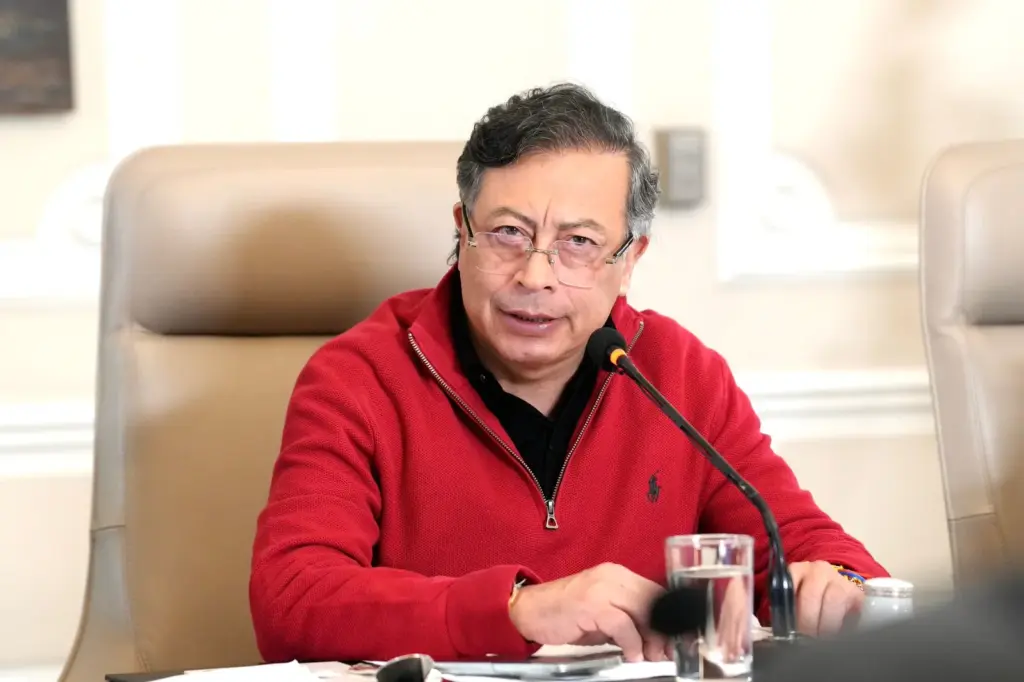
ELECTIONS IN COLOMBIA
Gustavo Petro clashes again with Bernie Moreno over elections: “The free decision of the Colombian people is respected”
President Gustavo Petro and U.S. Senator Bernie Moreno have clashed again over the elections to be held next Sunday. The president reacted Wednesday night to statements by the Ohio congressman warning that the United States would not recognize the election results if it found coercion against voters by armed groups. “The free decision of the Colombian people is respected. This is a democracy, not servitude,” Petro responded.
Read the full news here.
Aida Quilcué accepts Vicky Dávila’s proposal to paint a mural for minors recruited by the FARC: “I have defended children all my life”
Vice-presidential candidate Aida Quilcué and right-wing communicator Vicky Dávila exchanged a series of messages on X about the memory of the armed conflict in artistic murals. The indigenous leader, Iván Cepeda’s running mate, started the discussion by supporting a series of graffiti about the so-called false positives (the killing of civilians that the military presented as combat casualties) that some human rights groups made near former President Álvaro Uribe’s house. “The memory of the 7,837 young people killed in false positives during his government remains alive in the mothers, fathers, siblings, children, friends, and communities still waiting for truth, justice, and to find the bodies of their loved ones,” she declared on X. Dávila responded that she should also care about the 18,677 minors recruited by the FARC guerrilla and invited her to make another mural about them. “Don’t those matter to you?” she reproached. “The murders, disappearances, rapes, abortions, and many more crimes against humanity committed against those more than 18,000 minors must be repudiated and punished by all Colombians and by you.”
Quilcué accepted the offer in a new message on X. “Of course, Mrs. Vicky Dávila. Let’s make that artistic mural (…). But I also invite you to walk with me through the rural areas of that deep Colombia to rescue recruited boys, girls, and young people, as I have done for decades,” she said. The indigenous leader and senator emphasized that she has fought for children’s rights all her life: “Can you prove that I have not defended the children of this country? I was recognized as National Human Rights Defender in 2021 for a lifetime dedicated to this work. Who said the 18,677 children and adolescents don’t matter to us? They are an essential part of Colombia, and our duty will always be to protect them. That is why we have insisted on seeking peace in the territories, to prevent that painful figure, evidenced by the JEP, from increasing.”
De la Espriella responds to criticism from Rosa Elvira Cely’s sister and claims “a change in Colombia’s legal history”
Far-right presidential candidate Abelardo de la Espriella responded this Wednesday to criticism from Rosa Elvira Cely’s sister, a victim of femicide in 2012 whose name was used for the law that typifies femicide as a crime in Colombia. “Abelardo, as a criminal lawyer, achieved a change in the country’s legal history,” he wrote in a statement released Wednesday night. The document adds that the lawyer “legally proved that Rosa Elvira was killed simply for being a woman,” one of the claims that Rosa Elvira’s sister Adriana Cely precisely denies, reproaching him for not using the aggravating circumstance that at that time the Penal Code contemplated to punish crimes akin to femicide.
“He lies when he says that thanks to him the femicide law was made,” Cely states. “If he really had a gender perspective, why did he never use the aggravating circumstance of murdering a woman for being a woman?” she questions later in a piece published by this newspaper. De la Espriella’s statement continues: “With this litigation […] he promoted Law 1761 of 2015 (Rosa Elvira Cely Law), which created femicide as an autonomous crime in Colombia,” another claim that three women who contributed to the drafting and parliamentary promotion of the text flatly reject. “Not a comma,” they told EL PAÍS about their contribution.
Iván Cepeda demands that Paloma Valencia and her family apologize for land dispossession
Historic Pact candidate Iván Cepeda has formally requested that his opponent from Centro Democrático, Paloma Valencia, and her family “publicly apologize to indigenous, Afro-descendant communities, and Colombian peasants for having dispossessed them of their lands, as well as for having discriminated against, stigmatized, and persecuted them.” In a speech in a public square, reproduced on the Historic Pact’s social media, Cepeda questioned Valencia’s origins, coming from a family of aristocrats and landowners from Cauca, in southwestern Colombia. “Candidate Paloma Valencia and her ancestors dispossessed indigenous peoples of their lands,” he asserted, although he did not mention any specific case.
Cepeda thus appeals to the Colonial period, when Spaniards settled in American lands, a complex period of mestizaje that generated unrest and cultural clashes with the peoples already settled on those lands; unrest that continues to this day. The Valencia family’s presence in Cauca dates back to the 18th century, with the arrival of Spanish nobleman Pedro Agustín de Valencia, and the candidate’s paternal grandfather is former President Guillermo León Valencia, a conservative who led the country between 1962 and 1966. “Colombia has changed and no longer believes in lies,” added the candidate.
Cepeda also mentioned Manuel Quintín Lame, a Colombian indigenous leader of the Nasa people, who was persecuted by landowners and conservative sectors. Finally, he referred to a relatively recent event involving Valencia, who proposed in 2015 a referendum to divide Cauca into two, one for indigenous people and another for mestizos; then Afro-descendants would choose which they wanted to belong to.
Regarding this, Cepeda concluded: “They have sought to territorially segregate them.”
Iván Cepeda says graffiti artists near Álvaro Uribe’s house were threatened; Paloma Valencia says they had daggers
Left-wing presidential candidate Iván Cepeda has denounced that members of the cultural collective who wanted to paint a graffiti yesterday near former President Álvaro Uribe’s house have been threatened after the right-wing politician accused them of aggression against his home. “Yesterday, threateningly, [Álvaro Uribe] responded to a cultural act by young people and victims painting a mural on the road leading to one of his numerous estates,” said the senator and candidate. “As a result of those aggressions, we have received reports today that several Historic Pact leaders and people who participated in that cultural act have been threatened,” he added. He named those affected: “Hernán Muriel Pérez, Camilo Restrepo Gómez, members of the Fuerza y Gratifi collective, members of the Cofradía para el Cambio team, Laura Manuela Gómez, Stiven Pérez.” The candidate also said he holds “Álvaro Uribe directly responsible for any violent action or harassment against him.”
Uribista presidential candidate Senator Paloma Valencia said the collective in front of Álvaro Uribe’s house had daggers. “At their ‘cultural act’ they arrived with daggers in front of the Uribe Moreno family house,” she wrote on social media. “First the mural, then the dagger, then the bullet. We already saw it with Miguel Uribe,” she added, referring to the murder of one of the Uribista senators last year.
Officialist Senator Alexander López attacks Defense Minister for lack of military presence on the Pan-American highway
Yesterday, Iván Mordisco’s guerrilla dissidents attacked officialist Senator Alexander López on the Pan-American highway in the southwest of the country. Armed men fired at a vehicle accompanying the senator, who escaped unharmed because he was in another car. Today, the senator criticized the Defense Minister for the absence of public force at the point where the events occurred. “On that route, I did not see any public force control,” he said about the route between the capitals of Cali and Popayán. “I warned the minister at noon,” he added and said the minister would address the concern. “And the truth is, he took no measures,” López continued, who expects a report from the ministry on why this situation occurred in an area that has already experienced other types of attacks.
It is a complaint similar to one made by President Gustavo Petro last night to the same minister, Pedro Sánchez. “The attack site is one kilometer from where the same drug trafficking group exploded bombs killing 21 civilians. Why does a point permanently attacked by the armed group not have armed forces surveillance?” said the president.
Paloma Valencia announces Juan Daniel Oviedo as manager to address the health crisis
The Uribista candidate has announced that her vice-presidential running mate, economist Juan Daniel Oviedo, will be in charge of addressing the health emergency in Colombia in the first 100 days if they win the elections. Oviedo is a technician who became popular when he was director of the national statistics department (DANE), with detailed public reports during the pandemic, earning the trust of thousands of citizens. The candidate recalled this past when announcing Oviedo’s new role, which she must grant him if he becomes vice president. “I take on this challenge with the responsibility of clearing 10 million backlogged appointments, medications not delivered, treatments not done,” Oviedo said upon receiving the possible manager position. “And something very important: we will solve the corruption problem in health resources.”
Iván Cepeda rejects the kidnapping attempt against Senator Alexander López
Senator Iván Cepeda, Historic Pact presidential candidate, expressed Tuesday night his “strong rejection” of the “kidnapping attempt” suffered by fellow Senator Alexander López. The congressman, the main coordinator of the Pact campaign in the southwest of the country, was returning by road from Popayán to Cali when armed men fired bursts of rifle fire at an armored vehicle of his security detail, according to initial reports by President Gustavo Petro. “Preliminary information indicates that this macabre action is the work of a dissident group,” wrote Cepeda, who had campaign events in Popayán Tuesday. “I request effective investigation by the authorities and the capture of the perpetrators of this criminal act,” he added.
Iván Cepeda denounces new pressures from armed groups on voters
Senator Iván Cepeda, Historic Pact candidate, announced Tuesday from Popayán that he will file a formal complaint with the Prosecutor’s Office about pressures from an armed group in the Guaviare department. “We have received information and documents indicating that an armed group, apparently one of the dissident groups, is carrying out actions to pressure and coerce the electorate,” he said during a last-minute statement in the Cauca capital. “I will provide both audios and images that will be very clear regarding the complaint I am making,” he promised, without making details public. He also reiterated, once again, that, along with his vice-presidential running mate, Senator Aida Quilcué, they reject any type of pressure on voters. “We have not asked for, nor do we accept under any circumstances, that armed action be used to pressure, limit, censor, or constrain the electorate,” he emphasized.
Uribe, after the graffiti of a mural near his house: “They have to kill me first before coming to mistreat my family”
Former President Álvaro Uribe, leader of the Colombian right, complained Tuesday about the graffiti of a mural on a bridge near his house in the municipality of Rionegro (Antioquia). According to the ex-president, he had to interrupt his political activities in Medellín to go to the vicinity of his residence after being informed of the presence of Historic Pact members in the area. The ex-president said: “There was a large number of people protecting some painters to affect me, at my house.”
In his statement, released in a video showing him with a roller to cover the mural, Uribe said it was a “provocation of violence,” and added: “They have to kill me first before coming to mistreat my family.” However, there was no aggression from any side. He also called on his party members: “I ask Centro Democrático to be very calm with these people, but very firm. Wherever they go to attack you in Colombia, you have to confront them.”
Later, without any proof of his claim, he said the mural painting was encouraged by “terrorist groups and their spokesman Iván Cepeda,” the official candidate and leader in all polls for months. “This is the prelude to a Cepeda government,” he added. A similar accusation, also without proof, was made against Historic Pact elected representative Hernán Muriel, who made the call and whom he accused of being elected “by votes imposed by terrorism.”
Later, in a public statement, Centro Democrático rejected what it calls “vandal acts carried out by groups affiliated with the Historic Pact,” and added: “We reiterate the complaints we have been making for months about the increase in political violence, stigmatization, and systematic attacks promoted by sectors of Petrismo and candidate Iván Cepeda against members of our community and the Colombian opposition.” It also demanded guarantees for the opposition and respect for democracy.
Read more Bad Bunny ignites Barcelona with a colossal shared identity party