








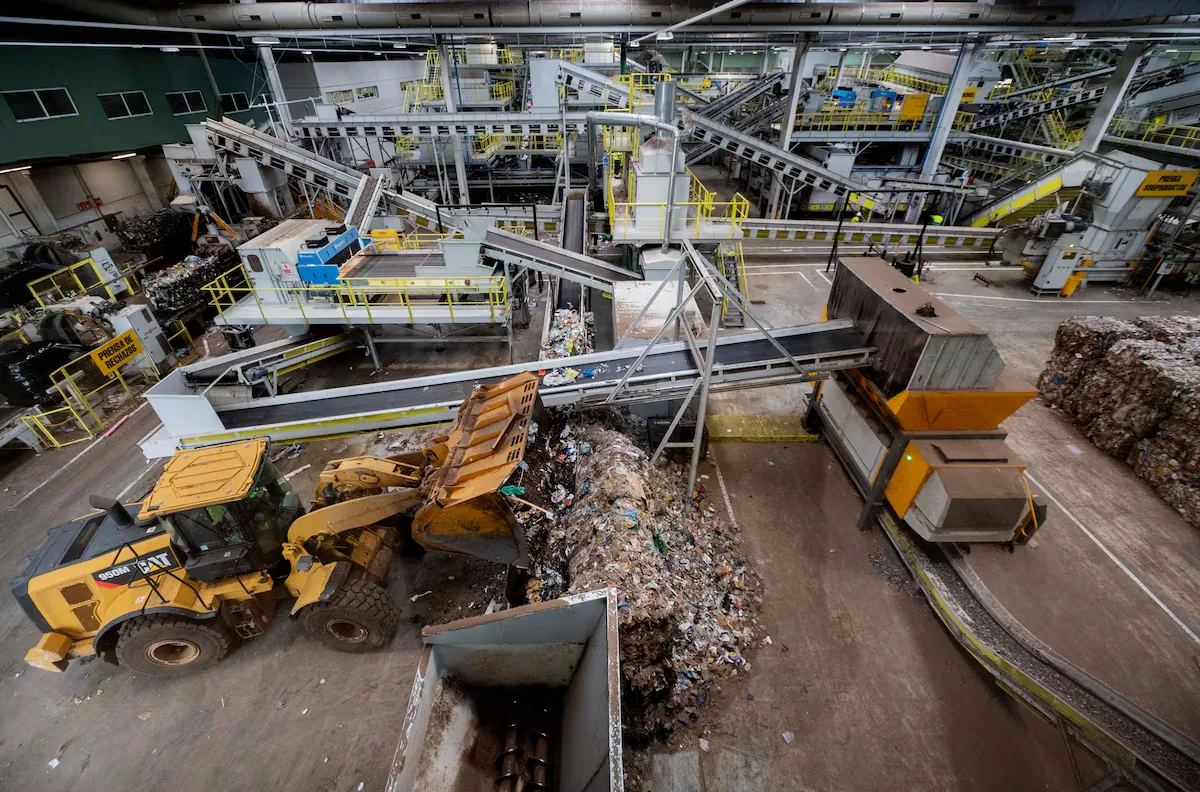
There are two ways to recover waste for recycling: one is to separate it at the source to prevent it from mixing with other waste, as citizens are asked to do in homes, and the other is to try to recover it with machines from mixed waste before it ends up in a landfill or incinerator. It has always been emphasized that the first way is much better, as logically it must be more complex to separate them once they are mixed with other waste and those extracted from there will be dirtier. However, a scientific study published this Wednesday in the prestigious journal Nature has meticulously compared, with chemical analyses, plastic packaging waste recovered in these two ways and has found even more compelling arguments. According to this research from various university centers in Belgium, Germany, and the Netherlands, plastics recovered from mixed waste contain more contaminants, including hazardous metals such as cadmium and lead. Therefore, its authors warn of the possibility that this contamination could end up in new packaging made with recycled material, potentially affecting human health.
“That is the greatest risk we warn about,” explains Alexandra Schmuck, researcher at the Circular Process Engineering Laboratory of Ghent University (Belgium), by email. “It could be argued that perhaps some new advanced physical or chemical recycling technology could eliminate it, but such techniques have not yet been implemented on a large scale. In current mechanical recycling technology, this represents a real risk.”
If this scientific work investigates so thoroughly the results achieved by machines to recover waste from mixed waste, it is because this option is necessary to increase recycling figures. Although collection methods vary greatly worldwide, the amount of waste obtained through separation in specific containers with people’s collaboration is still insufficient today, and in the case of the EU, recycling targets to be met are increasingly demanding. At this point, the comparison in the Nature study shows that the plastic bales obtained with one system or the other are similar regarding material purity (the percentage of each type of plastic). Thus, the technology is astonishingly effective at selecting packaging of different polymer types from the mass of urban waste, mixed with organic matter. However, as the researchers emphasize, extraction from mixed waste also constitutes a pathway for higher concentrations of contaminants, which not only poses a health risk but also limits the recycling processes themselves.
That contamination comes from other waste present in mixed waste, such as toys, medicines, textiles, shoes, or flowerpots. Specifically, shoes showed the highest lead levels, with this metal possibly accumulating in soles from paint residues or environmental dust.
The scientific work compares the two ways of recovering plastic packaging, focusing on a single waste sorting plant in the Netherlands. The researchers consider that, although a single facility is not statistically representative, its results do coincide with previous research in very different regions. Additionally, they explain that the fact it is the same plant, where waste from both systems is sorted, allows for a much more controlled comparison, regardless of the collection system and sorting technology.
Read more Aldama or ‘Ravalejar’
“Although [the results] come from a single plant, we are quite sure similar trends would be found in other countries, as sorting facilities are quite similar,” Schmuck details, adding: “We know some Spanish sorting plants quite well due to EU projects.”
European Regulation 2025/40 establishes that, in 2025, member states must recycle 50% of plastic packaging waste, affecting not only domestic formats but also other industrial ones. According to the Ministry for Ecological Transition (Miteco), the percentage for the country that year is still unknown, as available information is still being reviewed and cross-checked. Regarding plastic bottles, in 2023, 70% collection for recycling was to be achieved, but a Miteco report concluded that barely 41.3% was reached, which forces the implementation of a deposit, return, and refund system (SDDR) throughout Spain. This consists of the consumer paying a deposit (about 10 cents) when buying each drink, which can be recovered if the container is returned, expected not only to considerably increase recovered waste but also to achieve this in a much cleaner way, without contact with other waste in containers, thus reducing the presence of contaminants. This SDDR system must be operational by November 2026, but representatives of beverage producers and supermarkets have already said meeting this deadline is unfeasible.
European legislation also requires increasing the presence of recycled plastic in new packaging to make the material cycle more circular. However, for this reason, the presence of contaminants in waste is even more relevant. Plastics recovered from mixed waste require more thorough washing to reduce dirt and contamination, increasing operational complexity and cost. Moreover, according to the study published in Nature, “washing does not completely remove embedded contaminants nor the chemical diversity introduced by non-packaging items.”
Although technology can help substantially increase the amount of recovered waste, the researchers conclude that “higher recycling rates do not necessarily translate into greater circularity if the quality of the raw material decreases.”