









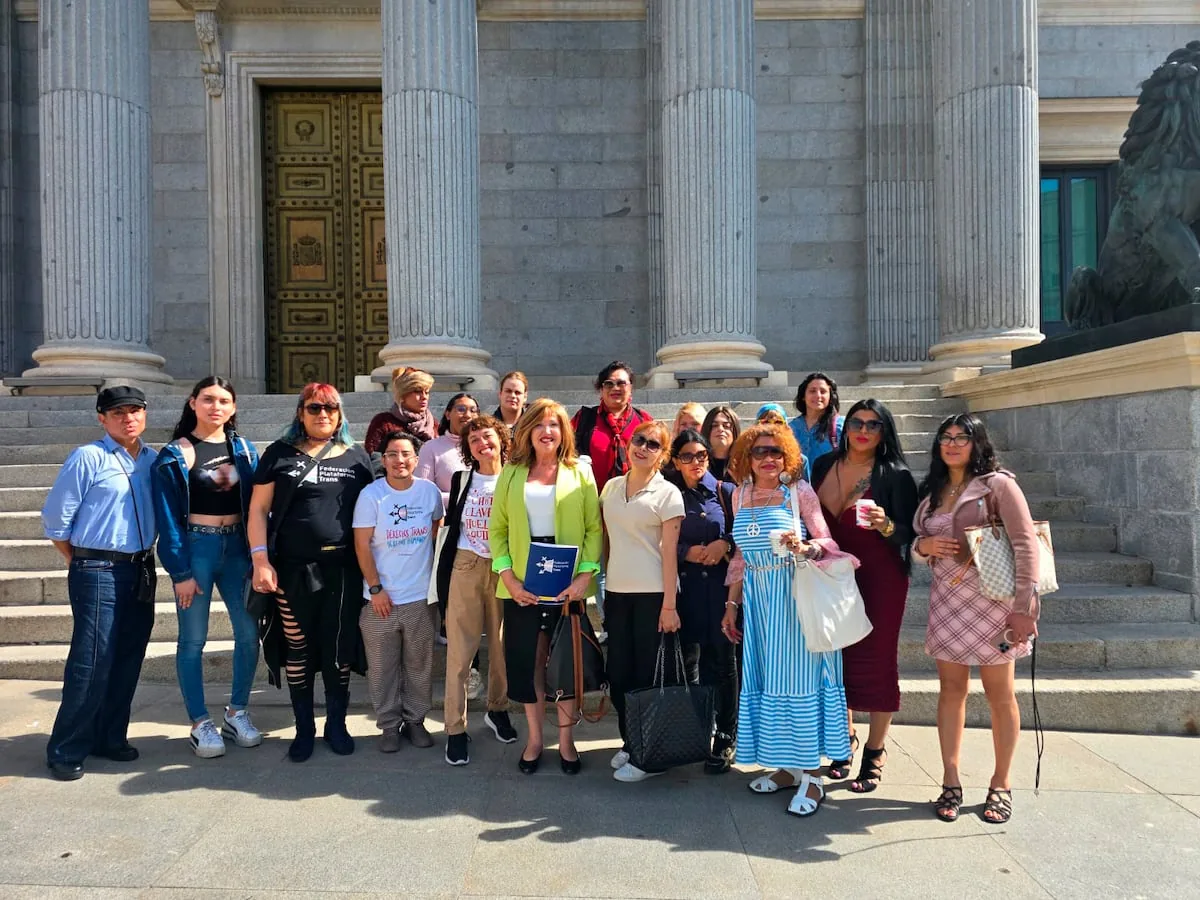
The president of Plataforma Trans, Mar Cambrollé, delivered to Congress this Wednesday a proposal to develop a part of the Trans Law, approved in 2023, that has been forgotten: the recognition of the identity of trans people from outside Spain. “This has been delayed for three years and affects more than 60,000 foreign trans people,” Cambrollé emphasized at the doors of the lower house. “This lack of regulation hinders the exercise of fundamental rights, generating situations of legal insecurity and administrative vulnerability for a group especially exposed to discrimination,” the activist continued.
Read more The judge highlights the “decisive influence” of Zapatero in Venezuela’s oil trade
To solve this situation, the organization she leads has developed a regulatory framework to make the law effective, with the collaboration of a team of jurists from the Complutense University of Madrid ―Doctor of Law Patricia Orejudo Prieto de los Mozos and Professor Carlos Brito Siso, both members of the Feminist Research Institute of that university―. “We do not limit ourselves to criticism, but rather make a serious proposal, endorsed by experts and that can save work for the Government,” detailed the president of Plataforma Trans, which represents more than a dozen organizations across the country, in conversation with EL PAÍS.
The Trans Law (Law 4/2023, for the real and effective equality of trans people and to guarantee the rights of LGTBI people) stipulates, in article 50.1, that the change of name and sex in official documents issued by the State must be made possible for all “foreign persons who prove the legal or factual impossibility of carrying out the registry correction relating to sex and, where appropriate, to the name in their country of origin.” That regulation represented “a historic advance in the right to gender self-determination,” Plataforma Trans has acknowledged, “but that right remains inaccessible for many migrant and refugee trans people who remain trapped in documents that deny their identity.”
“The Trans Law has gaps and one of them is what happens with migrant trans people,” lamented Tobías Conza, 27, in an interview with this newspaper. He is originally from Peru and arrived in Spain in 2022. After obtaining residency, he has tried to adjust his documents at least twice. Both times he was denied: “I feel abandoned, distressed, and paralyzed. My life has been put on pause; it reminds me that I cannot live freely.”
Faced with governmental delays and the problems generated for affected people, Plataforma Trans has taken the initiative. In addition to sending a letter to the Prime Minister, Pedro Sánchez, to explain the matter, this Wednesday they met with several parliamentary groups (PSOE, Sumar, Podemos, ERC, BNG, Bildu) in Congress. Earlier this year, Sumar, a minority partner in the governing coalition, already asked the Executive for mechanisms to resolve this situation. “PP and Vox were not present because we had not invited them; if they want to cut back and repeal the Trans Law, how are they going to support its development?” said Cambrollé.
Read more Evicted mother of three minor children with a vulnerability certificate by a ‘colivings’ developer
The groups have committed to promoting a Non-Legislative Proposal to make the organization’s proposal effective: “The meeting went very well,” celebrated its president.

In that proposal, which would be made effective through a Royal Decree, mechanisms are established to allow the correction of identity in Spanish documentation when this is not possible in the country of origin; the recognition in Spain of identity changes already made in other States; enhanced protection for applicants for international protection, refugees, or stateless persons; and to guarantee administrative coherence and automatic updating of data in the different public systems. Additionally, it includes training measures to ensure dignified treatment of these people. “All this reinforces the Administration’s commitment to real and effective equality,” according to the text.
The European Court of Human Rights has detailed that it is the obligation of States to guarantee the legal recognition of the gender identity of all people, including foreigners and refugees. Hence, the State LGTBI+ Federation (Felgtbi+), which represents 55 organizations defending the rights of the community throughout Spain, has denounced that this lack of recognition “contradicts not only the constitutional principles of equality, dignity, and non-discrimination, but also the international commitments assumed by Spain in human rights matters.”
For its part, the Ombudsman emphasized in its latest report, published in March, “the need for regulatory development to facilitate the adjustment of documents issued to foreign persons who cannot carry out registry correction in their countries of origin.”
Read more Telefónica recovers the Government cybersecurity contract for more than 100 million