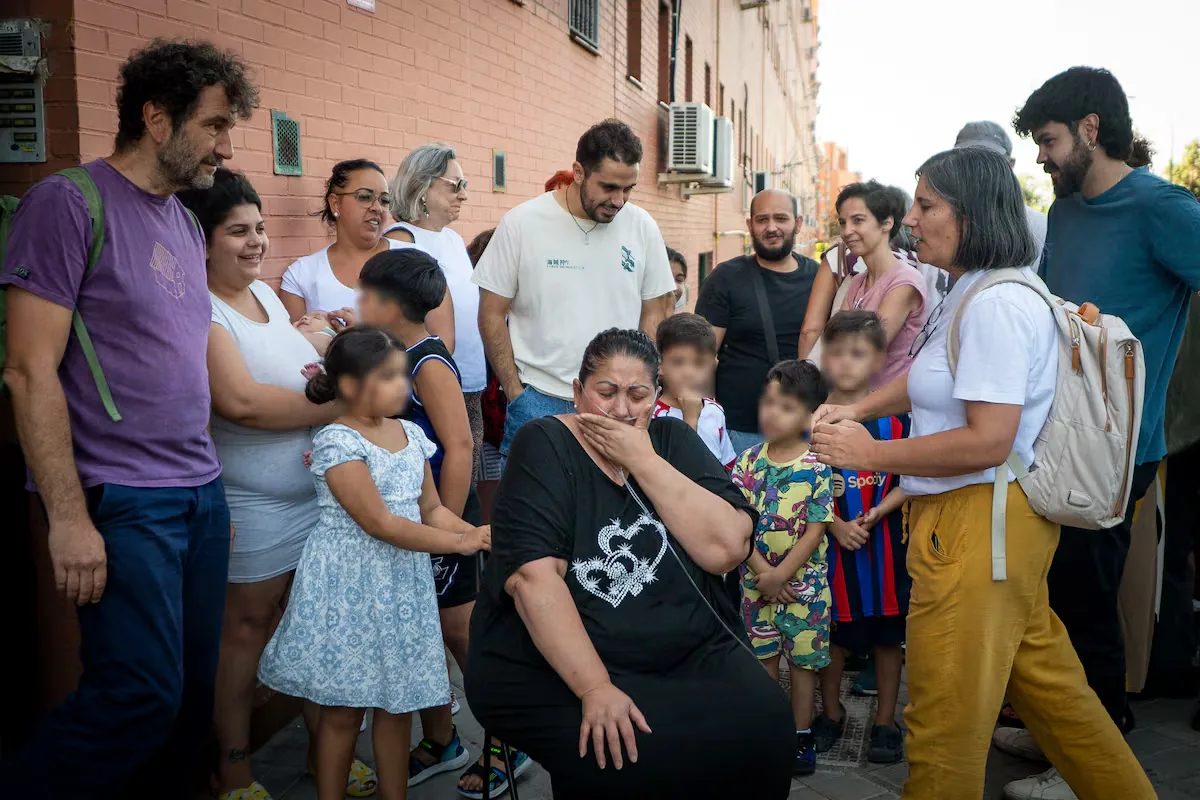









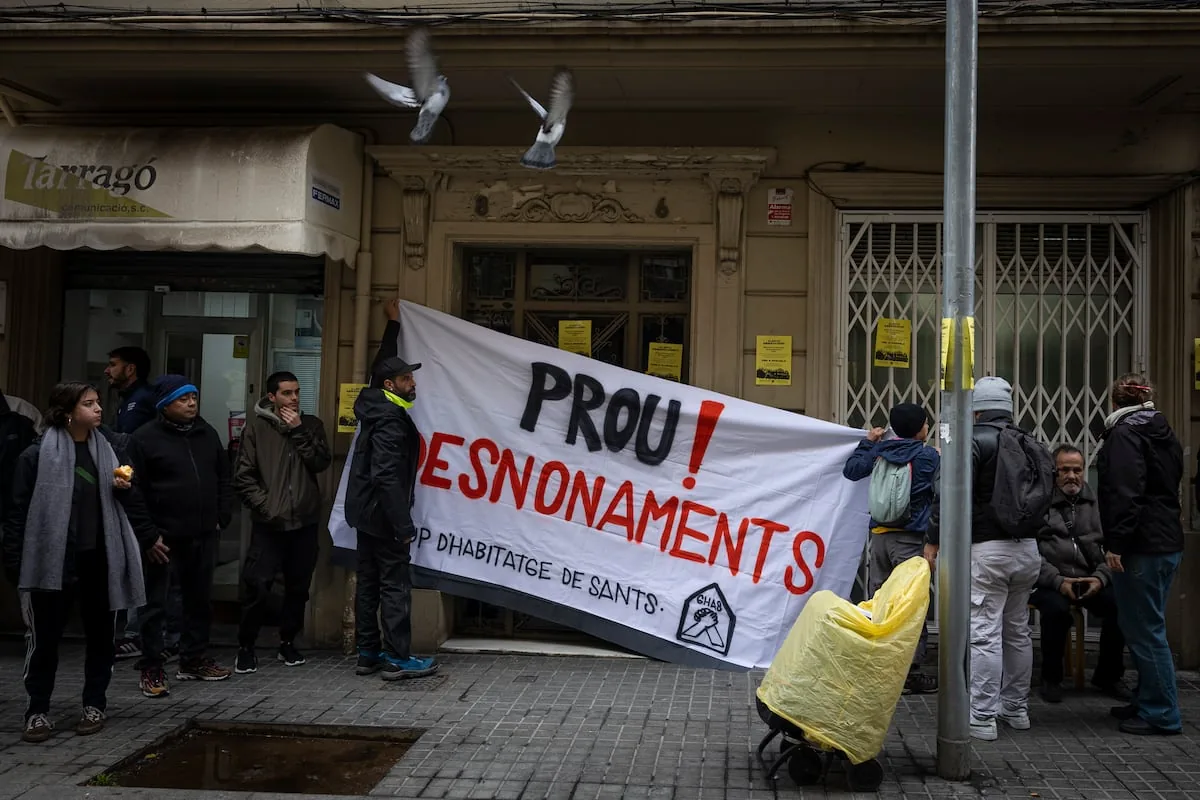
Last week about 60 people managed to stop the eviction of Olalla, a 40-year-old woman and mother of three minor children — one 10 and two 8 years old — at 30 Buenos Aires Street in Barcelona. The Mossos stated that they could not set up a device due to education strikes. However, a week later, the eviction was carried out. Seven Mossos vans arrived at the scene around 9 in the morning and removed about fifty people from the Socialist Housing Union of Catalonia, the Tenants’ Union, and COSHAC (Catalan Housing Trade Union Confederation), who were waiting at the door to prevent it. They could do nothing, and around quarter to ten, the judicial delegation went up to the home to notify Olalla of the eviction.
Read more Telefónica recovers the Government cybersecurity contract for more than 100 million
The process began right after the woman separated from her ex-husband. She was unemployed and lived in a “situation of serious social, economic, and emotional vulnerability,” according to the Barcelona City Council report. Olalla had accumulated unpaid monthly payments, but these were forgiven through the Second Chance Law, so her debts were settled. Even so, the building’s owner fund, NAD (New Amsterdam Development), refused to negotiate with her. Moreover, it is in this Buenos Aires Street building where its headquarters is located.
NAD is also the owner of the Papallona block in Eixample and the Sant Agustí block in Gràcia. The company buys buildings, divides the apartments into rooms, and rents them out. The Tenants’ Union claims to have found ads offering rooms in the block for 950 euros, a price similar to what Olalla paid for the entire apartment. Carmen Arcarazo, the union spokesperson, was present at the eviction and denounced that Collboni and Illa “instead of fining this company that is dedicated to plundering Barcelona and creating colivings, send the Mossos d’Esquadra to evict families.” “It’s a disgrace,” she declared. Txema Escorsa, a neighbor from the Sant Agustí block whose eviction was recently postponed for three months, was also present to show support.
Read more The IMF warns that fuel and energy subsidies may further increase inflation
Olalla had to be attended by an ambulance while the delegation notified her of the eviction due to an anxiety attack. The vehicle was applauded by the few people still on the sidewalk. A neighborhood resident lamented that she “did not understand” the situation: “She had a vulnerability certificate, debts settled, and yet… I don’t know what else we have to do.” At the same time, people coming and going stopped to ask what was happening. “I shouldn’t have asked. Now I’ll feel bad all day. Poor woman,” commented a lady.
Olalla’s future is uncertain. Neither she nor her three children have social housing. “She didn’t want to stay here. She wanted an alternative, and she doesn’t have one,” said a person from the Union.