









There are engines that roar without moving the machine: they consume energy, produce noise, and convey an impression of power, even though they run in neutral, without transferring that force to any wheel. Something similar happens to a government when it stops measuring its power by the reality it transforms and begins to measure it by the intensity of the signals it sends.
The Government is preparing a constitutional reform to strengthen public security and avoid new ‘stumbles’ before the Constitutional Court. The word is revealing. Some provisions of Protected Schools, including the loss of free education, were declared unconstitutional. As similar sanctions reappear in the Registry of Vandals and Incivilities, La Moneda intends to obtain a constitutional authorization to apply them anyway.
There is no need to defend the trajectory or design of the Constitutional Court to notice the problem. The question is earlier and simpler: what evidence supports the claim that withdrawing social rights reduces violence? The data shows another path. Chile reached in 2022 the highest point of homicides in decades, with 1,330 victims; since then, while entries through unauthorized crossings at the northern border halved and rural violence in the Southern Macrozone fell by more than 80%, homicides dropped to 1,091 in 2025 and continued to decline another 13% during the first half of 2026. The reduction is so deep in the south that it allows discussing something previously unthinkable: how to de-escalate the state of emergency without dismantling the capabilities that made it possible.
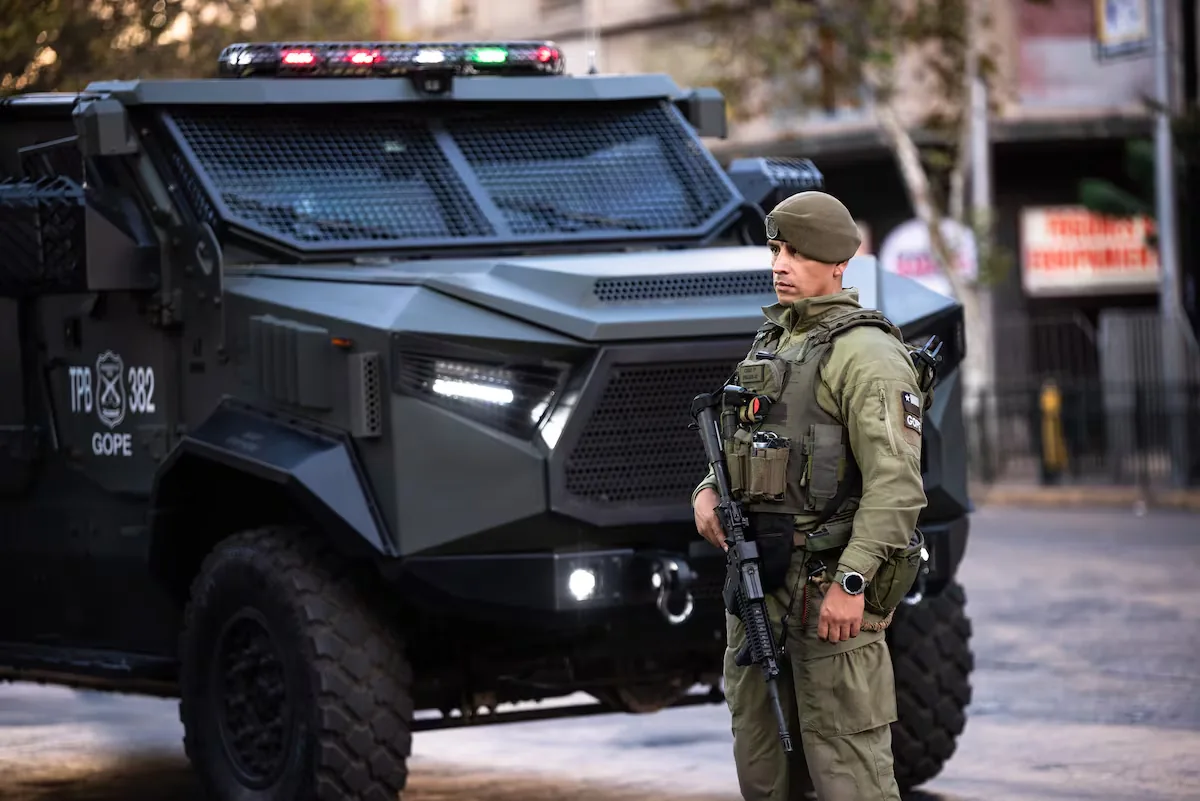
None of this happened by inertia or by a spectacular measure: it was politics, sustained over years, that produced these results. Security budgets, the police, and the Public Ministry were strengthened; vehicles, technology, and equipment were incorporated; more than 70 laws were approved alongside Congress, and after decades of discussion, the Ministry of Public Security was created. But the decisive transformation does not fit into an inventory of resources, but in the way the State learned to work.
In the south, under political and civilian leadership, the heads of National Defense integrated into permanent coordination with the police, prosecutors, and intelligence. However, the strategy was not limited to managing the state of emergency, as it also strengthened investment in lagging areas and sought to build cross-cutting agreements to address the causes of the conflict. In the north, the heads of Border Areas coordinated the Armed Forces with Carabineros, the PDI, Customs, and migration services, while billions of pesos allowed the recovery of deteriorated border complexes and strengthened the permanent presence of the State. The ECOH teams of the Public Ministry also brought together prosecutors, analysts, and police, shortening the distance between criminal information and operational decision-making.
Year after year, these institutions built procedures, networks of trust, shared information, and territorial knowledge, so that a law granted powers, the budget increased capacities, coordination ordered responsibilities, and repetition produced learning. At first, they barely managed to contain deterioration, then they managed to flatten the curves, and only over the years did they manage to bend them. That is the mechanism that the current discussion hides. The results did not appear because an authority spoke louder, but because successive political decisions built a public machinery with traction on reality. It is not just an administrative legacy, but the demonstration that security can advance through democratic leadership, institutions, resources, specialization, and perseverance, within the rule of law.
Read more Hostesses, drugs, special units, and terrorism
Minister Martín Arrau acknowledged it by stating that the National Public Security Policy promulgated during the Government of former President Gabriel Boric was “sufficient” to work on. Chile managed to reduce homicides, rural violence, and irregular entries without withdrawing free education, turning social rights into rewards for good behavior, or reforming the Constitution to bypass its limits.
If the Government insists on doing so, it is not because the evidence demands it, but because it needs its security to look morally different from what it received. It is the same procedure that transforms Codelco’s problems into the fantasy of an individual check and abortion under three grounds into an exhortation for women to “listen to their hearts”: complex problems, which require institutions and government capacity, turned into scenes of a moral and identity battle.
It is an effective political machine to produce antagonists, but without traction on real problems. Insecurity, economic deterioration, or a health reality enter on one side, and on the other comes a moral classification: those who deserve protection and those who must be corrected, those who are legitimate owners and those who are privileged, those who exercise their right and those who must be reoriented in their decision. It does not start from Chile to build a response, but from a doctrine that seeks in Chile the scenario to represent it.
The dispute does not pit those who want security against those who seek to obstruct it: it faces two ways, one that builds capacities, learns, and measures its success by the violence it manages to reduce; another that needs to turn every decision into a signal of identity. The security of the Republic was not born from a power freed from constitutional restrictions, but from a State that acquired the capacity to act within them.
The engine can make a lot of noise. Governing is building the mechanism capable of moving the country.