










On July 10, Inocencia Rodríguez was driving down a street in Guaynabo, Puerto Rico, to take a friend to her job. Upon reaching an access control checkpoint at the location, she was intercepted by two vehicles from which at least six immigration agents got out and took her into custody. This happened despite her showing them a document about her ongoing immigration status regularization process.
Read more Hostesses, drugs, special units, and terrorism
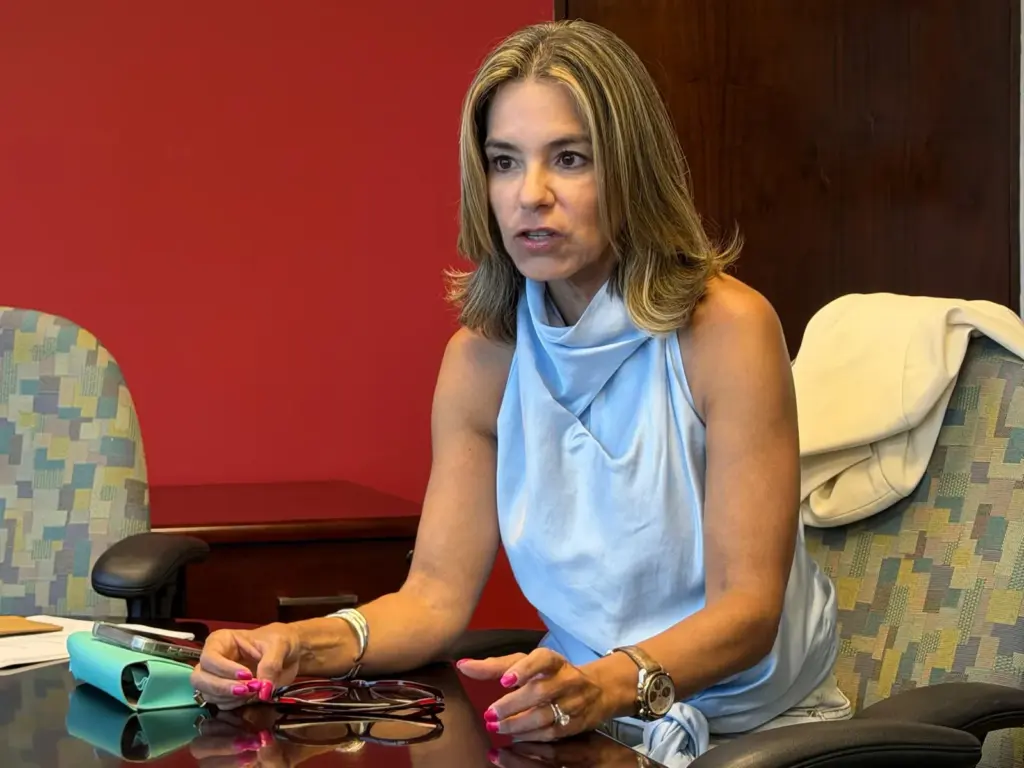
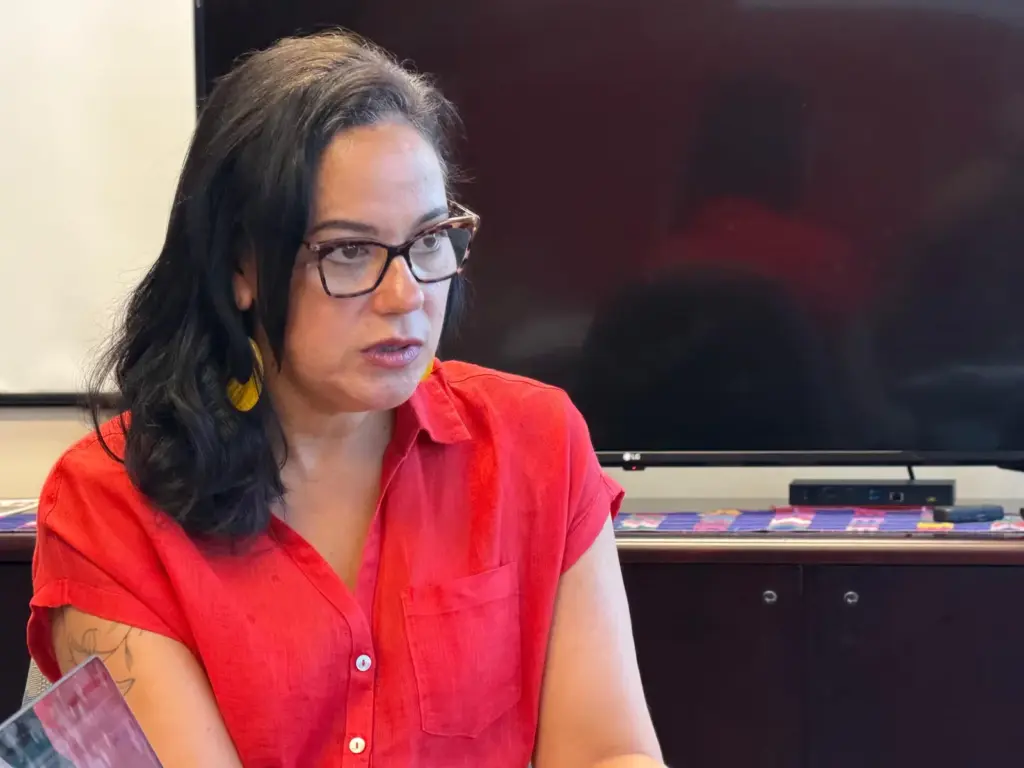
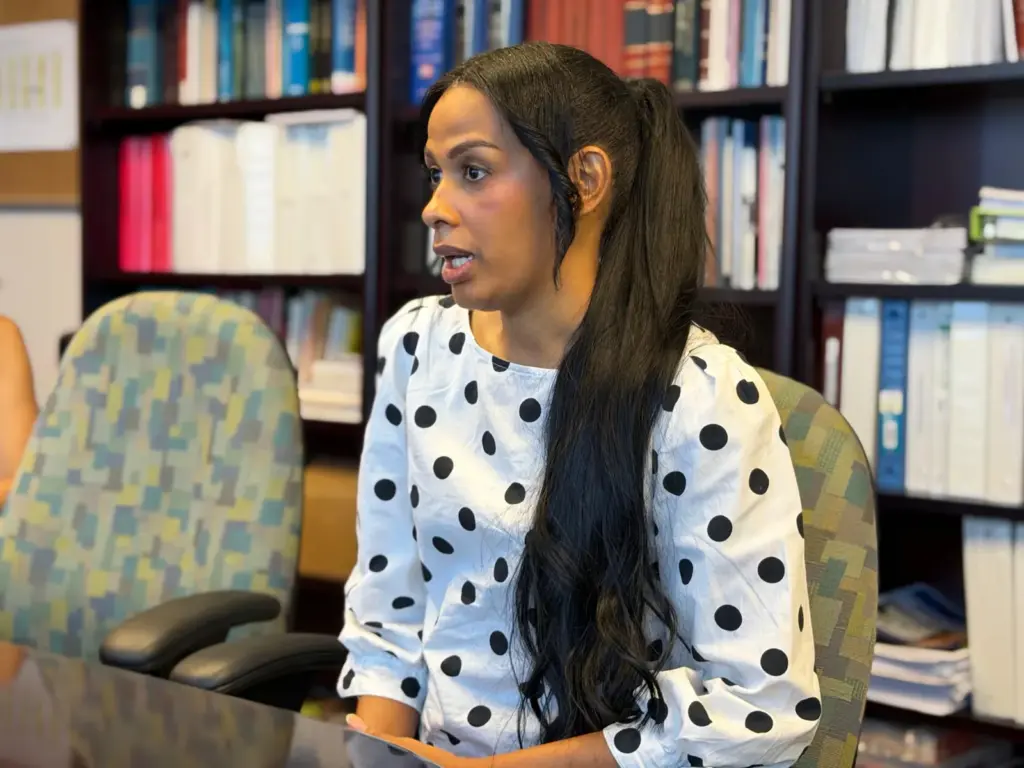
“I feel it’s unfair because I am doing things right and they know it, that I have responded to every mandate they have sent me. It was very unfair of them to make someone go through such a sad moment, because no one thinks about their life being locked up the way I was, handcuffed, as if I were a criminal,” recounts the 32-year-old Dominican mother in an interview along with her lawyer and professor at the Legal Assistance Clinic of the University of Puerto Rico, María García.
García and the lawyers from the American Civil Liberties Union (ACLU) and the Legal Assistance Clinic of the Interamerican University of Puerto Rico, who have jointly represented Rodríguez, believe that the Immigration and Customs Enforcement (ICE) detained her using information from the driver’s license shared last year with the Department of Homeland Security (DHS) by local authorities.
“The vehicle is in Inocencia’s name, she has a driver’s license and also has the vehicle registered in her name,” García points out. “If (the immigration agents) are on the street, they are operating whatever equipment they have left and right to see which vehicle makes a ‘hit.’ I think they are desperate because of the quotas (for detentions) they have,” she explains.
Rodríguez, who entered this U.S. territory irregularly in June 2016, has a driver’s license because Puerto Rico approved a law more than a decade ago that allows undocumented migrants to apply for that identification. It is estimated that nearly 6,000 undocumented migrants have obtained a driver’s license since then. The information those migrants gave to the local Department of Transportation, thinking it would be safeguarded, was handed over by the Government of Puerto Rico to the DHS in early 2025, following Donald Trump’s return to the White House with his policy of large-scale detentions and deportations.
An ICE spokesperson responded to EL PAÍS that Rodríguez was detained in “a focused operation,” in which she was the target, although denying that it was “related to any driving record.” ICE did not detail how its agents found Rodríguez that morning.
Few details about the agreement
It has been impossible so far to learn how the Government of Puerto Rico shared with the DHS the data of undocumented migrants to whom it has issued a driver’s license. It is only known that the DHS sent a request or subpoena to the local Department of Transportation in January 2025 asking for a list of undocumented migrants with a driver’s license. The Government of Jenniffer González sent the data between February and March of that year.
The ACLU sued the local Department of Transportation to make public the process under which it delivered the information, and three courts, including the island’s Supreme Court, have ruled that it must do so. The local government is currently exhausting its last possible appeal before the highest court in an attempt to avoid providing information that sheds light on its agreement with ICE. It mainly argues that it cannot do so because these are ongoing ICE investigations and that any details should be requested directly from the DHS through a Freedom of Information Act (FOIA) request.
A few months ago, this journalist requested from the DHS the information related to its request to the Government of Puerto Rico through a FOIA request. This was to try to understand what safeguards were taken when sharing the driver’s license data of undocumented migrants and whether there has ever been an agreement like the one made, for example, between the DHS and the Internal Revenue Service when the tax authority was asked to provide information about migrants who file their tax returns with an individual taxpayer identification number. The DHS itself had to present that memorandum in full in a case before the District of Columbia Court, which helped to understand some aspects of its pact with the IRS.
In the case of Puerto Rico, the DHS refused to provide information about how the Government of Puerto Rico delivered the information and how it has been handled since it has been in its hands.
This is something that has happened in the past in other U.S. jurisdictions that issue driver’s licenses to undocumented migrants. Besides Puerto Rico, 19 states and the District of Columbia do so. In 2016, the National Immigration Law Center sought documents showing how they access and use driver’s license information. It found that when the DHS wants to find a person, it mainly relies on driver’s license databases and considers that information — such as addresses — to be more up-to-date than its own. In the framework of that investigation, the DHS admitted to the National Immigration Law Center that it has no guidelines on how it requests driver’s license information and that its agents search for it case by case when they have “ongoing investigations.”
The legal center also found that, although the DHS claims it only uses the information to locate previously identified targets, documents it obtained revealed that ICE once asked a State’s Vehicle Department, one of those reviewed in its investigation, to search all vehicles at a particular address, encouraged those departments to issue “marked” licenses to undocumented migrants, and sought to obtain that data on a large scale.
ICE files with photos of driver’s licenses
In Puerto Rico, lawyers learned about the agreement between ICE and the local government when they began to see cases in 2025 where agents arrived at migrants’ homes with files that included photographs of their driver’s licenses.
“There is a serious problem of breaking public trust here, because the way these detentions are happening, first, rests on information that people voluntarily gave to the State, trusting it would be protected. And secondly, because of the way the detentions are happening, we continue to see, just like in the United States, unmarked vehicles chasing cars at high speed without any warning,” explains Annette Martínez, executive director of the ACLU in Puerto Rico.
Two operations of this type had fatal outcomes in the United States this summer. An ICE agent shot and killed Mexican migrant Lorenzo Salgado Araujo in Houston, Texas, after chasing him while he was driving his truck to work. Neither Salgado nor the other three men he was transporting in his vehicle were the targets of the immigration operation. Another ICE agent fatally shot Colombian migrant Joan Sebastián Durán in Biddeford, Maine, in a similar detention attempt on a highway. Durán was also not the target of the operation.
Martínez finds it concerning that the data migrants gave when obtaining their driver’s licenses is being used, as some of them may now have ongoing processes to regularize their immigration status. “It’s not just anything, it’s not about a fine; it’s about the life, the freedom of these people,” she considers.
“We have to fight”
In Rodríguez’s case, she says that when detained she gave the agents a document reflecting her ongoing immigration process. Her husband, a permanent resident, made a petition through the I-130 process in which a legitimate relationship must be demonstrated with the purpose of establishing a family. The couple has an 8-year-old daughter. Rodríguez was also granted a provisional I-601 A waiver, a pardon she qualified for after demonstrating that an immediate relative, in this case her husband, would suffer irreparable harm if she were not forgiven for having entered and remained illegally in Puerto Rico.
“That was the document I presented when they detained me and they still wanted to take me,” she says.
Her detention was challenged with a habeas corpus petition in the local federal court, where Judge María Antongiorgi labeled it “illegal” given the existence of an approved I-130 petition and a provisional I-601 A waiver. The judge ordered that Rodríguez not be transferred to an ICE center outside Puerto Rico, as happens with some of the migrants detained in the territory.
But when Rodríguez later appeared before immigration judge Elvin Talavera, he declined to grant her a bond hearing arguing that Judge Antongiorgi did not expressly request it. He also refused to verify the file with the approved petition and waiver, according to court documents in the case. The judge then demanded that the migrant be released immediately pending her bond hearing. Finally, she was released after paying a $5,000 bond. But now she must face a process in which the federal government seeks to deport her.
Despite this, Rodríguez tries to continue with her life. She works six days a week in house maintenance and dedicates her afternoons to her daughter, caring for her or picking her up from school when there are classes.
“We have to keep working, we can’t cling to what happened to us, everything happens for a reason,” she says. “We have to keep fighting, because we are doing things right and, as long as one is doing things right, well, we have to fight.”
Read more United States and Brazil stage a diplomatic duel between giants