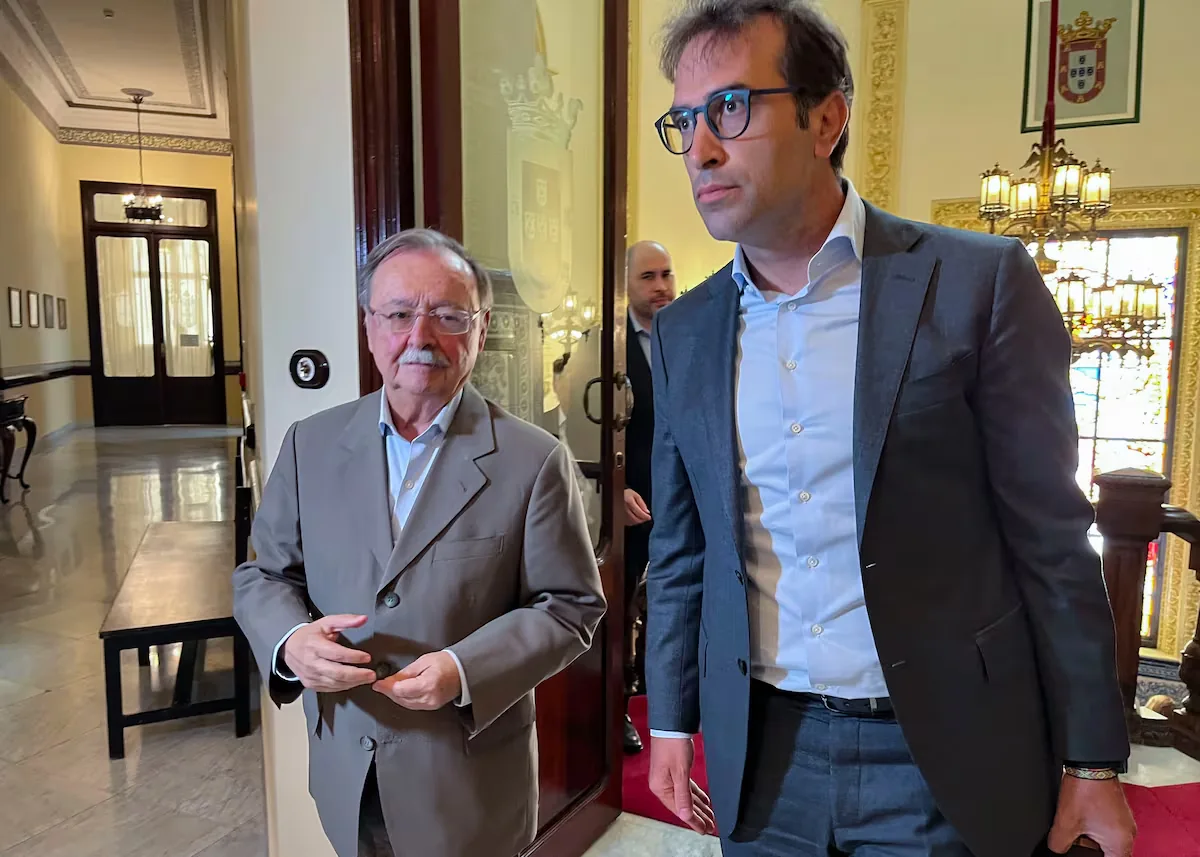
The decision was made over the weekend. For almost a month, the Government has faced harsh criticism for its handling of the Ceuta crisis, which is far from being resolved, with thousands of immigrants still wandering the streets of the city and sleeping outdoors, overcrowded. The Prime Minister, Pedro Sánchez, spoke many times, as he had throughout the month, with the most affected ministers and his closest circle of trust.
Read more The alternative left to the PSOE stakes out its own ground with a harsh message against Morocco
After rejecting it on multiple occasions for weeks because, according to his version, it was not necessary, the possibility of appointing a single command and taking control of the crisis from the Government, somehow sidelining the city, was seriously considered. The one who demanded it the most was precisely its president, Juan Jesús Vivas, overwhelmed and increasingly at odds with the Executive. Over the weekend, Ángel Víctor Torres, Minister of Territorial Policy and former president of the Canary Islands, who knows all the regional leaders well and is always appointed by Sánchez to speak with them, consulted again with Vivas on whether the single command was important.
The Ceutan told him that for him the priority is that all immigrants be returned to Morocco, that returns be expedited, but yes, he insisted on the single command. And Sánchez finally decided to stop resisting this possibility and thus give a strategic turn to the management of a crisis that is wearing down the Executive and has a high cost because it represents a blow to the core of his pro-immigration policy.
From there, the technical and legal part was analyzed: the Government needed to convene a National Security Council, a body that meets fairly frequently before the Council of Ministers for various issues, to determine there that the Ceuta crisis has become a matter “of interest for national security” and from there hang the decision of the single command led by Torres, who will travel this Tuesday to Ceuta to take control of the situation, which will have a broad committee including Vivas, the Government delegate, and the involved ministers, but also the CNI, which has the most information about movements in Morocco and has been criticized for not having detected a crisis of this magnitude with the entry of 80,000 immigrants at once, as many as the population of Ceuta.
This committee will have the support of the national security department of La Moncloa, in a clear message that the crisis takes on a new dimension and the Executive implicitly admits a severity greater than what it had assumed until now, when it unsuccessfully tried to offer a sense of normality while problems accumulated in Ceuta.
The choice of Torres, over other ministers with more direct competencies in crisis management such as the Interior Minister, Fernando Grande-Marlaska, or the Minister of Social Security and Migrations, Elma Saiz, has a political meaning because the veteran leader already acts as coordinator of the interministerial commission on migration and was in charge of other crises such as the Canary Islands, but also coordinated the work after the Valencia storm, for example.
In fact, Torres had already been appointed weeks ago as interministerial coordinator for Ceuta, but this is different. That was an internal position within the Government. This involves entering Ceuta’s competencies, taking control of the city and decisions, although always coordinated with Vivas, because this decision has not been made against the Ceuta Government, but on the contrary, because it is the one who has requested it the most. The decision also gives a card to the PP, which had been demanding it unsuccessfully from the start. The leader of this party, Alberto Núñez Feijóo, mocked on social media that they were proven right: “Better late than never,” he wrote.
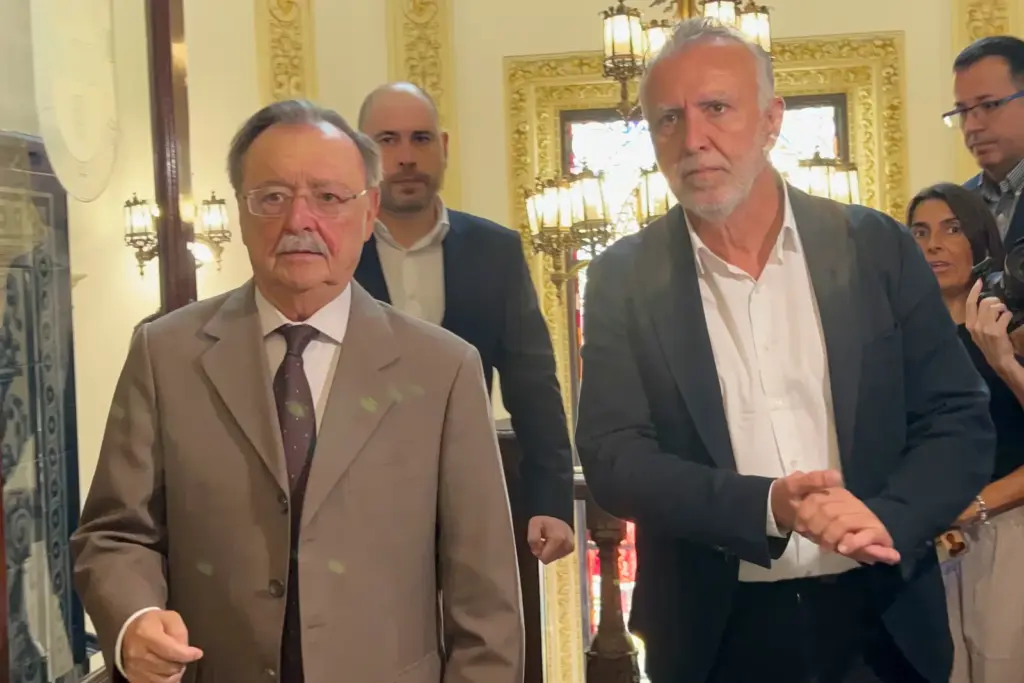
The solution had already been discussed with Vivas over the weekend, but it lacked formality. And that is why it was officially announced after the Ceutan president and the first vice president, Carlos Cuerpo, met, who in that same meeting in the autonomous city also negotiated a rain of millions that will arrive in the coming weeks to revitalize its economy, blocked by this crisis.
Sources from the Executive explain that the various ministers who have been in Ceuta and in charge of management did not see this single command as necessary, but it also made no sense to close off an idea defended both by Vivas and the PP. But the strategic turn right in the week when political activity renews with a Council of Ministers and the entire Government returns to Madrid, including the president, Pedro Sánchez, until now at his resting place in the Canary Islands, is a political gesture showing that the Executive feels the blow of criticism for poor management.
Read more Video| The five emergencies facing Colombia
Neither Cuerpo nor anyone in the Government officially clarifies why the Government now decrees a single command that it rejected for weeks. The vice president only pointed out that the crisis “has moved to a phase where we no longer only talk about security” and, therefore, “coordination between administrations is increasingly important, hence this single command.” The reality is that the Executive resisted this single command because it thought it was unnecessary and preferred to manage the crisis jointly with Vivas, each maintaining their competencies, but the criticism has been so strong and the wear so significant that Sánchez has decided it was not worth keeping this flank of the single command open.
The decision is thus a clear correction, although the Government insists privately that management would not have been better if the single command had been decreed earlier, because the problems of finding suitable locations for immigrants and managing their return, a complex procedure in the case of adults and much more so for minors, do not disappear.

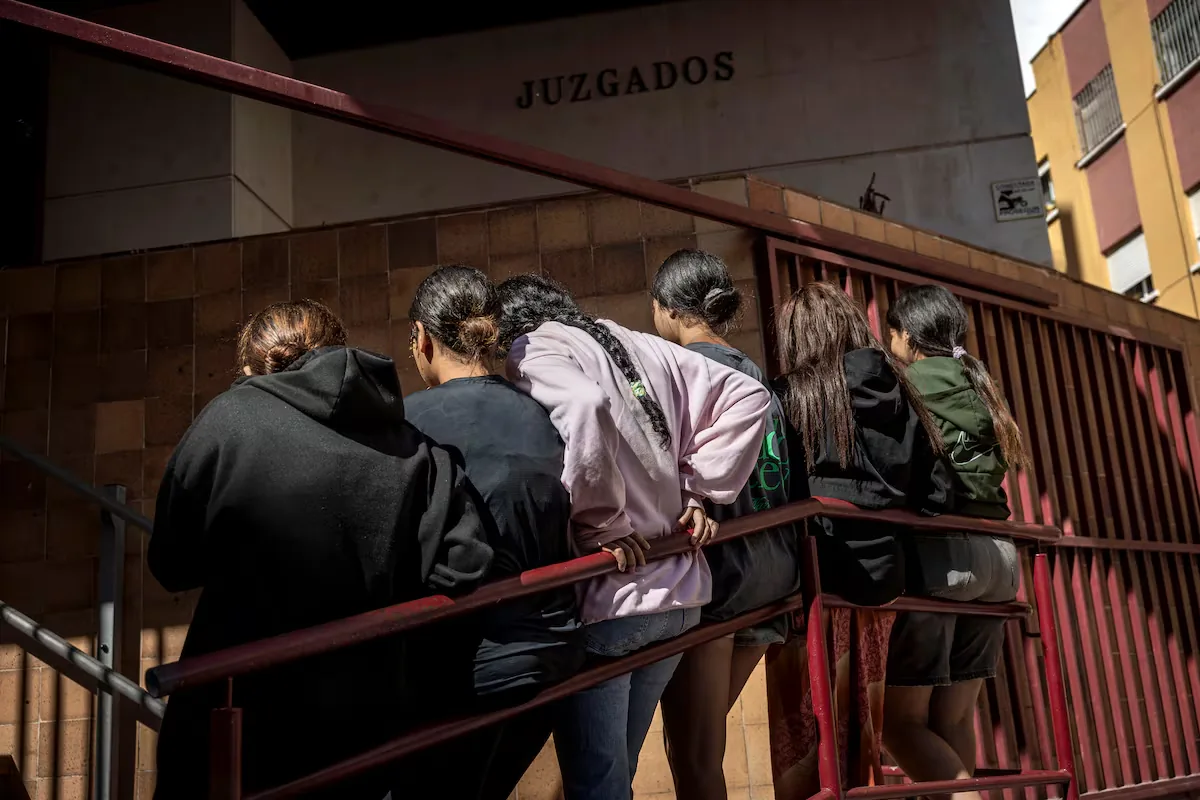
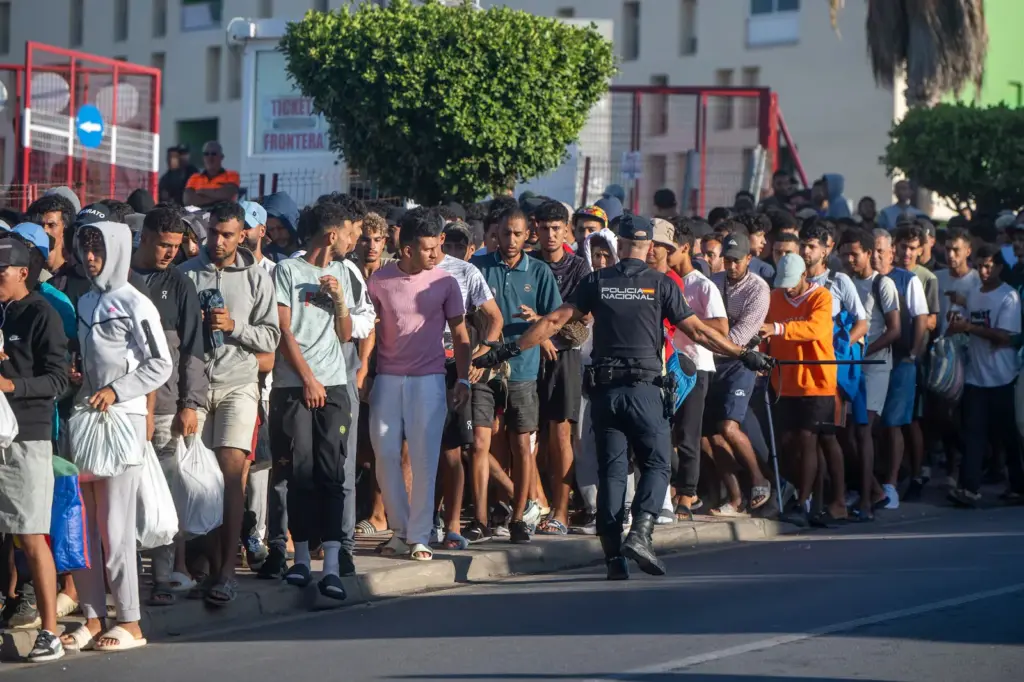
Almost a month later, there are still thousands of immigrants on the streets of Ceuta without a location, and the Government does not even know for sure how many there are. According to Cuerpo, minors are already controlled, about 2,900 already placed, but many adults are still wandering without having been registered or much less having started their possible expulsion.
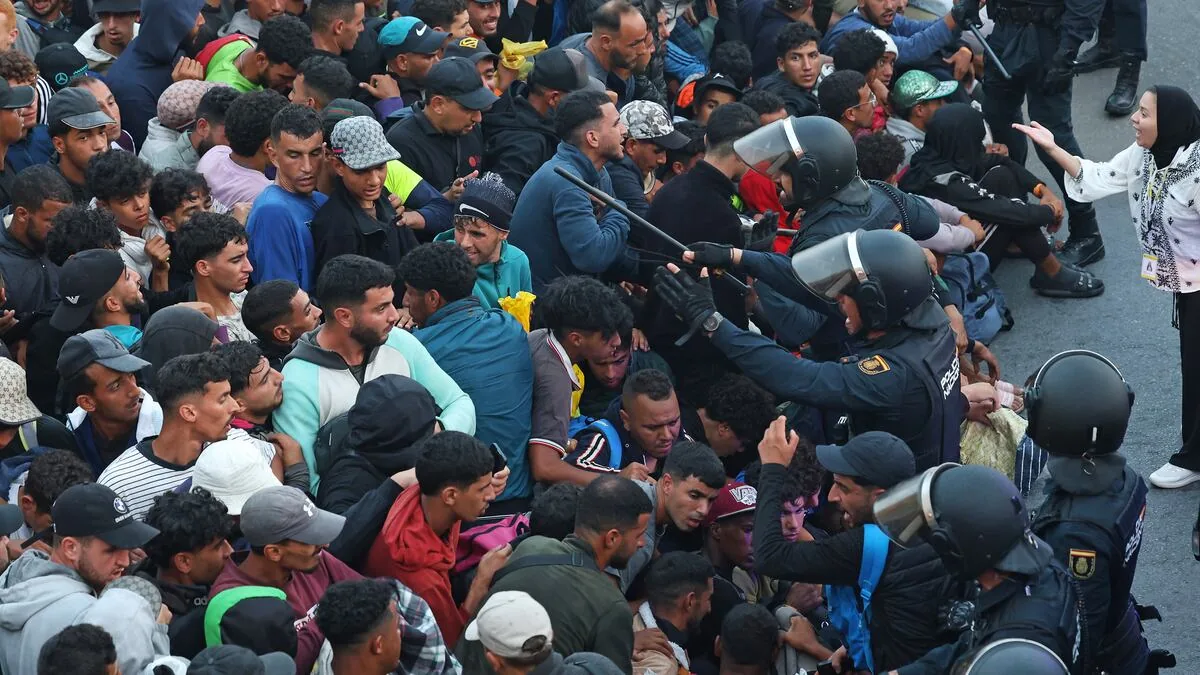
The initial strategy of the central Government and Ceuta was to try to get immigrants to voluntarily return to Morocco, something more than 70,000 did and which, according to Cuerpo, some still do daily, but the Government took a long time to manage all those who decided to stay at all costs. The law prevents them from being expelled if there is no individualized file for each of them and they cannot be forced to be in any specific place; everything must be voluntary.
Cuerpo sent a very clear and different message from Ceuta than that of the ministers who have visited in recent weeks. The tone was more serious, and above all he insisted on one message: “Ceuta is a border territory, but it must feel the State present like the citizens who live on the Peninsula.” It was a clear response to Vivas’s main accusation, harsher than ever, who reproached the Government for having “abandoned Ceuta.” Vivas demands that expulsions be expedited, and Cuerpo also promised this. “This single command will make management as fast as possible in the return [of adults] and the management of minors,” he said. He also insisted that everything necessary will be done, reinforcing the border — a permanent protection in the water is planned — so that something like this does not happen again.
Cuerpo announced a rain of millions, although not yet specified: the recovery plan will not go to the Council of Ministers this Tuesday, but in the coming weeks. The vice president explained that there is already a plan underway in Ceuta of 180 million euros, but admitted that “circumstances require going further and giving a response to the current exceptionality.” “All necessary resources will be made available to the people of Ceuta, we will reinforce urban security, manage returns, strengthen public services. Also, in the coming days we will define immediate measures to improve the conditions of Ceuta’s businesspeople, the self-employed, and workers,” he insisted.
Now we will have to see the practical effects of this turn. There are 5,000 people who do not want to leave Ceuta and so far space has been enabled for 1,800, partly also due to the difficulties the city has put in enabling places and the resistance of neighbors to several possibilities, unlike what happened in 2021. Now, with the single command, everything will be tried to be expedited and more locations can be sought, although the idea is not to do it against the city, which, for example, rejects the use of the sports center, which was used in the 2021 crisis. The start of classes complicates things because the option of schools is lost. There is much to do, but now it will be with a new tone and a clear command: Torres will travel this Tuesday after the Council of Ministers to take charge and Elma Sáiz will also go with him again. The Executive will spare no effort to try to turn around a very dangerous situation for its credibility on immigration, the key issue throughout Europe on which the Spanish right wants to base its assault on power in 2027.
Read more The world cup of the planet: the summits on land, biodiversity, and climate