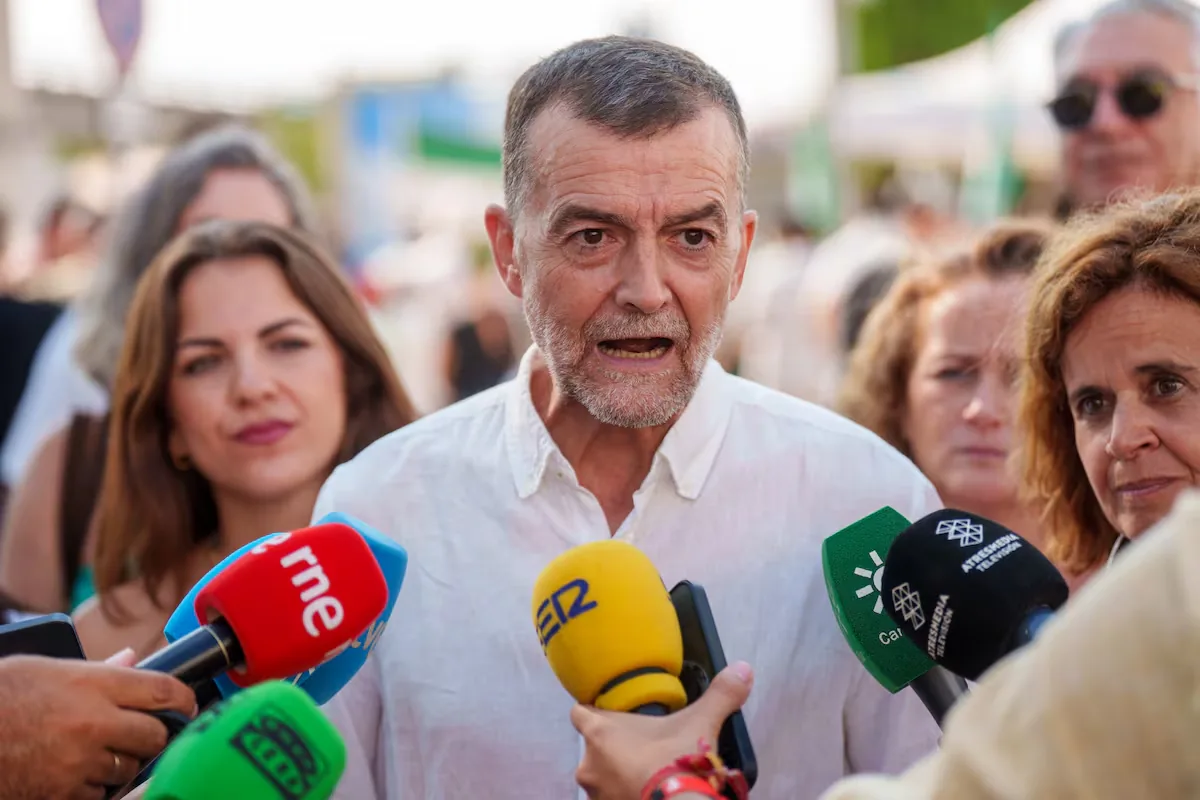
The forces to the left of the PSOE mark their own ground on the Ceuta crisis, especially by identifying a culprit that the socialist part of the Government does not point to as such: Morocco. In that diverse political space, where there are organizations integrated into the Executive as junior partners, formations outside the Government more or less critical of its management, parties of both state and regional scope — nationalist or not — all voices share with the PSOE the emphasis on the need to prioritize humanitarian aid and the denunciation of what they consider “xenophobic” or even “racist” messages from the PP and Vox. But two distinctive elements are added to this, which resurfaced on Monday just before the crisis reaches Congress with the appearance from this Tuesday and throughout the rest of the week of up to seven ministers.
Read more Video| The five emergencies facing Colombia
The first distinguishing element is a thorough questioning of what these parties call the European Union’s “externalization of borders,” especially if it is carried out with countries far from European democratic standards, such as Morocco. The second is a frontal criticism of the Alaouite regime, which contrasts with the position of the Government’s majority partner, and a demand for firmness from the Executive in its relationship with the Maghreb neighbor.
IU against Morocco
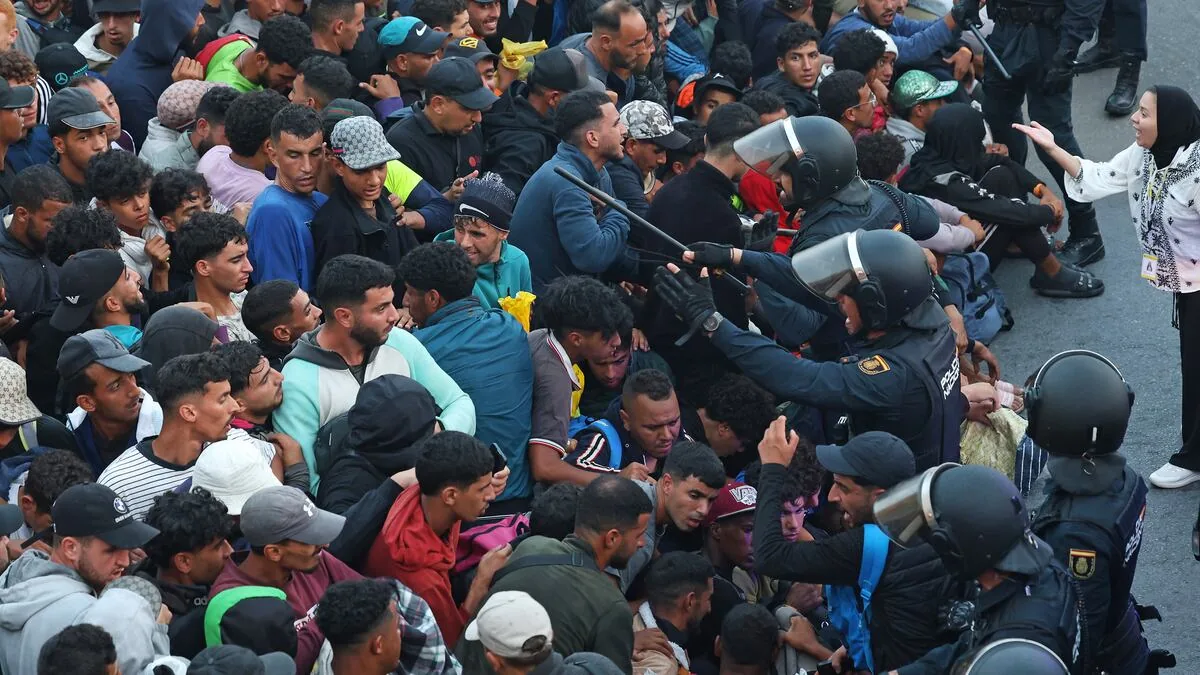
The most active formation in this political space since the crisis broke out in the last two days of July is Izquierda Unida, with a long critical trajectory towards Morocco, especially for its defense of the right to self-determination of the Sahrawi people, a core issue in the international positions of the coalition led by Antonio Maíllo. The federal coordinator of IU himself, a formation that has a minister in the Government and also with an area involved in resolving this crisis (Sira Rego, from Childhood), has insisted on emphasizing Morocco’s responsibility in the entry of about 80,000 immigrants in two days, in an avalanche that caused a number of deaths yet to be determined, but which Moroccan NGOs place above 140. It was a “criminal action” by Morocco, Maíllo told EL PAÍS in mid-month.
While the socialist part of the Government, led by Pedro Sánchez, has denied Morocco’s responsibility in the crisis and has even highlighted the loyalty and collaboration of the neighboring country in the effort to resolve it — still far from completion — IU registered last week a battery of seven questions that frame the late July avalanche as the “coercive pressure” of the Maghreb country. The coalition led by Maíllo questions Spain’s dependence on the United States and Israel in security and defense, who in turn supply Morocco and whose governments have used the crisis to attack the Spanish Executive.
Deputy Enrique Santiago, secretary general of the PCE, has also repeatedly pointed at Morocco, which he sees as responsible for a “hybrid attack against Spanish sovereignty” and the difficulties faced by the Ceuta population. In addition, he has demanded more firmness from the Government towards the southern neighbor. “It is not a reliable partner,” Santiago said, who is now in Ceuta, in a statement that clashes with the PSOE’s position.
Ceuta society demands, wants, and NEEDS to return to normality.
— Enrique Santiago (@EnriqueSantiago) August 24, 2026
That the people and minors who cannot be returned continue with their asylum or reception procedures on the peninsula.
The solidarity of the WHOLE country with Ceuta is the antidote against the racism of PP and Vox. pic.twitter.com/a7g71bSL5o
IU, also through Santiago’s voice, has been forceful in rejecting the Moroccan Government’s intention to discuss the sovereignty of Ceuta and Melilla, over which it claims a supposed “historical right.” “They are of Spanish sovereignty. There is nothing to mediate,” he said last week on RNE, statements that do resonate with those expressed by the Ministry of Foreign Affairs, which wants to stop any discussion about the sovereignty of the autonomous cities.
No to “impunity”
Like IU, other parties in the same space integrated into the Government, immersed in a reconfiguration process ahead of the next general elections, mark distances with the PSOE. Such as Movimiento Sumar, which at the start of the crisis set its position accusing the “Moroccan dictatorship” of using a “impoverished and desperate” population as an “instrument of pressure” on Spain, causing the death of its own citizens.
This very Monday, the party represented in the Government by Vice President Yolanda Díaz issued a statement reaffirming its position before the carousel of ministerial appearances. The crisis, it states, “is based on the EU’s border externalization policy and the Moroccan Government’s action.” According to Movimiento Sumar, which also attacks the “repugnant racism” of PP and Vox, Morocco “cannot go unpunished.”
In a more diplomatic statement, a prominent voice of this political family, the Minister of Social Rights, Pablo Bustinduy, said, in response to journalists’ questions about Morocco on Monday in Vigo, that Spain must be “consistent with its principles and approaches,” as it was in his view with its “very brave” position on issues such as the invasion of Gaza or the Iran war, reports Europa Press.
Read more The world cup of the planet: the summits on land, biodiversity, and climate

Also in a critical line towards Morocco is Más Madrid, the party of the Minister of Health, Mónica García, who has had a high profile during the crisis. The party’s spokesperson in the regional Assembly, Manuela Bergerot, told La Sexta, after the first week of the emergency, that there should be a “debate” on whether Spain could co-host the 2030 Football World Cup with a country with Morocco’s record of human rights violations, which she blamed for the Ceuta crisis.
This approach, the possible exclusion of Morocco from organizing the 2030 World Cup alongside Spain and Portugal, is included in a non-binding motion presented by the Sumar group in Congress on August 4 that seeks to exclude the North African neighbor from the football event.
Geopolitics versus immigration
A leader of one of the parties that ran in the 2023 general elections under the Sumar brand points out that the forces of the alternative left cannot share the PSOE’s “taboo” about Morocco, a country whose responsibility — he announces — will be very present in the diagnosis of the formations of this political space in Congress this week.
For these parties, he explains, introducing the responsibility of the Alaouite kingdom in their discourse on the crisis allows “addressing it with a much broader and deeper perspective.” “Talking about Morocco is essential to address the underlying geopolitical tensions, the role of the United States and Israel, the urgency of genuine strategic and defense autonomy that is not possible in NATO, the risks and terrible effects of border externalization,” enumerates this leader, who believes that this geopolitical reading of the crisis moves the debate away from the supposed threat of immigration, which is the point to which — he says — the PP and Vox want to take it.
“The threat does not come, as the right says, from immigrants fleeing very harsh situations. The threat comes from having ceded control of our border to a non-democratic regime that uses that power against Spain. That is the debate that must be had,” he concludes.
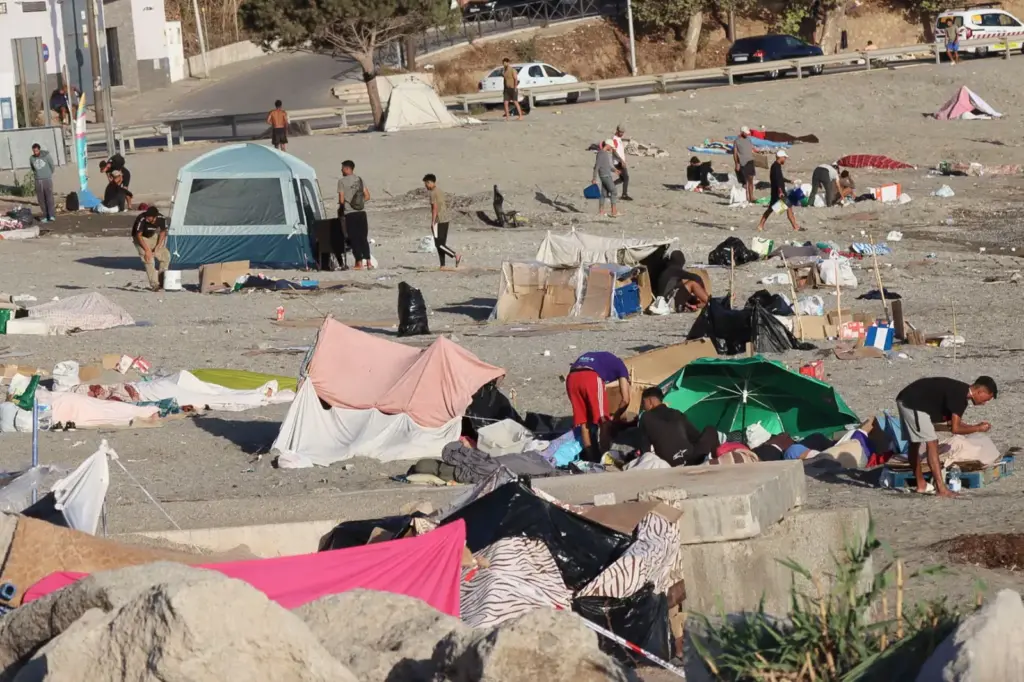
From another party integrated in the Sumar group, one of its leaders states that the references of this political space must be clear in labeling what happened as a “hybrid attack” by Morocco against Spain, also carried out with the “support” of the United States and Israel, interested — he says — in undermining the Executive for its role as a progressive reference. All this, he adds, must be done by combating the “racism” of PP and Vox and highlighting what the Government is doing well, in his opinion. “We positively value that Spain’s reaction was not like [the 2022 tragedy in] Melilla. This Government does not defend the borders by failing to save lives, and that must be highlighted, just as we denounce that it has not had the courage to recognize that 80,000 people do not remain to cross a border in a WhatsApp group,” adds this deputy, who states that, although there are “nuances” within Sumar on how to approach the issue, all parties are united in the essentials.
From outside the Government, Podemos has demanded “breaking relations with Morocco,” a position set by its secretary general, Ione Belarra, since the start of the crisis. If there have been critical voices within Sumar about the Government’s management, especially for its supposed lack of decisiveness in the response — deputy Alberto Ibáñez, from Compromís, said last week that it made “no sense” for the president to continue “on vacation” — Podemos has accused Sánchez’s Government of “dereliction of duties.”
The purple party, like the forces of Sumar, has presented the Ceuta crisis as proof of the failure of the EU’s “externalization of borders” policy. Similar discourses have been heard on the independentist left, with special insistence in ERC, where various officials have referred to what happened as “blackmail” that forces a rethink of European border policy and the relationship with Morocco.
Read more When our inner world trembles