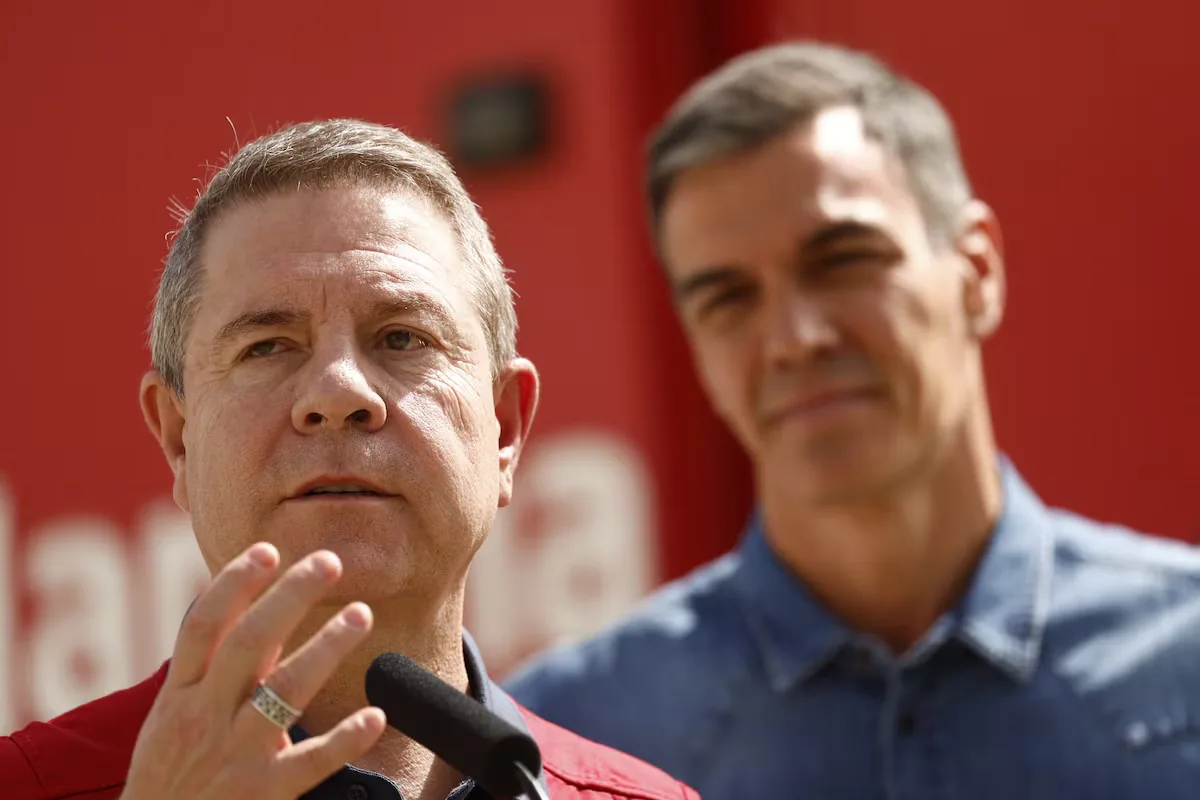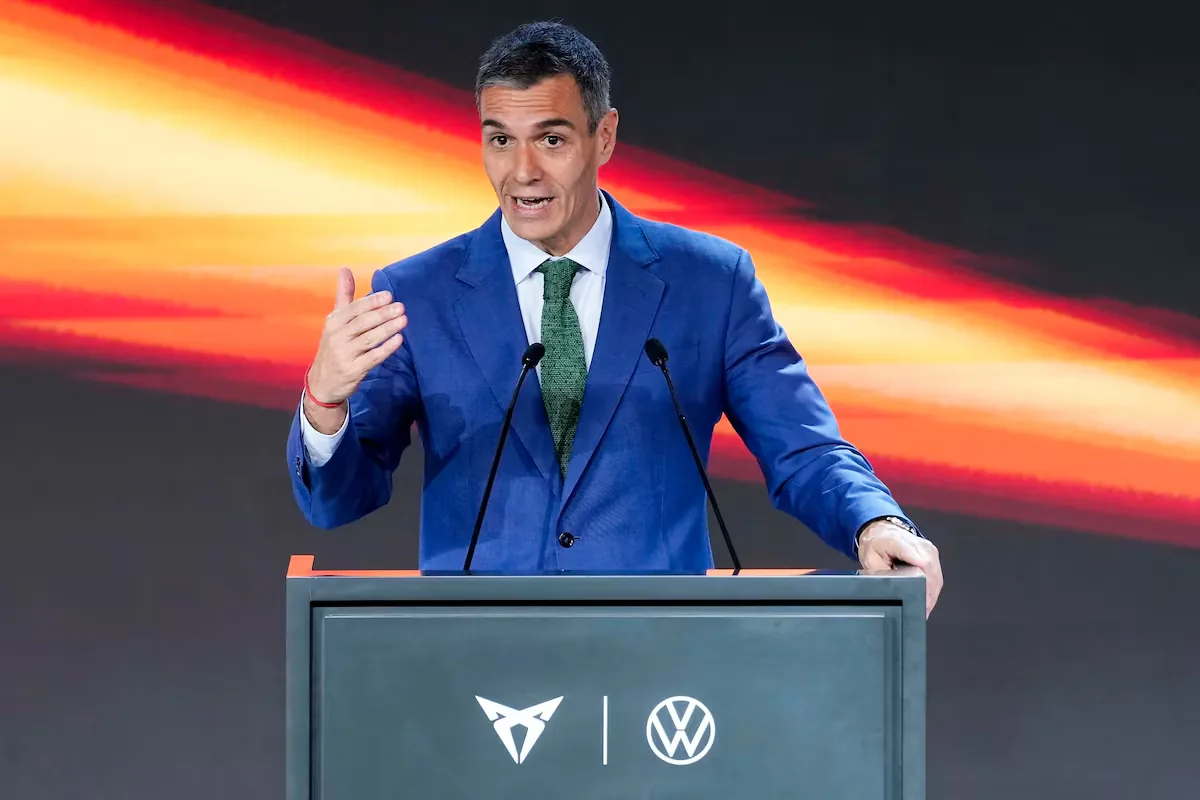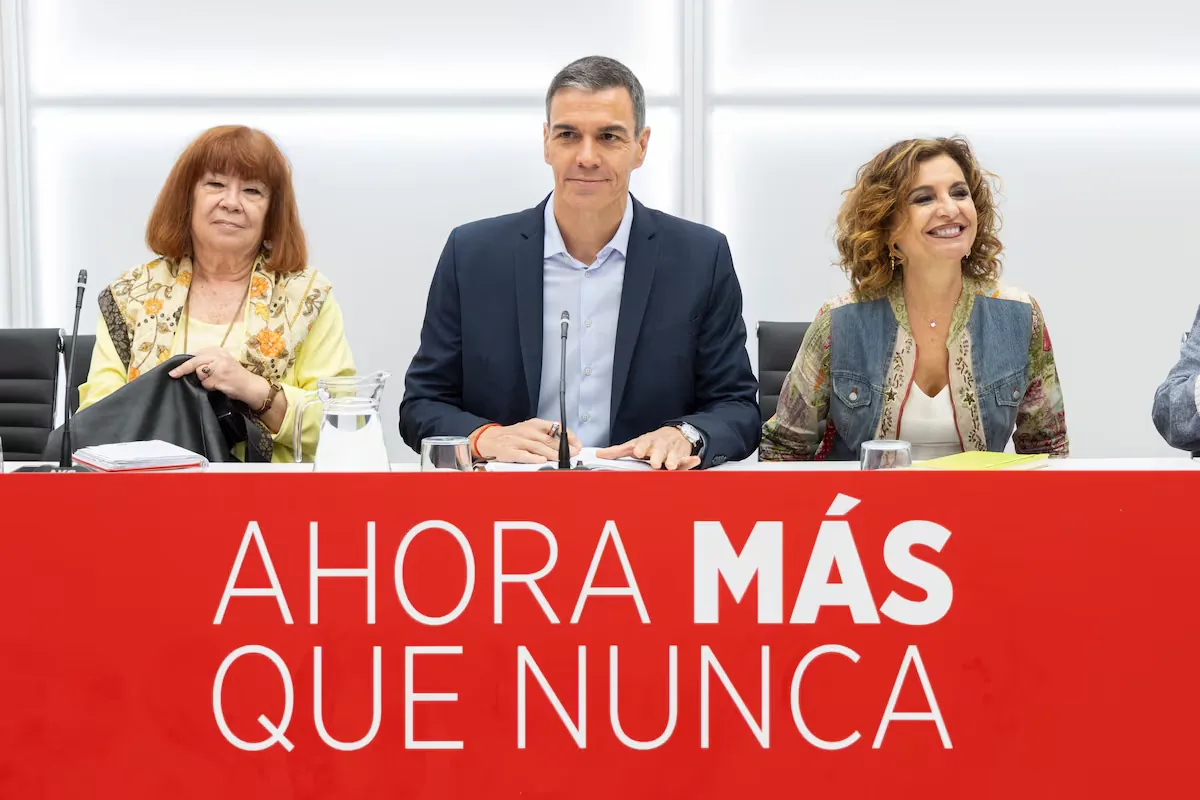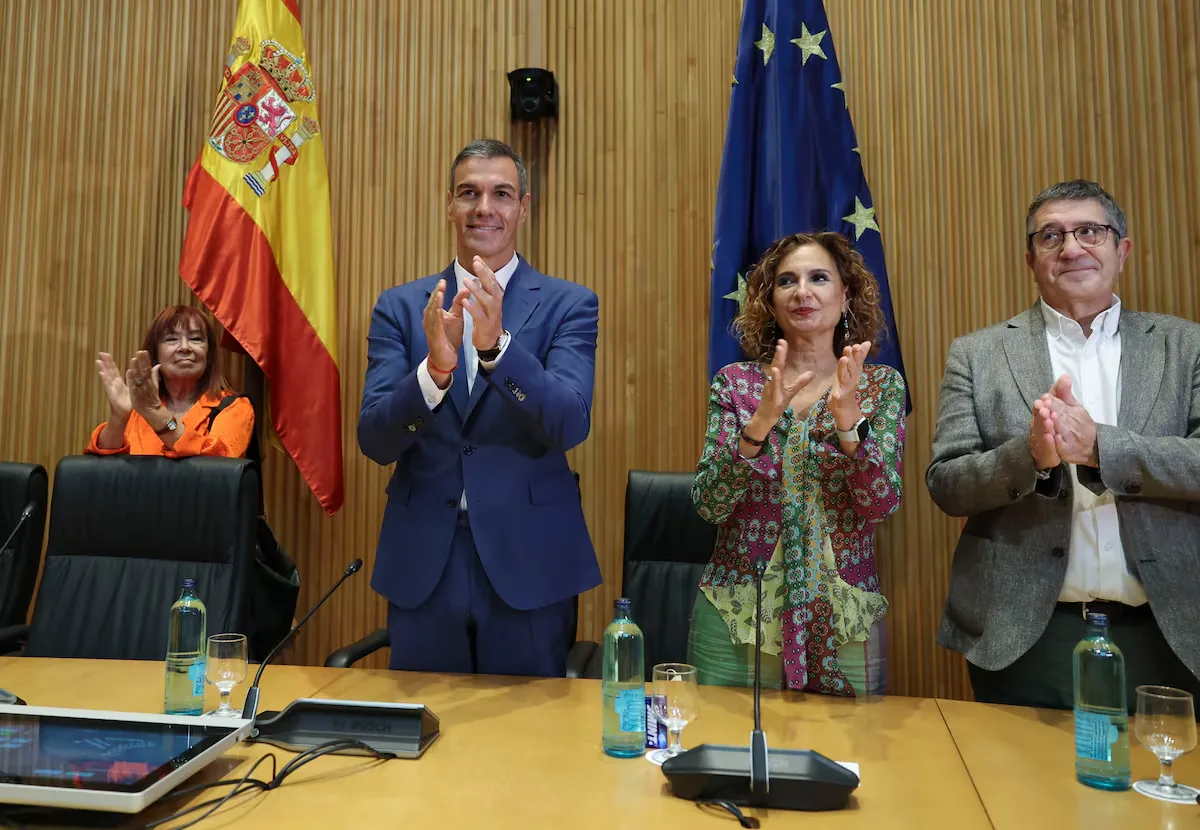
Pedro Sánchez has wielded the scarecrow of the far-right victory in the Saxony-Anhalt elections and the exceptionality of the progressive coalition government leading one of the major Western countries to try to revive the PSOE deputies, senators, and MEPs at the start of a term conditioned by the crisis in Ceuta. So much so that the president assured, without giving any date, that the city “will soon recover normality” and “will come out strengthened thanks to the Government’s action” in a speech in which he did not self-criticize the management of a crisis that is heading into its sixth week with no signs of resolution. According to a 40dB. survey for EL PAÍS and Cadena SER, 63% of Spaniards believe Sánchez is managing it “very badly” (49.9%) or “badly” (12.8%). The president associated part of the erosion with the interest of the global far-right: “Right now the entire far-right international, European and across the Atlantic, is attacking Spain. Well, there must be a reason.”
Read more The Terror: Devil in Silver
The PSOE secretary general also did not mention Morocco even once, despite 90% of respondents blaming Rabat for the crisis in the city, in a speech in which no socialist official requested to speak, as has been usual in the legislature. Sánchez, who assured that it is a priority “to understand what happened” so that “it does not happen again,” committed to “clarify what happened that week in July,” when about 80,000 irregular immigrants broke into the enclave; 72,000 left the city in the following days. “When we do, we will share it with the public transparently, as we have always done, and always also defending the interest of Spaniards and the general interest of our country,” he added. The Government will declassify the documents it has on the origins and management of the crisis at this Tuesday’s Council of Ministers.
“Those entitled to asylum will have it in Spain, as ethics and law require, and those who are not will be returned,” emphasized the president, who dedicated a couple of minutes to Ceuta at the start of his speech. The rest of the time he devoted to highlighting macroeconomic data, the commitment to renewables, and his social policies. But the underlying message revolved around the victory of Alternative for Germany, which with 44% of the votes leaves the far-right with options to govern a state for the first time since Hitler’s defeat in World War II. “We are on a sad day for Europe. Eighty years later, an openly Nazi force, claiming such a sad past, of a dictator who committed the greatest atrocity, has won with a terrifying result. This fact puts before us a mission: it is clear that we are more necessary than ever. We are their only brake,” preceded Patxi López, the parliamentary spokesperson, to Sánchez.
The president stressed that the Saxony elections are “a warning” that “the ultra threat is gaining ground in Europe and the world largely thanks to the blessing of the traditional right,” but also “the confirmation” that the progressive coalition government “is more necessary than ever today.” “The world is watching us. We are the vanguard of progress against the reactionaries, we are the spearhead of the rise of progressive policies that are allowing growth, job creation, strengthening the Welfare State, and providing a fair response to digital and ecological transformations. Therefore, let us not forget that every day of progress, every policy approved in these General Courts, is one more day and one more right won,” he concluded after emphasizing that his project “does not end in 2027,” but sets 2030 as the horizon, despite what the polls say.
Sánchez urged PSOE parliamentarians to be ambitious and not give up in the face of “the alliance of a regression between an increasingly ultra right and an increasingly emboldened far-right,” whom he accused of “fracturing coexistence.” The strategy is not new: he already exploited the rejection of PP’s pacts with Vox before the 2023 general elections and now bets his fate on positioning himself as the “vanguard of progress” against a rising “reactionary wave” after other recent victories in Latin America and promising a very happy outcome in next year’s elections in France or Italy.
Read more Brussels fears that polarization in Germany will affect the major consensuses in the EU
However, the atmosphere within the socialist ranks due to the wear of managing Ceuta and a judicial front that has reactivated after the summer break – Begoña Gómez was summoned this Tuesday to a preliminary hearing before opening an oral trial – has nothing to do with the euphoria of the global progressive summit in April in Barcelona, where Sánchez established himself as one of the main global left references for his rejection of allocating 5% of GDP to military spending as Trump demands or for his denunciation of the “genocide” in Gaza. “Now we are on the ropes,” summarized a deputy this Monday the feelings shared by many socialists present in the Congress of Deputies. The consolation could be Donald Trump’s defeat in two months, in the midterm elections where he could lose control of the Congress and even the Senate. “We have been like this for eight years and next year four more years (…) I ask you to do it again, to complete this session period as our citizens deserve,” Sánchez reiterated about the parliamentary weakness to re-energize the socialists.
The Budget project will confirm in the coming weeks the support the Government has. The last accounts approved were those of 2023, in the previous legislature, and since then they have been extended. “They will be the Budgets with the largest social allocation in history,” Sánchez previewed, who if he does not get the support of the investiture bloc could use that card in an early legislative election that many mayors and other PSOE leaders prefer to be before the regional and municipal elections next May.
The president also defended the proposal to reform the regional financing system, obsolete since 2014 and which the Government passed last week in the Fiscal and Financial Policy Council with the vote of Catalonia (PSC) and the Canary Islands (Canarian Coalition and PP). The rest of the common regime autonomous communities voted against, due to their mistrust that it was previously agreed with ERC. “The model increases autonomy and fiscal co-responsibility, what is unacceptable is to see some regional government leaders asking for resources and being given them to strengthen health, education, and dependency, and what they do is divert tax gifts to the elites of those communities while privatizing the common heritage of the entire working middle class,” Sánchez observed. Along those lines, he also reiterated his proposal for a State pact against the climate emergency, demanding that “all administrations rise to the occasion” in the fight against forest fires and other natural disasters like flash floods. “The UME is not a wildcard to use to avoid investing what corresponds in prevention and extinction,” he added in another message to the PP barons. The president of Madrid, Isabel Díaz Ayuso, had a personalized one: “We will not abdicate the right to decent protected housing, shielded forever. For some, it is a penthouse with 200 square meters of terrace.”
Read more Gnomes