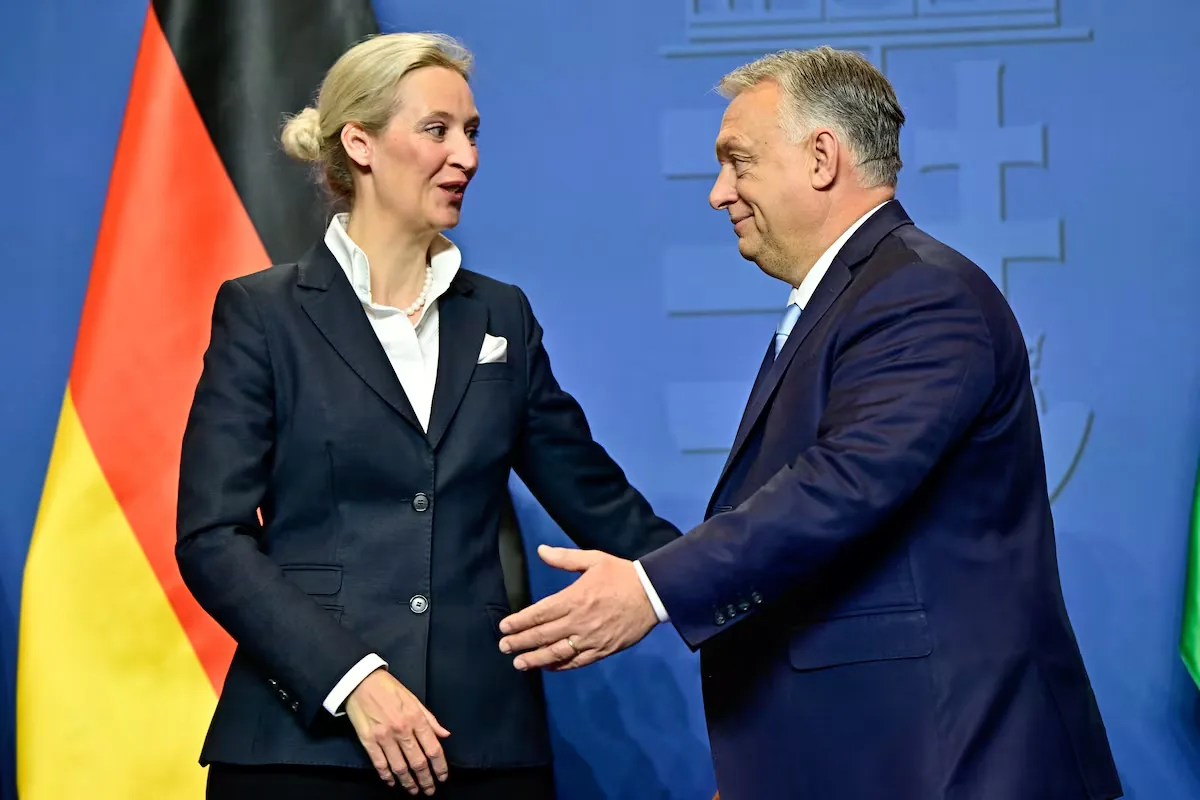
The victory of Alternative for Germany (AfD) in Saxony-Anhalt has come as a small shock to Brussels. The advance of the far right in the Union’s leading economy is causing concern in Europe. The substantial result of AfD goes beyond the borders of the land and represents a new sign of the erosion of the country’s political center and, with it, Berlin’s ability to act as an anchor for the European Union. Regardless of what happens in Saxony-Anhalt, whether the far right manages to form a government or not, several EU sources warn that the increasingly clear internal polarization in Germany could seriously affect European policy on major consensuses such as Ukraine, Russia, defense, competitiveness, or the EU’s own enlargement. All this at a crucial moment for the continent’s future amid threats from Donald Trump in the United States, China’s rise, and the prolonged war of Russia against Ukraine.
Read more Gnomos
“The erosion of the German center is a problem for all of Europe,” predicts a Brussels source. AfD is a Eurosceptic, anti-immigration party that has called for an end to German support for Ukraine and the resumption of energy agreements with Russia.
This last point was precisely addressed by the EU High Representative for Foreign Policy, Kaja Kallas, this afternoon in Lithuania: “Parties that are in a way blind to this threat and say we should do nothing about it because it is not our business are gaining ground. I am worried that we might wake up without having done enough to deter threats and defend ourselves.”
Saxony-Anhalt is not the conclusion but the first test of a German election cycle that will continue and extend throughout 2027. It is a super election year, with decisive elections in France — next spring — Poland, Italy, and Spain.
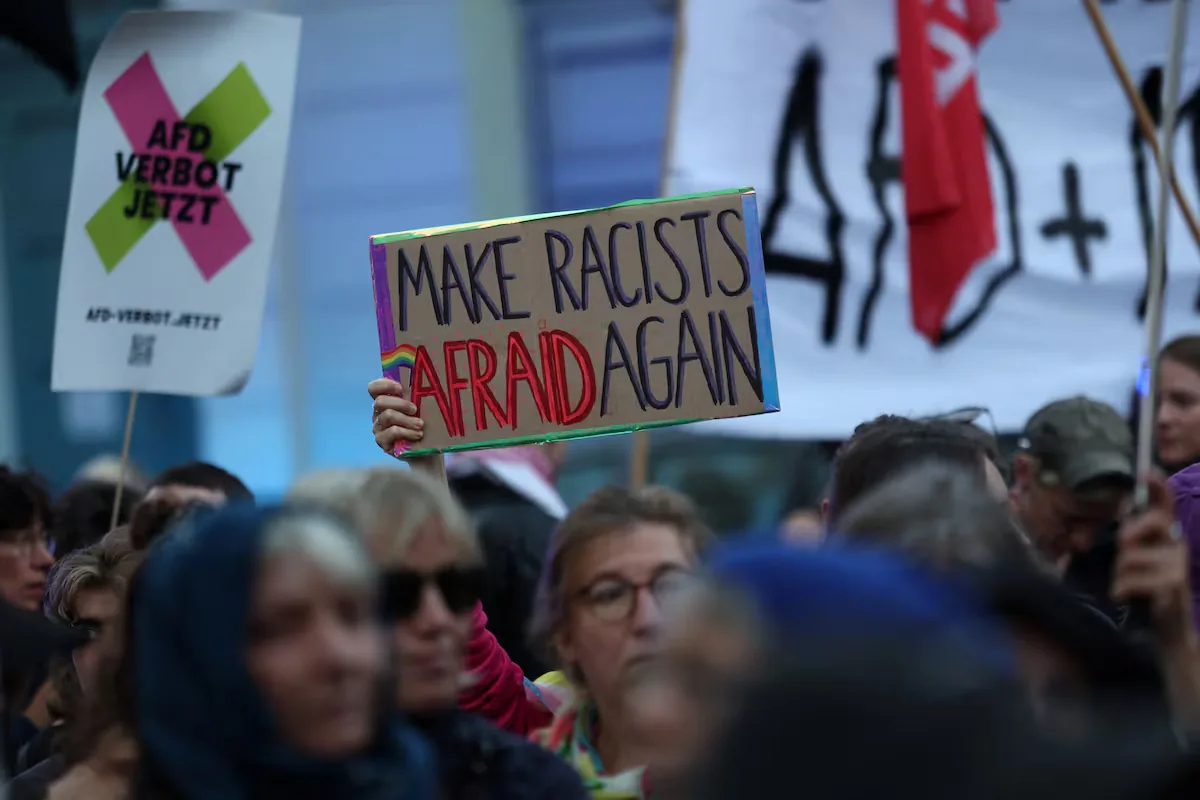
Analysts and experts also warn that what happened on Sunday in that land, which was part of former East Germany and has become one of the main electoral laboratories for the far right, can be read as a preview of the battle to be fought in the coming months elsewhere. The upcoming elections will determine whether traditional forces can contain the ultras or if the electoral normalization of parties like AfD, considered pariahs until recently, ends up shifting Europe’s center of gravity even further to the right.
In France, where they are already anticipating their own electoral battle and where Marine Le Pen’s far-right National Rally has also advanced, AfD’s result in the small and impoverished German state is analyzed as “a very serious moment for Europe.” “It sends a very, very worrying signal,” said French Finance Minister Roland Lescure on RTL radio. “This shows that we face a great challenge against a populist wave spreading worldwide today and to which we must resist,” he added.
W Polsce tylko idioci albo zdrajcy mogą się cieszyć z tryumfu AfD w Niemczech. Trochę się ich nazbierało w Konfederacjach i PiS.
— Donald Tusk (@donaldtusk) September 6, 2026
In Poland, Prime Minister Donald Tusk, who is fighting his own battle against the Polish far right, has been harsher. “In Poland, only idiots or traitors can rejoice at AfD’s triumph in Germany,” he said on social media. “The vote result in Saxony-Anhalt is the affirmation of a political force that is antithetical to the liberal and Western values recognized by Forza Italia and is very bad news that we hope will be a local exception,” said Italian Foreign Minister Antonio Tajani in statements collected by ANSA.
Read more 3,176,328 spectators and 103 million euros in revenue, new theater record in Barcelona
The political family of both, the European People’s Party, long ago dismantled the cordon sanitaire against the far right. The traditional European right differentiates between different types of ultras: those who support Ukraine and NATO and those who do not. AfD is in the second group.
In this second group is the League, led by Matteo Salvini, which is part of the Italian government. Its leader has been among those who congratulated the German ultra party by speaking of a “resounding success.” “Fear? Terror? Danger? No, it’s called democracy. Another Europe is possible,” said the deputy prime minister. In Spain, it was Santiago Abascal himself, leader of Vox, who wanted to congratulate AfD leaders “for this spectacular result that is a great hope for Germany and Europe.”
Both the League and Vox are part of the far-right political family called Patriots for Europe, a group that differs from the other ultra group, the European Conservatives and Reformists (ECR), by being more accommodating toward Russia. However, none share a parliamentary group in the European Parliament with AfD, the most right-wing and pro-Russian family. The Germans were expelled from the group due to comments sympathetic to the Nazis during the European election campaign, although this has not prevented congratulations from arriving now.
The Kremlin has been cautious in showing satisfaction with AfD’s victory, its big bet to break Germany and Europe from within, amid an escalation of sabotage and attacks in the Central European country, reports Javier G. Cuesta. In the absence of official reactions, an important negotiator for the Russian president, businessman Kirill Dmitriev, a member of Putin’s family, applauded the far-right party’s advance. “The ‘most dangerous man in Germany’ is the voice of reason, forgotten among the warmongering lies of those profiting from the war,” Dmitriev said while sharing an interview with Ulrich Siegmund on X. An AfD delegation visited the St. Petersburg Economic Forum in June and was received by Dmitriev himself and the head of the state gas company Gazprom, who offered the German party to resume pumping cheap gas to Germany in exchange for abandoning Ukraine.
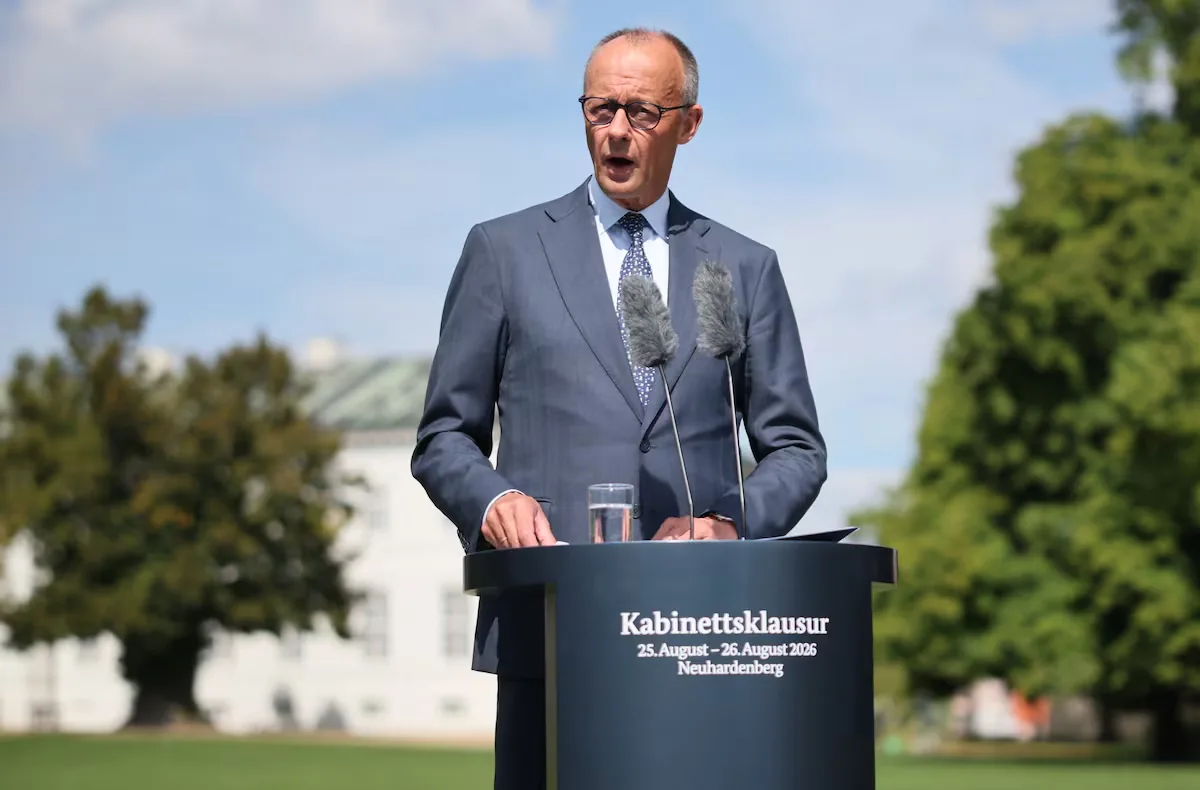
In the European Parliament, for now, there are few reactions to what happened in eastern Germany outside the far right. Terry Reintke, co-chair of the Greens group, has spoken: “The high support for AfD’s far right marks this day in post-1945 German history. All democrats should stand together to defend our diversity and an open society against far-right extremisms.” This German politician also pointed to Chancellor Friedrich Merz’s management as responsible for what happened because, she believes, “he has failed with his radical austerity.” “People want fair social policies, not insults,” Reintke continued.
The leader of the Socialists and Democrats group, Iratxe García Pérez, has also reacted, demanding “a deep reflection” from the European People’s Party. “When the center-right copies the far right’s discourse, it does not weaken it; it legitimizes it. Voters prefer the original over the copy. The far right is not fought by adopting its agenda,” she added. “Germany leaves a warning from which the entire European democratic family should take note and act.”
She agrees with the historical analysis of the Green leader, Jeremy Cliffe, director of the European Council on Foreign Relations, who highlights that what happened on Sunday “has great significance.” “A red line has been crossed in German politics: the far right has, for the first time since 1945, a substantial chance of power,” he concluded.