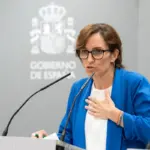

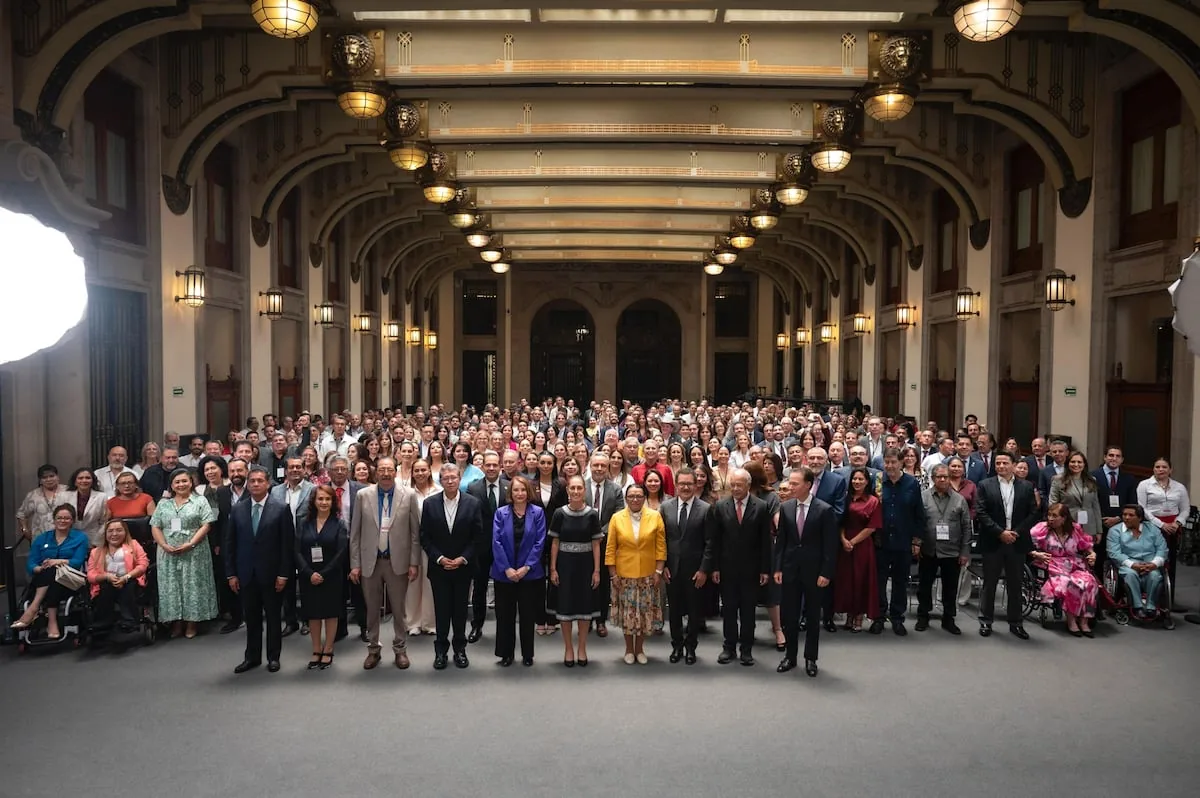
President Claudia Sheinbaum gathered this Thursday at the National Palace deputies and senators from Morena, the PT, and the PVEM in a closed meeting marked by a message of political discipline, internal cohesion, and national defense in the face of increasing pressure from the United States against figures of the Mexican ruling party. The president asked the legislators to “close ranks” and go out into the territory to defend the discourse of sovereignty and national independence, but she also warned that her Government “will not protect anyone” and urged that “those who need to be investigated be investigated.” With a nuance: if there is evidence. This comes amid the political earthquake caused by the accusation from Washington against the licensed governor of Sinaloa, Rubén Rocha Moya, and the warnings from the acting U.S. attorney general that new investigations against Mexican politicians may come.
The meeting took place at a moment of maximum tension for the ruling bloc. The judicial and political offensive of Donald Trump’s Government over alleged links between Mexican officials and drug trafficking has put the ruling party on high alert and opened an unprecedented crisis for Morena. Attendees at the meeting told EL PAÍS that Sheinbaum avoided at all costs directly mentioning Rocha Moya, but did acknowledge before the legislators that there are requests for investigation into members of the movement and made it clear that her Government will not protect anyone if there is evidence.
“She said we are facing this because of an electoral issue in the United States, but that we are not going to protect or defend anyone. She said to investigate whoever needs to be investigated, but with evidence. The same as she has said in the morning press conference,” said a Morena legislator. The name of the governor of Sinaloa has become unmentionable for Sheinbaum, officials say. “What she mentioned is: ‘There is a request to investigate some comrades of the movement and they will be investigated.’ She did not mention Rocha, she did not say the governor,” related another attendee.
The message, they say, sought to balance the two most important fronts at this moment for the ruling party: rejecting what they consider a political attack coming from the U.S. Government and, at the same time, avoiding appearing as a group that covers up members accused of possible criminal links.
The possibility of new revelations involving leaders or officials has begun to generate nervousness in different sectors of the ruling party, particularly among legislators, governors, and regional leaderships, sources consulted by this newspaper say. “We may have some differences, such as on the recall referendum, but on what we cannot have any kind of difference is in the defense of sovereignty,” the president pointed out. In the ruling bloc, Sheinbaum’s political priority has become clear: to keep the movement united at the moment of greatest external pressure Morena has faced since coming to power.
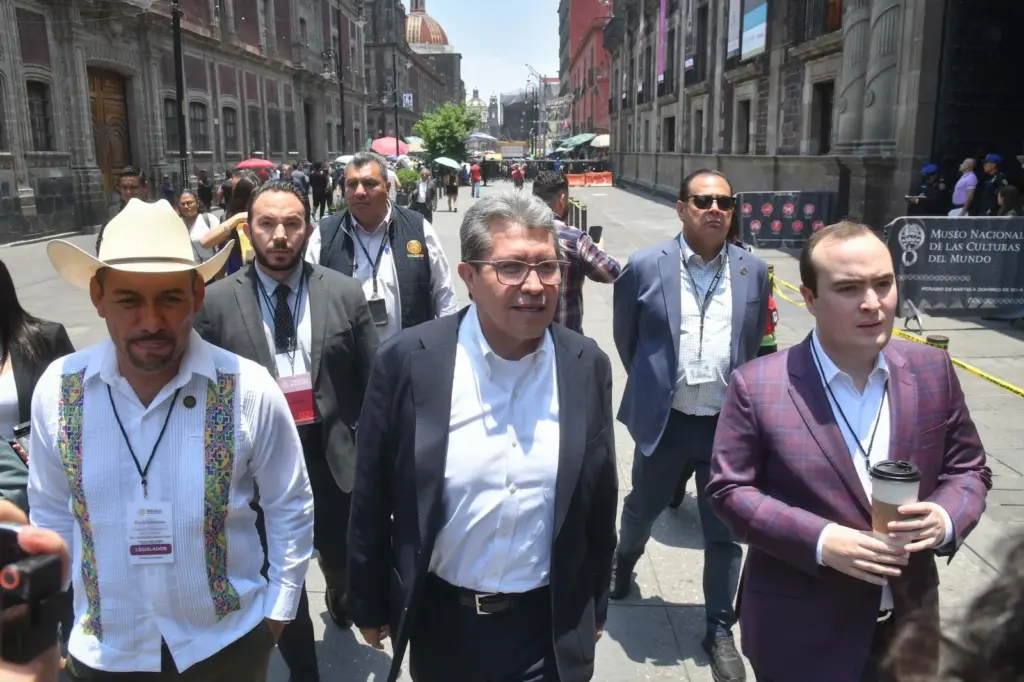
The meeting began with the intervention of the Secretary of the Interior, Rosa Icela Rodríguez, and continued with the statements of the Morena coordinator in San Lázaro, Ricardo Monreal; the national leader of the PT, Alberto Anaya; and the PVEM senator, Manuel Velasco, before the president took the floor to deliver her message.
According to another attendee, both Monreal and Anaya insisted on the need to strengthen territorial work given the impact the crisis is beginning to have on public perception. “She said that people must know in the territory that the fight from now on is for the country’s independence and sovereignty,” recounted a PT source.
The narrative of sovereignty has become the new axis of defense for the ruling party in the face of the hardening of the U.S. discourse. In Morena, there is the perception that political sectors in Washington have begun to use security and the fight against drug trafficking as an electoral weapon ahead of the U.S. midterm elections, a reading that Sheinbaum shared before the legislators.
Sheinbaum’s call has been interpreted by several attendees as an order to avoid public divisions and maintain a uniform discourse. “She called us to unity, to walk the path of principles and to close ranks in defense of sovereignty and independence,” related another legislator at the end of the meeting. “We talked about the strength of going together. Then people are not objective and have other intentions and that is where everything falls apart.”
The meeting revealed the ruling party’s concern about the political impact that the U.S. narrative may have on social mood. Especially, on electoral preferences ahead of the 2027 midterm elections in Mexico, where the prize is not small. Seventeen governorships will be contested, including Sinaloa, and about 3,000 local and federal positions. Morena and its allies fear that investigations and accusations coming from Washington will end up permeating public opinion and eroding the movement’s main banner: do not lie, do not steal, and do not betray. The moral legacy of former president Andrés Manuel López Obrador.