









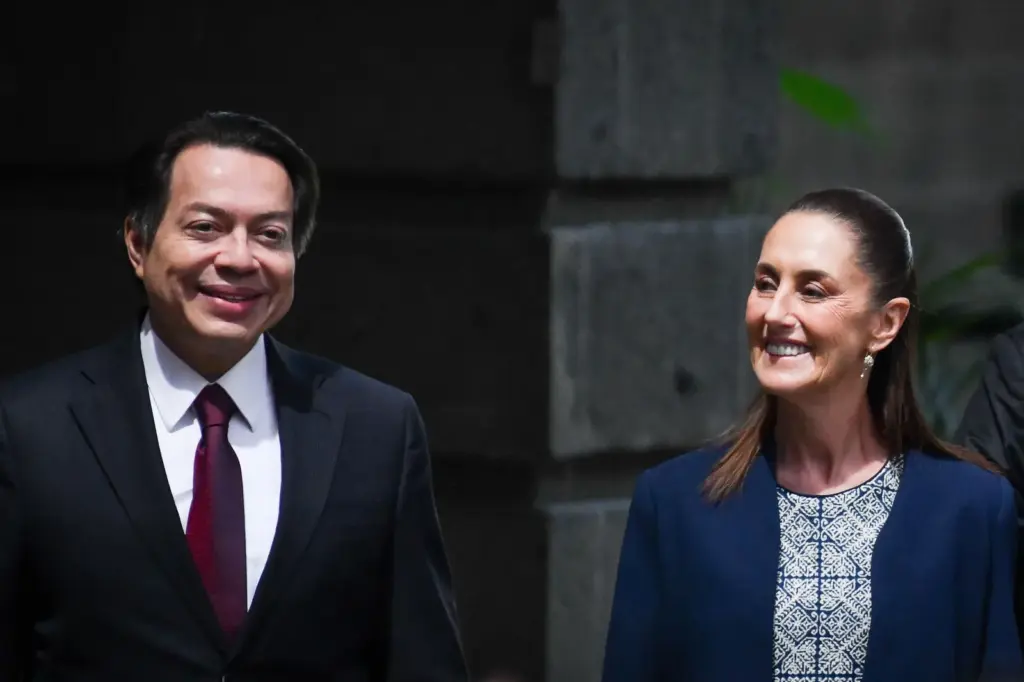
Mexico’s president, Claudia Sheinbaum, has chosen a date loaded with political symbolism to send a message of reconciliation to the teaching profession. On Teacher’s Day, the head of the Secretariat of Public Education (SEP), Mario Delgado, announced a 9% salary increase for basic education teachers in an event from the Living Museum of Muralism, the SEP headquarters. The adjustment, consisting of benefits and direct income increases, comes at one of the most politically sensitive moments for the Government. The National Coordinator of Education Workers (CNTE) maintains the warning to intensify mobilizations and protests, even during the World Cup celebrations, if the Government does not address one of their main demands: the withdrawal of the 2007 ISSSTE Law to guarantee better pensions for teachers.
The president has defended the announcement. In her message to representatives of the teaching profession, she said that her Administration has had to make “a great effort” to finalize the salary adjustment. “I wish it were double,” she admitted in front of the teachers, before asserting that public resources must be allocated “to the people of Mexico” and that whatever can be done for the teachers “will be done.” Sheinbaum reviewed her social redistribution policy which seeks, she said, to sustain welfare spending without abandoning public investment.
Beyond the figures, the president has placed the figure of teachers as the core of public education and has been critical of previous governments’ policies that, she said, unfairly blamed teachers for educational deterioration. “The profound transformation of Mexico is owed to the teachers,” she said.
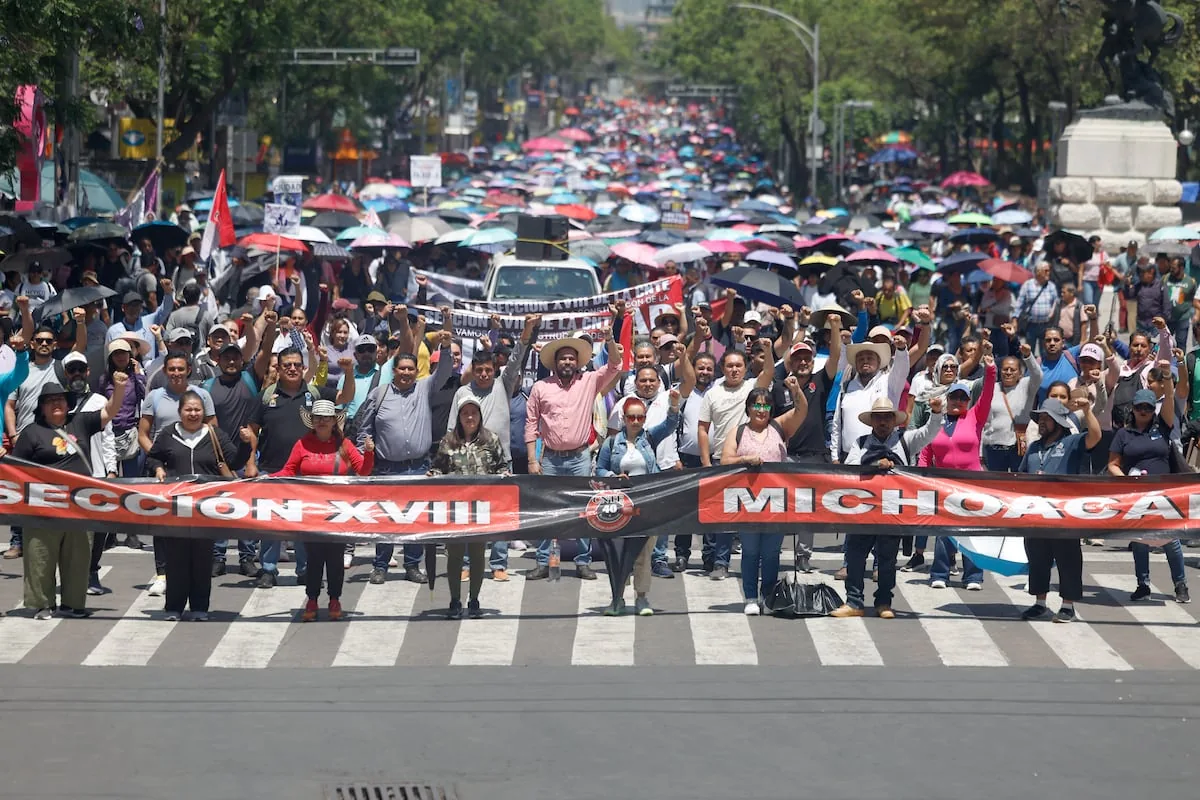
In parallel to the official event, the CNTE march has occupied the main roads in downtown Mexico City demanding the repeal of the legislation, which they consider undermines their retirement conditions, and salary improvements. The demand is not new. For years, the teaching profession has denounced that the reform promoted during Felipe Calderón’s administration transformed the pension system into an individual account scheme that worsened the retirement conditions of State workers. Now, the pressure has escalated to become one of the most delicate issues for Sheinbaum’s Government.
Read more Louisiana Primary Elections 2026: When They Are, How to Vote, and What’s at Stake
Alfonso Cepeda Salas, leader of the National Union of Education Workers (SNTE), historically closer to the government, has incorporated the demand into his speech this Friday in front of Sheinbaum. “Mexico’s teachers deserve a dignified pension, a peaceful old age, and a retirement without worries and precariousness,” he stated. The union leader has put on the table the feasibility of an amendment to the law. “After a thorough actuarial study, we are certain that, with rationality, budgetary responsibility, and will, it is possible to modify the law to reverse the neoliberal reform,” he concluded.
Sheinbaum responded by reaffirming the role of teachers as “the backbone” of the country and maintained that her Government will continue a policy of salary recovery for the sector. The increase, although celebrated by the official union leadership, has not provided a fundamental solution to the conflict: pensions and the social security model for education workers.
Amid the announcement, the teaching profession’s threat to raise the tone of their protest during the World Cup celebrations remains latent. Teachers have historically demonstrated pressure capacity. Prolonged sit-ins in the capital, airport blockades, and closures of strategic roads are part of their political repertoire. Now, the specter that these mobilizations coincide with the preparations for the Football World Cup puts the federal Government and local authorities on the ropes.