






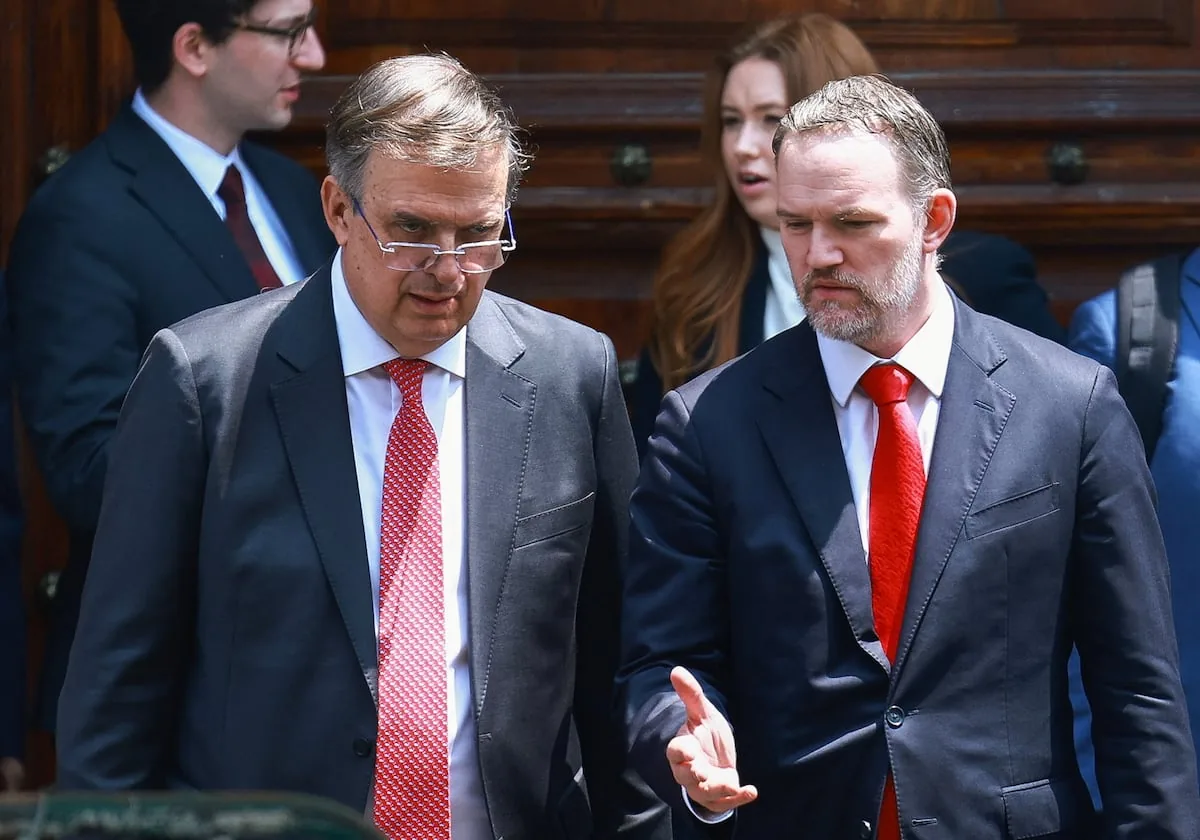
Mexico’s President, Claudia Sheinbaum, met this Monday at Palacio Nacional with the United States Trade Representative, Jamieson Greer. The second round of talks between Mexico and the US on the trade agreement is part of the process that will lead to the maximum review of the USMCA next July in Washington. “I am very happy to be here in Mexico today. We have been working very constructively with Secretary Marcelo Ebrard and his team. It is a great honor to be with President Sheinbaum at this time, and I am confident that we will make progress,” Greer declared upon his arrival at Palacio Nacional. After the meeting, which lasted just over an hour, the US official left the premises to go to the bankers’ club to continue working with the Ministry of Economy. His visit also included a meeting with prominent businessmen such as Carlos Slim Domit, from América Móvil, and Daniel Servitje, from Grupo Bimbo.
Secretary @m_ebrard and Ambassador Greer (@USTradeRep) arrived at Palacio Nacional to meet with President @Claudiashein, within the framework of the dialogue between Mexico and the US to advance strategic issues of the commercial relationship and the #USMCA review process. pic.twitter.com/78Wx7fK2kz
— Economía México (@SE_mx) April 20, 2026
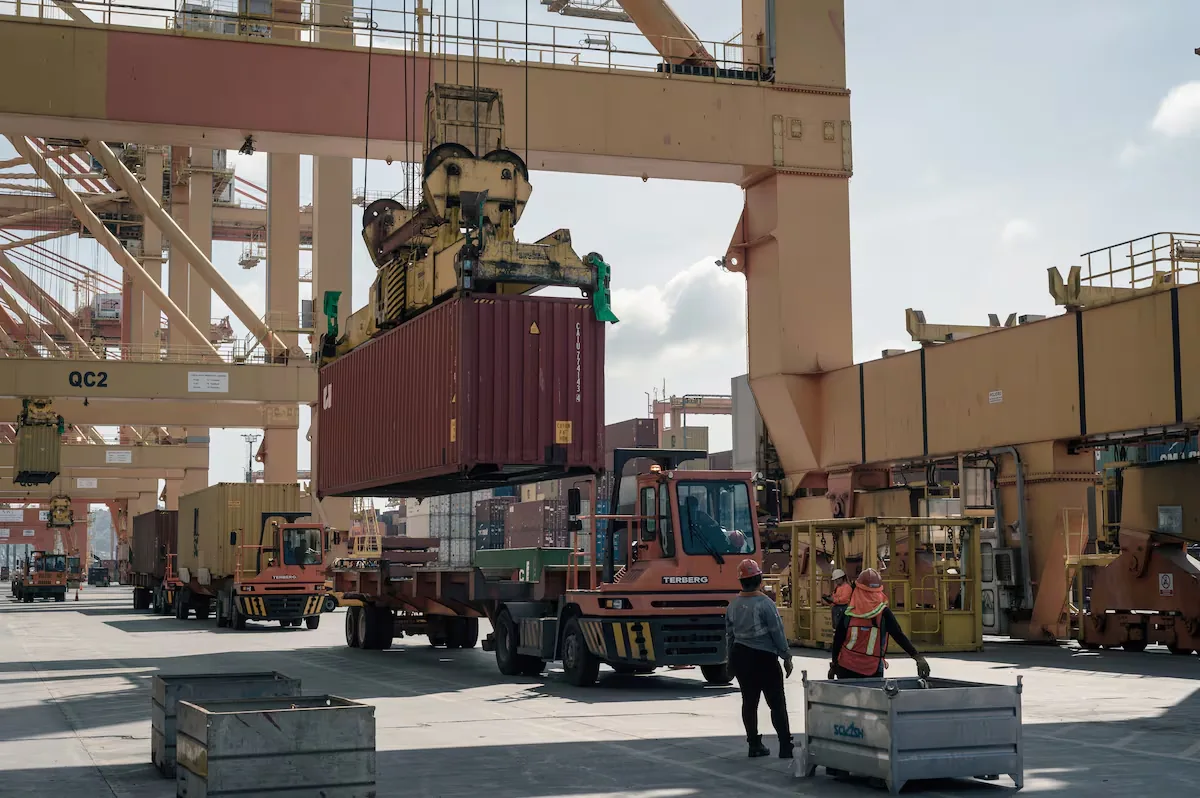
Before the closed-door meeting, Sheinbaum briefly stated that progress would be made on the strategic issues of the binational trade relationship. “We want the treaty to remain with some improvements, but in essence, what is being proposed is a review. The issue of steel, aluminum, and automobiles is very important to us, and a prior agreement could be reached beyond the negotiation itself or within the negotiation itself,” she mentioned in her usual press conference. Although Mexico has avoided most US tariffs via the USMCA, sectoral tariffs imposed on the automotive and steel sectors still weigh heavily, the latter with a 50% tariff.
Sheinbaum pointed out that the federal government decided to strengthen the negotiating team by incorporating the Secretary of Agriculture, Julio Berdegué, the CEO of Nafin and Bancomext, Roberto Lazzeri, and Diana Alarcón, Mexico’s representative to the World Bank, into the working groups. The president acknowledged that the United States is interested in tightening the rules of origin of the trade agreement to prevent products from third countries from entering through Mexico without paying tariffs. “The more the rules of origin are strengthened, the better, that means more is produced in Mexico,” she added.
The day of the head of the United States Trade Representative (USTR, by its acronym in English) in Mexico began in the early hours of the morning in the heart of the capital, at the bankers’ club. On behalf of the Executive, the working meetings will be led by the Secretary of Economy, Marcelo Ebrard; the Secretary of Finance, Édgar Amador, and Altagracia Gómez, coordinator of the Regional Economic Development and Relocation Advisory Council. On the business side, the USTR head met with the directors of the main automakers and steel companies: General Motors, Nissan, Mazda, Stellantis, Mercedes-Benz, Arcelor-Mittal, Deacero, Tenaris Tamsa, Minera Autlán, among others.
The rules of origin and the elimination of non-tariff barriers by Mexico are some of the issues that will be addressed during Greer’s visit. Bilateral meetings between Mexico and the US began last March in Washington and are part of the USMCA review process, which will culminate next July. Under the protection of this treaty, signed more than 30 years ago, the Latin American country has become the main trading partner of the United States, surpassing countries like China and Canada.
With an annual exchange of almost 900 billion dollars between imports and exports, the Mexican government has always defended the permanence of the USMCA. However, US President Donald Trump has repeatedly disqualified the agreement, opening the possibility of undermining it and replacing it with bilateral agreements. Despite these criticisms, Mexico will continue to advocate for North American trade integration via the USMCA.
Read more Trump’s popularity falls to its worst level due to the economy and the war in Iran