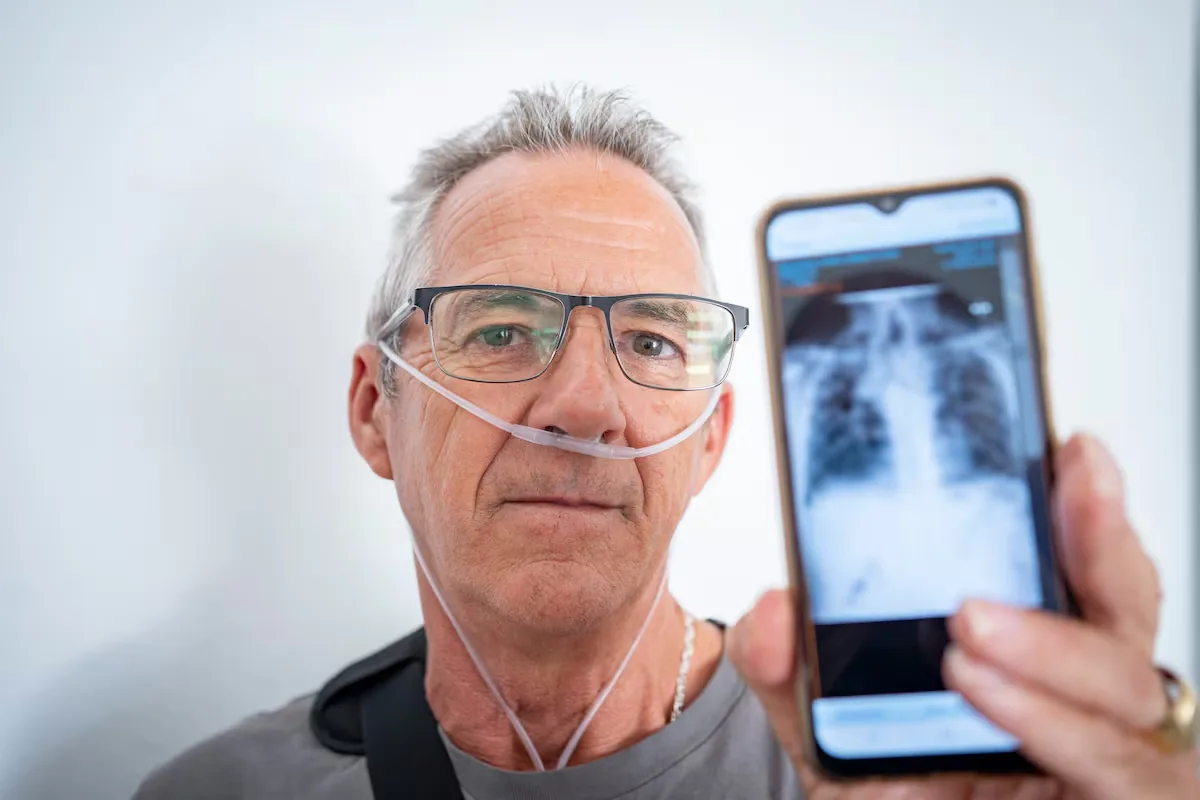
For Serafín Oliva, every step is a world. “With any staircase, any little hill, I get extremely tired. I run out of breath. When I go out to walk, if it’s a long route, I have to carry the breathing machine with me,” says this marble worker from Cádiz, who dedicated a good part of his working life to installing artificial stone countertops in kitchens. He has been permanently disabled since the age of 54, due to silicosis caused by years of exposure to crystalline silica at work. “Many of the colleagues I worked with are in the same situation. I feel cheated for not having known back then what I was exposing myself to,” adds Oliva, now 60 years old.
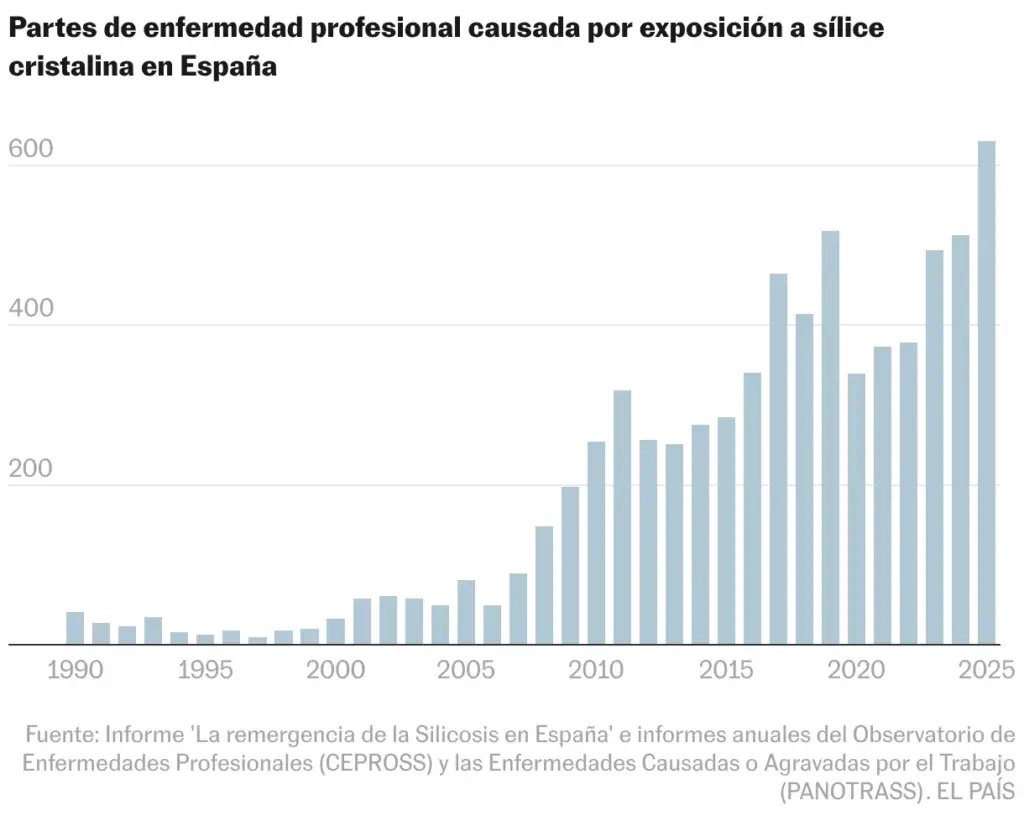
This worker is one among thousands in Spain in that situation, diagnosed with silicosis after having worked part of his life installing artificial stone countertops, an activity specialists link to the outbreak of the problem in this century so far. The most detailed report that has analyzed the phenomenon, , promoted by the Ministry of Health and published in 2024, warns of the “substantial increase” in cases in recent years. In 2025, 630 reports of occupational disease caused by exposure to crystalline silica were notified, compared to 285 in 2015, 81 in 2005, and 13 in 1995. Thus, in the last twenty years, cases diagnosed as occupational disease have multiplied eightfold. The phenomenon is also reflected in the activity of the Labor and Social Security Inspection related to this issue, according to data obtained by EL PAÍS through the Transparency Portal.
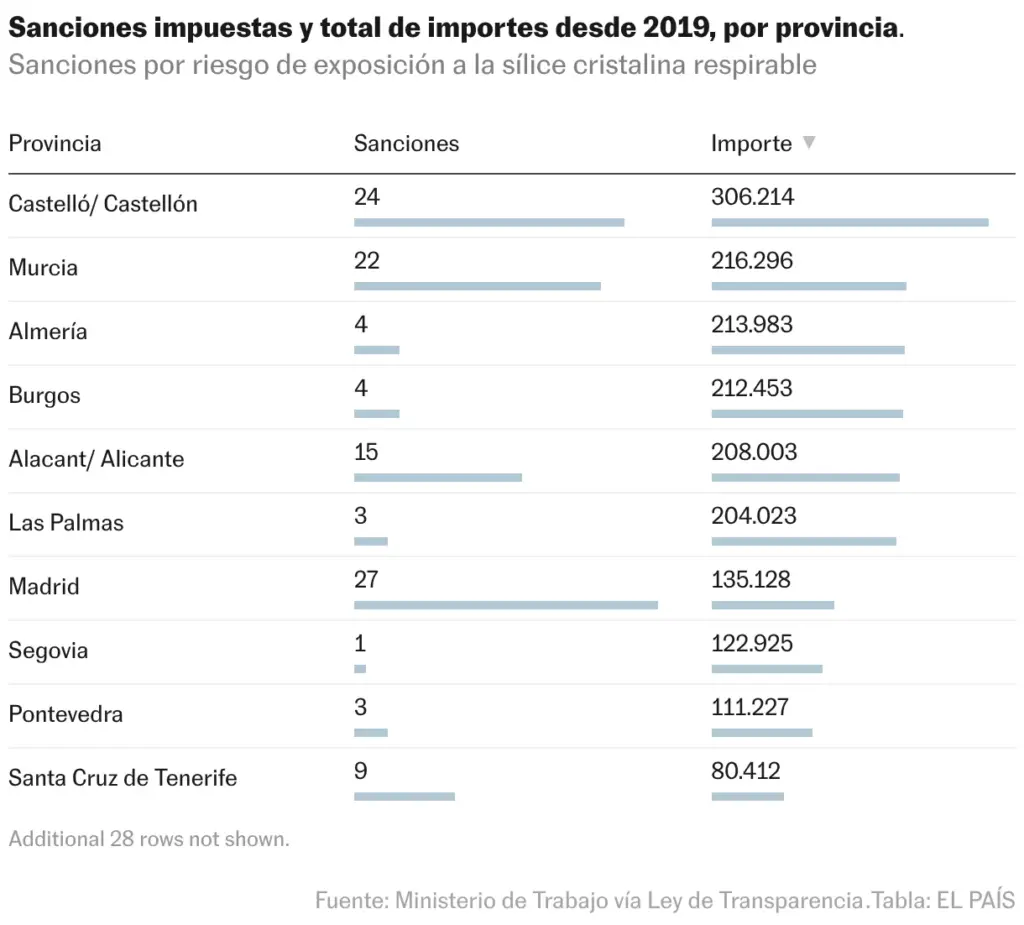
The Inspection has imposed 224 sanctions on companies from 2019 to 2025, in a clearly increasing trend over the years: there were 13 in 2019, 17 in 2021, 36 in 2023, and 72 in 2025, according to the provided data. This has meant multiplying the number of fines to companies by more than five. At the same time, accordingly, the annual amounts of imposed infractions have increased: from 49,300 euros in 2019 to 162,500 in 2021, 381,800 in 2023, and 738,900 in 2025, totaling 2.5 million euros in six years.
By territories, the prominence of the Mediterranean coast in the activity is evident, with 306,200 euros in fines in Castellón (from 2019 to 2025), 216,300 in Murcia, and 214,000 in Almería, the main headquarters of the sector giant Cosentino. The Inspection information does not identify the sanctioned companies.
The Almerian multinational, heavily criticized by affected associations, has made headlines for two landmark rulings in recent years: one in February 2023, when the Criminal Court No. 2 of Vigo convicted the company president, Francisco Martínez-Cosentino, for five counts of serious injury by gross negligence for not providing another firm with sufficient information about the risks and health hazards derived from handling its Silestone product; and in March 2024, when the Criminal Court 5 of Bilbao acquitted the president of Cosentino of criminal responsibility related to silicosis contracted by eight workers at a marble workshop in Bizkaia.
In that case, the judge said the material manufacturing company did not provide sufficient information about its danger, but did not consider that conduct criminally relevant. The company has been announcing reductions in the silica content of its products: if it was previously around 95%, it now has lines around 10%. The high silica content (higher in artificial stone than in natural stone), according to specialists, accelerates the development of the disease.
From Cosentino they detail to this newspaper that this reduction “represents a tangible advance that helps workshops manage their employees’ exposure to silica dust more effectively. Thanks to the continuous reinforcement of prevention and safety measures in centers handling materials with crystalline silica, a progressively downward trend in these cases can be expected in the coming years.”
“Reemergence”
One of the authors of the report The reemergence of silicosis in Spain is Alfredo Menéndez-Navarro, professor at the Faculty of Medicine of the University of Granada. He has also participated in a study by the American Thoracic Society on silicosis from artificial stone. “The number of disease reports continues to grow and since the beginning of the century it has done so almost exponentially. We are facing a clear and serious reemergence,” says this specialist, who links this occupational health problem to a specific activity: “The data we handle show that behind this new emergence are not extractive activities, but the manufacture and handling of artificial stone.”
The report he co-authored specifies this point: “This increase has been mainly linked to silica exposure in sectors different from those traditionally responsible for silicosis. The sector with the greatest growth has been Manufacture of other non-metallic mineral products, which has accumulated 50% of the reports.” It adds that between 2007 and 2019, 93% of the reports in the Manufacture of other non-metallic mineral products sector corresponded to cutting, carving, and finishing of stone, “an activity that includes companies working with quartz agglomerates as well as those processing natural stone.”
Menéndez-Navarro emphasizes that research shows silicosis associated with mining usually has a less severe progression than that caused by handling artificial stone used in the manufacture and installation of countertops. In light of the available scientific evidence, he also considers that current preventive measures do not sufficiently reduce the risk, so he calls for opening a debate on the advisability of banning the manufacture and handling of this material.
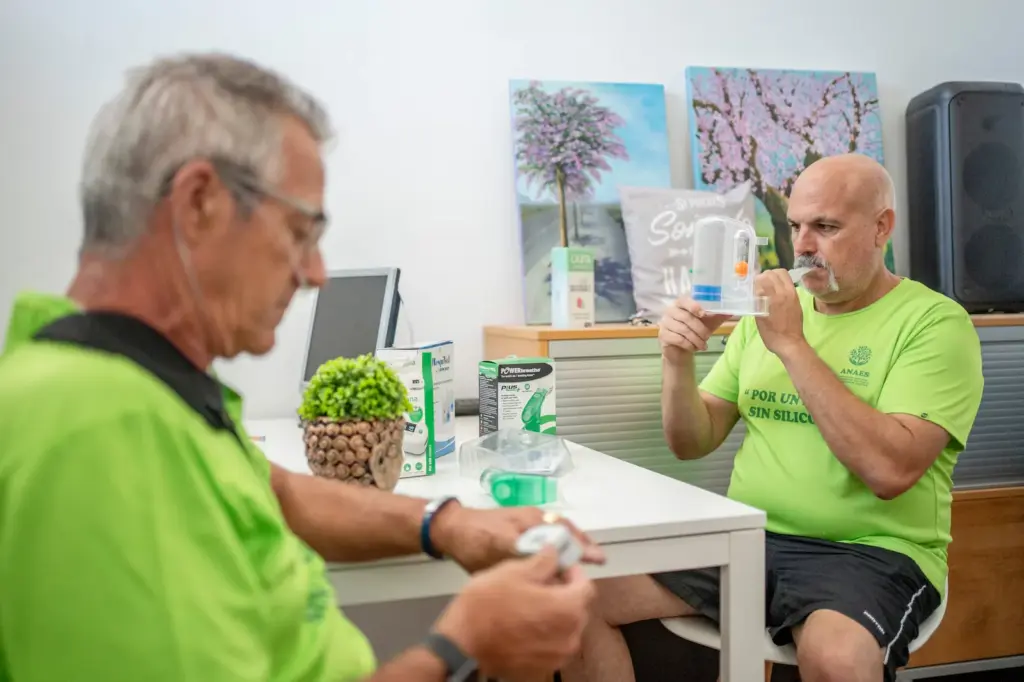
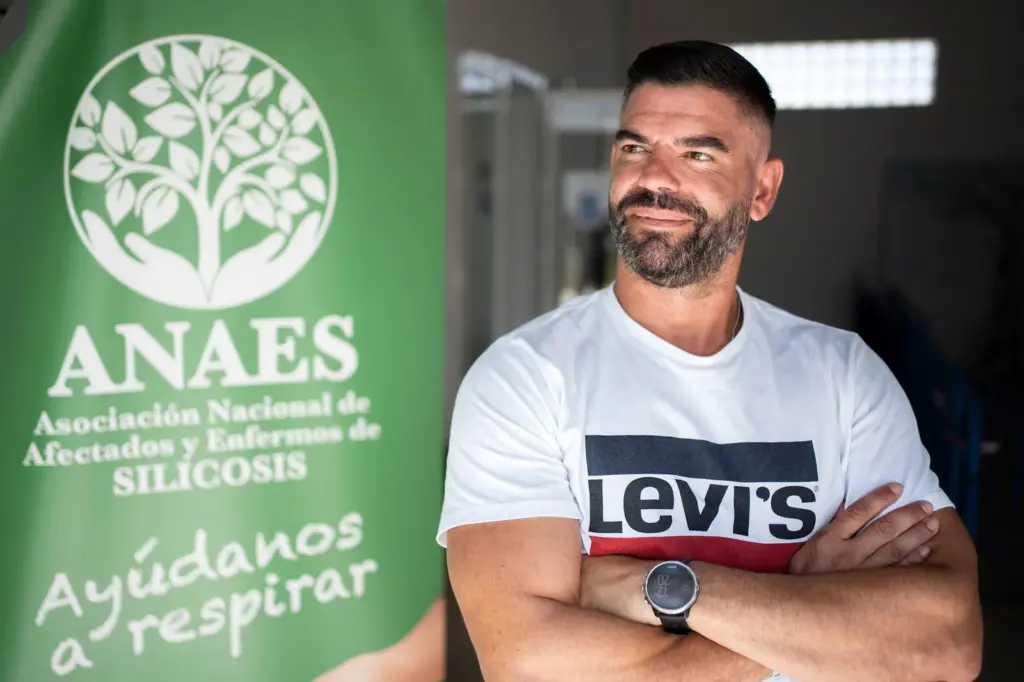
It is a request to the administrations echoed by one of the main affected associations, ANAES. “Silicosis is an occupational epidemic, increasing year by year due to the use of quartz agglomerates. We believe there is no way to work with artificial stone without the risk of contracting the disease, no matter how many measures are now being implemented,” says Francisco Manuel Aragón, president of the association, who with that situation analysis demands the following: “We ask the administrations to look at the scientific data, to see that people keep getting sick, and to ban work with artificial stone.”
Aragón stresses that Spain would not be the first country to take that step, which Australia has already undertaken, and that authorities are moving in the same direction in the most populous territory of the United States, California. The Spanish Federation of Marble Workers Associations rejects this path. “Regulation must be strict and protection measures as well; materials with high silica content cannot be used, but that does not mean quartz agglomerates should be banned,” says Alfonso Fernández, vice president of this employers’ association. This business representative regrets the increase in silicosis in recent years due to handling materials with high crystalline silica content, which has caused diseases still suffered by thousands of employees, but defends the reduction in new developments.
It is a discourse similar to that of the general secretary of UGT FICA in Andalusia, José Manuel Rodríguez Saucedo. “We are against the ban. Many jobs depend on that product. What we do support is that there be preventive measures appropriate to a highly dangerous product,” defends this unionist, who adds: “There are many polluting industries and safety measures are put in place, such as in oil refining or steelmaking.” The latest reinforcement of the requirement on crystalline silica was approved in 2022, with a limit value of 0.05 mg/m³. It is a more demanding value than that imposed by the European directive, which is set at 0.1 mg/m³.
More control
The data from the province with the most Inspection sanctions for silicosis, Castellón, does not surprise the occupational health manager of CC OO in the Valencian Community, Cristina Solera. “There is a lot of marble work, quartz agglomerate, and countertops. It seems that Inspection is intensifying control in the province, but these fines come when workers have already been exposed to the risk,” this specialist denounces. She believes the silicosis crisis is similar to that of asbestos: “The adaptation of the law and companies is very slow. A young union delegate in Castellón recently died from silicosis without it having been recognized as an occupational disease at the time, after little exposure.”
Solera criticizes the mutual insurance companies for the “obstacles” they put to recognizing the occupational origin of this disease and also criticizes companies for “not doing more health surveillance, for not being more attentive through specific medical check-ups.” “In time we will regret not having paid more attention to this problem. Many more preventive measures are missing,” insists the CC OO representative.
Francisco Manuel Aragón, president of the National Association of Silicosis Affected and Sick, demands “even tougher laws” to prevent other workers from ending up in his situation. “I spent a long time installing countertops in homes, without anyone warning me of the risk of what I was doing, without adequate preventive measures,” he recounts. There was a moment when he began to feel a dry cough and stabbing pains in his lungs. “I went to the doctor, he sent me to the pulmonologist who saw that I had spots in my lungs that were not normal.” He says he is no longer able to walk up even to a first floor: “I have a little daughter who wants to play with me and it breaks my heart to tell her many times no, that I can’t because I run out of breath.”
Read more Another failed conversation