









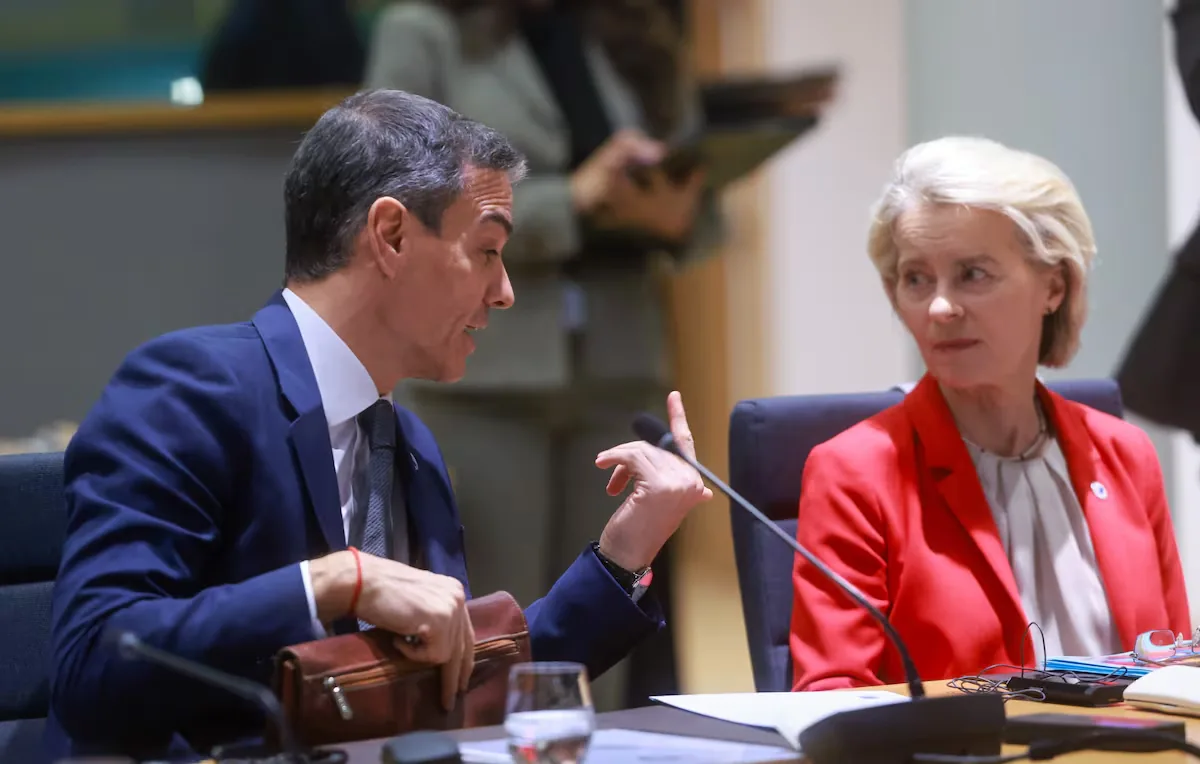
The European Commission has authorized the payment to Spain of more than 6.230 billion euros corresponding to the penultimate payment of the recovery plan, the sixth. This amount includes both grants, nearly 5 billion, and loans, 1.008 billion. When the disbursement is finalized, the money received by Spain will amount to 61 billion in non-repayable funds and another 17 billion in loans. Brussels announced the payment this Tuesday, once it received the approval of the EU Council, that is, the Member States, since its evaluation with partial approval was known at the beginning of July.
Read more Chumbak
What Spain is going to receive now not only includes money corresponding to the sixth tranche of the recovery fund, although this part is the largest: 5.970 billion euros. It is accompanied by another smaller one: 265 million that were actually blocked by the European Commission since the previous payment. At that time, Spain had not fulfilled all the commitments it had acquired for the fifth disbursement and Brussels withheld 1.1 billion for not raising diesel taxes and failing in two other milestones. A year later, Madrid remedied part of these breaches and the Commission has released about 260 million corresponding to them.
Also this time the EU Executive gave its partial approval to Spain, since three commitments remain pending: investments in bilingual vocational training, telecare services, and projects supporting vulnerable populations, entrepreneurship, and microenterprises.
A fact to consider when each tranche of the recovery plan is disbursed is that Spain receives a net amount. On this occasion, that money is 6.234 billion. However, since there was a pre-financing payment when the plan was approved in 2021 and another in its first major modification in 2023, the gross amounts corresponding to each of the payments are actually higher. For example, Spain receives for this sixth tranche a payment of 6.719 billion.
👉 It is official: Spain receives 6.234 billion euros from the sixth disbursement of the Recovery Plan.
📝 So far, 338 milestones and objectives of the Recovery Mechanism focused on improving sustainable mobility, housing, social protection, and… pic.twitter.com/xY1PtxkvAh
Read more Ratonera
— Arcadi España García 🇪🇺🚴♂️ (@ArcadiSD) August 11, 2026
After this sixth disbursement, only one remains, which Spain must request before September 30 because throughout 2026 the recovery plan is concluding its different stages. This very August all the spending of the mechanism must be committed and executed. Before September 30, the last request for funds must arrive from the Member States and, before the end of the year, in theory, the last payment should be released, which in Spain’s case amounts to about 18 billion in grants and more than 5 billion in loans.
However, all these dates, especially the last one, pose a challenge for the European Commission, because Spain is not the only one that will submit its last disbursement request. So far, only one Member State, Denmark, has fully completed its plan and received 100% of the allocated money. The rest have some payment pending; in Hungary’s case, it is practically yet to be requested and justified. However, what happened with Budapest is directly linked to breaches of the rule of law by the previous government, that of Viktor Orbán.
Modification
The path for Spain to request the last disbursement is almost clear. On Friday, the Commission gave its approval to the last modification of the plan, the ninth, to facilitate compliance. In that reform, the Government gave up another 1.25 billion euros in loans from the total it was entitled to, when a few months ago it had already given up requesting 61 billion. Therefore, the total amount in loans would have dropped from the 83.160 billion granted in the summer of 2023 to the 21.5 billion that Madrid will finally request.
Also, in this last reform, the Government and the Commission agreed to change some of the previously agreed commitments. The most notable among all is the one involving the revision of the tax incentives of the Spanish tax system to increase Treasury revenue by one-tenth of GDP. This milestone was in the plan from the beginning. It was later delayed and, in this last revision, given the Executive’s parliamentary weakness, the Executive decided to replace it with other commitments that do not require approval in the Congress of Deputies.