









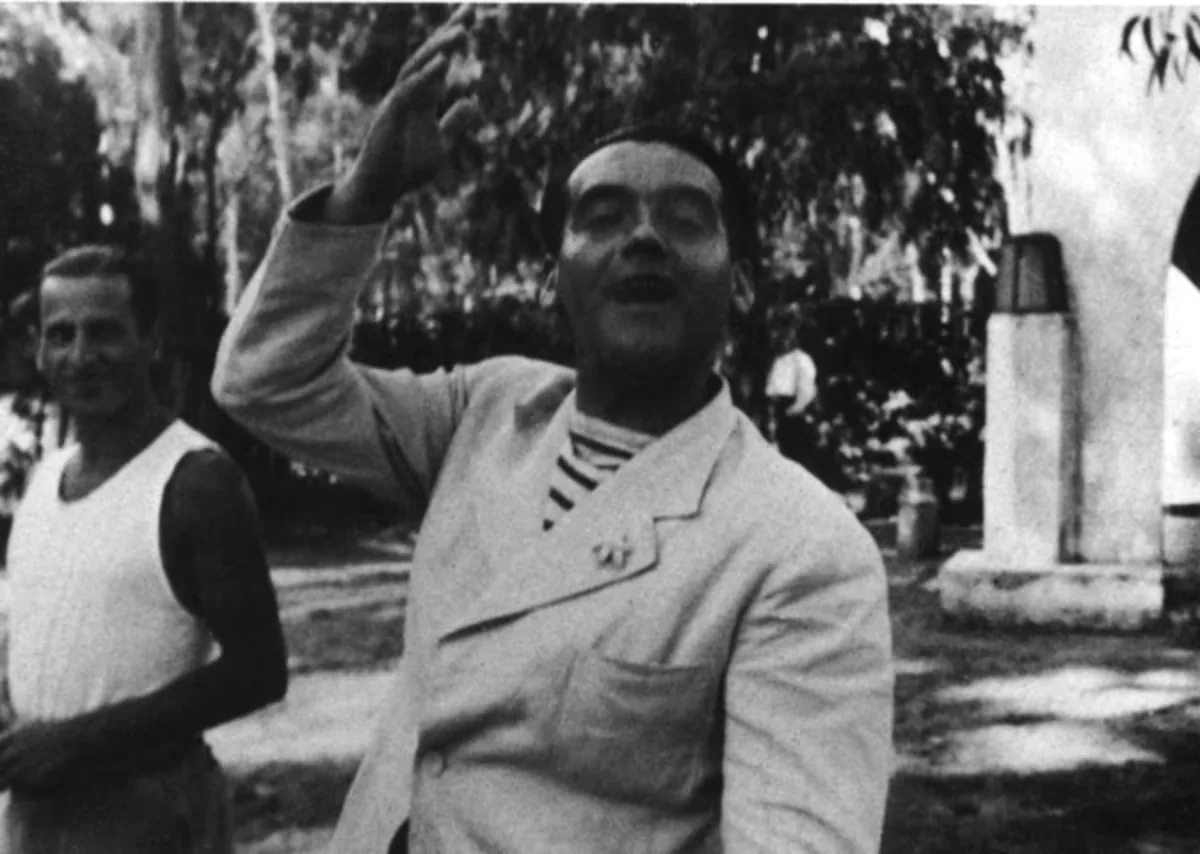
Sumar has demanded that the Government promote the legacy of the poet Federico García Lorca “at an international level” and make him a “universal symbol of freedom of creation.” On the 90th anniversary of the assassination of the poet from Granada by the coup forces, the left-wing party is requesting, through a non-legislative proposal registered in Congress this Tuesday, the launch of a specific plan for the recognition, dissemination, and projection of his cultural and democratic legacy, coordinated with the various public administrations.
Read more The decisive trial against Meta begins: «They knew their platforms were harming young people»
The initiative, which EL PAÍS has had access to, has been registered for discussion in the Culture Commission, and proposes, among other things, that the Instituto Cervantes, Spanish embassies and consulates, and the various external cultural action programs be responsible for spreading the work and figure of Lorca “as one of the main figures of contemporary Spanish culture.”
Furthermore, the party requests that “cultural and educational activities especially aimed at younger generations be promoted to deepen the knowledge of the life, work, and historical context” of the Andalusian artist. They also demand that “the conservation, digitization, research, and public access to documentary, audiovisual, and cultural collections” related to the poet be strengthened.
From the left-wing parliamentary group, they point out that Lorca should be recognized as “a victim of Francoist repression,” and that the Government must incorporate his “figure into the dissemination and recognition actions” developed within the framework of public Democratic Memory policies. In the proposal, they indicate that the “study, documentation, and dissemination of living cultural manifestations linked to the work” of Lorca must be promoted, “especially their transmission and reinterpretation through flamenco, music, theater, dance, recitation, and other expressions of popular culture.”
Read more Chess Analysis | Carlsen’s Fulfillment (XIX)
The text has been signed by three deputies from Izquierda Unida in Congress: Nahuel González, Toni Valero, and Enrique Santiago. The latter, the party leader, recalled in a message on X that the poet “was murdered by Falangists.” The parliamentarian pointed out that his “crimes” were “being a free spirit, spreading culture among the people with ‘La barraca,’ defending democracy and the Republic… and being homosexual,” in a message in which he argued that “fascist intolerance made him immortal.”
These words have been echoed by representatives of other political parties, such as the deputy and spokesperson of ERC in Congress, Gabriel Rufián, who recalled that “90 years later his remains are still being sought and those of the fascism that killed him are still voted for.” Along the same lines, the President of the Government, Pedro Sánchez, wrote on the former Twitter that the poet’s voice “was silenced by violence,” but that “his verses remain alive.” The Ministry of Culture, led by the Sumar minister, Ernest Urtasun, remembered the poet in another post accompanied by an image of the poem ‘Memento,’ a piece by Lorca that is part of the book ‘Poema del Cante Jondo,’ published in 1931: “When I die / bury me if you want / on a weather vane / When I die!”
“They killed Federico when the light was dawning. The firing squad of executioners did not dare to look him in the face.”
Today marks 90 years since the assassination of Federico García Lorca.
His voice was silenced by violence, but his verses remain alive.
Memory and justice.
Read more The GDP of the second quarter in Colombia accelerates to 3.5%
— Pedro Sánchez (@sanchezcastejon) August 18, 2026