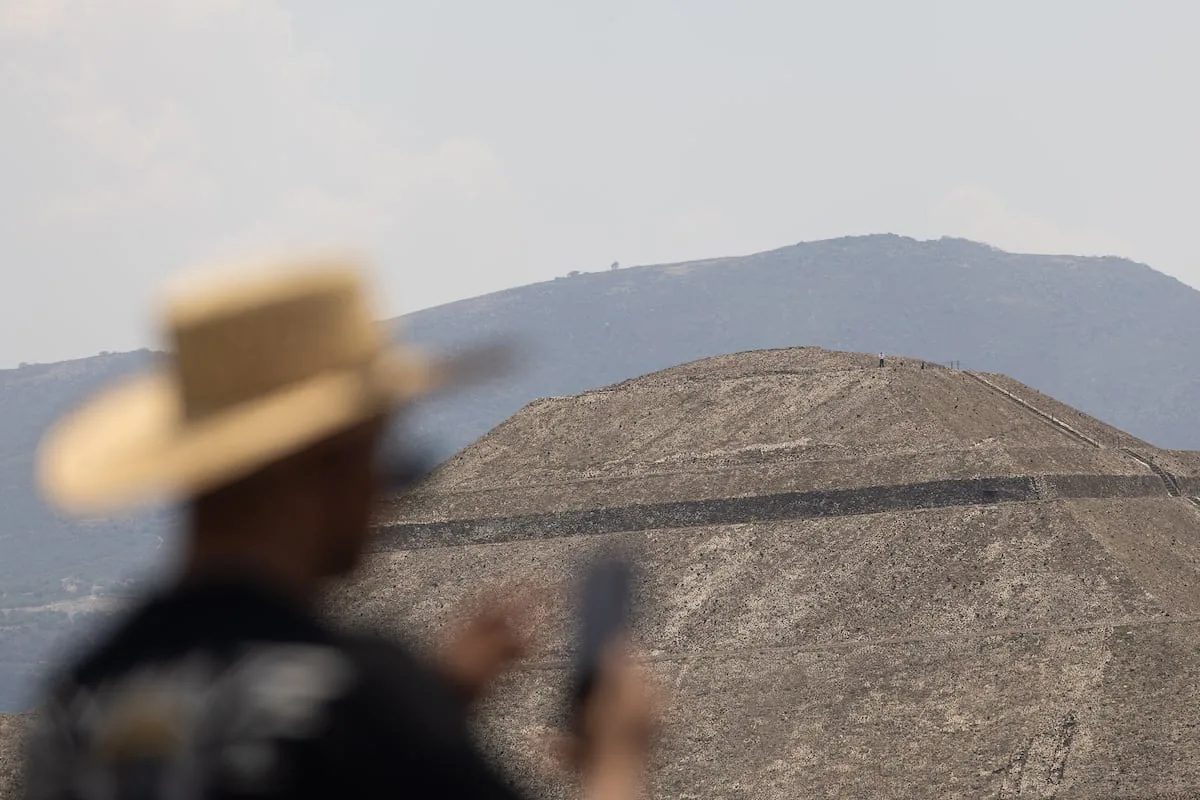


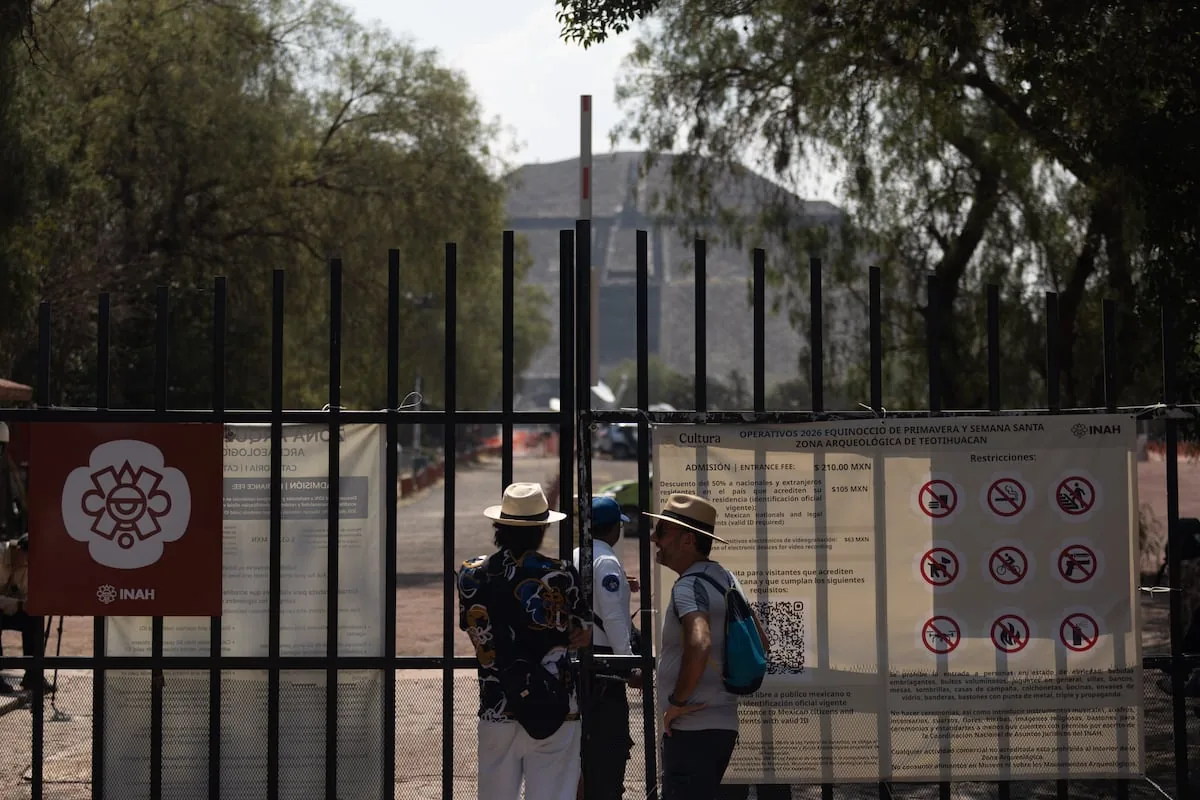
It is 11 in the morning in Teotihuacán when the first tourists enter the archaeological zone. On a normal day, the site opens its doors at 8:00, but a security operation by the National Guard inside has delayed access this Wednesday. The earliest tourists waited up to three hours to enter. Some, like Hana, 62, who traveled from Japan, arrived at the site unaware that just two days ago Julio César Jasso Ramírez climbed the Pyramid of the Moon armed to kill a 32-year-old Canadian tourist, injure 13 other people of different nationalities, and commit suicide with his own weapon. “I had no idea, what a tragedy. I’ve seen a lot of security. I’m so sorry,” says Hana. Shortly before opening the gates, the workers announce the news: “Today admission is free.” The line applauds and celebrates.
Read more Elche gets a boost and defeats a summer-friendly Atlético
At gate two, the closest to the Pyramids of the Sun and the Moon, visitors, mostly foreigners, arrived by public transport or ride-sharing taxis. Those traveling on tours wait in agency cars, while on the cobblestone road, about 10 small and large patrols, with armed agents, drive back and forth. Son HO, a 24-year-old Vietnamese man, was one of the first to arrive. “I was in Oaxaca when my friends shared the news with me. I had many doubts about whether to come or not. I wondered if the security would be enough, but I thought the opportunity to be in Mexico City and visit this place was worth it. I’m here now and I feel safe,” shares Son.
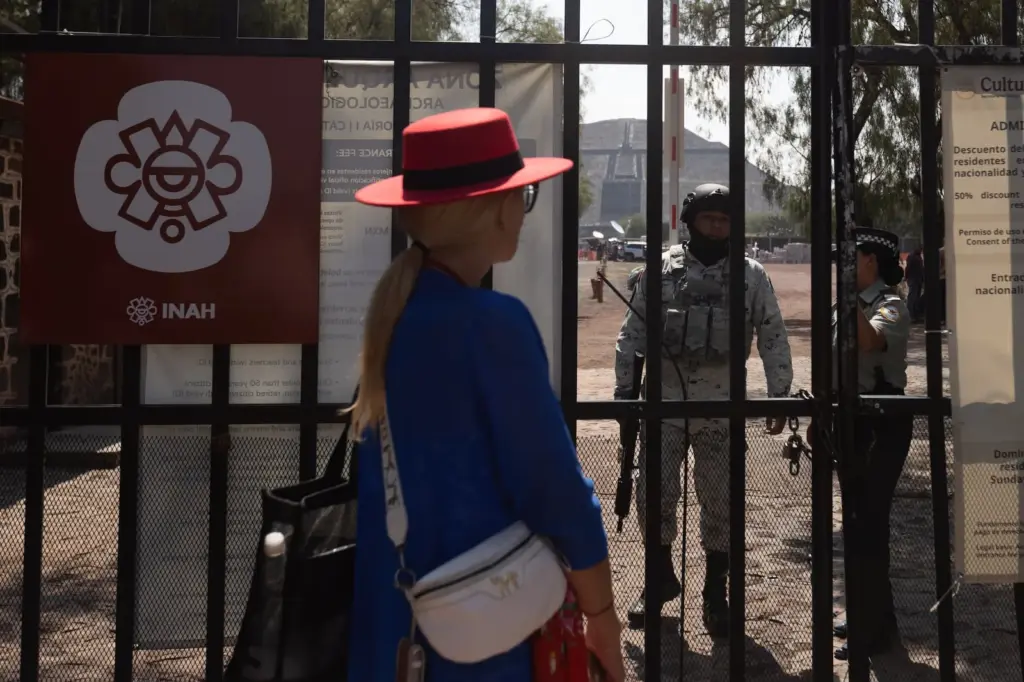
In a booth near the entrance, auxiliary police wait to check backpacks and bags, with National Guards behind them monitoring access. Omar Vázquez, general director of the National Institute of Anthropology and History, explains at the site that next week five security arches will be installed, one for each entrance, with metal detectors, included in the site’s annual budget of 30 million, along with infrastructure improvement works for the World Cup. “We are very optimistic, it was an isolated incident.” He also announces that the same security measures will be applied in other archaeological sites in the country such as Chichen-Itzá, Monte Alban (Oaxaca), Palenque (Chiapas), and Tulum (Quintana Roo).
Once inside, under the strong midday sun, there are plenty of phones in the air with cameras pointing at the imposing pyramids, hats, guides speaking various languages, sunscreen, and handicrafts that emit sounds of birds and jaguars. There are even school visits. “It’s a normal day that is not normal at all,” says María del Carmen, 54, an obsidian jewelry seller who prefers not to give her last name given what happened. On Monday, a busy day because the city’s other museums are closed, she was attending a client when she heard the gunshots. “There was nothing else to do but run, although none of us understood what was happening. I worried about my husband,” she shares.
Vendors resent the nearly 48 hours that Teotihuacán was closed. “We live day to day. If three hours of opening late affected me today, a full day even more,” says Frida Pérez, as she opens her souvenir and craft business. “This is going to affect us a lot. I think like the pandemic,” projects Pérez, who has worked here for 10 years. “Today, the few who come will be out of morbid curiosity. Morbid curiosity sells,” she says. The few national visitors, like Roberto and his family, visiting from Sinaloa, envision a quick return to normality. “You just have to be careful, but this is not something that happens in Mexico and we don’t want it to keep happening,” he shares.
Dyck, an 88-year-old Dutchman, visits the site with his grandchildren. “We are not afraid, Mexico has taught me to take things calmly. These attacks happen all over the world,” he assures. Lou, a 24-year-old French woman who works at a university, is on the same page. “I don’t feel unsafe because normally these things only happen once.” She refers to active shooter attacks, common in the United States and increasingly replicated in other countries. Something that had not happened before in Mexico, President Claudia Sheinbaum assured this Tuesday.
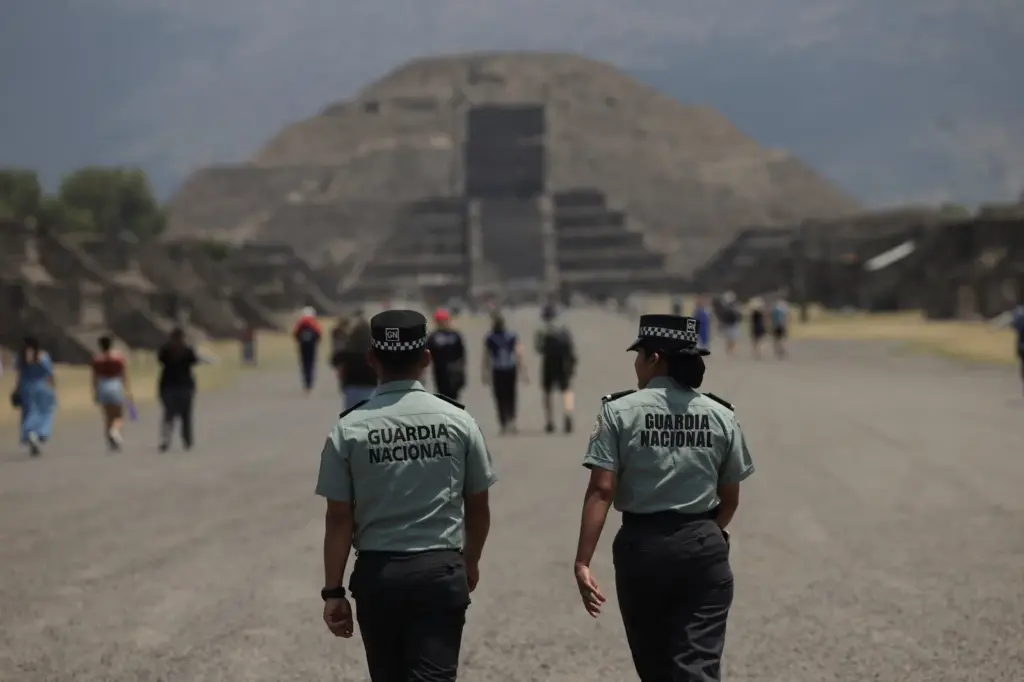
With an average of three million visitors (1.8 million last year), the site reopens its doors this Wednesday after the tragedy, with 60 National Guard elements inside, 60 INAH custodians, and 16 auxiliary police, in addition to another 150 outside. They conduct patrols in the area. The Pyramid of the Moon, from where Jasso aimed his weapon and held tourists hostage for several minutes who could not descend in time, reopened access this Wednesday around midday. Tourists accumulated on the stairs to climb. “We cannot miss this opportunity,” says Javier Sánchez, from Spain, before ascending.