






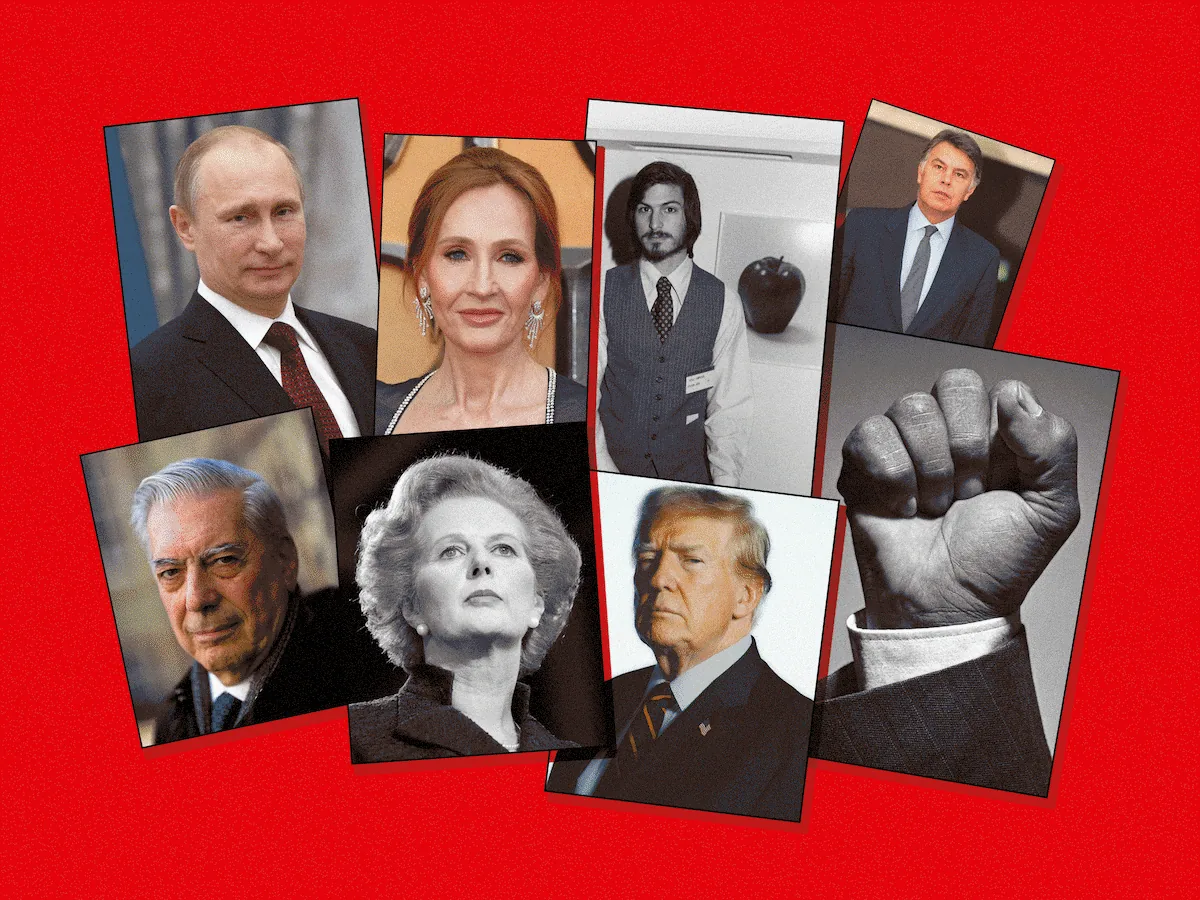
History does not advance on its own. Behind every milestone are figures who shape the course of societies. Often for the better; sometimes for the worse. In any case, the world would be different if these men and women had not been born. On the occasion of EL PAÍS’s anniversary, we set out to create a list of the 50 personalities who have had the greatest influence during this time. The result had to be the product of intense editorial debate, a list with diverse profiles representing fields ranging from politics to science, culture, sports, technology, or entrepreneurship, taking into account that we are a Spanish and Latin American newspaper, and avoiding the trap of thinking that the latest is always the most relevant. We had to look at these 50 years from a certain height. This is our proposal, the one EL PAÍS makes after consulting with specialists from the Editorial Team and going through several screenings until finalizing it in an ad hoc committee. Among other passionate debates, there was discussion about whether we should seek parity, but forcing history seemed like a bad idea. However, there was much consensus from the beginning about the most influential person in these 50 years: Gorbachev.
Read more The EL PAÍS festival starts this Friday at Matadero Madrid
1. Mikhail Gorbachev
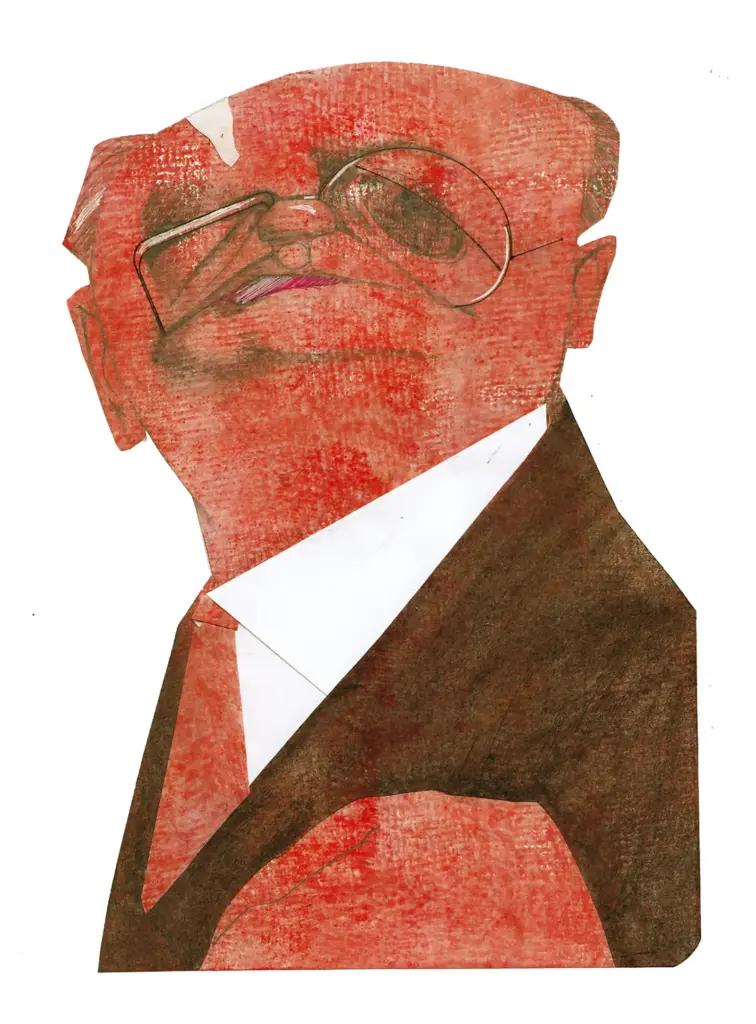
He took over the government of an economically stagnant Soviet Union that had endured decades of political and social repression. His will was to improve the system and democratize the empire. But he was overwhelmed by the reforms he himself initiated.
By Pilar Bonet, journalist and analyst. She was EL PAÍS correspondent in the USSR, Russia, and the post-Soviet space for 34 years.
Thirty-five years after the Soviet Union disappeared, Mikhail Gorbachev, the last leader of that country, is still perceived in various ways, depending on whether he is judged based on the economic difficulties and hardships that accompanied perestroika or valued for the freedoms and hopes generated by his humanistic ideas of a global world.
Born in the North Caucasus, to a Russian father and Ukrainian mother, Gorbachev (1931-2022) sought to reform and democratize the Union of Soviet Socialist Republics, the state that was the alternative to the capitalist system during the Cold War. He did not succeed, as lacking precedents and instruments, he lost control of the process when the republics that made up the world’s second nuclear power pursued their own national projects and disregarded the Soviet supranational project.
Gorbachev considered himself a citizen of the USSR but was not a fanatic of the state. He tried, as best he could, to maintain its unity, sometimes clumsily and with victims, but in December 1991, when the leaders of Russia, Belarus, and Ukraine dispensed with the “center” of power in the Kremlin, which he represented, the first and last president of the USSR did not believe a bloodbath was justified and did not resist the disintegration.
The legacy of the nearly six years during which he was the top leader of the USSR includes disarmament agreements with the US, the fall of the so-called “Iron Curtain” between East and West, the reunification of the two German states, the renunciation of imposing Moscow’s policy on allied countries, and the withdrawal of Soviet troops that had invaded Afghanistan in 1979.
Gorbachev revolutionized the prevailing political philosophy when he came to power in March 1985 as General Secretary of the Communist Party, which was the political force underpinning the state. Instead of the Brezhnev doctrine on limited sovereignty, the Warsaw Pact countries became masters of their destiny; class struggle was relegated in the name of humanity’s interests, and the European common home eclipsed military blocs. With Gorbachev, denuclearization became a goal, and the dangers of weapons of mass destruction formed the basis of a policy responsible to humanity.
In the USSR that Gorbachev came to lead, the economy had stagnated, the country lagged technologically compared to the West, and it struggled to maintain strategic parity with the US and ensure adequate supply of consumer goods to the population.
Gorbachev’s identity combined multiple facets. He had peasant origins and came from southern Russia; his two grandfathers had been repressed in the 1930s. His childhood was spent with a grandmother who sang him Ukrainian songs during sowing. His father fought in World War II and was decorated for it. Fulfilling agricultural plans behind the wheel of a tractor, he made a career in the Communist Youth (Komsomol) and the Communist Party and thus managed to enter the Law Faculty of the prestigious Moscow State University, where he met Raisa, his future wife. After finishing his studies, Gorbachev was sent to the Stavropol region and in 1978 was transferred to Moscow to continue his trajectory as an apparatchik in the central leadership of the Party and the State. In the capital, he emerged as one of the favorites for generational succession at the country’s helm until his opportunity arrived.
Gorbachev and his close associates had the pending task of completing the “thaw” policy initiated by Nikita Khrushchev after Stalin’s death in 1953 and aborted with the entry of Warsaw Pact tanks into Czechoslovakia in 1968. Glasnost or informational transparency was the chosen instrument to continue the task. Censored books were published, banned films were disseminated, and the media reported Stalinism’s crimes harshly. Previously silenced figures, dead and alive, took their place in the country’s history and reality.
However, Soviets not only queued to buy newspapers but also to acquire basic foodstuffs, often with ration coupons, as Gorbachev’s initial economic reforms destabilized the state planning system without sufficiently developing alternatives.
From 1987, small private initiatives and cooperatives were promoted, and in 1989, Gorbachev was finally able to reform the political system by creating a gigantic Parliament of more than 2,000 deputies, elected with multiple candidates. He favored small steps, and his cautious pace caused clashes within his supporting team; some of his comrades, led by Boris Yeltsin, demanded faster and broader reforms.
The freedoms fostered by Gorbachev uncovered unresolved national problems, such as Russian dominance in non-Russian republics, territorial claims of peoples deported by Stalin, or those caused by arbitrary internal borders within the USSR. Yeltsin used Russia, the largest of the 15 federated republics in the Soviet Union, as a platform for his ambitions, and the Soviet republics one by one declared their sovereignty first and independence later.
In August 1991, a group of senior USSR leaders attempted a coup that accelerated its end.
Gorbachev was overwhelmed by the reforms he himself promoted. In 1996, the dreamer of socialism with a human face ran for the presidency of Russia and only obtained 0.5% of the votes. His figure inspired indifference or rejection among his compatriots, mostly associated with the end of the USSR, understood as loss rather than liberation.
2. Tim Berners-Lee
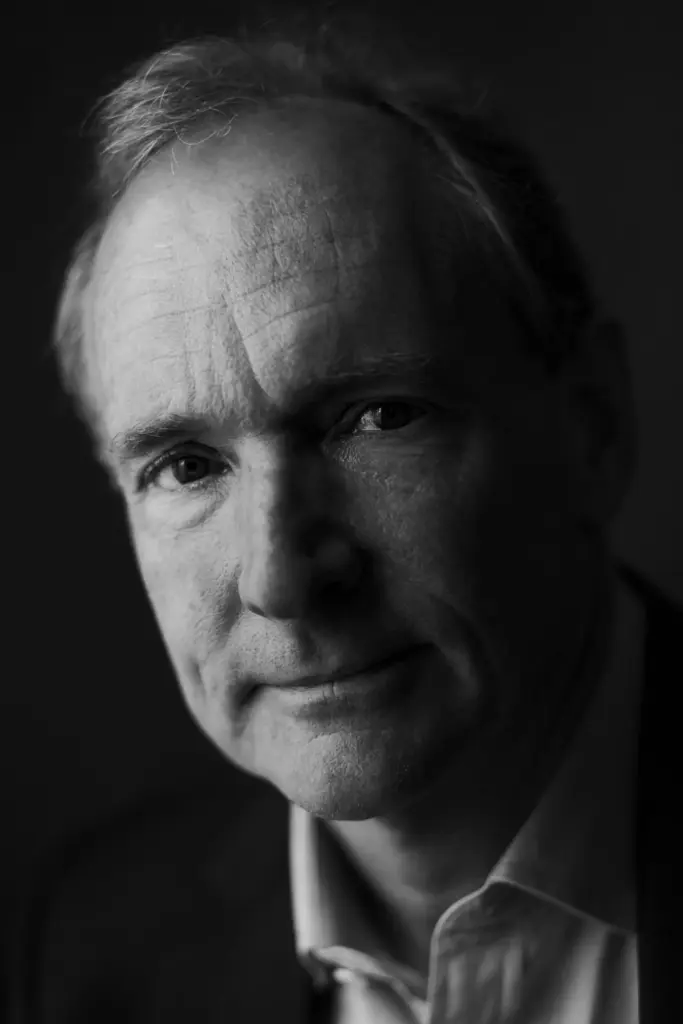
The engineer invented the World Wide Web and nothing was the same afterward. He refused to profit from it.
By Patricia Fernández de Lis, Science and Technology correspondent for EL PAÍS. She has been writing on these topics since 1998.
It happened on March 12, 1989. A British engineer working at CERN, the Swiss center housing the world’s largest physics laboratory, wrote a proposal for his boss. It was returned with a handwritten note: “Vague but exciting.” Thirty-seven years later, that “vague” idea is the infrastructure supporting almost everything we do today. Tim Berners-Lee invented the World Wide Web and, unlike many who have changed the world since EL PAÍS was founded, he did so without asking for anything in return.
Berners-Lee (London, 70 years old) established the first communication between what he called a “client” and a “server” in December 1990, over the http protocol, and in August 1991 launched the first website in history. The initial proposal had a provisional name, Mesh, before opting for something more ambitious: World Wide Web. He never took steps to obtain intellectual or commercial property rights over his invention. He simply gave it away. It was the spirit of the moment and of his invention: “The original idea of the web was that it would be a collaborative space where you could communicate by sharing information,” he said on the 25th anniversary.
When EL PAÍS was born in 1976, there was no email, no mobile phones, no social networks. Today, Berners-Lee’s creation is regularly used by 5.5 billion people. The web he conceived in a particle physics lab became the planet’s nervous system: shopping is done there, jobs are sought, learning happens, news is read, votes are cast, couples meet, revolutions are organized, and the dead are mourned.
Time is also wasted, insults are hurled, harassment and threats occur. Using social networks for three or more hours a day is linked to higher rates of anxiety and depression, and addicted minors are two to three times more likely to experience suicidal ideation. A few weeks ago in California, Meta and Google were ordered to pay six million dollars to a 20-year-old woman for designing their platforms to keep her hooked since childhood. This ruling is seen as a clear warning that social networks have entered their tobacco era: they are beginning to be considered a health hazard.
Berners-Lee has long said this was not what he had in mind. He has criticized Google and Instagram for their addictive algorithms and data exploitation and warned that “the web is being hijacked to move from an intention economy to an attention economy.” The user, he says, has been reduced to an advertising product because in the 1990s the web was taken over by “charlatans.”
Sir since 2024, Berners-Lee received the very exclusive Order of Merit in 2007, which only 24 living people can hold at once. He married in 2014, is shy, and avoids interviews. His latest book is titled This Is For Everyone — a declaration of principles. “We can fix the internet. It’s not too late,” he has written.
3. Nelson Mandela
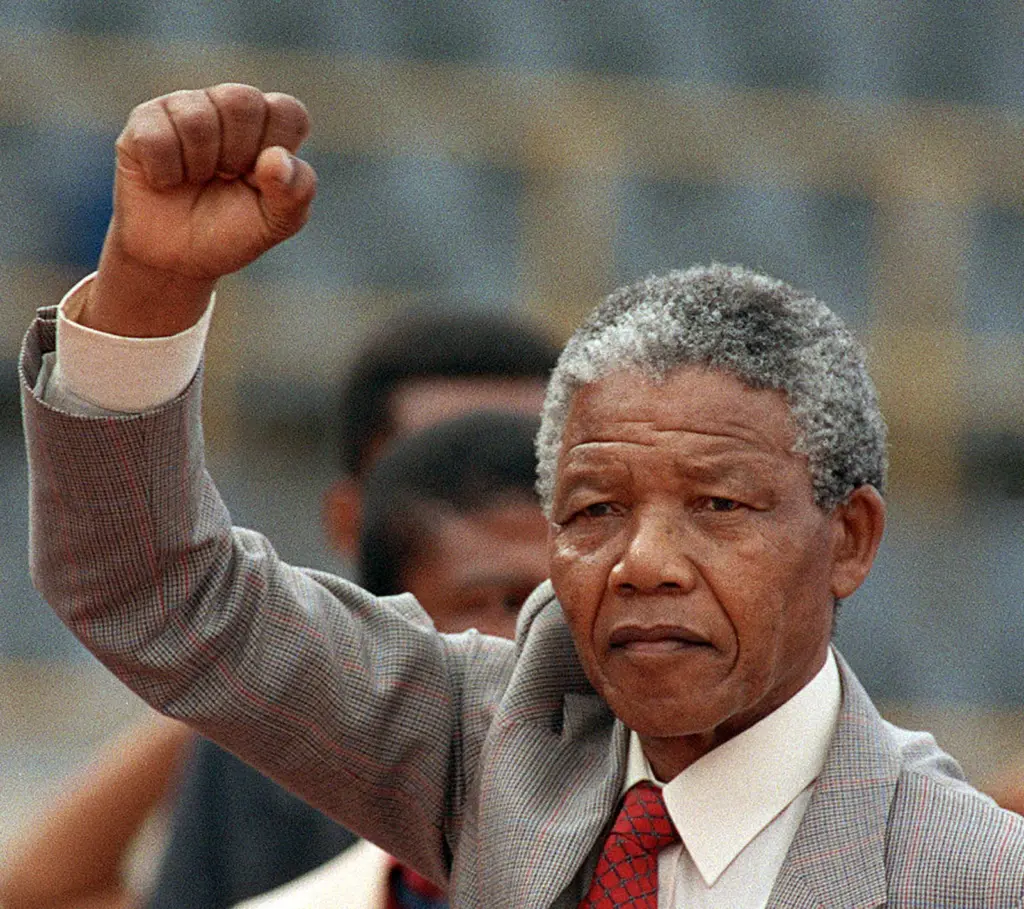
No one exemplifies the struggle for a just world free of racial oppression like this politician and activist, who was imprisoned for 27 years by the apartheid regime and became president of South Africa.
By Beauregard Tromp, South African writer and journalist. Coordinator of the African Investigative Journalism Conference. Translation by María Luisa Rodríguez Tapia.
At the Nelson Mandela Foundation in Johannesburg, archivists and researchers remain dedicated to the seemingly endless task of managing Madiba’s legacy. Among dozens of notebooks filled with notes written in Nelson Mandela’s (1918-2013) characteristic and careful handwriting, paintings, sculptures, and various memorabilia from sports figures — from boxing legends to NBA stars — there is a yellowed photograph, printed on newspaper-sized DIN A3 paper. It shows Mandela absorbed in conversation with his companion Walter Sisulu in Robben Island prison, where they were serving life sentences. The photograph, once part of the campaign against apartheid, is torn and has holes. It was initially hung on the wall of Ruth First’s university office, a contemporary of Mandela and loyal participant in the fight against the racist South African regime. In August 1982, a letter bomb ended her life. The photograph was a silent witness to her assassination.
Mandela’s photo was rare since the apartheid government had banned displaying his image since the mid-1960s. Authorities knew that in him, the African National Congress (ANC) liberation movement had found a figure embodying much more than the man they wanted confined to his 2.4 by 2.1-meter cell. Mandela was also the black woman sitting on a “whites-only” bench. The teenager confronting police equipped with batons and drawn weapons. The homeowner forcibly evicted from his home. He was all of us.
In collective memory, he is presented as a virtuous man, a giant who dedicated his life to the struggle for a just world free of racial and other oppression. But no one is just one thing, and neither was he.
The world knows the Madiba who left prison without holding grudges against his oppressors. But his close collaborators also remember a man who could be relentless and sometimes wrong.
Nelson Mandela suffered many failures, some weighing more than others. Few caused him as much pain as the separation from his wife, Nomzamo Winnie Mandela. During imprisonment and forced confinement, she played a crucial role in keeping alive the memory of her incarcerated husband and became a beacon of resistance against the brutal regime. She was present when he was released in 1990, with a raised fist in defiance as crowds gathered to see the man accompanying her, a Mandela more myth than reality. Six years later, the couple separated. In private and public statements made by Madiba after the divorce, he consistently showed deep affection and concern for his ex-wife. When Winnie was involved in legal troubles, he asked an ally to provide help, but the friend refused. Mandela never spoke to that person again, despite numerous attempts by mutual acquaintances.
One aspect to analyze when examining Nelson Mandela’s legacy is the party he led and to which he dedicated his life, the ANC. During its 32 years in power, it gradually moved from dysfunction to mismanagement and corruption and increasingly struggled to fulfill its electoral promises of “a better life for all.” This frustration was especially evident in the #FeesMustFall movement, a vigorous student-led protest against tuition hikes and for decolonizing higher education institutions. Activists denounced the mythification of Mandela, his generation, and subsequent ones for carrying out a revolution that failed to build a tangible future for later generations. The revolutionary Marxist ideas and nationalization plans that had permeated the years of struggle were replaced by pragmatic neoliberal policies of privatization and rampant capitalism.
Madiba was a man of principles and, at the same time, a pragmatic man. He was criticized on several occasions for the strong ties the ANC and he maintained with figures like Cuban Fidel Castro, Libyan Muammar Gaddafi, or Ayatollah Khomeini in Iran; all had supported the anti-apartheid movement at times when countries like the UK and the US backed the racist South African regime. His pragmatism became even more evident when he became president and established a close relationship with US President Bill Clinton.
Retired, he remained very attentive to events and found himself in the extraordinary position of participating in debates about his legacy, a project that increasingly concerned him. According to those who worked with him, Madiba was glad that unvarnished truth came to light. Amid this task, he was able to recover a statement he had made 40 years earlier in a letter to Winnie: “One issue that deeply concerned me in prison was the false image I inadvertently projected outward, making people consider me a saint. I never was, not even by the most earthly definition of a saint, as a sinner who keeps trying.”
4. Katalin Karikó and Drew Weissman
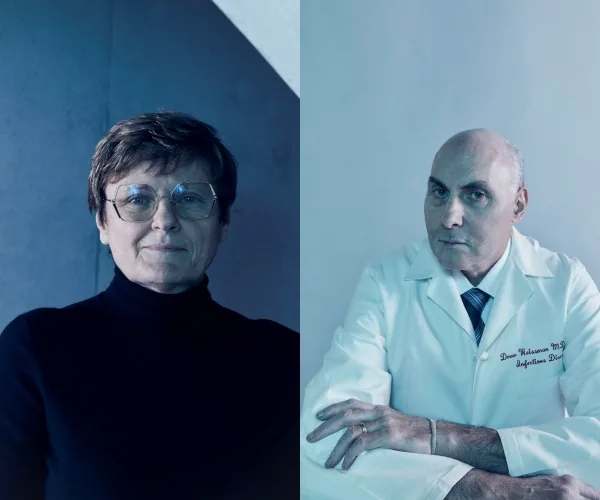
These two scientists laid the foundations that made it possible to develop COVID vaccines shortly after the pandemic began. They saved lives with research that the industry had ignored.
By Javier Sampedro, scientist and journalist.
From the declaration of the COVID pandemic in early 2020 until vaccines became available, barely a year passed. Such things usually take ten times longer, and that’s if they succeed. The world welcomed the vaccines with open arms, attributed the success to major advances in the biotech industry, and forgot about it with barely concealed relief. The real story, however, is much more complex and also much more interesting.
COVID vaccines, which resolved one of the worst pandemics in history, began to be developed 20 years earlier, when they were not yet needed, and were the product of the genius of two scientists who had to endure neglect, lack of funding, and professional marginalization imposed by both the pharmaceutical industry and major public research funders, not to mention most of their own skeptical colleagues. They are Katalin Karikó (Szolnok, Hungary, 71 years old) and Drew Weissman (Lexington, USA, 66 years old), and few politicians can boast of having saved as many millions of lives as they have.
The original work by Karikó and Weissman, on which the 2020 vaccines are based, was rejected 15 years earlier by the two highest-impact scientific journals, Nature and Science, a painful reminder that the scientific elite can mess up as badly as anyone else. Fortunately, this chain of errors was resolved after the COVID pandemic was declared, and the two visionary scientists received the Nobel Prize in Medicine in 2023. The Swedish Academy rarely acts so quickly in recognizing talent.
The science behind the discovery is sophisticated. A traditional vaccine is some form of infectious agent (a virus, for example) capable of alerting the human immune system without causing disease. Thus, when the real virus infects the person, their immune system is already trained to respond. Every virus consists of a small package of genes wrapped in a protective coat (capsid). Almost all vaccines are inactivated viruses treated to leave their capsid intact enough for the immune system to recognize and generate antibodies.
Karikó and Weissman’s vaccines are based on very different principles. Forget viruses for now and focus on how our genes normally work. A human gene is made of DNA, the famous double helix, and its sequence of chemical letters, the accounts of the necklace that constitutes a protein. But this translation from one sequence to another does not happen directly, but through an intermediary called messenger RNA (mRNA). The winning idea is to make mRNA whose sequence codes for a protein of the capsid of any virus, COVID in this case. This mRNA is injected into the person, penetrates their cells, and directs the production of a capsid or spike protein of the virus. The immune system detects the foreign protein and is trained to respond against it.
Karikó and Weissman’s story is one of overwhelming success, but the record speed with which the vaccines were developed is deeply misleading. Behind it were two immensely talented brains, decades of perseverance, and the conviction that solid science would eventually prevail despite a demoralizing, inert, and shortsightedly skeptical environment. This is how real science and all human knowledge advance.
5. Deng Xiaoping
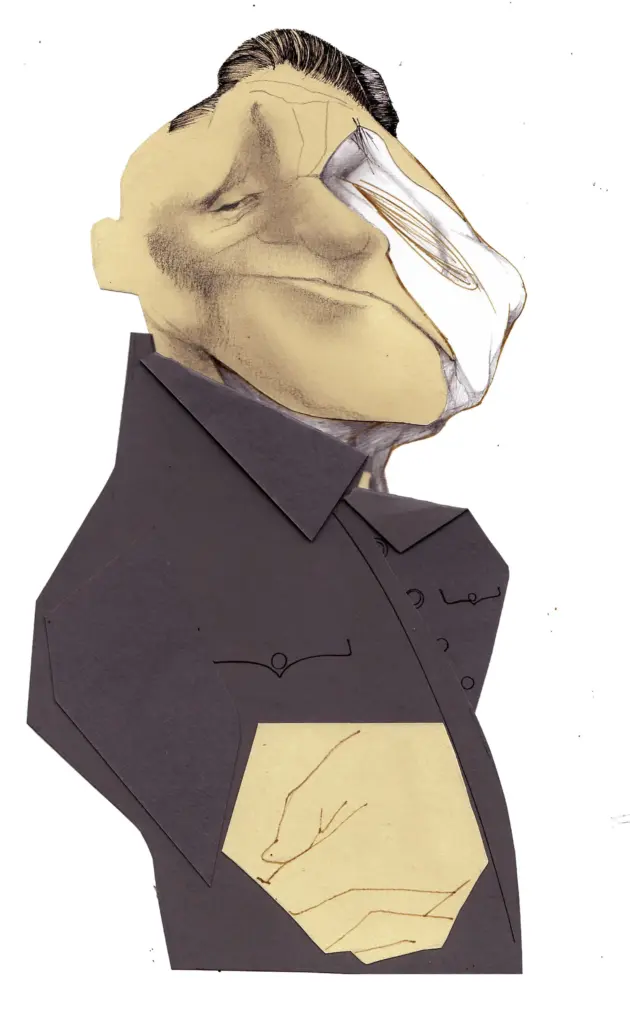
The communist leader was the architect of modern China. He laid the foundations for the country to become the world’s largest factory. His major mistakes were the Tiananmen repression and the one-child policy.
By Georgina Higueras, writer and journalist. She was EL PAÍS correspondent in Asia between 1987 and 2013 and special envoy to numerous countries in the region.
Like a Quixote, Deng Xiaoping defended his ideological pragmatism and the need for China to open up and modernize at great personal and family cost. He was purged three times, and a son was left paraplegic after being tortured by Mao’s Red Guards. It was December 1978 when he finally imposed the theory of the four modernizations (agriculture, industry, science and technology, and defense) on the Chinese Communist Party (CCP) Central Committee, leading the country to become the great power it is today.
Deng Xiaoping knew that to get the economy moving, he had to free himself from the most backward wing of the CCP. He used the trial against the Gang of Four to bring down Mao Zedong’s heir and consolidate himself as supreme leader. Opposed to Mao’s cult of power, he preferred to govern from behind the scenes.
It was not easy. Reformists thought progress was too slow. Conservatives (the far left) considered his mercantilist policy anathema. Among the latter was the military gerontocracy present in the CCP leadership. Therefore, once he secured a new Constitution (1982), the only position he took was president of the Central Military Commission, from where he retired many members of the People’s Liberation Army opposed to the country’s transformation.
His firm support for the liberal Hu Yaobang as CCP General Secretary caused him the most wear. Hu Yaobang, tasked with reforming the party, became the enemy of the far left, which politically ousted him after his support for the 1987 student protests. Two years later, when he died of a heart failure, students gathered in Tiananmen to claim his leadership. This marked the darkest chapter of Deng Xiaoping’s era, ending in a bloodbath and the conservatives’ takeover. A heavy smoker and avid bridge player, he was the architect of “one country, two systems,” with which he recovered the British colony of Hong Kong, frustrating Margaret Thatcher’s arrogance.
Where he lacked foresight was in his one-child policy, sacrificing fundamental principles of Chinese society. It was his great mistake, but China owes him for having reclaimed the center of the world.
6. Margaret Thatcher
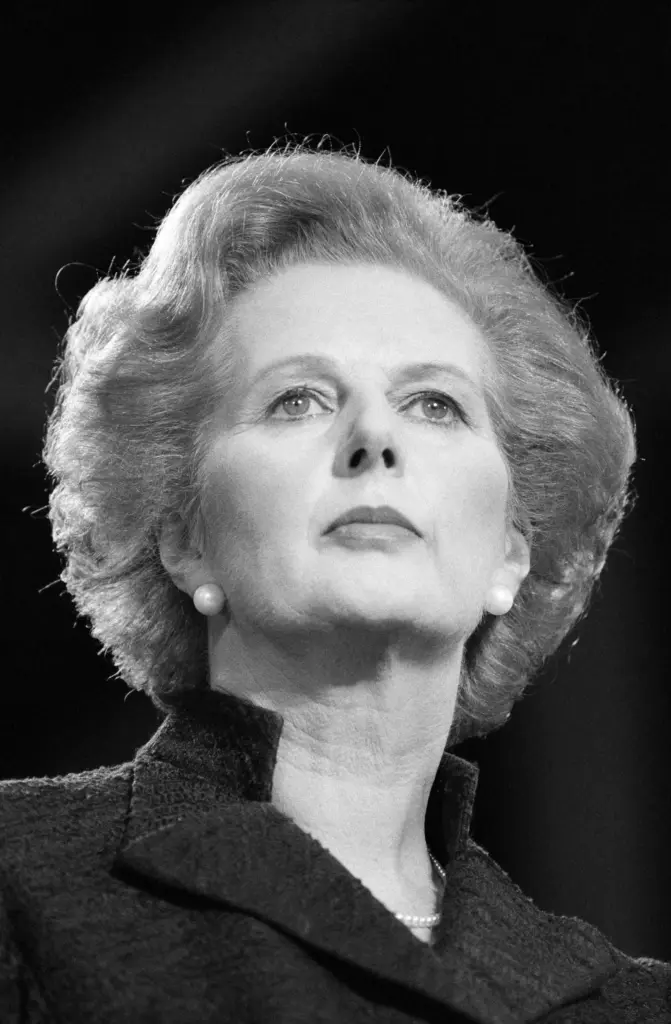
The British leader championed neoliberal doctrine until it became hegemonic.
By Walter Oppenheimer, EL PAÍS correspondent in the United Kingdom between 2001 and 2014.
Margaret Thatcher (1925-2013) was the first woman to lead the British Conservatives (1975) and the first to form a government (1979), but none of that matters compared to her political legacy. Charismatic and stubborn, she pushed her belief that the individual moves the world to the limit. “There is no such thing as society,” she once said. She broke the political consensus prevailing since World War II, when fear of communism led Europe to embrace Keynesianism and guarantee social welfare with public money by maintaining demand and reducing unemployment: she made a 180-degree turn and began applying monetarist doctrine. All economic activity in the hands of the market. Her early years in government were marked by the closure of unprofitable coal mines and fierce confrontation with miners. Also the first nationalizations: with them came unemployment and discontent.
She was aided by Argentine dictator Leopoldo Galtieri, who ordered the invasion of the Falkland Islands in 1982. Thatcher scorned any diplomatic settlement and clung to the old maxim that there is nothing like a good war to save a politician in danger. She sent a navy to the Falklands that reminded the British of the old Empire days.
With unions defeated and the public economy devastated, Thatcher allied with Ronald Reagan to promote free capital movement, transforming the industrial economy into a service economy that enriched London at the expense of the countryside and northern cities. The right sees her as salvation. The left, as the devil’s seed that led to current inequalities, middle-class impoverishment, and wealth and power accumulation in the hands of a few. The UK became a grumpy old man blaming Europe for its misfortunes and embracing Brexit.
7. Donald Trump
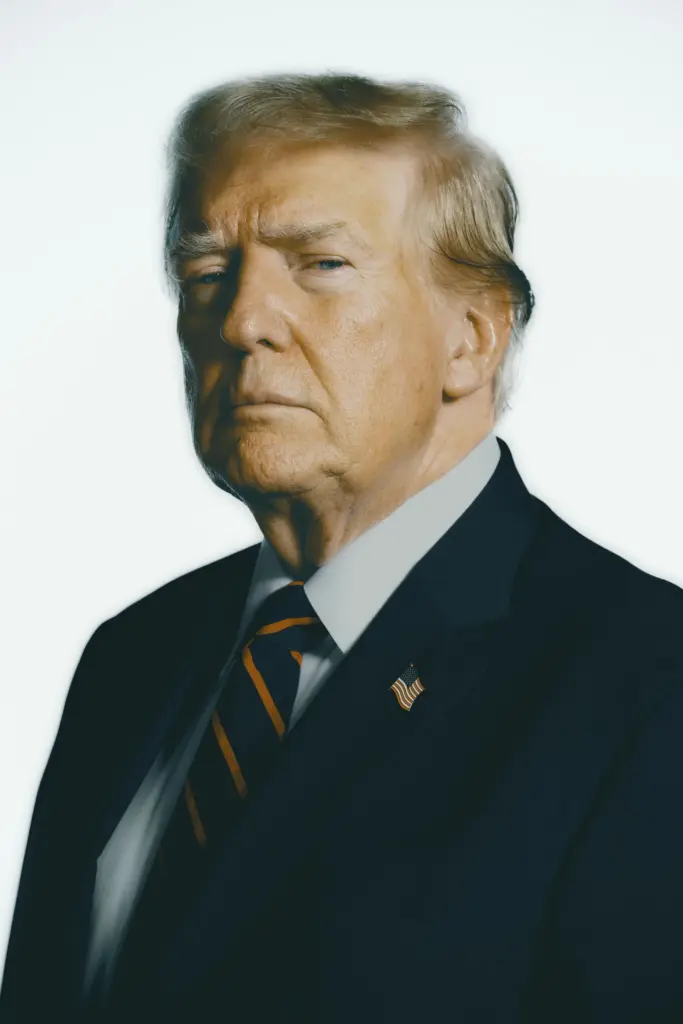
The TV star turned US president blew up the geopolitical board.
By Miguel Jiménez, deputy director of EL PAÍS. He was chief correspondent in the US between 2022 and 2025.
The real estate magnate and reality TV star elected US president is probably the most famous, influential, and powerful person in the world today. His abuses of power and cult of personality make him a modern tyrant who governs whimsically, disregarding conventions, the Constitution, and the law.
Charismatic, demagogic, and lying, he first reached the White House as an anti-establishment figure who charmed globalization losers in 2016 in an election he won with fewer popular votes than his rival, Hillary Clinton. He cut taxes for companies and the highest incomes, imposed tariffs that damaged the economy, and eroded relations with allies before social protests and the pandemic overwhelmed him completely. It was a failed presidency. However, with the appointment of three justices, he gave the Supreme Court a far-reaching ideological shift.
He was swept away at the polls by Joe Biden in 2020. He refused to accept his defeat. His supporters stormed the Capitol in one of the darkest episodes of American democracy. He was indicted for maneuvers to alter the election result and for taking confidential documents to his Mar-a-Lago mansion, but prosecutors’ slowness and his lawyers’ maneuvers spared him from trial. He was found guilty of 34 forgery crimes, but the judge left him unpunished after his return to the presidency.
Trump presented himself as a martyr and capitalized even on the photo of his mugshot. Biden’s physical deterioration and discontent over inflation and migration crises allowed his victory. After his triumphant return, the first convicted criminal US president practices a revengeful domestic policy and confrontational foreign policy, with even genocidal threats and little morality.
Mass layoffs, brutal deportation campaigns, and persecution of rivals dominate his domestic agenda. He declared a harmful and illegal trade war on the world, though he had to back down due to damage to his own economy. Abroad, he blew up the geopolitical board with his imperialist rhetoric (Canada, Greenland, Panama…), less support for Ukraine, carte blanche to Netanyahu in Gaza, Maduro’s capture in Venezuela, and massive bombing of Iran. Trump has eroded relations with allies, questioned the West, and strengthened China, his great rival, even though his second term has not yet reached its midpoint.
8. Steve Jobs
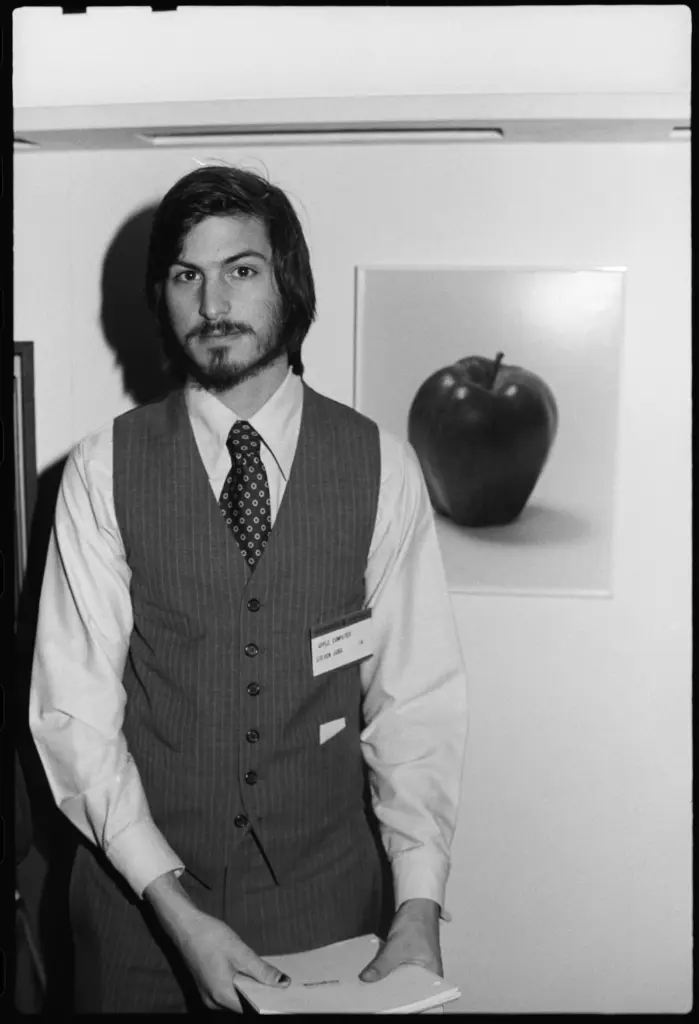
The founder of Apple transformed computing, telephony, music consumption, and animated film. As visionary as he was insufferable, he channeled the desires of billions. His cultural influence was enormous.
By Delia Rodríguez, journalist specialized in Technology.
While the first issue of EL PAÍS was being printed in Madrid, across the Atlantic two long-haired young men, Steve Wozniak and Steve Jobs (1955-2011), were soldering motherboards against the clock in a garage to deliver the first order of the company they had founded a month earlier, which now also celebrates its 50th anniversary: Apple. One was the brilliant engineer, the other the visionary hippy. This founding myth has been told a thousand times; they were in the right place at the right time, California during the computer revolution of the 1970s.
Jobs was expelled from his own company by the same executive he convinced to leave Pepsi by asking if he preferred to spend his life selling sugar water or changing the world. After a few years away during which he founded another computing company and acquired Pixar — which he later sold to Disney — he returned to Apple in 1997 to revive it. He did so so well that in 2011, the year of his early death, Apple surpassed Exxon as the most valuable company in the world. After the industrial revolution came the information age, and Jobs was its most charismatic figure.
According to his biographer Walter Isaacson, he helped transform seven industries: personal computing (with the Mac), animated film (Pixar), music (iPod and iTunes), telephony (iPhone), tablets (iPad), retail (Apple Store), and digital publishing (iBooks). With just the iPhone, which put a computer in the pocket of billions, accelerating internet adoption and ubiquity, he would have gone down in history.
He is considered one of the most effective entrepreneurs of all time, a visionary genius, a tireless perfectionist, an aesthete, a salesman who created a “reality distortion field” around him. Also a tyrannical boss who ignored working conditions in China and an insufferable being who, although adopted, refused to recognize his daughter Lisa. Even today, there is debate about what his magic consisted of. He was not a great technician like Wozniak nor a designer like Jony Ive, and much of his innovation consisted of appropriating what already existed, making it desirable on a large scale. He died at 56 of a cancer that could have been curable, but his new age arrogance made him waste time on useless therapies: the new world also advanced in its weaknesses. Today Jobs would be 71, and it is inevitable to wonder what role he would play in contemporary dark technocapitalism. Would he have channeled our desires again?
9. Amancio Ortega
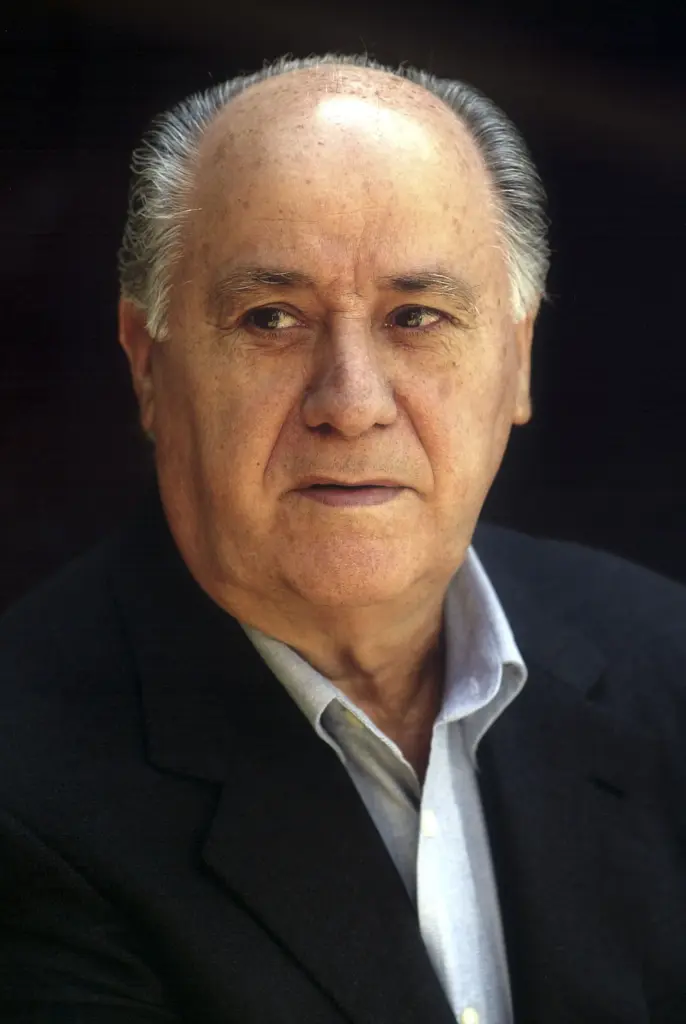
The founder of Inditex revolutionized the fashion business with Zara and built a global real estate empire.
By Ricardo de Querol, director of Cinco Días.
Spain’s richest man is responsible for perhaps the greatest revolution in how fashion is produced, distributed, and especially consumed since the invention of prêt à porter in the mid-20th century. Zara’s success — the flagship brand of Inditex, alongside Pull & Bear, Lefties, or Bershka — is based on a well-oiled chain that renews shelves every few days according to what works and what doesn’t. Zara is very competitive in price and knows how to quickly respond to changing customer tastes, who have made visiting its stores another leisure routine.
No one in Spain can rival Amancio Ortega for the title of self-made man. The businessman (born in León province in 1936, but above all from A Coruña), the youngest of four children of a railway worker and a housewife, is the tenth richest person in the world, with a fortune of $148 billion (€128 billion) on the Forbes list. He started from the bottom to build Inditex, the most valuable company on the Ibex 35 (€160 billion), which pays him dividends twice a year. With that money, he built another colossus, Pontegadea, which owns iconic properties in New York, London, and Paris.
He is rarely seen in public. Only a handful of photos of him are available. He has never given interviews or press conferences. He dislikes noise about his philanthropic initiatives, such as donating equipment to public health. Those who know him say he is austere, far from the luxuries and extravagances common among the tech oligarchs with whom he shares the billionaire list. He made his way from adolescence, first as a errand boy at the A Coruña shirtmaker Gala and then as a salesperson for the clothing company La Maja. This was his entry into the textile industry he would come to dominate. Together with Rosalía Mera — then his girlfriend, later his wife, with whom he had two children and who died in 2013 — he sewed garments at night. The success of their quilted robes led them to found Goa Confecciones, a small workshop, and in 1975 they opened the first Zara store in A Coruña. Inditex was established in 1985, and global expansion followed quickly. In 2001, he married Flora Pérez Marcote, with whom he had Marta, now company president. He left that position in 2011 without giving up his 60% stake. That empire has continued full steam ahead, supported by the meticulous analysis from its headquarters in Arteixo (A Coruña) of what is selling minute by minute in Bangkok.
10. Gabriel García Márquez
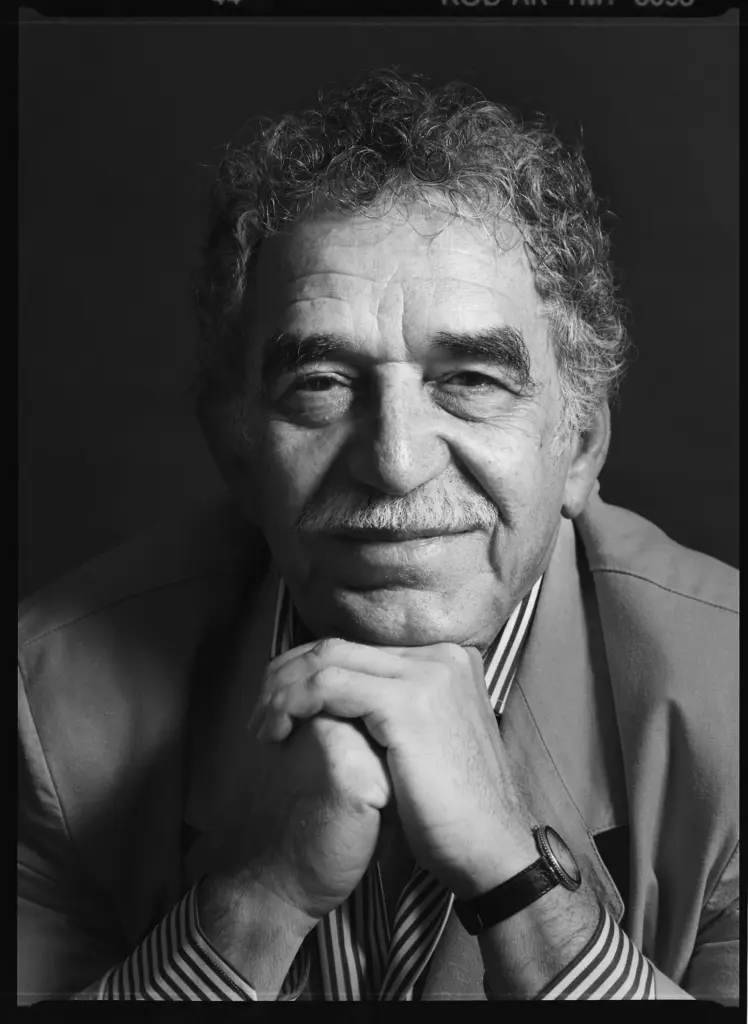
The writer influenced both the literature of several generations and numerous political causes.
By Juan Gabriel Vásquez, writer.
Yes, it is true, he was one of the most influential novelists of the last half-century. But what does that mean? What kind of influence was his, how did it manifest, and where is it visible? Let’s start with the important: the books. I can offer, for starters, a hyperbolic or scandalous opinion: with the exception of Don Quixote, One Hundred Years of Solitude is the most influential Spanish-language novel of the last four centuries. Novelists from all traditions have declared, as if passing through the customs of literature, the influence of the Macondo saga: from Patrick Chamoiseau in the French Caribbean to Peter Carey in Australia, from Mo Yan in China to Toni Morrison in the United States. Others have spoken of that influence in more ambiguous, indirect, or even reluctant ways: Indian Salman Rushdie, Japanese Haruki Murakami, Nigerian Ben Okri. García Márquez’s (1927-2014) presence is more or less evident in the pages of novelists as diverse as Isabel Allende, Angela Carter, Michael Chabon, and Laura Esquivel. And the list could go on.
And the books allowed him another kind of influence: what we can call political. His relationship with the Cuban Revolution — and his friendship with Fidel Castro — remains a topic of controversy in Latin America; entire reams have been covered with reflections on his ties to power, and I suspect that in those diagnoses there is often much prejudice, ignorance, Latin American envy (in this we are leaders), or disqualification for ideological reasons (well, in this too). Those who knew him speak of his generosity’s forms, for influence was also that: the possibility of picking up the phone and talking to anyone — Mitterrand, Clinton, the Pope — to help someone. So yes: if we talk about influence, he put his at the service of those who had none, or used it to defend, from the shadows, some of the causes that moved his compass.
García Márquez was born in Aracataca, a small Colombian town, but lived all over the world; born in 1927, he falsified that date to coincide with the banana massacre, one of the most notorious events in Colombian history. I like to see this misinformation as a metaphor for his relationship with his era: he always wanted to identify with history, live in it, shape it, and be shaped by it. In that, influence certainly consists.
11. Bill Gates
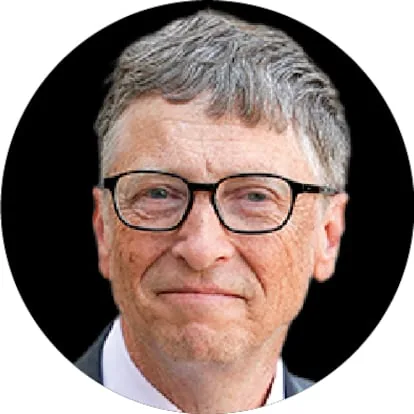
1955. Tech entrepreneur. At 19, together with his 22-year-old friend Paul Allen, he turned a garage into the great myth of the American entrepreneur. There they took the first steps to invent Microsoft in 1975 and the Windows operating system shortly after. They revolutionized computing. Today he is one of the greatest philanthropists. His fortune is estimated at $104 billion. By Amanda Mars
12. Vladimir Putin
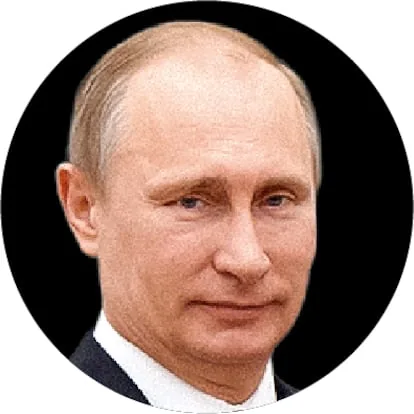
1952. Politician. De facto leader of Russia since 2000, he changed the Constitution in 2020 to govern until 2036. He initiated wars in Chechnya and Georgia, participated in Syria’s, annexed Crimea, and invaded Ukraine. His vision of world order through force has inspired a generation of authoritarian leaders and reached the White House. By Margaryta Yakovenko
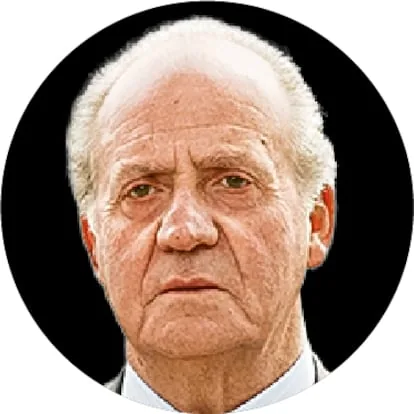
13. Juan Carlos I
1938. Emeritus King. Juan Carlos de Borbón never wanted his heir to have an independent structure at La Zarzuela. Everything had to inevitably go through him. Today, the man who was the engine of democracy, the king who stopped the 23-F coup, now nearing 90, has created a parallel court between Sanxenxo and Abu Dhabi. His son is the victim of friendly fire. By Jesús Rodríguez
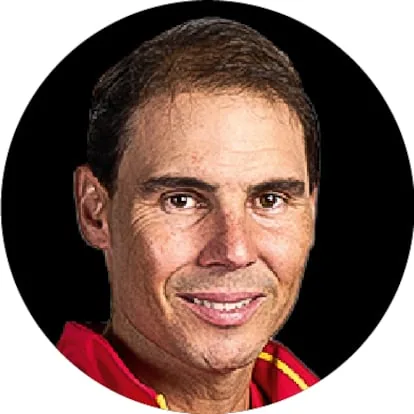
14. Rafa Nadal
1986. Tennis player. What is sport if not overcoming? The Mallorcan knows a lot about that, the greatest Spanish athlete of all time. Synonymous with epic and success, also with suffering, Spain saw him grow, triumph, fall, and regenerate again and again. Master and lord of Roland Garros, which he won 14 times, along with Djokovic and Federer defined a golden era in world tennis. By Alejandro Ciriza
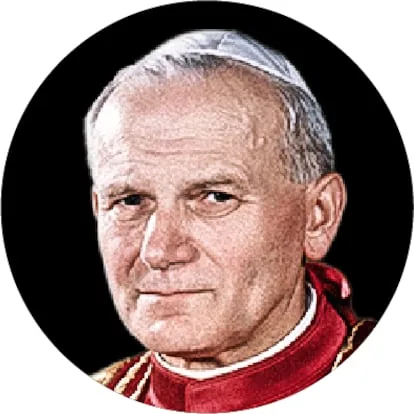
15. John Paul II
1920-2005. Pope. Polish Karol Wojtyla became a global leader for his charisma, role in communism’s fall, and surviving an assassination attempt. He confronted the Mafia but did not fight pedophilia in the Church and protected the great abuser Marcial Maciel, leader of the Legionaries of Christ. John Paul II was a luminous pope with many shadows. By Pablo Ordaz
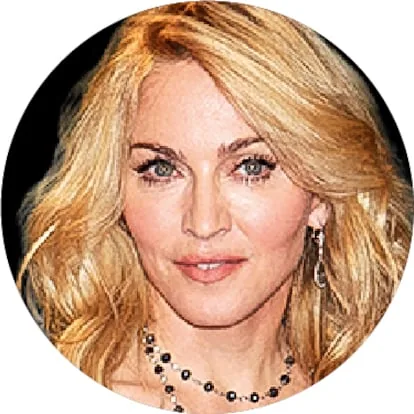
16. Madonna
1958. Music. The American dream with a feminist perspective was born in a broken family in the Midwest and moved from the New York underground scene to become the most important pop diva of all time. She redefined industry standards, even equating herself with the Virgin Mary. She continues to challenge conservative minds. By Raquel Peláez
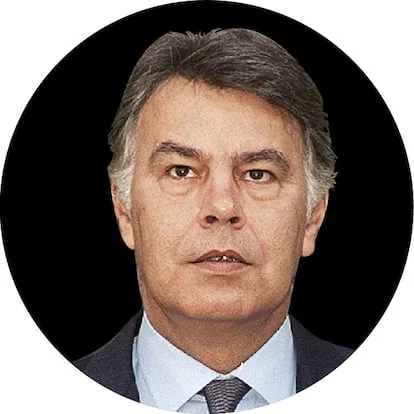
17. Felipe González
1942. Politician. EL PAÍS reported on December 9, 1976, the “victory of Felipe González’s line” at the 27th PSOE Congress in Madrid, even though it had not yet been legalized. The socialist began modernizing his organization and country. He succeeded during his long term from 1982 to 1996. Spain transformed with entry into the European Economic Community in 1986. Democracy consolidated. The perennial “military problem” was resolved. Autonomies took root. The welfare state took shape. And the Monarchy settled. However, disillusionment grew among those expecting more leftist policies and crystallized with the general strike on December 14, 1988. There has never been another like it. There was state terrorism and corruption within the PSOE. For the international press, González was a “patriot” and “reformist.” Perhaps he himself best defined his philosophy with a quote he heard from Deng Xiaoping in 1985, on his first official trip to China: “It doesn’t matter if the cat is white or black; what matters is that it catches mice.” By Anabel Díez
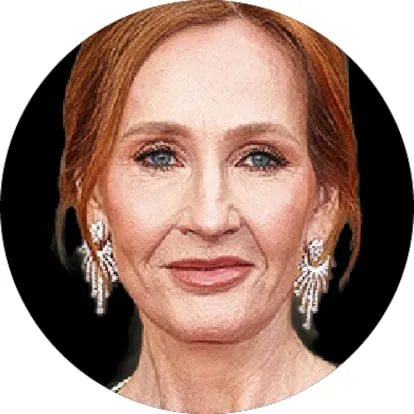
18. J. K. Rowling
1965. Writer. Translated into more than 60 languages and with nearly 500 million copies sold, the adventures of a boy wizard named Harry Potter are a cultural phenomenon that has marked an era. Its creator built a world expanded in films, plays, and a series. Like the Pied Piper of Hamelin, she led several generations behind her. By Andrea Aguilar
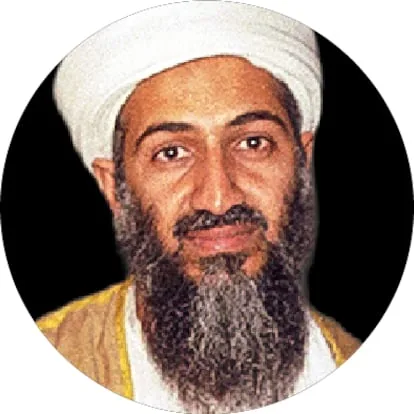
19. Osama Bin Laden
1957-2011. Terrorist. Responsible for the 9/11 attacks, the Saudi inaugurated an era of global terror with Al Qaeda. The 21st century cannot be understood without his hatred; nor without the wars in Afghanistan and Iraq unleashed by George W. Bush after the attacks. His death in Pakistan at the hands of the Navy Seals became a symbol of Washington’s avenging power. By Guillermo Altares
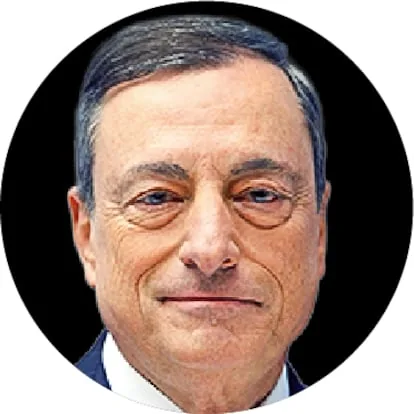
20. Mario Draghi
1947. Politician and economist. At the worst of the Great Crisis, Mario Draghi, then president of the European Central Bank, pulled this spell out of his hat: “We will do whatever it takes, and believe me, it will be enough.” Speculators fled like rabbits. Draghi, who later became Italy’s prime minister, saved the euro and defined subsequent European economic policies. By Claudi Pérez

21. Greta Thunberg
2003. Activist. At 15, Greta Thunberg became a global symbol by skipping school to protest in front of the Swedish Parliament against adult inaction on climate change. Her greatest contribution to humanity is to shame it, which is why her figure makes many uncomfortable. Now, at 23, she has more reasons to protest, such as the Palestinian genocide. By Clemente Álvarez
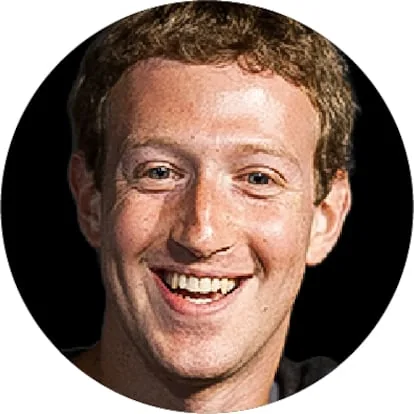
22. Mark Zuckerberg
1984. Tech entrepreneur. He started the social media era with Facebook, which he still dominates 22 years later, connecting millions. But he is also responsible for its miseries: from fraudulent use of user data to send personalized political ads to its addictive and harmful design for young people, now in court. By Manuel Pascual
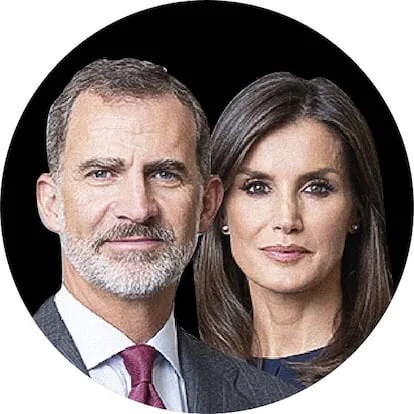
23. Felipe VI and Letizia Ortiz
1968 and 1972. Monarchs. Felipe de Borbón and Letizia Ortiz, the descendant of Saint Louis and the granddaughter of a taxi driver, have formed an unbeatable team. Since their marriage in 2004, they have shown that one can reign differently. They have bet on usefulness and closeness. Their daughters are their heritage. The previous monarch is the thorn in their side. By Jesús Rodríguez
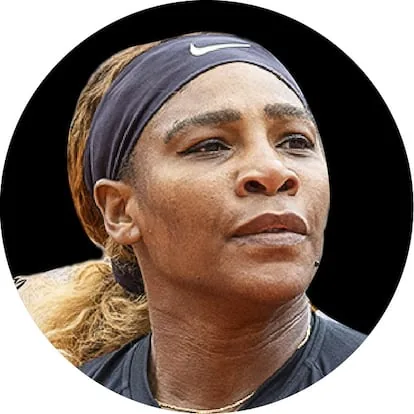
24. Serena Williams
1981. Tennis player. She is the best tennis player of the Open era that began in 1968. This must always be the starting point: the profound impact Serena Williams has had on modern sport, with the voracity of her tennis, with the emergence of her personality. Born in Saginaw, Michigan (USA), in 1981, she appeared on the professional circuit in the late nineties with physical power and a competitive mindset that overwhelmed traditional tennis codes. Along with her sister Venus, she redefined the game and racial and cultural representation in a historically elitist sport. Williams built a career marked by resilience: injuries, criticism, and motherhood expanded her legend. Her 2017 Australian Open victory, while pregnant, summarizes her almost mythological dimension. Off the court, she built a business and activist identity, engaging in causes linked to gender and racial equality. Her retirement in 2022 has not diminished her influence. She not only changed tennis: she altered how sport understands excellence, the body, and power. By Manuel Jabois
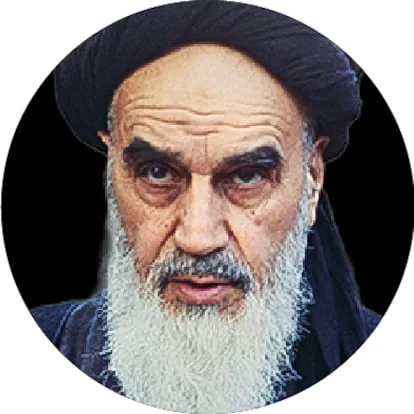
25. Ruhollah Khomeini
1902-1989. Ayatollah. In 1979, when the Shah fell in Iran, Persian democrats believed they could control Khomeini, and the global left considered him a people’s leader; during the interview with this furious cleric, I had to cover myself and keep my head lower than his. Soon after, mass executions began in Iranian stadiums and a hell that still lasts. By Rosa Montero
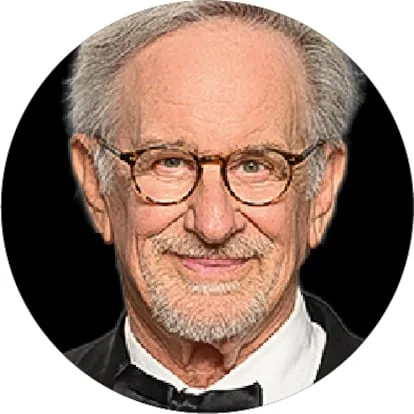
26. Steven Spielberg
1946. Filmmaker. Steven Spielberg distinguishes in his filmography between films (author films) and movies (films for the general public). The filmmaker, probably the most relevant contemporary director, has often managed to fuse both factions without losing his best quality, that of a narrator who enjoys discovering and popularizing stories. By Gregorio Belinchón
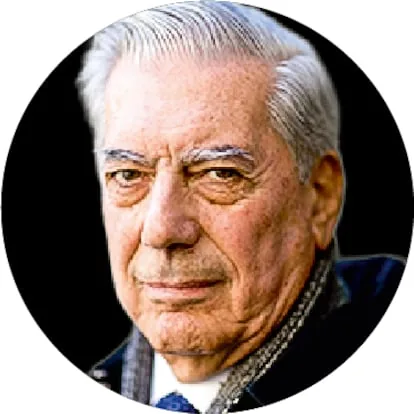
27. Mario Vargas Llosa
1936-2025. Writer. He not only created dazzling prose and pushed the boundaries of literature into unexplored territories but was also one of the great architects of the Spanish-language novel’s triumphant return to the universal canon, where Cervantes placed it. He was as capable of creating his own universe as narrating others’ extraordinary stories. For all this, he was unique. By Berna González-Harbour
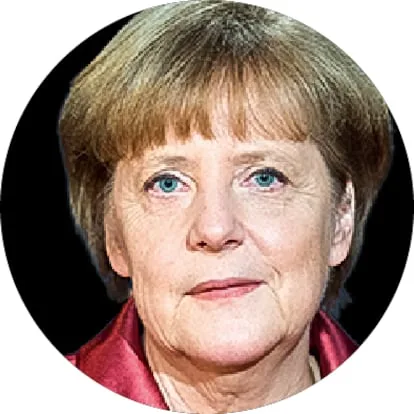
28. Angela Merkel
1954. Politician. No European leader has been as decisive in the early 21st century as Angela Merkel, German chancellor between 2005 and 2021. She managed the euro crisis, opened the country to immigrants, and governed during years of relative prosperity but was criticized for avoiding reforms and for excessive complacency with Vladimir Putin’s Russia. By Marc Bassets
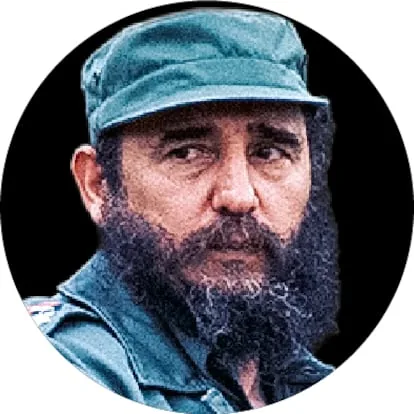
29. Fidel Castro
1926-2016. Politician. He embodied the Cuban Revolution, appropriated it with authoritarian leadership, and turned it into a myth preserved by the global left. He aligned with the Soviet Union, and after its dissolution, Cuba entered crisis. Even today, 10 years after his death, he evokes hatred and veneration inside and outside the island as a leader who survived a thousand shipwrecks and the last anti-imperialist hero. By Silvia Blanco
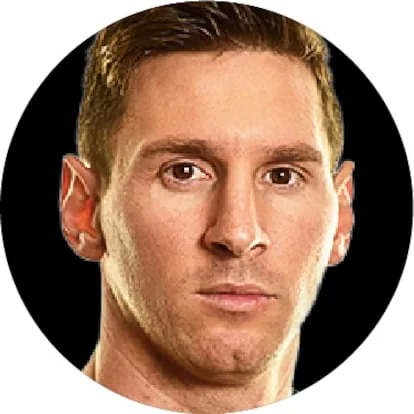
30. Lionel Messi
1987. Footballer. The Argentine has conquered the world with a ball, effortlessly, smoothly and elegantly, driven by a child’s dream and an adult’s ambition, marked by the virtuosity of a unique, impossible, or well-known play: routine turned into art by the genius of number 10. No one has won more Ballon d’Or awards than the Rosario native, who will play his sixth World Cup this summer. By Ramon Besa
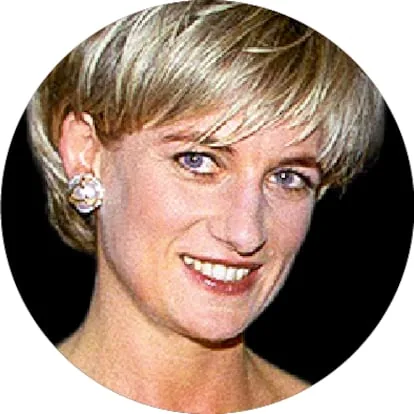
31. Lady Di
1961-1997. Princess. She was the target of photographers from her engagement at 19 to Charles of England until her death at 36, pursued by paparazzi in Paris. She captivated with charisma and glamour and shook the British monarchy. She only achieved privacy in death: her grave is on an island within a lake in the gardens of Althorp House, her family’s estate. By Elisabet Sans
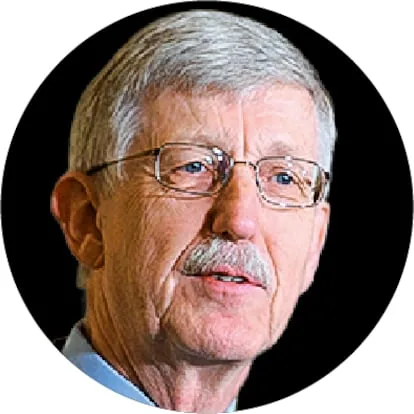
32. Francis Collins
1950. Geneticist. This doctor and biologist led the Human Genome Project, which sequenced our entire DNA chain for the first time, the largest biomedical research project in history. He was also one of the most relevant directors of the US National Institutes of Health, the world’s largest biomedical research funder. By Nuño Domínguez
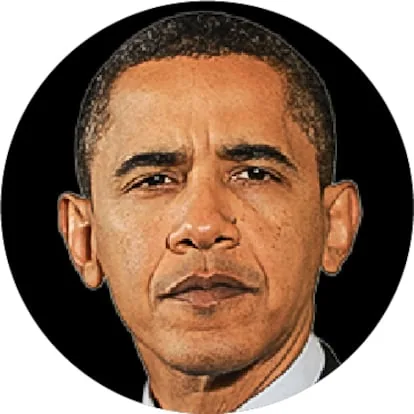
33. Barack Obama
1961. Politician. With Barack Obama’s victory, the first black president in US history, another world was briefly possible. The prose of his presidency was, as always, worse than the poetry of his campaign. Washington and the world have yet to overcome that promise, which earned him the Nobel Peace Prize and lasted until Donald Trump arrived. By Iker Seisdedos
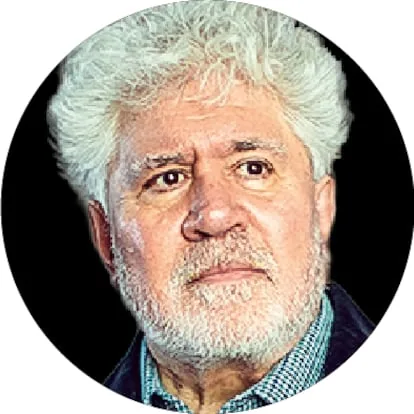
34. Pedro Almodóvar
1949. Filmmaker. From the prank that was Pepi, Luci, Bom… to the melancholic restraint of Amarga Navidad, through his reinvention of screwball comedy and melodrama, he has built a body of work faithful to his obsessions. No Spanish filmmaker has portrayed the country with such a mix of insolence, tenderness, artifice, and lucidity. Still today, a radical and luminous anomaly. By Álex Vicente
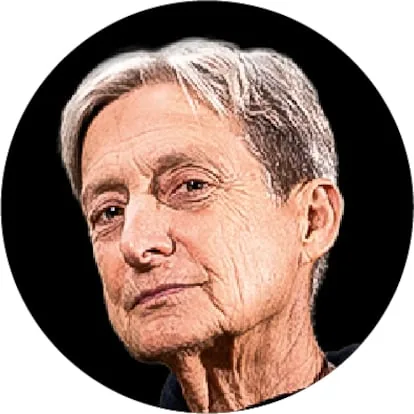
35. Judith Butler
1956. Philosopher. She opened a breach in the division of the world between them and them; she illuminated queer theory. The Jewish-origin thinker has studied violence, pain, response to authoritarianism… But it is Gender Trouble (1990) that causes her lectures to be filled with fans. Her influence on thought and our identity is immense. By Carmen Pérez-Lanzac
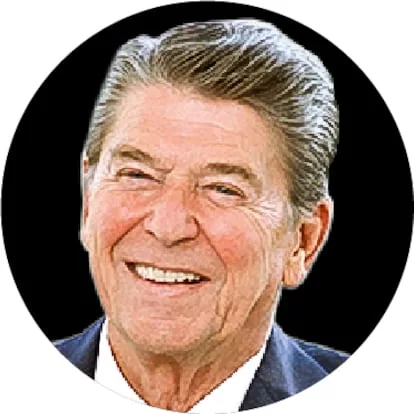
36. Ronald Reagan
1911-2004. Politician. He was a milestone of optimism and hope with his conservative revolution: more market, fewer taxes, and minimal state intervention. His measures tripled debt, increased deficit and inequality. His contribution to the Cold War was negotiating with Gorbachev the greatest nuclear disarmament of our times. By Lluís Bassets
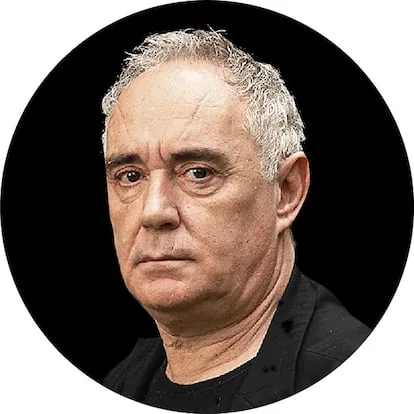
37. Ferran Adrià
1962. Chef. He changed the rules of the global gastronomy game. He did not study at university but holds honorary doctorates from five (in Spain, Canada, Scotland, and Argentina) and created the Science and Cooking course at Harvard University. His restaurant elBulli, located in a remote place on the Costa Brava, was recognized five times as the best in the world according to The World’s 50 Best Restaurants list before closing in 2011. His story graced the cover of El País Semanal in 1999 and the The New York Times magazine in 2003, marking him as the leading figure of a new global avant-garde cuisine movement. The current leaders of world gastronomy passed through elBulli’s kitchens, and he is responsible for the presence of a dish with spherification in any restaurant. Since elBulli closed, Adrià has focused his obsession on knowledge dissemination, from creating the Sapiens method to his Bullipedia. By Almudena Ávalos
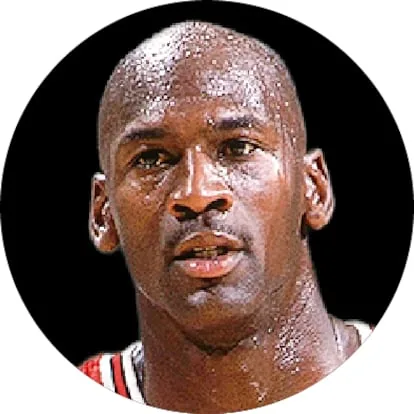
38. Michael Jordan
1963. Basketball player. In the debate about the greatest athlete of all time, Michael Jordan competes with anyone. Not only for what he won, six NBA championship rings as the leader of a dynasty in the Chicago Bulls, but for his transformative role in basketball, entertainment, and even the relationship of stars with sports brands. By Juan Morenilla
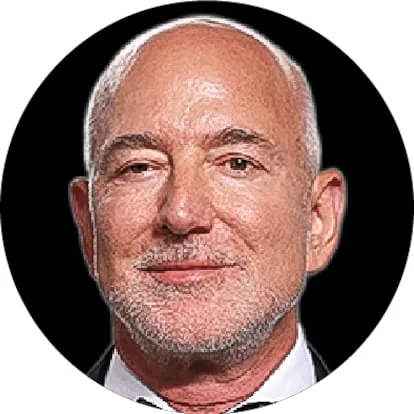
39. Jeff Bezos
1964. Entrepreneur. The impact of a businessman has to do with the ability to transform an industry and even the way of consuming. This is the case of Bezos, creator of Amazon, the largest e-commerce giant, owner of The Washington Post, and founder of Blue Origin. Thanks to him, we forever changed our way of shopping: with one click and without leaving home. By Amanda Mars
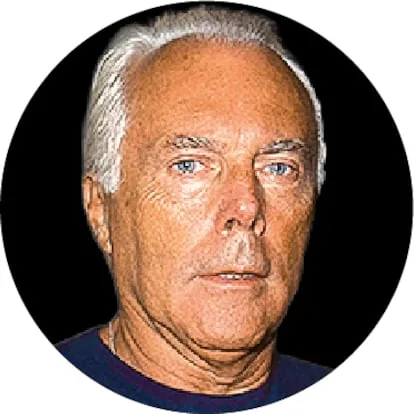
40. Giorgio Armani
1934-2025. Fashion designer. He died at 90, days before the 50th anniversary of his brand. He built an empire from a tailoring style that changed fashion’s course: women wanted to wear those fluid masculinity suits. The freedom of his silhouettes reflected the lucidity of those who wore them. This redefined the relationship between clothing and identity. By Sofía Ruiz de Velasco
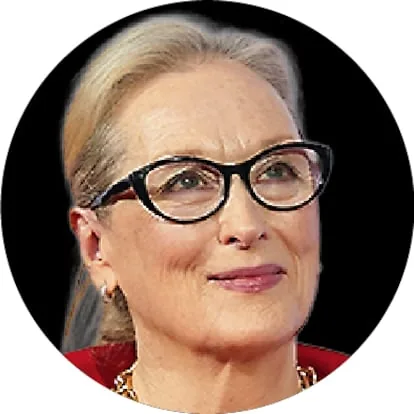
41. Meryl Streep
1949. Actress. The actress of accent and hairstyle changes, the woman who has played and won everything. Meryl Streep has been at the top of her profession for half a century, and at 76, she is the great matriarch of the art of emotion and gesture thanks to her inimitable mix of common woman and goddess. By Elsa Fernández-Santos
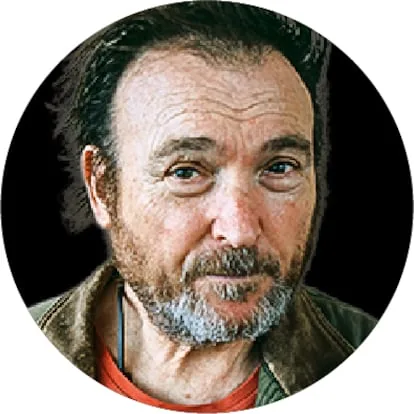
42. Miquel Barceló
1957. Artist. Painter, draftsman, sculptor, ceramist, and performer, he has consolidated a dazzling career “backwards,” as he defines it. His legacy is one where the archaic meets the modern. His work does not constantly reference current events, but his materials, like him, have always been porous to the reality around him, whether in Europe or Africa. By Ana Marcos
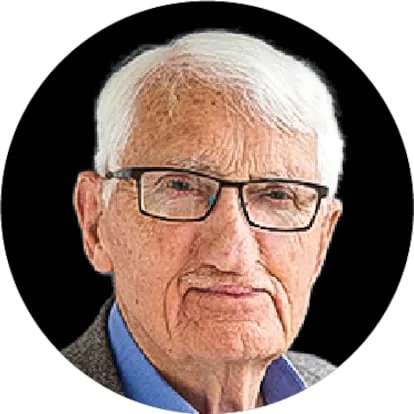
43. Jürgen Habermas
1929-2026. Philosopher. Disciple of Adorno, member of the Frankfurt School, and 2003 Prince of Asturias Award for Social Sciences winner, he authored seminal works of 20th-century political thought such as The Theory of Communicative Action. This text and his concept of deliberative democracy continue to shape our political and social time from a humanist and progressive perspective. By Borja Hermoso

44. Shakira
1977. Music. Long before Bad Bunny reached the top, Shakira did. Between the late nineties and the early new century, the Colombian appeared not only as a Latin pop star but as an architect of cultural crossings. With her voice — both clear and rough — she captivated the world. She achieved this by first singing in Spanish with Pies Descalzos (1995) and Dónde Están los Ladrones (1998), then with her strategic crossover to English, Laundry Service (2001), which established her as a phenomenon. Pop, rock, and Latin rhythms mixed in a formula that did not ask for permission but space. Thanks to her, the US public and industry began to look south with new eyes and understood that Latin was not an isolated genre but a movement. Her success opened a crack through which new generations of Latin artists later entered, and major labels began investing more in bilingual talents. What was perceived as an exception became strategy. And then, the norm. By Paola Nagovitch
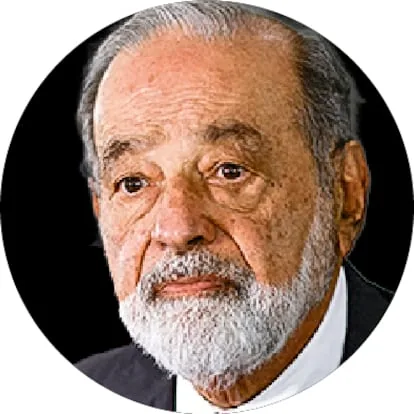
45. Carlos Slim
1940. Entrepreneur. Engineer by training, he is one of the great figures in recent Mexican and Latin American history. He made crises his playground and patience a strategy. He built an empire from telecommunications starting with Mexican Telmex and extended it to dozens of countries and sectors. His power is not displayed but exercised constructively. By Javier Lafuente
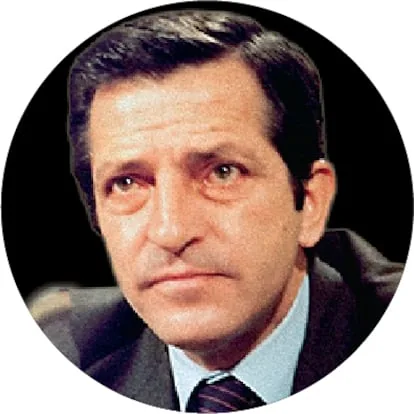
46. Adolfo Suárez
1932-2014. Politician. He was chosen to lead Spain to democracy. He extended a hand to the opposition, seduced his own — he was part of the dictatorship elites — and, with the pressure of a society wanting transformation, he succeeded. The leader and founder of UCD called elections, legalized the Communist Party, and pushed a new Constitution. By José Andrés Rojo
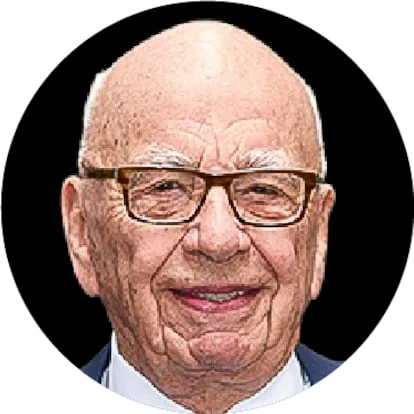
47. Rupert Murdoch
1931. Entrepreneur. His 95 years paint a portrait of power in shadows. His succession battle ended with Lachlan’s victory, the founder of News Corporation’s favorite, a conservative media empire (Fox News, The Sun) that catapulted Donald Trump. Both magnates now face off in courts, but the seed of chaos was planted for the 21st century. By Quino Petit
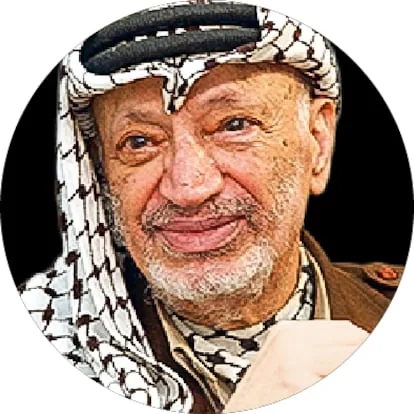
48. Yasser Arafat
1929-2004. Politician. He symbolized Palestinian nationalism for decades, giving it a face and iconography. His image, with kufiya and olive-colored uniform, still looks faded in refugee camps. Despite his personalism and changing discourse on violence, he is the dignified, charismatic, and unifying leader many Palestinians still long for today. By Antonio Pita
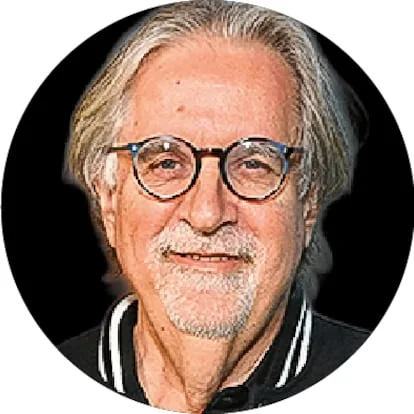
49. Matt Groening
1954. Cartoonist. The Simpsons owe their tenderness to filmmaker James L. Brooks and their sarcasm to head writer Sam Simon. But before that, their main creator, Matt Groening, had literally given them shape and a certain underground air. The resulting success is known to all. But if the years have eroded sarcasm and tenderness, the drawings remain the same, 37 years later, iconic and unavoidable. By Tom C. Avendaño
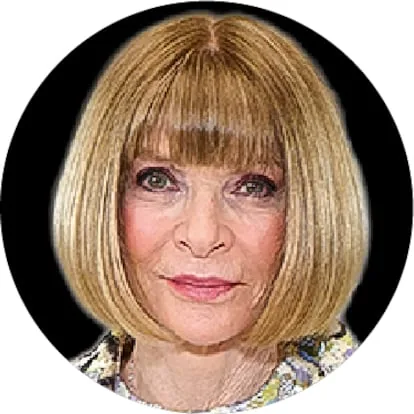
50. Anna Wintour
1949. Editor. She just starred on the cover of her magazine, American Vogue, alongside her fictional alter ego, Meryl Streep, to show she is not like her: despotic, capricious, frivolous. She has been the most powerful woman in fashion for 40 years, during which the industry has changed beyond recognition. But fashion passes, and Wintour remains. By Leticia García