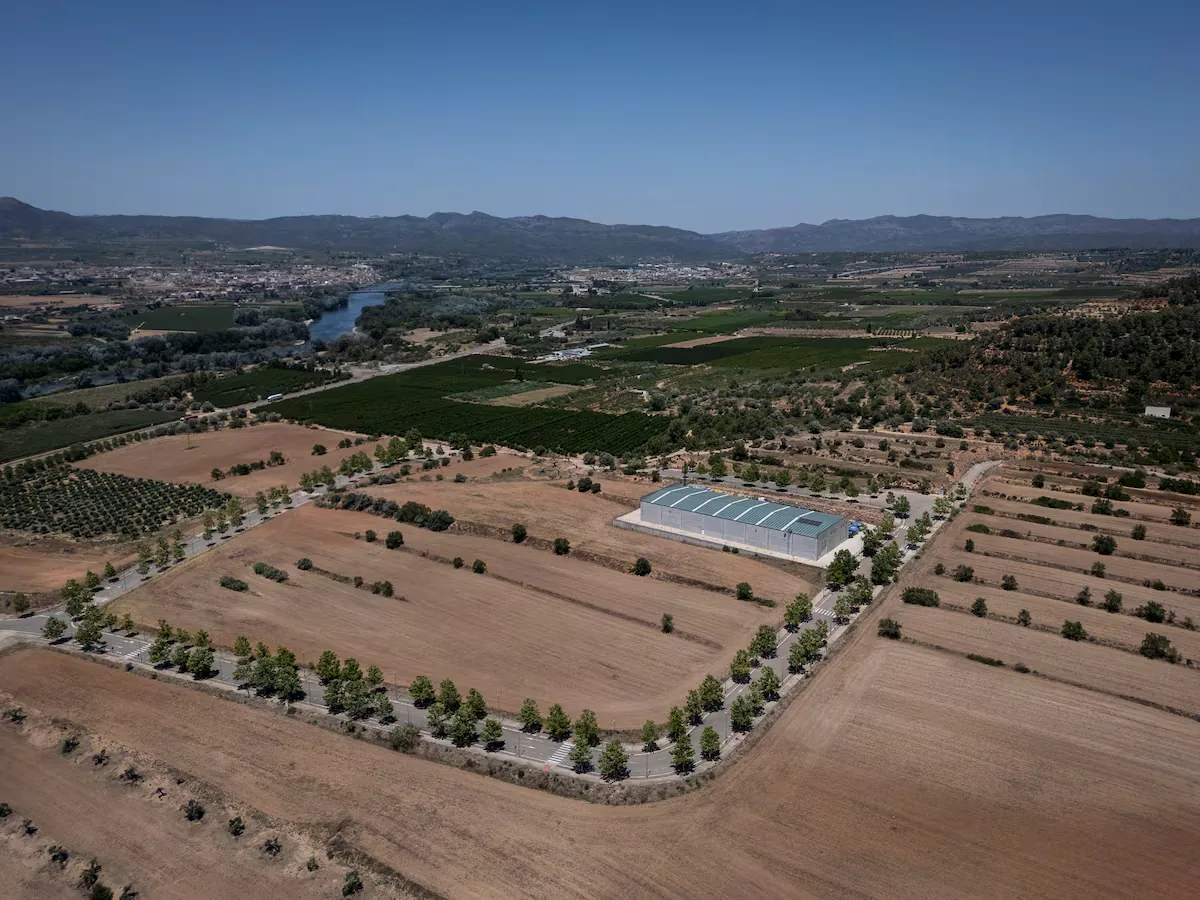
Renewable energies to meet electricity demand, a rationed water consumption quota, a closed cooling circuit to avoid losses due to evaporation, and insulating solutions to mitigate the acoustic impact on neighboring populations. The candidacy of Móra la Nova, in the Ribera d’Ebre region (Tarragona), to be the site of the Artificial Intelligence (AI) gigafactory seeks to guarantee the sustainability of the project, so that its final design convinces the European Commission and helps dispel the concerns that may arise in an environment wary of the presence, for decades, of highly resource-demanding facilities with a compromising environmental footprint.
Read more Riki Blanco: vacation extender
The Generalitat states that there is no reason to fear the impact of the gigafactory and emphasizes that it adheres to a European guide of good practices for the construction of new data centers. It happens that this guide recommends choosing locations where “the ambient temperature is low,” while the Ribera d’Ebre records the highest temperature in Catalonia: 44.1 degrees at the beginning of July.
The Government assumes that when evaluating the suitability of each candidacy, the European Commission will take into account the degree of territorial acceptance, and the same will happen later to attract investment around the gigafactory. “Today’s data centers have nothing to do with those from ten years ago,” repeats the Generalitat, which has a 1% stake in the gigafactory candidacy, far below the 48% held by the State and the 51% private capital mainly concentrated in the hands of Banco Santander, Telefónica, and ACS and, to a lesser extent, Multiverse.
The Secretary of Telecommunications and Digital Transformation of the Generalitat, Albert Tort, states that the candidacy to make the Móra la Nova proposal the winner, which includes a support subsite in San Fernando de Henares (Madrid), aims to give sustainability the status of “added value” to compete in the selection process open by the European Commission, which expects to accept candidacies until next November 12.
“In any digital infrastructure, its impact can be questioned. Currently, there is nothing in that Móra industrial park, and it is evident that the gigafactory will have an impact. The debate should not be avoided; on the contrary, it should be valued,” highlights Albert Tort. The bet on the gigafactory coincides with a moment when the southern Catalonia regions are among the most active in presenting objections against the Plater, the plan that marks which areas are suitable for hosting wind farms or large photovoltaic installations. The reason given by municipalities and entities is that this same area has already made a notable contribution to guaranteeing energy supply to the rest of Catalonia. Specifically, in the Ribera d’Ebre, and about fifteen kilometers from Móra la Nova, are the two nuclear reactors of Ascó. In another direction but also about twenty kilometers from Móra is the Vandellòs nuclear plant.
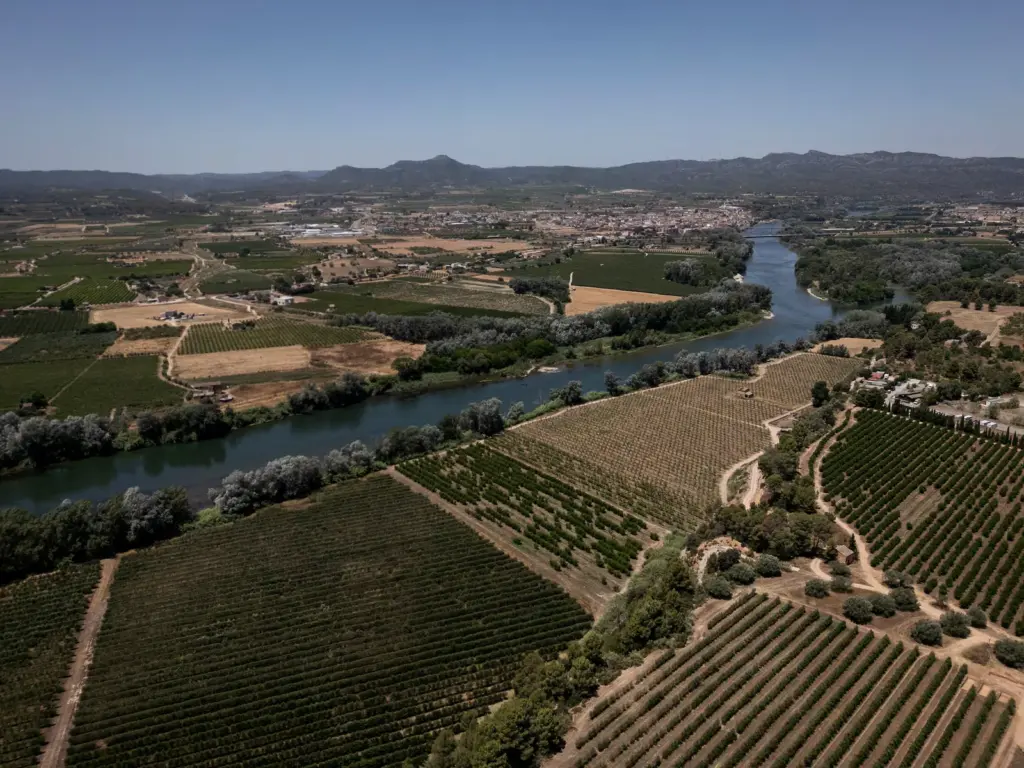
The Generalitat does not reveal which proposals from other countries may pose the greatest competition threat to Móra’s candidacy but highlights that Catalonia has a lot of work already done to secure the site of what is considered a key AI facility, with an associated investment of between 3,000 and 5,000 million euros.
Read more It is Zeus’s law, Meloni
The first injection of funds for the gigafactory is guaranteed because the State commits more than 700 million, but sooner rather than later it will be necessary to attract companies and investors. It is assumed that these will hardly take the step if they detect the presence of a rooted opposition front. In this regard, the candidacy adheres to what the European Commission mandates in its good practice guide for data centers. Emphasis is placed on the need to use water resources sparingly, with adjusted water consumption, and to seek technical solutions to optimize the cooling of data warehouses.
In that same European Commission guide, the Best Practice Guidelines for the EU Code of Conduct on Data Centre Energy Efficiency, one of the obstacles that Móra’s candidacy may face appears. The document consists of more than 60 pages detailing what design requirements data centers should have to optimize their performance and mitigate the effect on the environment. In one section, it warns that the location “influences the achievable efficiency” and recommends choosing a site where “the ambient temperature is low” and there is no “high humidity.” The Ribera d’Ebre records the highest temperatures in Catalonia, with repeated episodes above 40 degrees Celsius. On July 8 in Vinebre, a record of 44.1 degrees was reached.
“The focus must be on sustainability; we will not be the only ones to do so, but it must be presented as an added value because it is an aspect that appears in the debate,” insists the Government’s Secretary of Telecommunications.
At its start-up, scheduled for early 2028, the gigafactory will have a maximum energy demand of 55 megawatts (MW), already guaranteed by the supply from the dels Aubals substation, located in the municipality of Garcia and part of the electrical line route between Escatrón (Zaragoza) and La Secuita. “The most important axis for Catalonia and one of the most important in the Iberian Peninsula,” emphasizes Red Eléctrica. By 2029-2030, demand could reach 150 MW, but the Generalitat states that it assumes the commitment to total “renewable coverage.” It is hoped to make this possible with wind and photovoltaic energy.
Read more Glassmaker obituary by Mayor Uruñuela for his deputy mayor Rodríguez Almodóvar