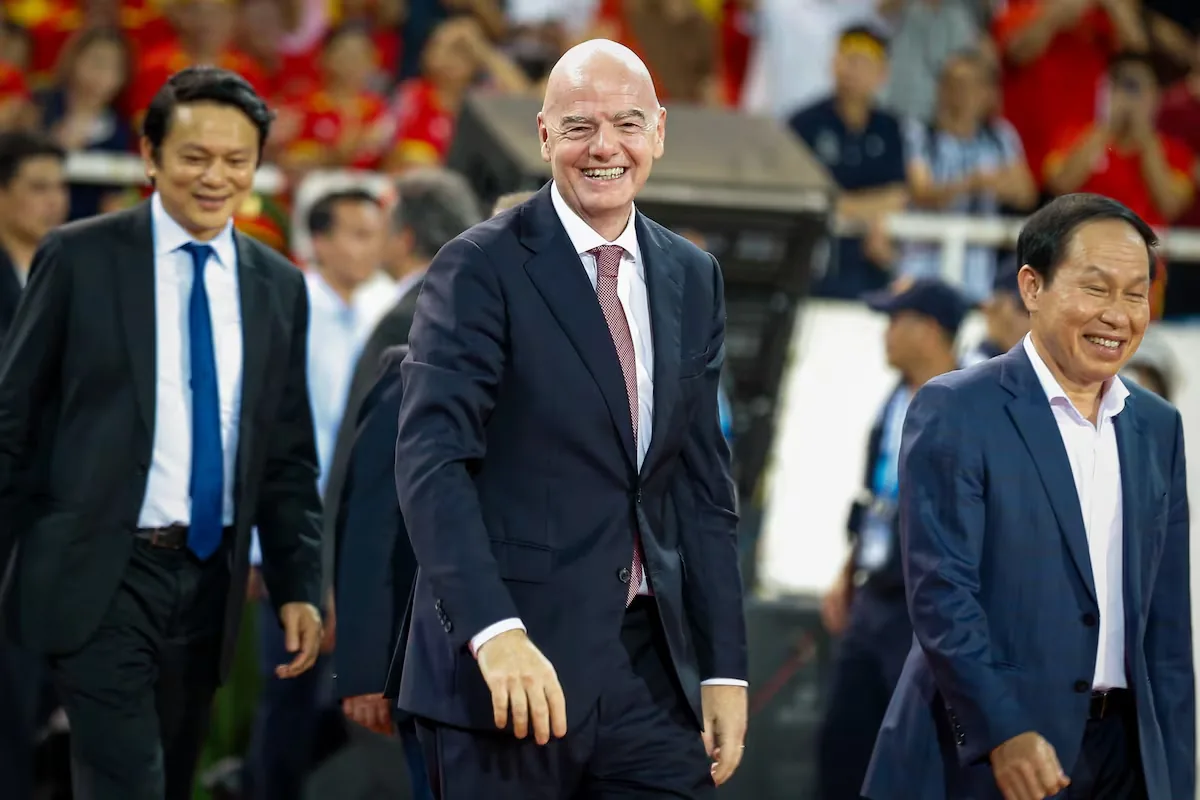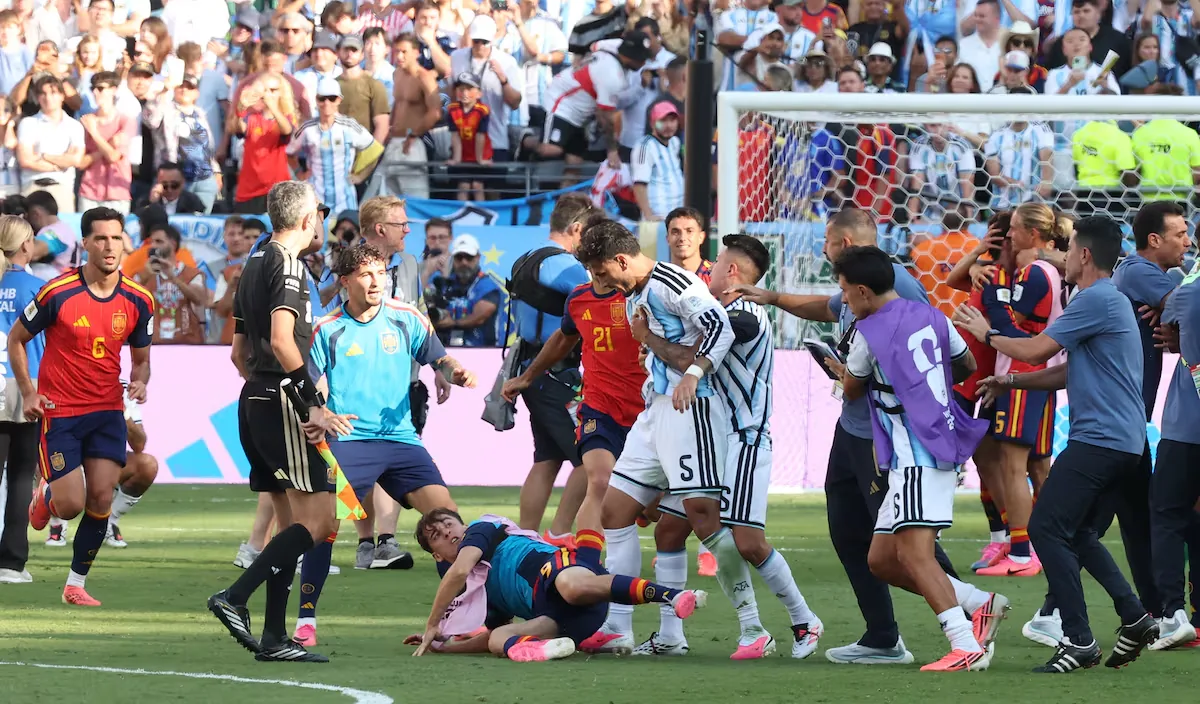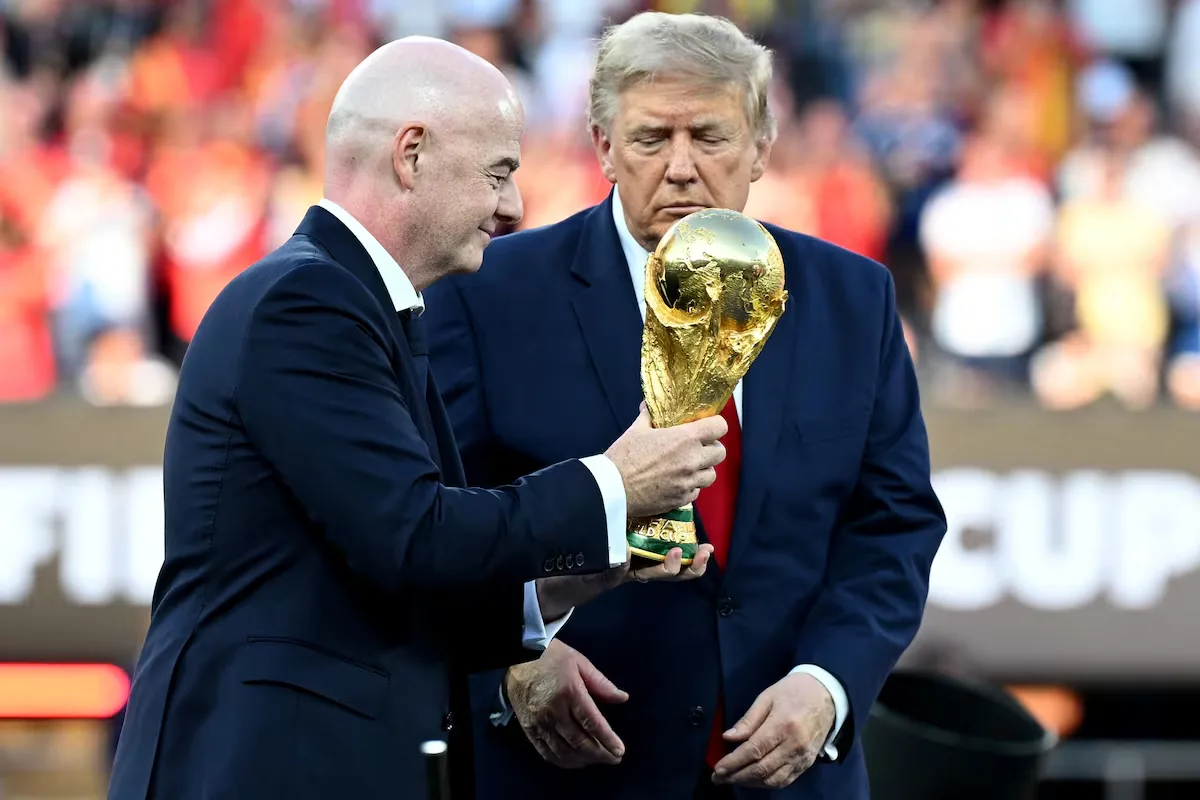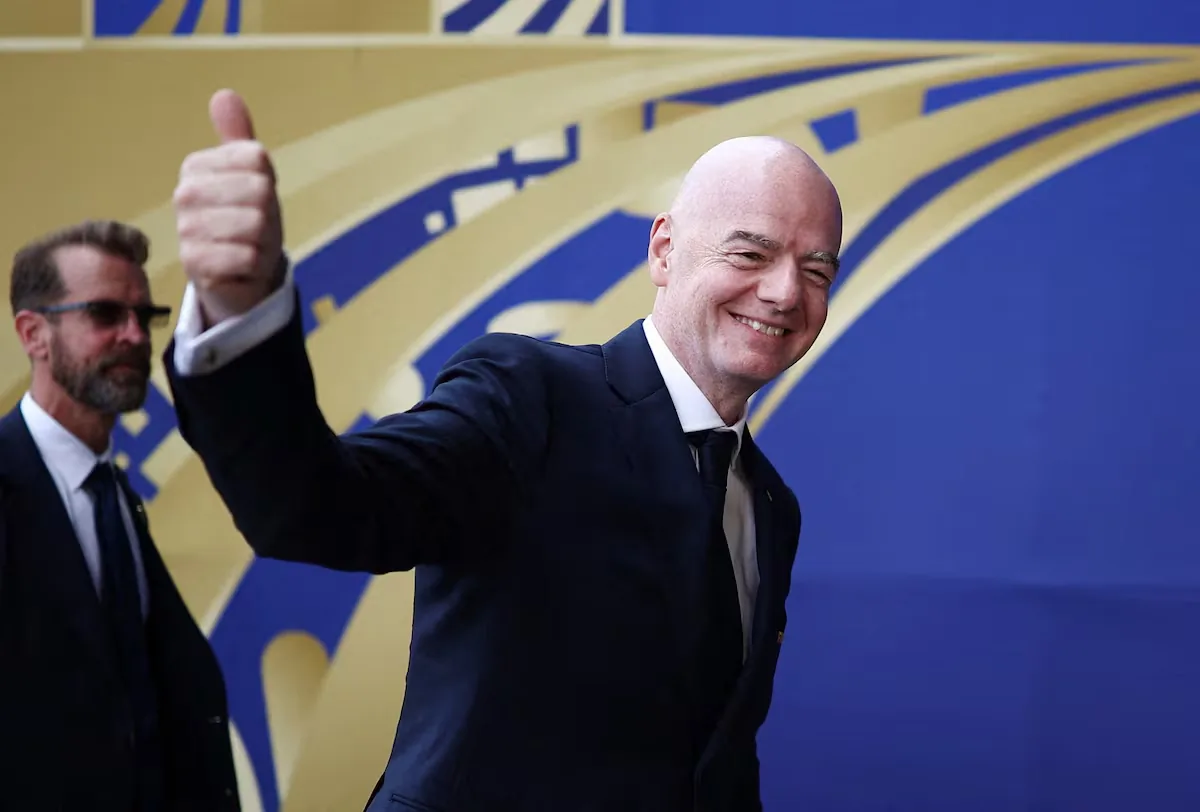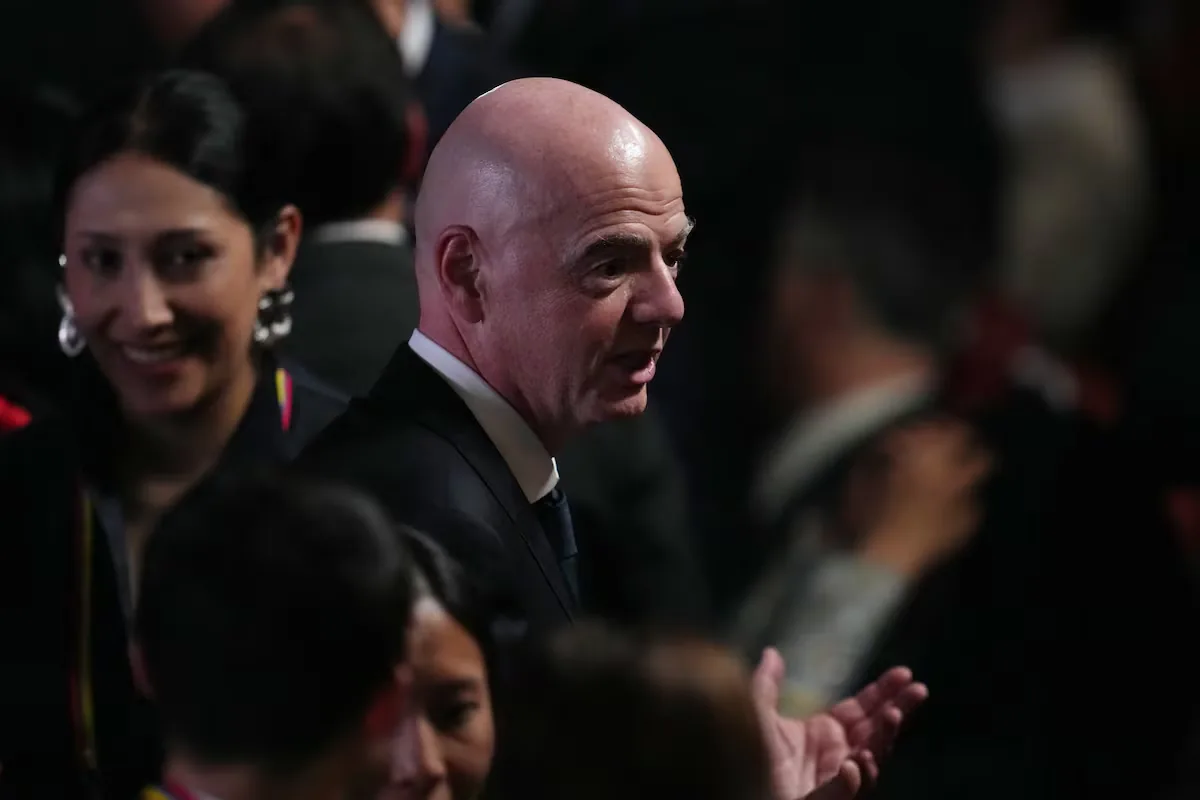
Overthrowing FIFA president Gianni Infantino, following his failed attempt to grant private capital 20% of a subsidiary and independent company that would exploit the marketing rights of the men’s and women’s World Cup, has become the main consequence of the internal and reputational crisis undermining the world football governing body and its president. Since The Times revealed on July 28 the controversial financing plan by which FIFA’s 211 member federations would receive about 40 million euros annually between 2027 and 2031, UEFA, led by its president, Slovenian Aleksander Ceferin, has taken on the complex task of ending the Infantino era, which began in 2016.
Read more The AI gigafactory in Móra la Nova prioritizes sustainability to convince the EU and the neighbors
Right now, the only real possibility that the Italo-Swiss leader will not continue at the head of FIFA would be if he resigned and declined to be re-elected for his fourth term in the elections to be held on March 18, 2027. Infantino has publicly and privately declared that he will not leave voluntarily, and none of the candidates most likely to challenge him have the 106 votes needed to overthrow him by convening an extraordinary FIFA Congress. Neither Victor Montagliani, president of the Confederation of North, Central America and the Caribbean (Concacaf), nor the president of the Norwegian Football Federation, the combative former player Lisa Klaveness, have enough support to end Infantino’s term. The latter, between April and May of this year, gathered by letter the support of 200 federations for his re-election.
After the failed project to create the aforementioned subsidiary company, named FIFA Forward Enterprise (FFE), Infantino would have about 140 votes after losing the vast majority of UEFA’s 55 and just over half of Concacaf’s 35, according to various sources from European, South American, and Central American football consulted. The loss of support for Infantino is considerable but not enough to force his departure. A large majority of the African Football Confederation (54 votes), much of the Asian (46), the entire South American (10), Oceania (11), and the support he retains in Concacaf, with influential Mexico at the forefront, currently form the backing that guarantees the continuity of the current FIFA president. This is the main reason why messages issued from UEFA itself, by close collaborators such as Luis Figo, or by the aforementioned Klaveness, revolve around the word resignation. No one dares, for the moment, to call the bluff of convening an extraordinary FIFA congress, for which only 43 signatures from its member federations are needed, because they do not have the 106 votes guaranteed to defeat Infantino.
Several sources consulted by this newspaper summarize the conflict between UEFA and FIFA as a struggle for economic control of football and the personal confrontation that their presidents have maintained for a decade. Both began their terms in 2016, after Fifagate.
The corruption scandals brought down Swiss Joseph Blatter as the head of world football and French Michel Platini as UEFA president. Infantino and Ceferin respectively took their seats, and barely six months later, a personal and institutional confrontation began that has escalated like never before in the last ten days despite the aborted attempt to launch the aforementioned FIFA Forward Enterprise.
Read more Riki Blanco: vacation extender
Last Thursday, UEFA stated in a communiqué sent to various media that neither the withdrawal of the project, nor the acknowledgment of errors, nor the promise to improve the transparency of processes to propose initiatives of the magnitude of the aborted one are enough to lift the boycott of FIFA competitions. The battle looks as harsh as it is long-lasting because Ceferin, according to European football sources, plans to run for his fourth term after having renounced it two years ago and after introducing a modification in UEFA statutes that allows it. When the Slovenian leader took office in 2016, he said that the two and a half years remaining when he replaced Platini would count as one term. With the 2024 statutory modification, that period no longer counts as a term, but Ceferin defiantly told the press present at the UEFA Congress held in Paris that he would not run in 2027: “I am tired. We have suffered COVID, the Super League, the moral superiority of those who criticize us, of those who say UEFA is divided. I had planned this for six or seven months. I did not want to say it before so as not to alter the federations’ decision on the voted amendment. Not everyone in football is like some clowns out there.”
UEFA elections will be held in February or March 2027, and according to sources belonging to the organization, Ceferin also collected unanimous support through letters sent to his member federations between April and May to run and be able to sing the tired message that he is running because football demands it. “Ceferin will be president until 2031 and is the best option for UEFA and the football family,” defends a European football leader.
Faced with the very likely continuity of Ceferin, Infantino is aware that his main goal is to try to rebuild his image and that of FIFA. The task will be arduous. He knows that, as with VAR, the Club World Cup, the expansion to 48 teams in the World Cup, or the FIFA Forward Enterprise attempt, UEFA will oppose any initiative he proposes. The difficult part will be to make the public forget his flirtations with Vladimir Putin, the Emir of Qatar, Donald Trump, and the latter’s interference to pressure and achieve the lifting of a suspension on American forward Folarin Balogun during the last World Cup.
Infantino’s luck is that public opinion does not vote in FIFA presidential elections and that UEFA does not control the majority of federations.
Read more It is Zeus’s law, Meloni