








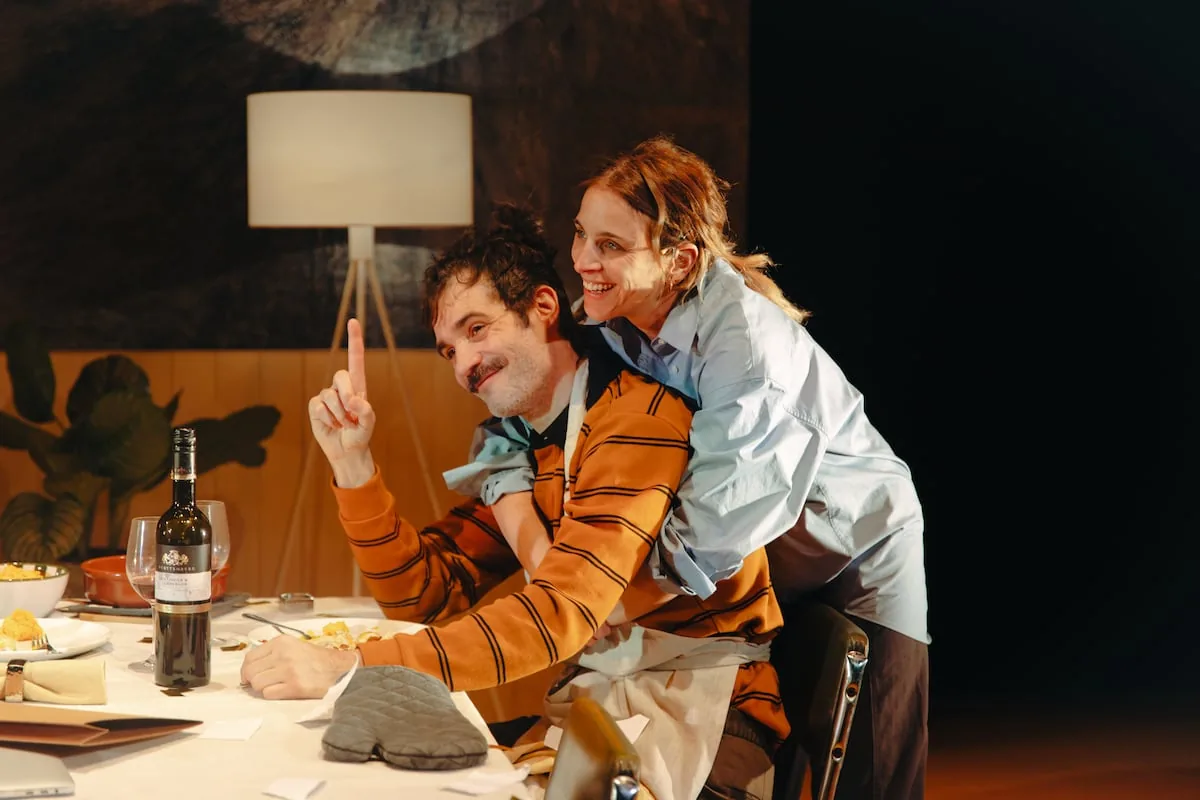
British playwright Ella Hickson premiered The Writer at the Almeida in London in 2018. We live in such fast-paced times that now, when her Catalan version has just premiered at the Lliure (translated by Carlota Subirós), the text already seems outdated to us. Anna Serrano firmly directs a production that strictly follows the author’s stage directions: here the aim is to question and challenge theatrical language itself, its conventions, and its clichés. Both in form and content. Hickson constructs characters so archetypal they seem like a joke: the young author who wants to change the world, the pragmatic and conservative director (who sometimes seems like a producer), the pusillanimous, henpecked boyfriend… L’autora is an interesting theatrical device that ends up falling into its own traps: the first part of the piece is stimulating, while the second deflates dramatically.
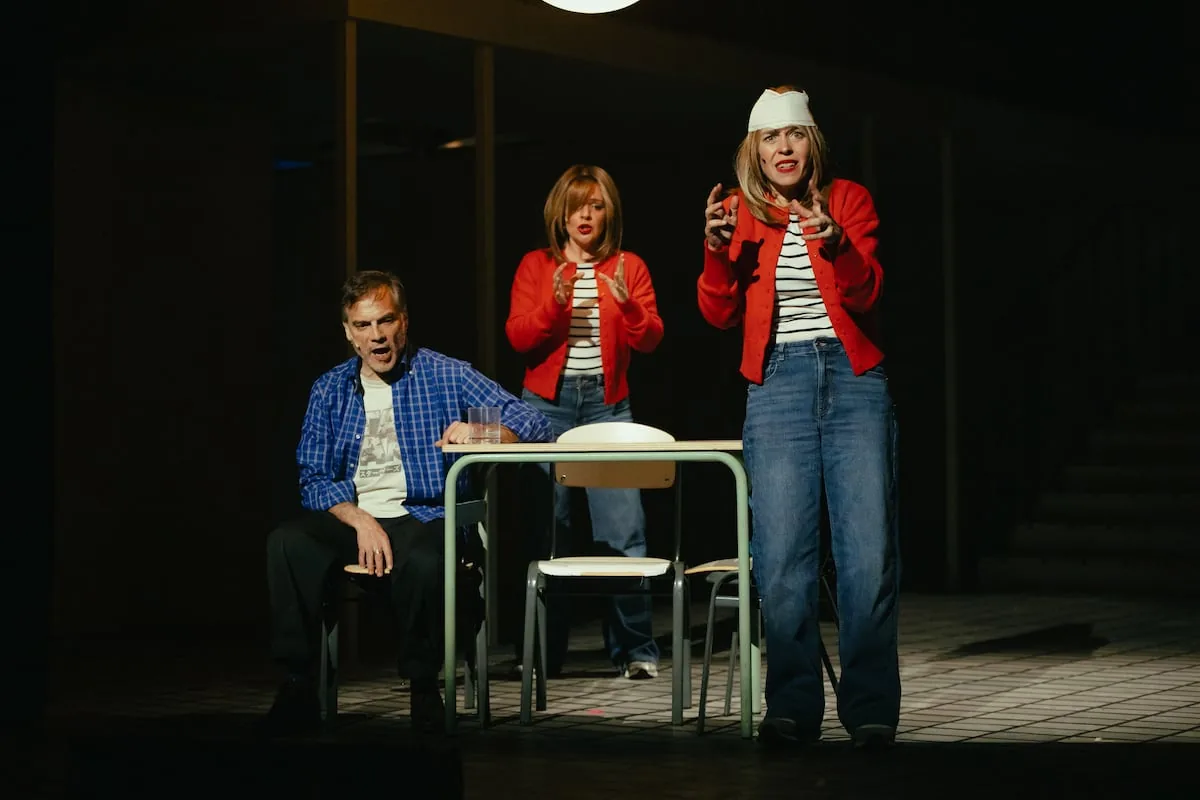
A scene of dialectical battle between a young author (a very convincing Ravina Raventós) and an establishment director (a razor-sharp Javier Beltrán) ends up becoming a collection of clichés about generational and gender conflicts: we all agree that capitalism and heteropatriarchy are the evils of this world, but the innocence of the young woman who intends to make a revolution through theater causes embarrassment. After this prologue, we realize we have seen an open rehearsal of a work in progress, and a colloquium begins which is, without a doubt, the best part of the show. Here enter Nausicaa Bonnín and David Selvas, the real author and director of the scene we have just witnessed. The power tensions among the artistic team members are shown through their cautious interventions and responses to a couple of audience members, in a metatheatrical exercise that works due to its clarity and subtle humor. Mansplaining from the director to the author and general discomfort at a question about race: nothing new under the sun.
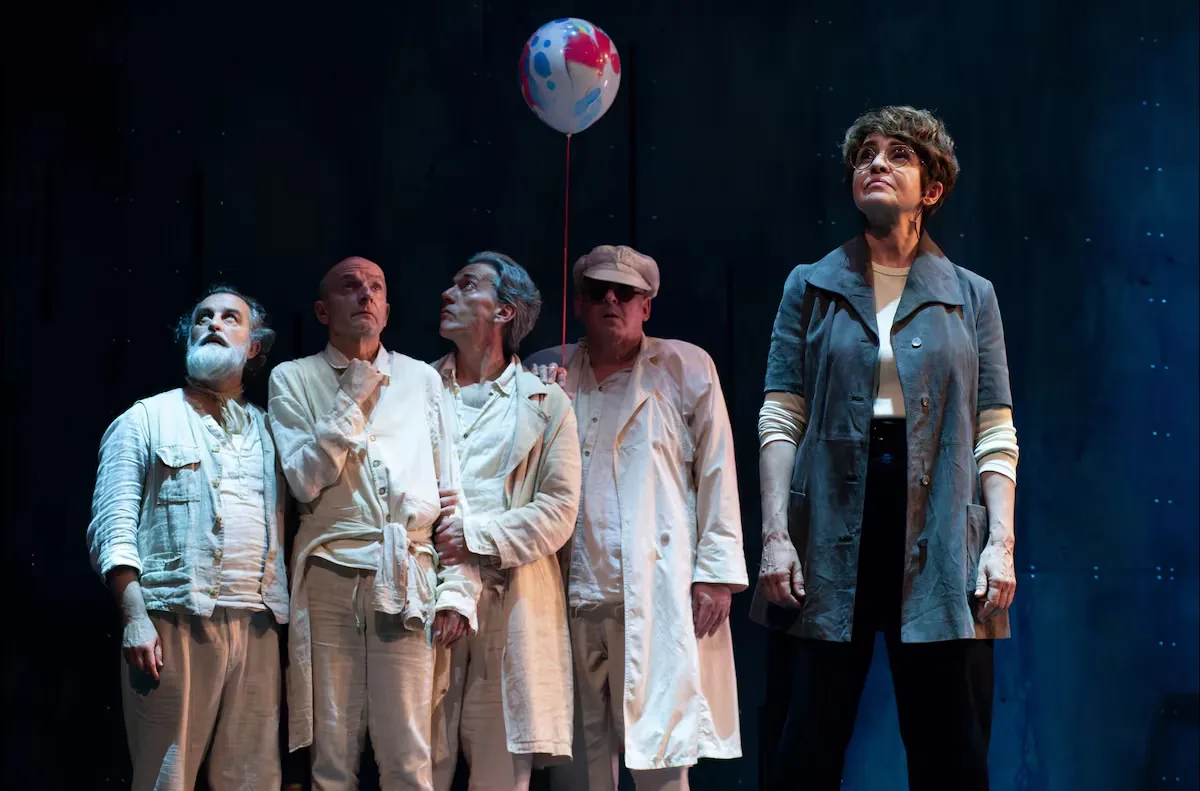
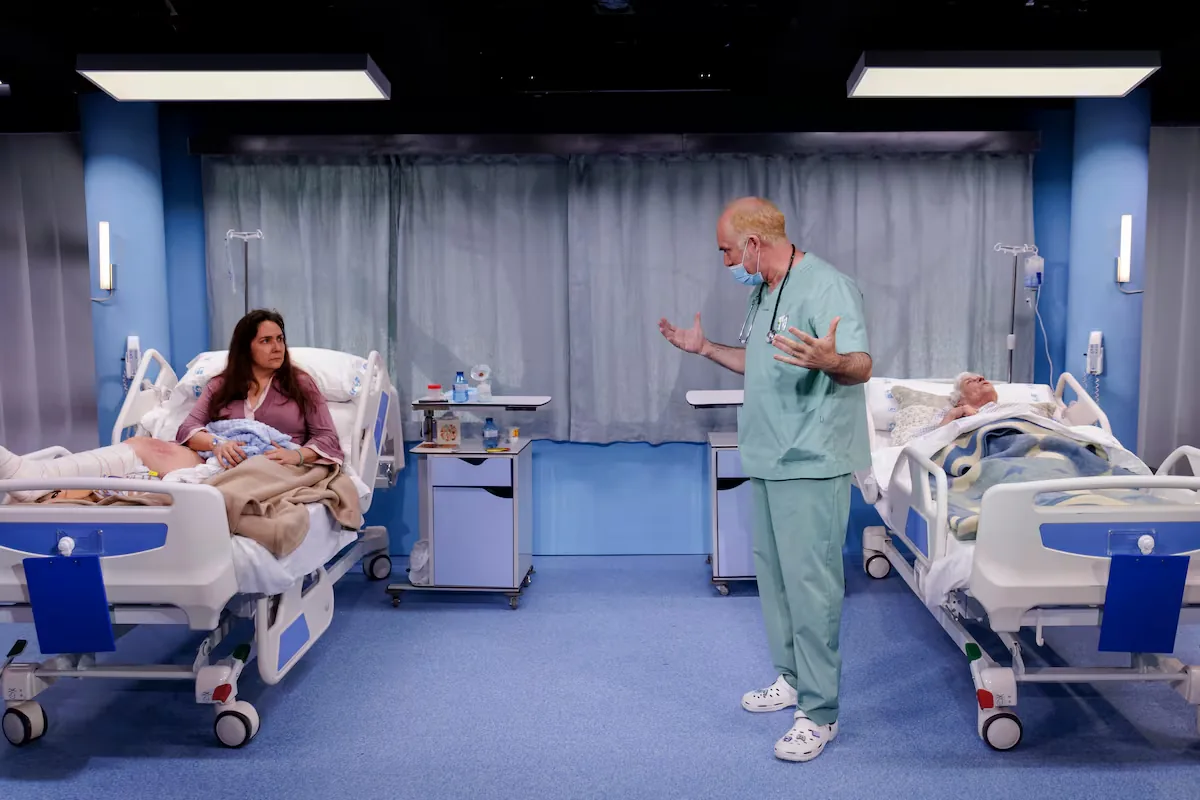
Next, we move to the home of the author and her boyfriend, with a stage device by Judit Colomer that reveals the tricks of theater, including stagehands working in full view of the audience. Javier Beltrán portrays with skill and affection a boyfriend so simple that he is happy when he goes to the supermarket. Special mention to Paula Barjau’s characterization: that bun defines a whole typology of seemingly deconstructed men. The author has the poster of her previous show, Young Woman and Angry, at home, and this is the definitive proof that the system always wins. Whether at the Almeida in London or the Lliure in Barcelona, the big theaters desperately seek their young (and angry) authors and directors, to fulfill the purplewashing (and youngwashing) demanded by our times. Defending the revolutionary power of theater and criticizing its bourgeois character before an audience like that of the Lliure (including this critic) is glaringly naive. You too have been captured by the system, Ella Hickson, and the system lets you shout and throw tantrums until you feel satisfied: you win, theater wins, we all win. The bank always wins.
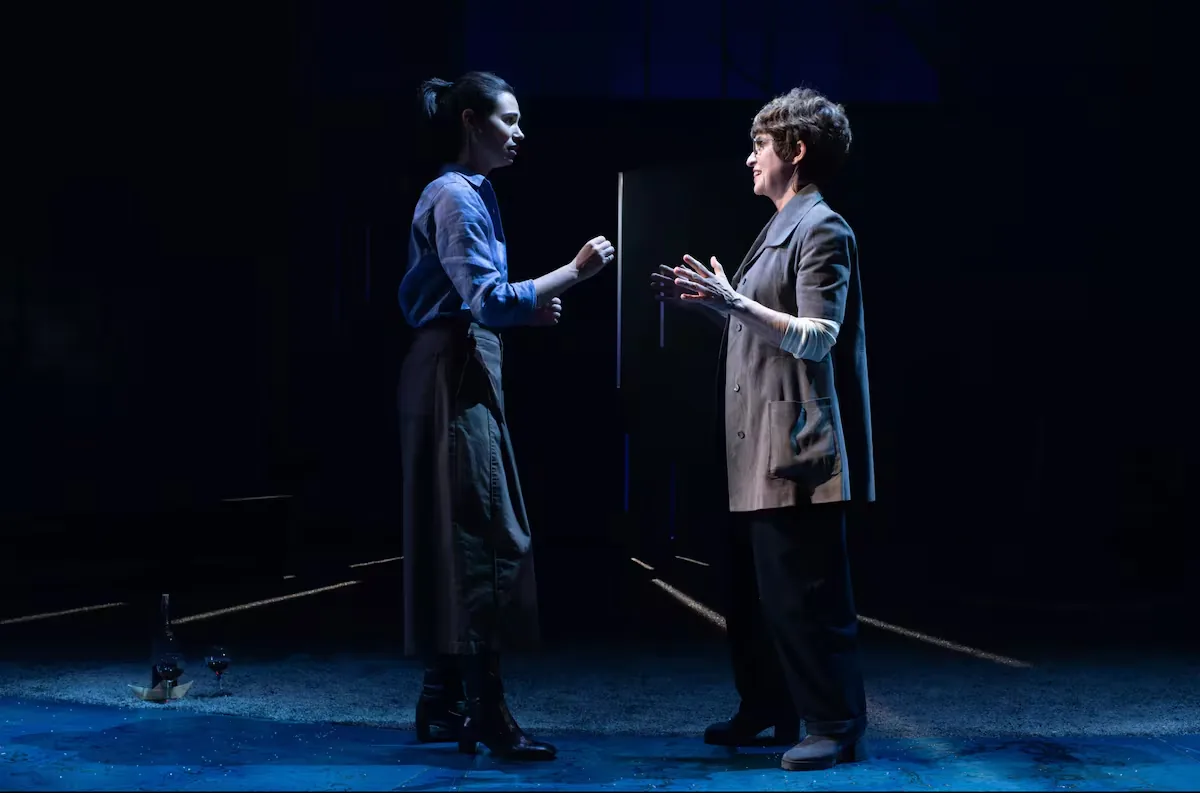
The second half of L’autora is a bizarre attempt to seek other theatricalities: Nausicaa Bonnín defends a rather unbearable monologue well, with references to Semele and Dionysus, and Anna Gatell fulfills what is supposed to look like a postdramatic theater scene (lighting by the always effective Marc Salicrú). If this part is disconcerting, what follows is laughable: we understand perfectly what Hickson wants to tell us with this ridiculous dialogue between the author and her almost teenage girlfriend (a Raventós who perfectly portrays a young woman imagined by a male director), but dramatically the scene doesn’t offer much. The reference to Picasso’s Guernica is the cherry on a cake that, eight years after its London premiere, already feels like reheated dinner. Rosalía recently stated that she might have been friends with the Malaga painter: there is no debate about whether to separate the work from the author, because if we don’t, we would have to discard much of the history of art, literature, or music.
In short, and to conclude, L’autora is a well-intentioned production that has arrived too late, showing that its nature as a public tantrum is completely fruitless. Will L’autora change theater? No. Will the audience leave the Lliure transformed? Neither. Despite everything, the commitment of the director and all the performers is commendable. But it is sad to see, once again, that we continue living in the world of “the author of the moment” or “the trendy director.” Truly young and angry creators do not premiere at the Lliure, because the system ensures they never get access to it.
L’autora
Text: Ella Hickson. Direction: Anna Serrano Gatell
Cast: Javier Beltrán, Nausicaa Bonnín, Ravina Raventós, and David Selvas Jansana.
Teatre Lliure. Barcelona. Until June 7