I propose a journey for which you will not need tickets, sunscreen, or even a towel. We will go to a place you probably know well, although you may not have stopped to think about it yet. First stop: any beach in Spain, 40 years ago. Put on the outfit that feels most comfortable to you: you can be the child building sandcastles with a bucket and a plastic shovel; the teenager who would have preferred to stay home; the grandparents who discover that their grandchildren grow up too fast; or the parents hoping their children grow enough to be able to sneak out for dinner alone again.
Read more Friends, vacations, and different budgets: why money can be a threat that ruins the trip
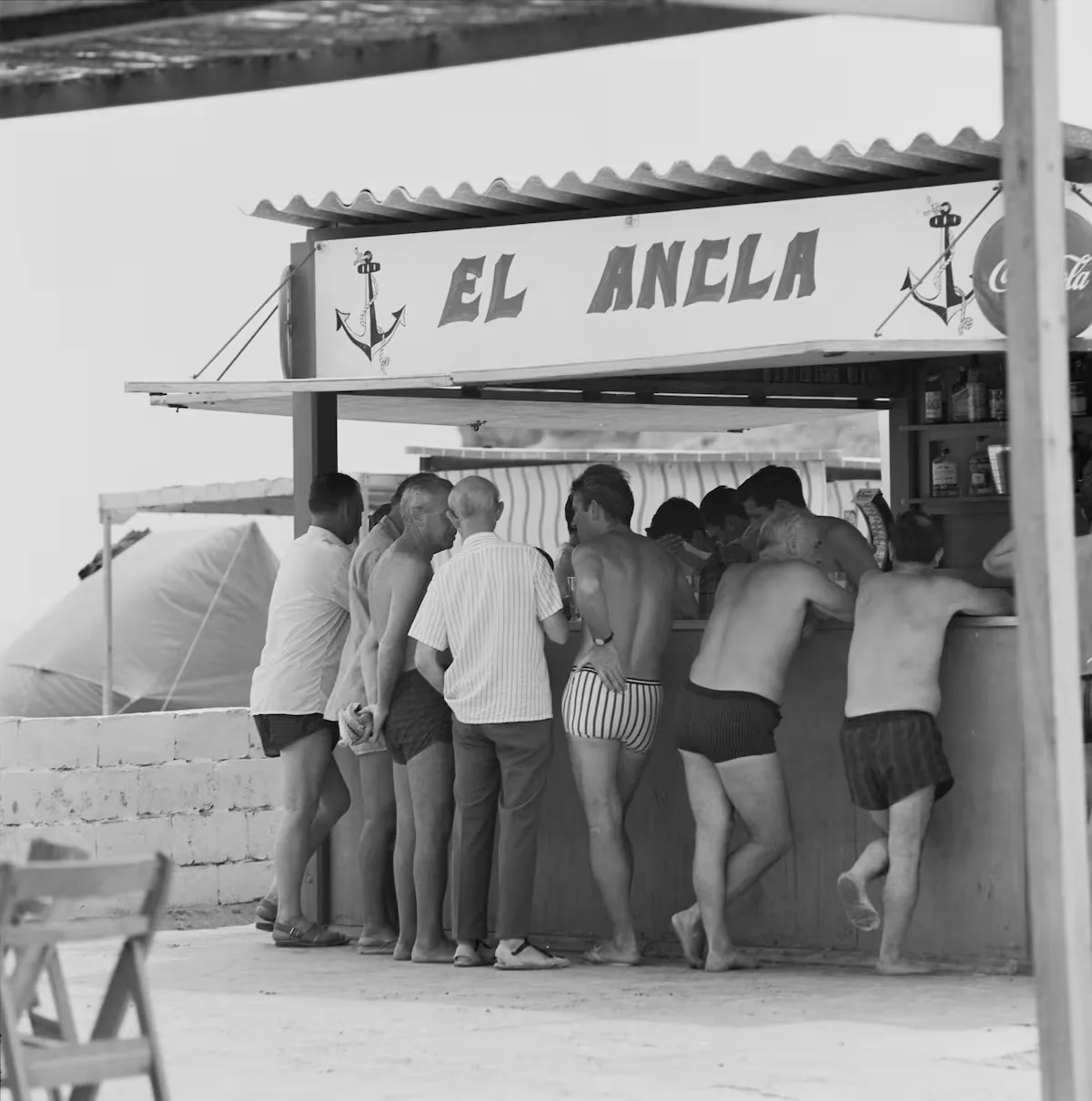
For decades, the destination was never the beach bar: the destination was the beach. The beach bar appeared as a logical consequence of having spent several hours in the sun. It was hot, hunger set in, the water ran out, and for some strange reason, that day no one had thought of moving the living room to the shore. Amy Rosenberg, a journalist for The Philadelphia Inquirer, coined a few years ago the habit of colonizing the sand with coolers, folding chairs, umbrellas, side tables, and half a household’s worth of items as beach spreading. Without knowing it, she had just turned our grandmothers into unwitting pioneers of an international trend.
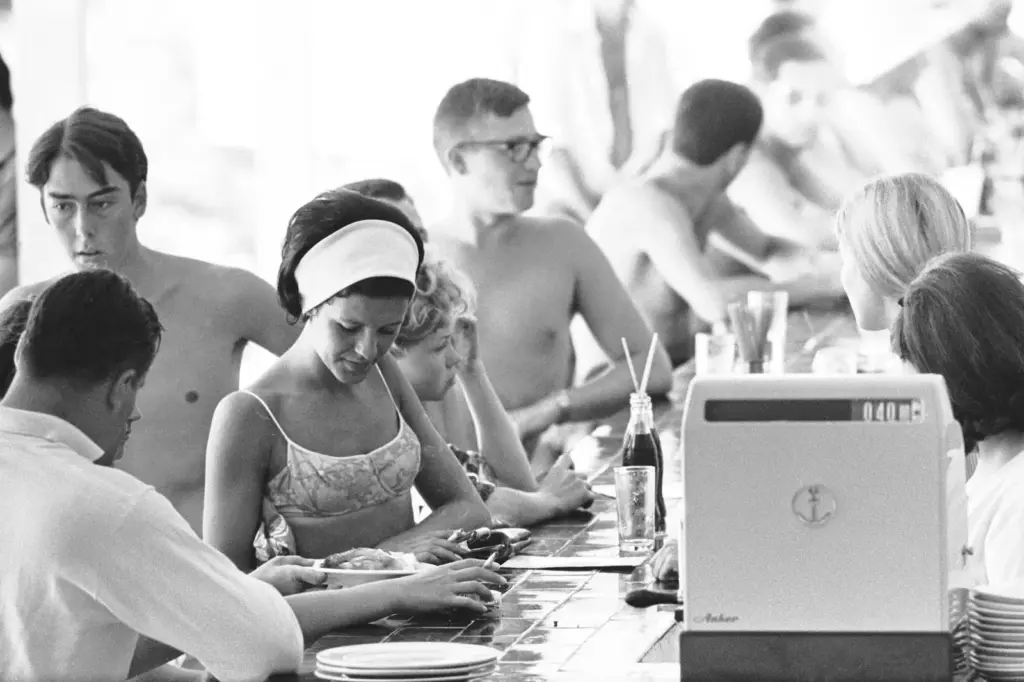
The beach bar did not intend to compete with the beach, only to make it last a few hours longer. A few plastic tables, reasonable shade, and someone turning sardines on the grill, or squid, flour-dusted anchovies, grilled shrimp, omelet sandwiches, a paella served in containers the size of those in dishwasher ads, soft drinks, red wine with soda, or draft beer “small, because it warms up” were enough. The menu changed from one coast to another, but the function was always the same: to keep the day going.
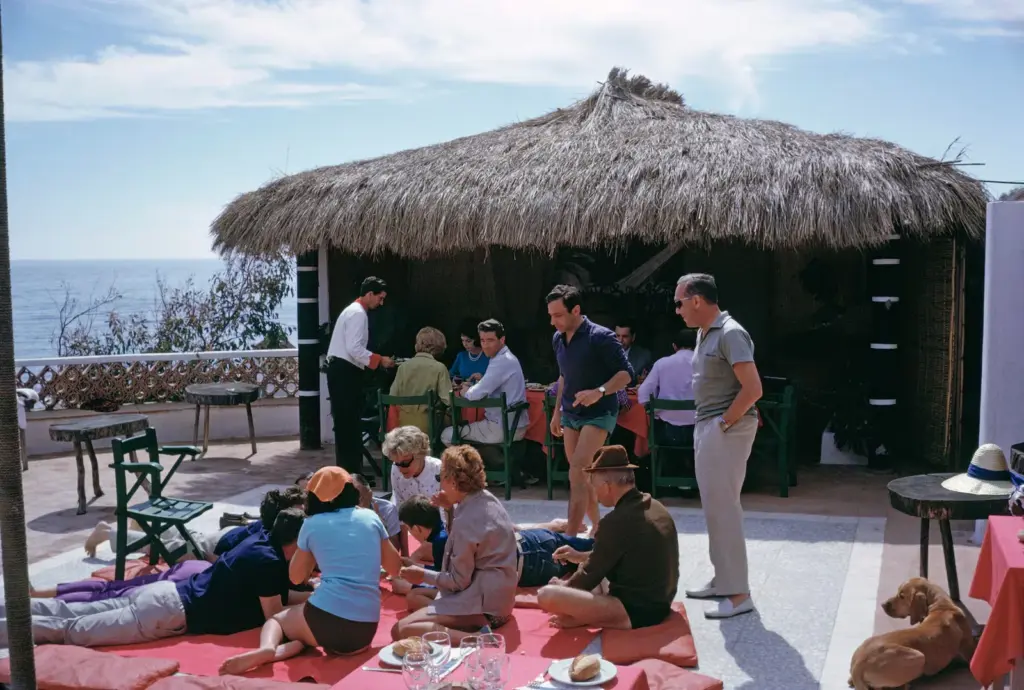
With luck, there was a restroom: it was the base of Maslow’s pyramid and all that a day that actually happened around it needed. The beach bar was never the star of the summer, but its invisible infrastructure, where you ate with your feet in the sand and no one seemed in a hurry to ask for the bill. Maybe that’s why we never thought much about it. For a long time, it was one of those institutions so integrated into the landscape that they were invisible. Like benches in a square or fountains in a park, you only realize how important they are when they start to disappear. Because what has changed over these years is not just the way of eating by the sea; it is the idea of what we expect from a day at the beach.
Carles Armengol, psychologist, waiter in charge of the café at the +Bernat bookstore and author of Killing a Bar, a Tavern Elegy on the Death of Our Counters (Col&Col, 2025), places the start of the downfall at a very specific moment. “At the beginning of the 2000s, we were fascinated by opening ourselves to the world. Traveling, breaking borders, listening to Manu Chao, feeling like citizens of the world, globalization: everything that was very ours started to seem automatically tacky.” While low-cost airlines turned any European capital into a weekend getaway, our way of understanding leisure also changed. Vacations stopped being measured by the days spent on the beach and started being measured by the experiences we were able to accumulate: rest was for cowards.
For almost a century, the beach bar lived with packed suitcases, based on dismantlable structures and temporary permits, designed to last one more summer. The 1988 Coastal Law turned that provisionality into a rule: the coast was public domain and any construction, even if full of customers, would one day disappear. There were demolitions, legal appeals, and a reform in 2013 that extended concessions and changed the perspective for survivors (and those who came after). The business that doesn’t know if it will open next summer uses the plastic tables supplied by its soft drink provider; one that is sure it will still be there in 50 years can build an infinity pool: when the horizon changes, so does the architecture. Balinese beds, cocktail menus, and even waiting lists or reservations for the front line appeared. Going to the beach stopped being enough; you had to go to the right spot on the beach: it’s another way of understanding the business, the problem arises when that logic ends up displacing the previous one.
Ernest Cañada has been studying for years how tourism transforms territories and the ways of life of those who inhabit them. For the researcher, the debate has never been whether a beach club is better or worse than a beach bar, but what kind of coast we are building. “When space is organized mainly thinking about the visitor with the greatest spending capacity, it inevitably stops being equally accessible to the rest,” he summarizes. It’s not just about the price of a sunbed or a cocktail: the type of business that is viable changes, the audience it targets, and little by little, the relationship that the inhabitants themselves maintain with their beaches.
Try it. Open Instagram, type #beachclub and try to guess in which country each photo was taken: you will find it surprisingly difficult. Rattan parasols, perfectly aligned umbrellas—sometimes decorated with blue or red stripes—linen-upholstered sunbeds, light wood, tropical plants, and curtains that filter light designed for the photo. Cocktails come with dehydrated citrus, food is never served on white plates, and the logo typography repeats: it doesn’t matter if it’s Marbella, Tulum, Mykonos, or Dubai, the aesthetic travels better than the places.
However, a beach bar never looked too much like another: not because it was better or worse designed, but because it barely was. One smelled of sardines; another, of baby squid; another, of rice. In Galicia, razor clams dominated; in Huelva, coquinas; in the Ebro delta, mussels; in Cádiz, tuna. “Beach bars should bet on local and seasonal products, focused on seafood and garden products,” says chef Susana Aragón, linked to the Slow Food movement. “They are ideal showcases to learn about and appreciate the territory’s gastronomy, generate local economy, give value to small producers, and attract visitors who enjoy the local gastronomy, seeking regenerative tourism.”
Read more What is a yellow flag in a relationship, how to detect it and when to raise the red one
A beach bar never competed to be the prettiest place on the beach; if anything, it competed to make the best fish or serve the coldest beer. It was a business deeply tied to the territory. American cultural geographer and essayist John Brinckerhoff Jackson dedicated his work Discovering the Vernacular Landscape (1984) to the everyday landscape as an embodiment of a culture, its values, and aspirations, avoiding archetypal scenic beauty. In a landscape linked to daily life and its conception as a cultural, social, and even political product, the beach bar says more about us than the Sagrada Familia and the Prado Museum combined: it was not a restaurant, but a translation of the place where it was.
“There are many reasons to make an ode to the beach bar,” reflects Izaskun Chinchilla, architect and author of The Neighborhoods of Good Living (Catarata, 2026), an essay advocating urban well-being planning over economic or structural aspects. “The first is that it pushes us to outdoor life: in a Europe where we spend 90% of our time indoors—which in a Mediterranean climate like ours is a truly dramatic statistic—a beach bar does something as simple as inviting you to stay outside.”
Urban planners talk about permanence as one of the indicators of public space quality: a park works when people decide not to leave immediately, and a square is well made when you want to stay a little longer. The beach bar had been doing that for decades without needing to know the theory. “Long meals generate comfort,” explains Chinchilla. “And that comfort fosters relationships.” Children found other children, adults ended up talking to the table next to them or the waiter. The beach created a shared experience; the beach bar gave it time to become conversation.
That balance, however, is becoming increasingly difficult along much of the Spanish coast. “It’s a trend that starts, I think, in the 1990s: the loss of spaces and social value regarding working-class vacations in recent decades,” notes Cañada, who, in his upcoming publication, There Aren’t Rich People for Everyone. In Defense of Popular Tourism (Icaria Editorial, 2027), analyzes the complexities of the current model and proposes proximity infrastructures that respond to leisure and rest needs. “The future of tourism involves rethinking the spaces where it will have to develop; it will necessarily be more local for ecological reasons and, at the same time, needs to be much more egalitarian.”
The beach bar was never a luxury: its greatest virtue was to admit almost any way of enjoying it. “One of the great riches of Mediterranean society—and, in fact, much of the Spanish summer—is open socialization,” adds Chinchilla. “We have to defend all those spaces that encourage shared uses.”
That’s why it’s so hard to measure what a beach bar contributes. Its value doesn’t appear on the menu nor fit in an Instagram photo. For years we took for granted that those places would always exist. Only when they start to disappear, or look too much alike, do we discover that they were not simply businesses, but a way of organizing everyday life.
Let’s go back to that family we left on the sand a few pages ago. The child with the plastic bucket may already have their own children. The teenager will have discovered that their parents were right about something: vacations go by too fast. The grandparents will no longer be there or will walk more slowly toward the shore. The landscape will have changed; some beach bars, too. Hopefully, there will still be a place where that family can sit without having reserved, where you can talk without house music playing in the background, where the fish comes from the sea right in front, and no one is in a hurry to clear the table as soon as the coffee arrives.
Defending the beach bar does not mean turning it into a relic at all. It is about understanding that few institutions have done as much to democratize the Spanish summer as this kind of half-improvised bar, where several generations learned that a good day at the beach didn’t end when leaving the water, but when the sun went down and there was still the penultimate drink to share.
Read more The day the stars will align for a mayor who hunts eclipses