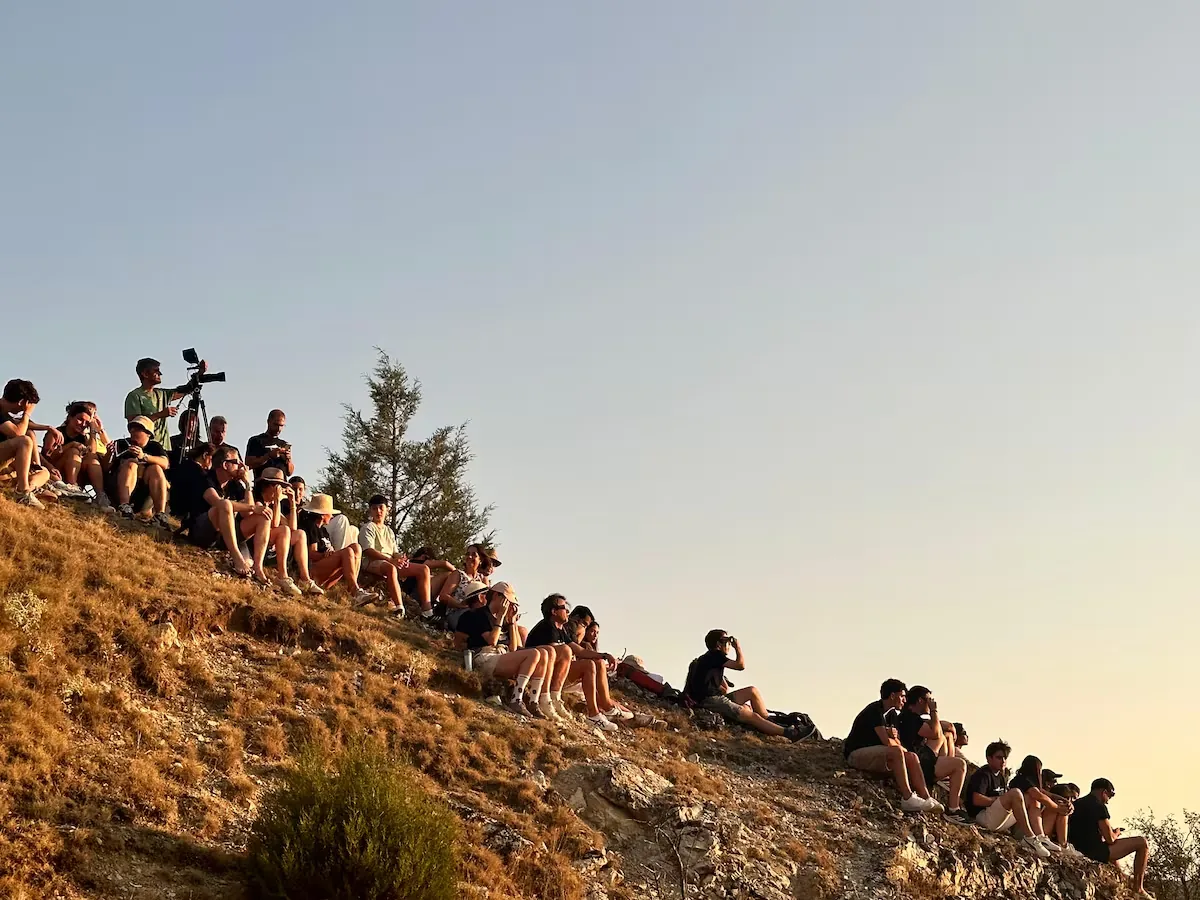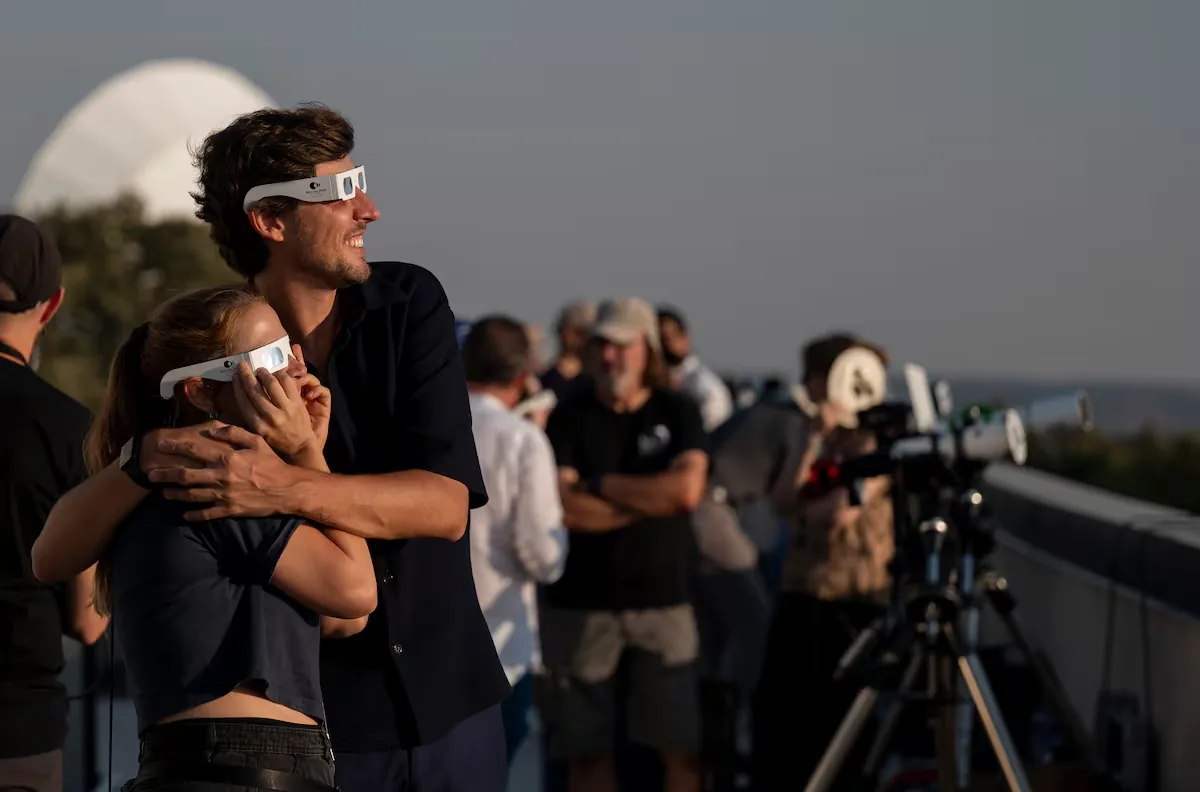







This Thursday evening —around 8:30 PM, Spanish peninsular time— look to the west. If you see the Sun, you will also be able to see the great solar eclipse in Spain’s history at its peak. As with many prizes, the astronomical lottery that Spain has won with the total eclipse on August 12 is a gift with fine print. The fortune of being the only country in the world where the phenomenon can be seen with guarantees is offset by a major drawback: it happens too close to sunset, which complicates direct viewing of the phenomenon. But just this week, a window of opportunity opens for those who want to see it to ensure they can.
Read more The tension between the PNV and the socialists explodes over an AI joke about Aitor Esteban
If on August 12 we see that natural relief or buildings and other human obstacles block the best part of the eclipse, it will be very difficult to get to a more suitable place in time. But this week, the ideal conditions are met to check it on the ground: this Thursday, April 30, is the solar twin of the eclipse, which means that the Sun will be in approximately the same position at the same times as on that day. The coordinator of the Government’s eclipse commission, Juan Cruz Cigudosa, Secretary of State for Science, Innovation and Universities, has invited citizens to go out this Thursday to check if, in their own place of residence or vacation, the Sun will be visible during the eclipse, with the aim of minimizing travel to concentration areas to see it as much as possible, and thus avoiding incidents.
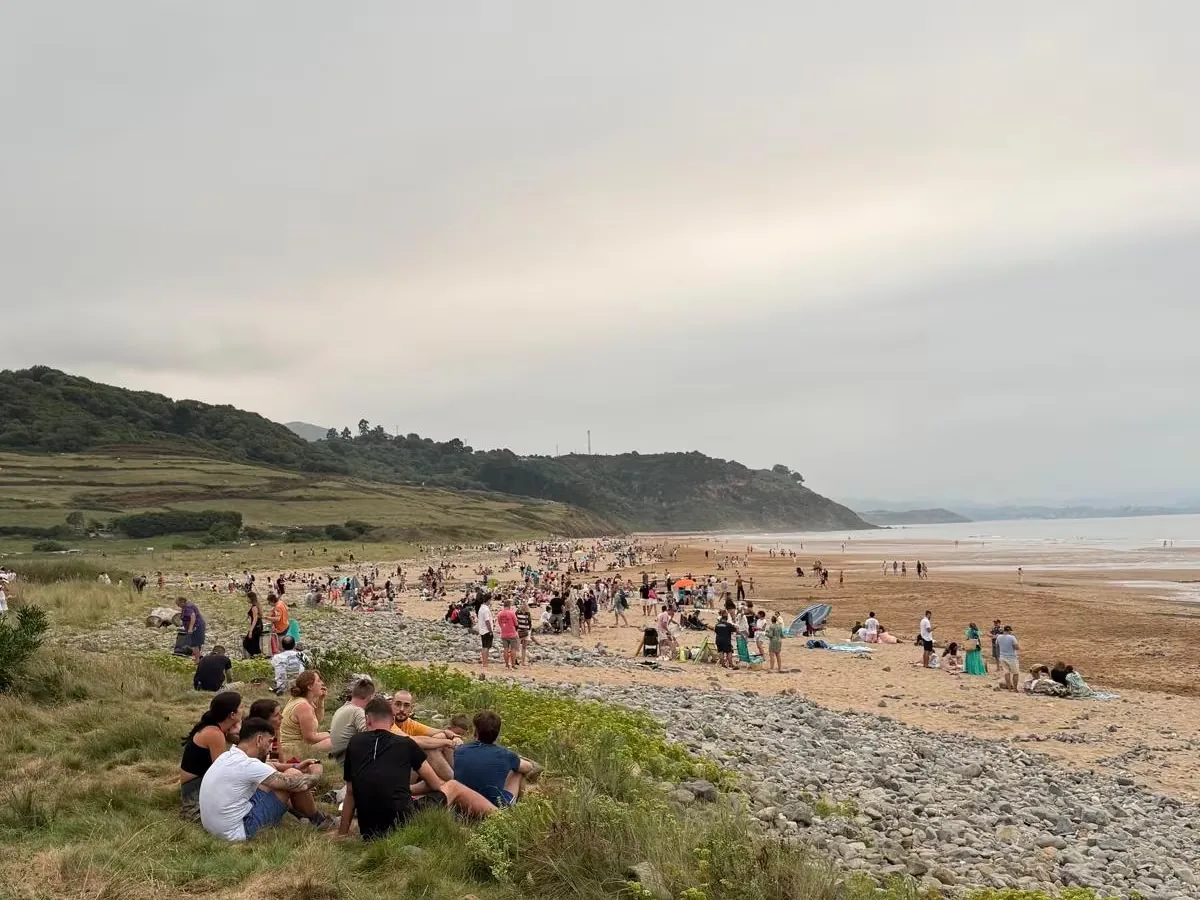
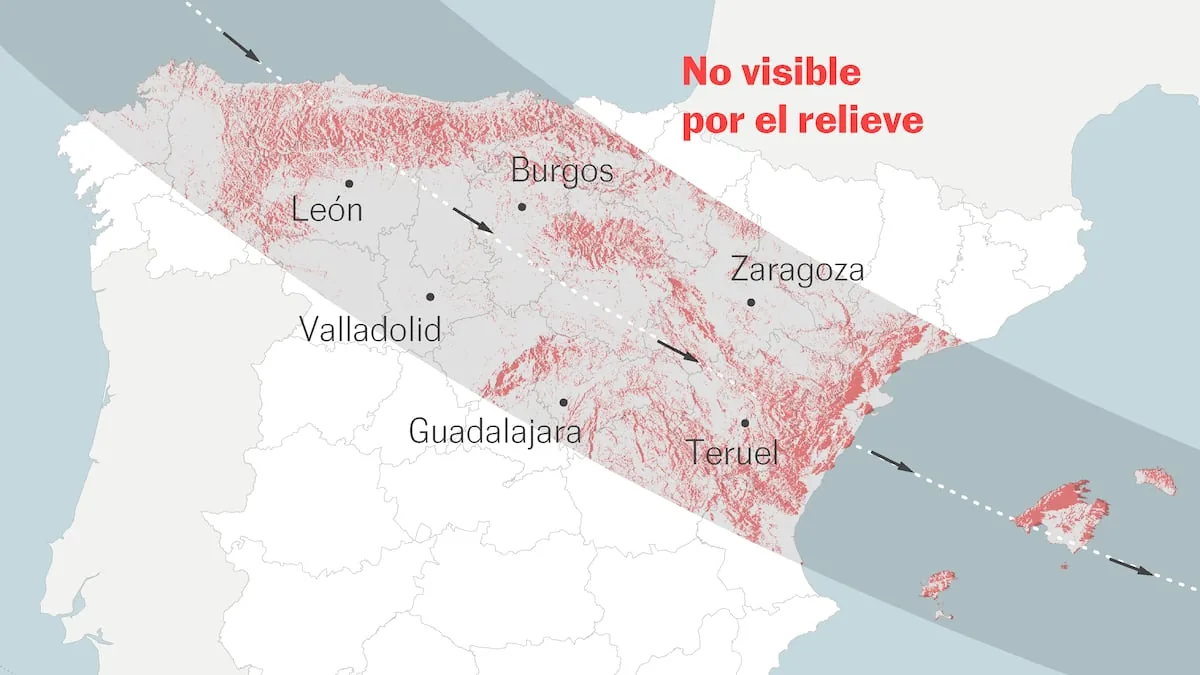
The uncertainty greatly affects the preparation of the large state public safety operation for the eclipse, which revolves around the massive concentrations that will occur in the optimal places for its observation. For this reason, the Spanish authorities will also take advantage of this week to carry out tests. The theory makes it very clear: part of 31 of the 50 Spanish provinces, from Galicia to the Balearic Islands, will be darkened. But in practice, with a star so low on the horizon, the complicated part is knowing if a block of flats, some trees, or a small hill can cover the sun at the peak of the eclipse: when the Moon’s shadow completely covers it and a black Sun is visible, emitting an exciting white trail around it. Being able to see that with our own eyes is something that happens once in a person’s lifetime; and that, with luck. A total solar eclipse will not pass through those provinces again until November 17, 2180.
Tomorrow, April 30, we will experience the “dress rehearsal” of the total solar eclipse on August 12. It will be what we call a ‘mirror date’ or ‘twin day’ 👇🏻
— Diana Morant (@DianaMorantR) April 29, 2026
🌞 The Sun will be in the same position as on the day of the eclipse and it will be the perfect occasion to choose the best place from which to… pic.twitter.com/xn7Z6PgbSe
The occasion is not limited to this Thursday, as it extends throughout the May 1st long weekend, making it easier for those traveling these days to their usual summer vacation spot to check. “April 30 is the mirror day of August 12 because the summer solstice day —June 21— is right in the middle of them,” explains astrophysicist Javier Armentia. “So, more or less, you will see the Sun set in the same place where it will set on August 12. The ideal is to check it on the 29th and 30th. But, two days before or two days after, that same position is reached with a difference of only a few minutes.” This science communicator, who will coordinate a public observation of the total eclipse in Lerín (Navarra), warns that the practical checks carried out this week around 8:30 PM “are not a fixed astronomical calculator, but they allow you to ensure that you won’t have a tower there that spoils the view of the eclipse.”
To get the most precise estimate possible, Germán Peris explains from the Castellón Planetarium that a “somewhat more elaborate check, which only requires three fairly simple steps” must be carried out:
1. Check the time of maximum eclipse
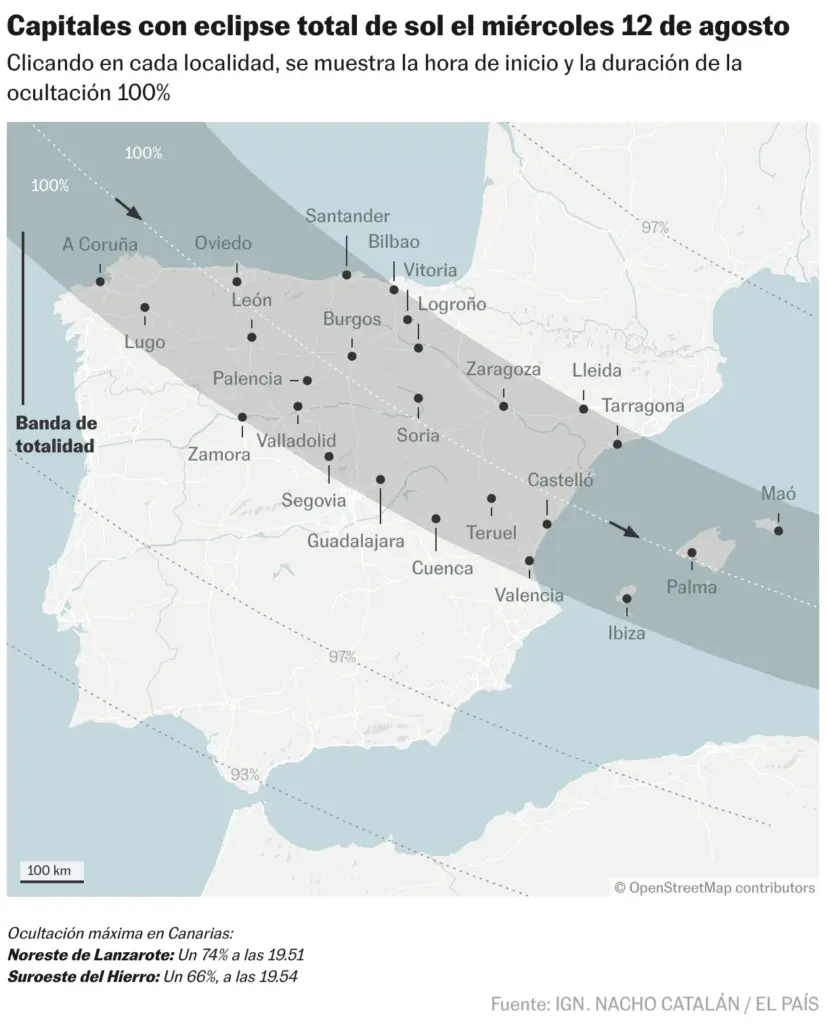
First, to know if we can see the total eclipse on August 12 from a specific location, we must check that it is within the band of totality. “But that does not guarantee a direct view of the eclipse,” warns Peris, technical coordinator of the Castellón node for the observation of the upcoming eclipse. On this page of the National Geographic Institute (IGN), you can consult, for each municipality in Spain, if the eclipse is total and what are the exact hours during which the phenomenon occurs. If it is total, Peris indicates that the time of maximum eclipse must be noted.
2. Avoid shaded areas
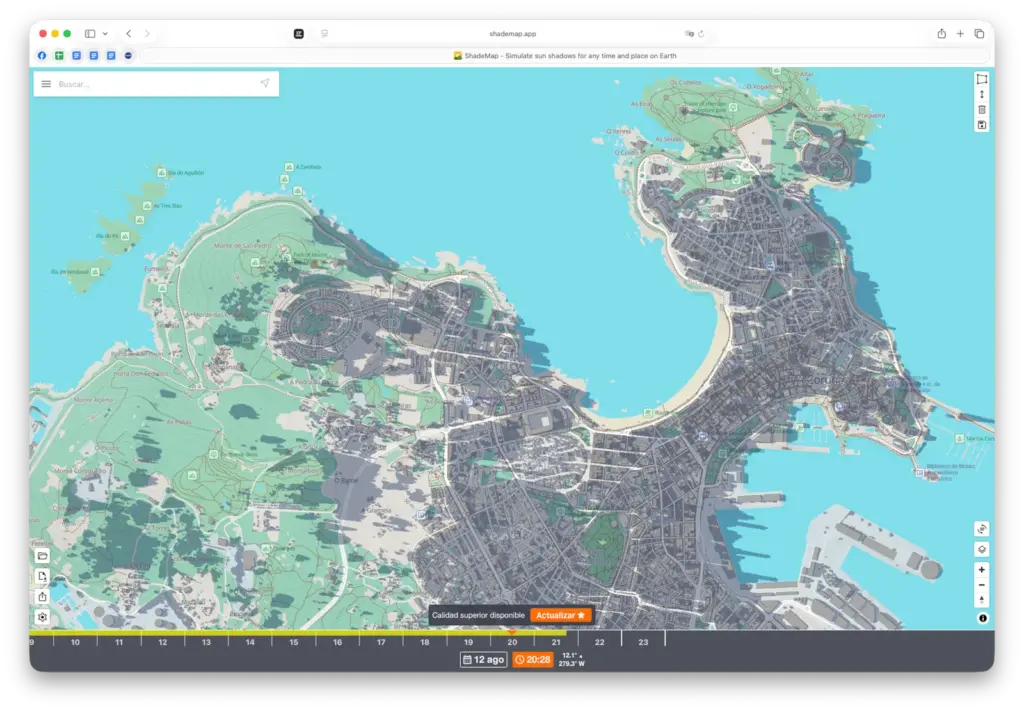
The second recommendation Peris makes, before going to see this Thursday 30 if the Sun is visible at the time we have noted, is to “first verify it in a shadow map app.” This expert’s favorite is ShadeMap, which can be consulted in any web browser “and has the advantage of also showing the shadows produced by forests and buildings, whereas the official IGN eclipse viewer only includes the shaded areas generated by mountains and hills.”
Read more What does science propose against the use of fossil fuels?
Once the desired location has been selected on the chosen shadow map, you must set the date to next August 12 and choose the time of maximum eclipse in your locality. German Peris warns that “in shaded areas it will be impossible to see the totally eclipsed sun, but in clear areas, it is not 100% certain to see it: it is to these clear areas that we must go to check on the ground, lest a minor obstacle, not cataloged on the map, block the sun.”
3. Find the Sun at the right moment
To observe the total eclipse on August 12, you not only have to be in the band of totality, you have to be able to see the Sun above the horizon. You can check if this is possible in your locality by doing a test in the coming days. We explain it below. pic.twitter.com/8kATiVqEoY
— Real Observatorio (@IGN_RObsMadrid) April 22, 2026
The general recommendation is that the final check can be carried out around 8:30 PM this week, within the areas that, in the previous step, we have seen outside the shadows on the map. If at that time we do not see anything close enough to the sun to cover it in the following minutes, there is nothing more to check.
But if we see any possible obstacle, Javier Armentia indicates that we can still do one last precise check: “According to the table recently distributed by the Royal Astronomical Observatory of Madrid (of the IGN), this Thursday 30, we must subtract 7 minutes from the time of maximum eclipse that we have noted to have the time at which the sun will be at exactly the same height in the sky as on August 12; and if we carry out the check on Saturday 2, we will only have to subtract 5 minutes.”
From autonomous communities and city councils
Multiple local administrations will take advantage of the days around the solar twin to re-check that the official eclipse observation points meet the main requirement: that the Sun is visible at the time of maximum eclipse. In addition, autonomous governments such as those of Asturias and Navarra are encouraging citizen participation in the checks through photographic contests to capture the Sun this April 30 at 2:30 from multiple locations in their territory.
In a pioneering initiative, the A Coruña City Council has launched two tools on its website to help citizens carry out their own eclipse simulation: “We want everyone to be able to enjoy it, avoiding unnecessary travel. That’s why we have created two interactive maps so that any resident knows which are the closest points to their home from which the eclipse can be perfectly seen,” says Inés Rey, mayor of A Coruña.
Read more The ECB asks banks for contingency plans regarding Anthropic’s new AI model