







Everything indicates that the tension came from behind, from the always difficult relations between two parties that are both government partners and electoral rivals, and that have lived together for many years, occupying almost all the power in the Basque Country but facing the growing pressure from Bildu, which in the last Basque elections tied in seats with the PNV but did not win by less than 30,000 votes.
Read more What does science propose against the use of fossil fuels?
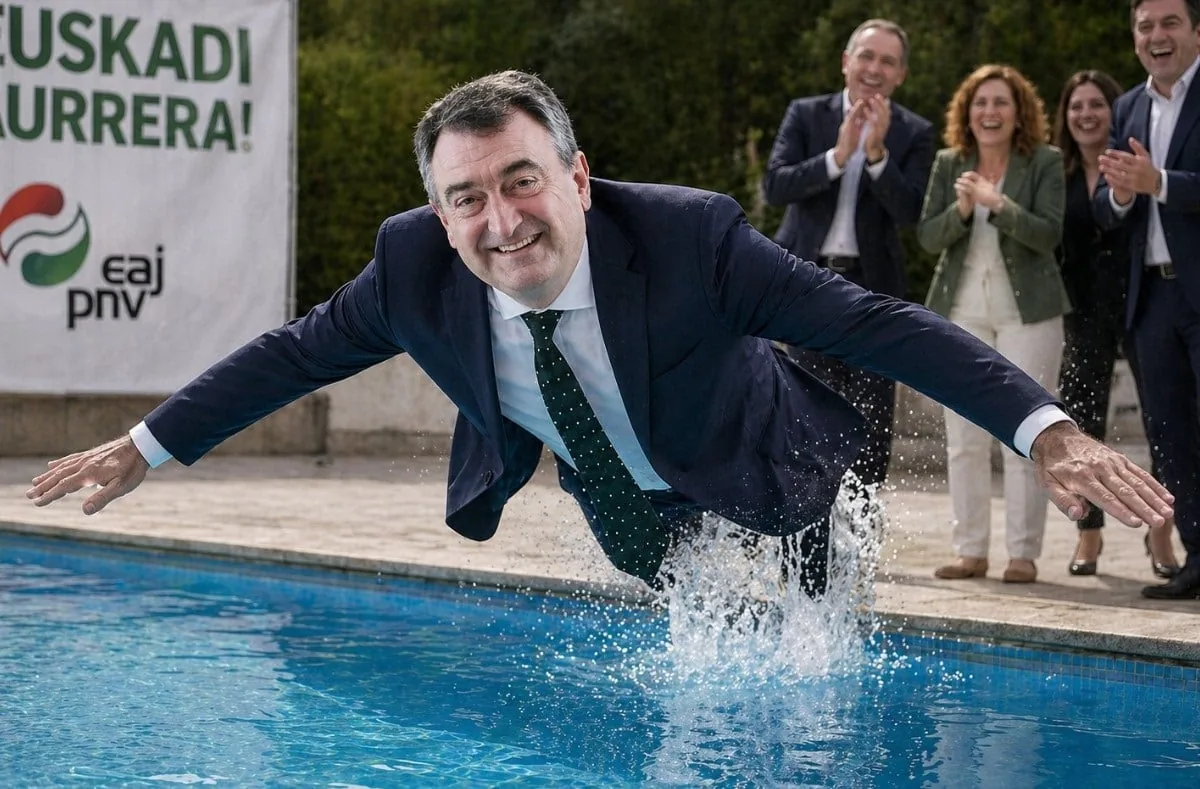
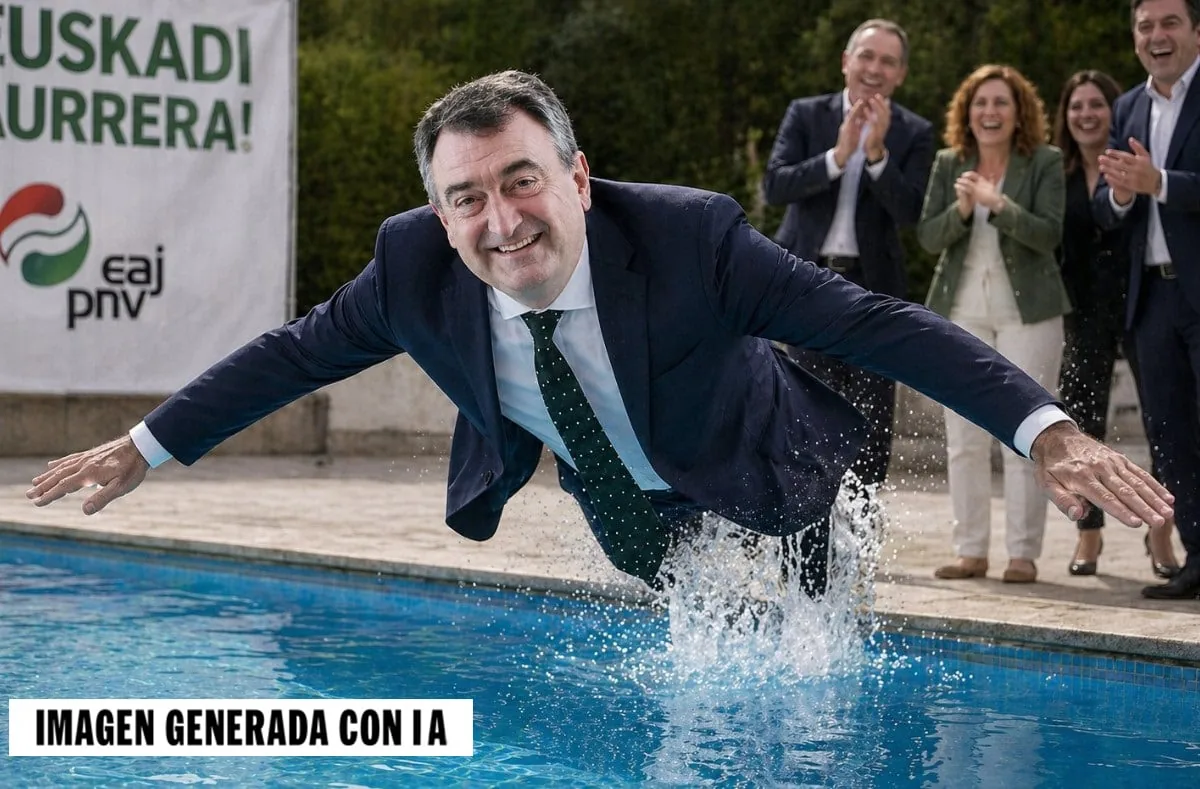
A tweet on X from the PSE, showing a manipulated image of Aitor Esteban, leader of the PNV, jumping into a swimming pool —a joke because he had said there was water in the pool of the Statute reform, according to the Basque socialists— was what unleashed an unexpected crisis between two essential partners, whose breakup would have serious consequences in Euskadi and in Congress, where they have almost always traveled together for eight years, when the PNV’s votes ousted Mariano Rajoy and made Pedro Sánchez president, and in Euskadi since 2016, when they began to govern in coalition.
Sources from the Government, the PNV, and the PSE agree that nothing indicates that this is a terminal crisis and that the coalition governing Euskadi or the nationalists’ membership in the majority that supports Sánchez is at risk. But the crisis is strong, Esteban’s anger is very significant, and therefore there is a lot of discreet political work to try to resolve it.
The Government hopes to do so quickly. Sánchez took advantage of the perfect occasion this Wednesday to do so: the question in the control session to Maribel Vaquero, spokesperson for the PNV. Vaquero made an indirect mention by asking the president that his party “mind its manners” and Sánchez responded with a recognition of the PNV and a vindication of everything that has been agreed so far between both groups. “I always appreciate the PNV’s constructive position. Of course, I want company and good company like the PNV’s,” the president said while an “ooooooh” was heard in the chamber. Both parties thus seem interested in redirecting the issue.
Last week, Junts told Sánchez that he should go to elections because he does not have their support. Esteban has also repeatedly launched the idea that the president should consider calling elections because he no longer has a majority as before, although the nationalists usually are in it, but without Junts nothing can be approved, as was seen this Tuesday in the housing decree, which the Catalan independentists overturned by joining the PP and Vox while the PNV abstained. However, neither Junts nor PNV have the capacity to force those elections, which Sánchez wants to take to 2027, when they are due, and neither of them is willing to support a PP motion of no confidence that needs the votes of Vox to go ahead. The PNV also needs the PSE to govern not only Euskadi but also several municipalities and the decisive provincial councils, where the true economic power lies in the particular Basque tax system. A breakup would be very risky for everyone because the only viable alternative is to govern with Bildu, something that neither the PNV nor the PSE want at the moment.
The crisis erupted with great virulence and sowed confusion in the Government when the PNV announced that a meeting scheduled for this Wednesday “with Moncloa” was canceled. At first, it was thought to be a meeting between Esteban and Sánchez, but in reality, the matter was of another level. “With Moncloa” is with Antonio Hernando, right-hand man of Óscar López, Minister of Digital Transformation, and Sánchez’s trusted person whom the president has designated as the PNV’s interlocutor after the departure of Santos Cerdán, who ended up in Soto del Real prison for alleged corruption. What was planned was a three-way meeting at the PNV’s central headquarters in Bilbao between the nationalists, the PSOE, and the socialist federation of Euskadi. In addition to Esteban, the general secretary of the PSE, Eneko Andueza, his organization secretary, Miguel Ángel Morales, and Hernando himself were to attend, theoretically representing the PSOE but above all as a trusted man of Sánchez. The meeting was not for any urgent matter, according to the sources consulted, but for follow-up, like those held periodically. Socialist sources state that it is not the first time Esteban has canceled a meeting, although it was the first whose cancellation was made public.
Behind this crisis, there is some underlying tension between the PNV and the PSE. The two parties are in full tension over the debate in the regional Parliament on the requirement of Euskera in public service and have not yet reached an agreement for the reform of the Statute, the origin of the cross on social networks. The PNV accused the PSE-EE of “lack of respect” after it published the image created with artificial intelligence of Aitor Esteban, leader of the Basque nationalists, jumping into the pool. It was their response to the nationalist leader’s optimism about the progress in the negotiation of the new Statute of Autonomy. “Wow! Now there’s water in the new Statute’s pool… says the PNV,” reacted the minority partner. “There is nothing that justifies a lack of respect of this caliber. It is indecent,” responded the nationalist formation.
Read more The ECB asks banks for contingency plans regarding Anthropic’s new AI model
According to sources from both parties and both governments, both the central and the Basque, the crisis does not jeopardize the Basque coalition government or the rest of the government pacts. But it does denote the mistrust within the alliance. The underlying reason is the PNV’s demand for proficiency in Euskera in public service. The socialists argue that they already agreed with the nationalists on the current public employment law, approved in 2022, which regulates the activity of more than 100,000 employees working in the Basque public administrations. The Basque Executive approved two years later the so-called profiles decree, which promotes the use of Euskera through flexible and progressive measures. However, the PNV and Bildu have presented separate proposals in the Basque Parliament that toughen the requirements to apply for a position in the administration. PNV sources indicate that this matter is in full negotiation and solutions are being sought, but the situation does not at all justify an official PSE message with artificial intelligence, which is not at all common in quiet Basque politics, much less between government partners.
It so happens that Minister Óscar López, Hernando’s boss, recently presented a reform to the Council of Ministers to limit the use of AI in political campaigns —the PP and Vox frequently do so against Sánchez— and at least oblige social media users to clarify that such a false image was made with AI. The nationalists are very indignant and want a rectification, which has not yet arrived.
The PSE’s position on Euskera is clear. “Despite our willingness to find a way to agreement, which has resulted in several months of conversations, the PNV’s proposal opens the door to discretion and an increase in the demand for Euskera in the administration,” warned Andueza last week. “We believe that, under the excuse of protecting Euskera from appeals and court rulings, what is proposed goes against the rights of thousands of Basques who want to access a job or who want to consolidate their position in the Administration after working in it for years without stability,” added the leader of the Basque socialists. Andueza stressed that the PSE defends the normalization and use of Euskera —he himself speaks it fluently— but at the same time warned of “the Basque sociolinguistic reality.” In recent years, several judicial decisions have annulled initiatives at the regional and local level that required knowledge of the language to work in public administrations or contract with them. The most relevant was the 2023 Constitutional Court ruling that annulled the law that promoted “preferential” use in city councils. The deadline for submitting amendments ends this Thursday, according to sources from the regional Parliament. The next step would be the presentation of the text in the chamber.
The PNV and the PSE-EE renewed in 2023 the global coalition agreement they have maintained since 2015 “wherever possible” in city councils and provincial councils. A year later, the PNV withstood the onslaught of EH Bildu and the PSOE emerged strengthened from the Basque elections. The agreement was not long in coming and the two partners revalidated the Government for the third consecutive legislature. But there was a novelty: Andueza declined to be vice-lehendakari to be able to dedicate himself full-time to the party, something that the nationalists also believe contributes to increasing tension.
Andoni Ortuzar’s resignation as president of the PNV in February last year, leaving the way clear for Esteban, opened a new stage in Sabin Etxea, the PNV’s headquarters. The dialogue with the socialists was also affected. Ortuzar had been president of the Euzkadi Buru Batzar since January 2013. His successor arrived in Congress in 2004, meaning he was a deputy in Madrid for 21 years, 12 of them as spokesperson for his group. The relationship, according to socialist sources, has not been as refined as with his predecessor in the year Esteban has been at the head of the PNV, where he has had to attend to the different sensitivities within the party in Bizkaia and Gipuzkoa, according to the sources consulted. Sources from the nationalist leadership, on the contrary, point out that in this case it is clear who decided to provoke with a “lack of respect” that does not correspond to anything Esteban said, who merely showed a certain optimism about the negotiation of a new Basque Statute. This Wednesday’s session thus clearly showed the interest of both groups in redirecting the situation.