







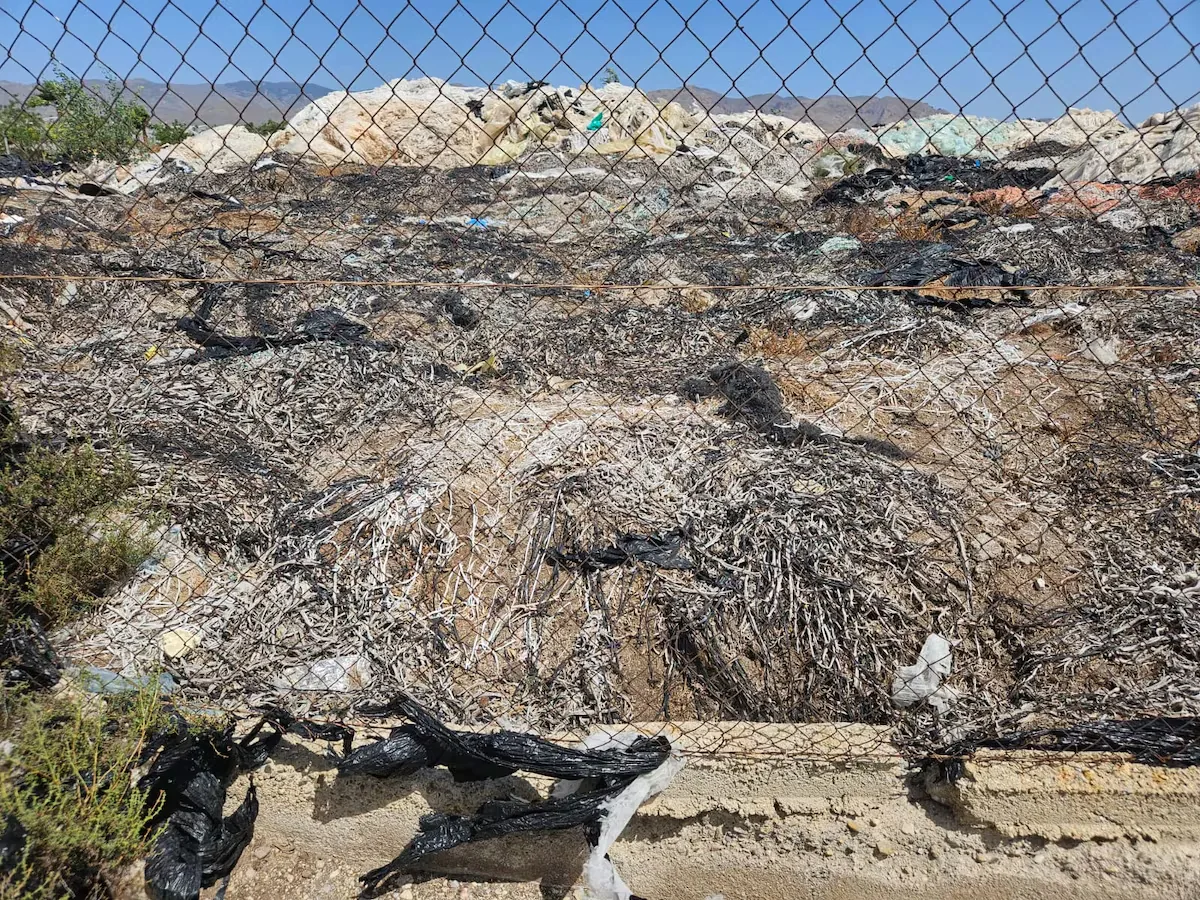
Access is complex. To get there, you have to travel along a series of unmarked dirt tracks hidden among greenhouses. Until, suddenly, there is a plot that is pure plastic: up to 13,000 square meters where tons of waste accumulate. The Boqueras Altas area, in the municipality of Níjar (Almería, 33,319 inhabitants), has hosted for more than a decade a farm where raffia ropes, pesticide jugs, and other intensive agriculture waste pile up. Its tenant was sanctioned for the first time in 2018 and, since then, files and fines have accumulated. Bureaucracy, however, has not managed to get anyone — neither the person responsible nor the administrations themselves — to remove the dumping. “There is clear public inaction: the solution is to clean up,” denounces Marcos Diéguez, spokesperson for Ecologistas en Acción, an entity that has reported the situation of this land both to the Junta de Andalucía and to the Prosecutor’s Office.
The case is a good example of what happens with the plague of plastic from the Almerian greenhouses, which spreads over 33,500 hectares in this Andalusian province. Altogether, they move more than 33,000 tons of plastic waste — excluding packaging — per year, according to data handled by both the Association of Fruit and Vegetable Producers of the province of Almería (Coexphal) and the Junta de Andalucía. Both assure that between 85% and 90% is managed through authorized managers for recycling, but the rest is not. That is, each season there are between 3,000 and 5,000 tons that, for the most part, remain scattered anywhere: dry riverbeds, channels, shoulders, shrub branches, under highway bridges, on unused public and private lands throughout the municipalities of Níjar, Adra, Roquetas de Mar, Almería, and El Ejido. Also on the nearby beaches in Cabo de Gata, where the association Amigos del Parque Natural already reported another 8,000 square meter dump in 2024.
Other times they are places out of sight like the Boqueras Altas area, where Ecologistas en Acción requests a criminal investigation against those responsible for acts that, they assure, are not precisely an exception: just check their website Stop vertidos ilegales, where they point out up to 451 illegal dumps, only 19 already cleaned. In response, the Andalusian administration assures that, since 2019, it carries out an average of 400 requirements per year for dumping — that is, it accumulates almost 3,000 in seven years — and about a hundred sanctioning files — more than 700 in the same period —.
The danger of microplastics
The environmental complaint, which EL PAÍS has had access to, points out that the farm piles up “containers of phytosanitary products, drums, fiber cement and asbestos, an abandoned vehicle.” The documentation includes aerial views of the plot taken since 2005, in which it can be seen how the material has been stored for more than a decade. “I would say that has been there for more than 20 years,” adds a farmer who has reported the situation to the administrations on several occasions, always without receiving a response. “Everything I have said has fallen on deaf ears,” laments the man.
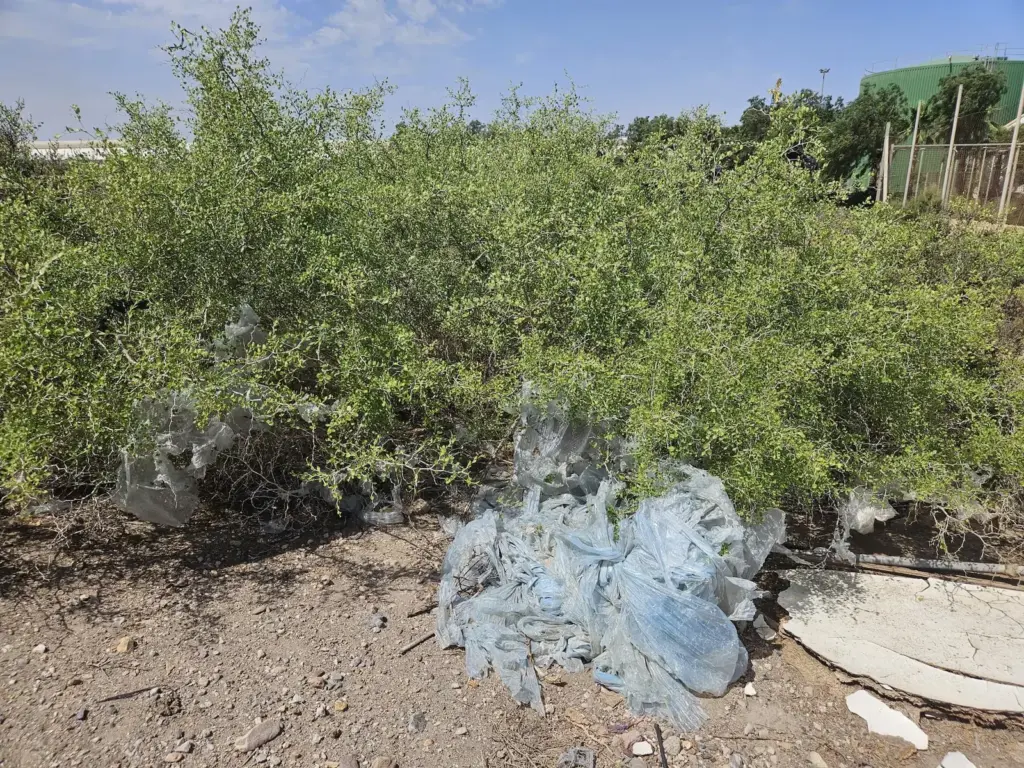
“We believe it is an environmental crime because there are, among many things, jugs of phytosanitary products and other hazardous waste,” says Marcos Diéguez. The conservationist warns not only of the possible impact on the adjacent channel and the aquifer of the Campo de Níjar, but also that the plastics break down with the action of the sun and disperse around the environment by the wind. “It remains as a dust, microplastics, which contaminate all the soil,” he adds. Also the sea. “They are dangerous for the trophic chain and we eat them through fish,” explained Nerea Piñeiro-Juncal, marine soil biogeochemist at the Advanced Studies Center of Blanes, belonging to the CSIC, after publishing a study on these microparticles in the posidonia meadows of Agua Amarga, also a town in Níjar.
Read more Gonzalo Boye, Puigdemont’s lawyer: “Time is against the image of justice, not against us”
15,000 euro fine
It is not the first time the farm has been reported. Its administrative journey began in 2018 — China stopped buying these plastics precisely that year — when the Agriculture delegation of the Junta de Andalucía opened a sanctioning procedure in plant health against the landowner, although it later shifted to the tenant, who — according to the administration — was the one using the land. The process was repeated in 2021. And in 2024 a third file arrived, this time from the Environment delegation, according to data from the Andalusian Junta. Then a fine of 15,000 euros was imposed for “abandonment, storage, dumping or uncontrolled disposal of any type of non-hazardous waste.” It is the same reason why a patrol of the Nature Protection Service (Seprona) filed another complaint after a visit to the place in January of that year, according to the Civil Guard. Ecologistas en Acción do not understand that this whole path of fines “has served no purpose and everything remains the same.” The company Biosabor, with facilities very close to the place, also filed a complaint about the dumping. “The matter is in the courts,” sources from the company emphasize, who for that reason prefer not to make statements. “For us, cleaning the rural environment is a matter of utmost importance and we work every day convinced that a more efficient, responsible, and sustainable agriculture is possible with everyone’s collaboration,” they stress.
The Níjar City Council, for its part, assures that it was unaware of what was happening on this land, to the surprise of conservationists. Sources from the corporation argue that it is difficult to control everything that happens in the 600 square kilometers of its municipality and that there were no complaints or official writings about the specific case. Following the information request from this newspaper, the City Council sent Local Police agents to Boqueras Altas to make checks and, according to municipal sources, they have initiated a sanctioning file against the owner to end “that undesirable situation.” “No one wants to have a plot with illegal plastic dumping,” assure the same sources, who emphasize that the municipality carries out constant cleaning tasks in dry riverbeds, channels, and public or private lots. “Work is constant, the problem is that plastic generates a lot of visual noise,” say the City Council. Just take a walk along the roads that descend from the A-7 highway to the natural park: plastic is always in sight.
Great visual impact
“It is a very bulky waste and very eye-catching,” confirms Rosa García, technician of the Agroecology Department at Coexphal, who points out that most farmers and agricultural companies comply with their obligations for the management and recycling of their plastics, but that there is a small part that does not “and that is very noticeable because of the great visual impact it has.” “The bad practice of a few damages the image of all,” says the specialist, who explains that the process to properly treat the material consists of its removal so that it is then processed by an authorized manager, always under private initiative, since there are no public managers (Níjar, for example, lacks a plant to recycle agricultural plastics). These authorized persons can collect the waste on the farm or receive it at their facilities. Cover plastics, which have a useful life of between three and five years, are usually clean, easy to recycle, and the farmer usually receives a small compensation for them.
The problem, they say at Coexphal, is the solarization plastics, which go on the ground, are changed every season, and accumulate dirt and moisture. And that complicates their management. “The farmer must pay to take them to recycle and, of course, they are usually the ones that end up scattered around,” adds García, who considers the existence of dumps like the one reported by Ecologistas en Acción “unacceptable.” “We have been fighting for years with administrations and conservation organizations against the abandonment of these wastes, which is one of the great challenges of the sector,” she states. The organization, in fact, has a public channel open so that anyone can report a dump of any size. Even as large as Boqueras Altas.
Read more Kimi K3, the Chinese AI that has put Silicon Valley on alert