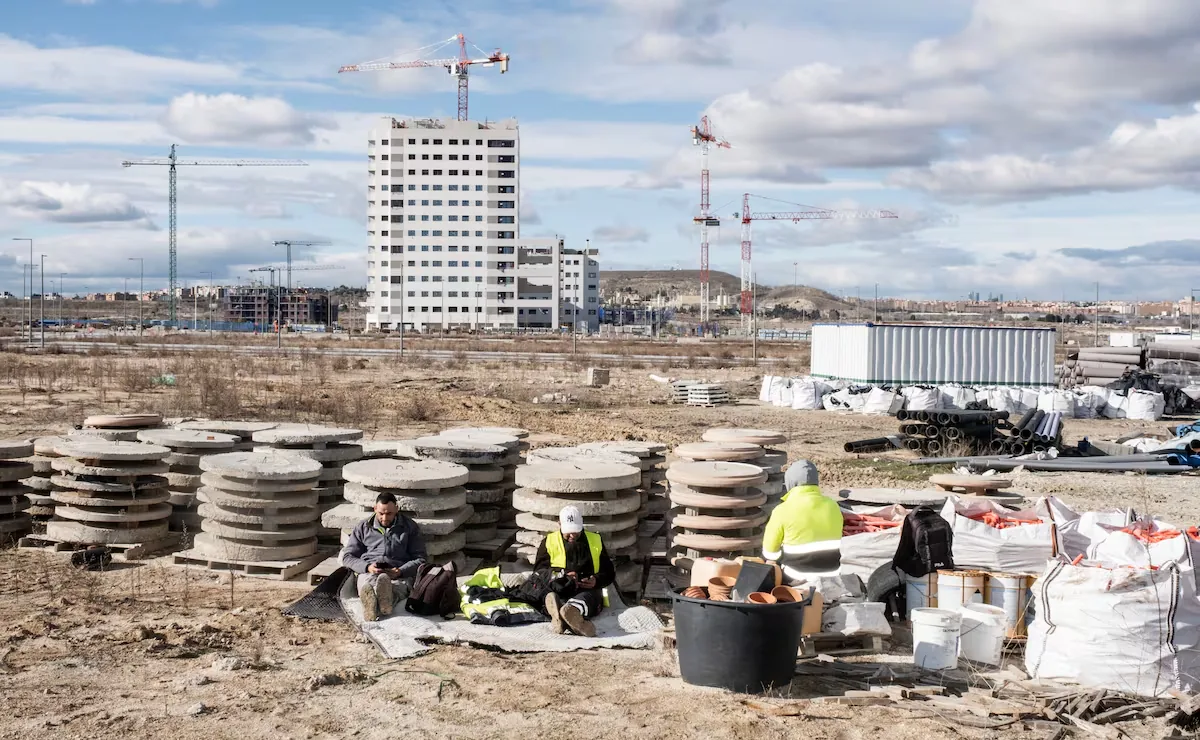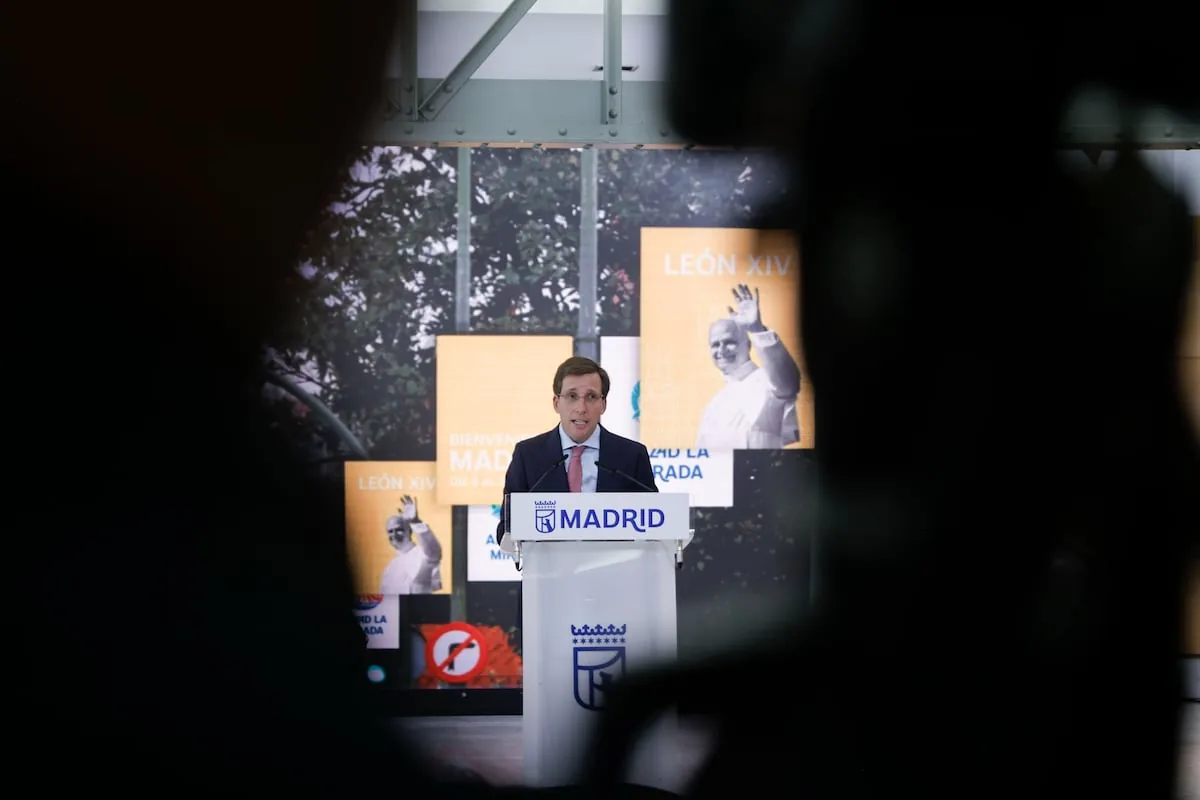








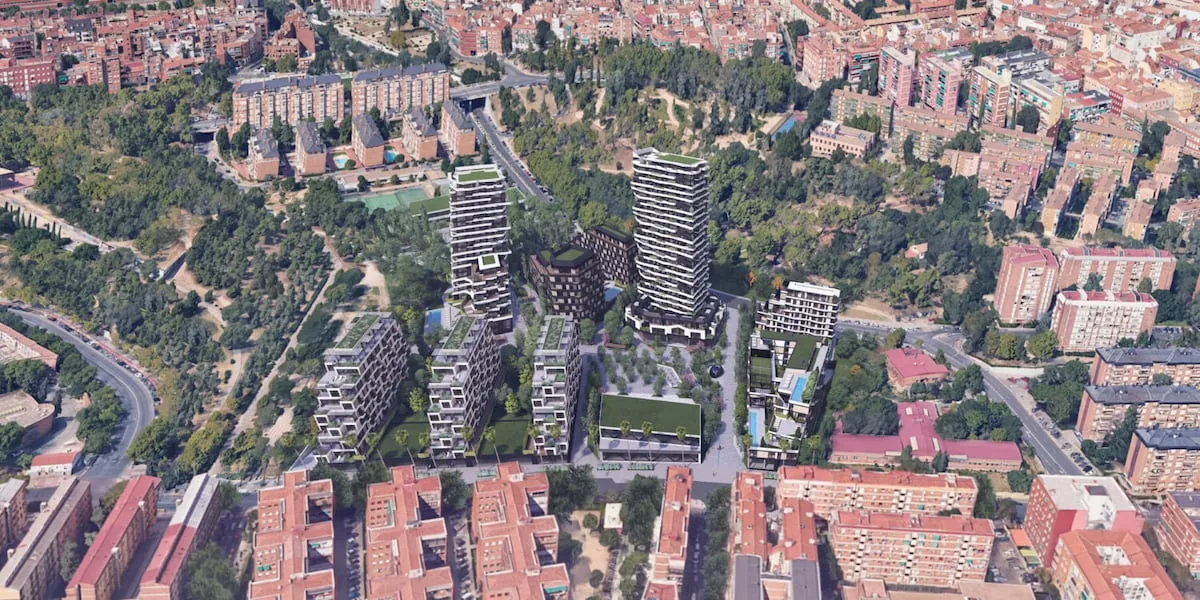
The Madrid City Council gave a new boost this Thursday to the Ermita del Santo urban development operation, one of the most controversial developments in recent years in the Latina district. The Governing Board has initially approved the project, an administrative step that will allow the transformation of the land of the former shopping center into a new residential area next to Madrid Río with 530 homes and two towers of up to 23 and 28 floors. Of the apartments, 129 will have some type of public protection, 28% of the total, according to the deputy mayor, Inma Sanz, at the press conference following the Governing Board meeting.
Read more The greeting between Donald Trump and Ilia Topuria: “I didn’t imagine he was so kind”
The project affects an area of 44,349 square meters owned by Desarrollos Ermita del Santo, SOCIMI, S.A., composed of five companies. The most relevant, with 30%, is Ibemetex, whose owner is the Venezuelan businessman Alberto Enrique Finol Galué.
The works will be financed and carried out by the Compensation Board, an urban entity formed by the landowners. “Always supervised by the Works and Equipment area,” Sanz clarified. The City Council argues that the project will allow recovering for citizen use nearly 70% of currently private land in the Los Cármenes neighborhood and incorporate more vegetation, as well as stimulate commerce in an area degraded for years. “We gain green areas, we gain facilities, we gain housing, and we gain commercial spaces that, at this moment, were very degraded,” summarized the deputy mayor.
But the development comes preceded by a long political and neighborhood controversy. The operation was rejected during Manuela Carmena’s term and later recovered by the Government of José Luis Martínez-Almeida (PP), a decision that has fueled criticism from neighborhood associations and opposition groups, who label the project as an “urban speculation bonanza.”
The socialist councilor Pedro Barrero maintains that the operation “once again turns the Latina district into a laboratory of urban speculation” and criticizes that the land has not been used “to create more public facilities in an area that already has scarce and overcrowded amenities.” The councilor considers the planned percentage of protected housing insufficient and warns that one of the tertiary plots could be used for flexliving [flexible temporary rental in furnished apartments], which, in his opinion, would open the door to “more speculative housing” and worsen the gentrification of the area. He also questions the impact of the towers on the urban landscape and warns of mobility problems due to the forecast of a parking lot with up to 2,000 spaces.
In similar terms, Más Madrid councilor José Luis Nieto expresses himself, accusing Almeida of “giving another twist to the money-making machine of the landowners in the area.” The councilor denounces that the City Council has “twisted the rules” to change the use of a sports and facility land to private housing, in an operation that, he defends, “does not respond to the real needs of the residents of Puerta del Ángel and Los Cármenes.”
Nieto assures that the neighborhood needs “facilities and amenities, not urban speculation bonanzas,” and links the project to the increase in gentrification in the area. He also recalls that a facility plot in the area was sold last January “for a fortune” to a company planning a flexliving complex, Dazia Capital, an operation that, in his opinion, “only responds to the particular interest of the landowners and not to the general interest.”
The origin of the dispute dates back to the progressive deterioration of the Ermita del Santo shopping center, inaugurated in the 1990s and now practically empty. In recent years, the decline of the complex has become a common image of the neighborhood: closed shops, semi-deserted corridors, and residual commercial activity. Neighbors and citizen platforms denounce that the abandonment of the building has been used to justify the urban reclassification and accelerate a real estate operation of great economic value.
The shopping center was bought in 2012 for about 16 million euros by Desarrollos Ermita del Santo. Real estate experts, consulted then by this newspaper, estimated that the land value could multiply by five after the final approval of the planning.
Neighborhood protests have accompanied practically all phases of the plan’s processing. In April 2024, several residents were expelled from the municipal plenary after displaying banners with the slogan “No to the Ermita del Santo bonanza” during the approval of the modification of the General Urban Development Plan. Más Madrid and the PSOE voted against the initiative considering “that it prioritizes private profit over public interest.”

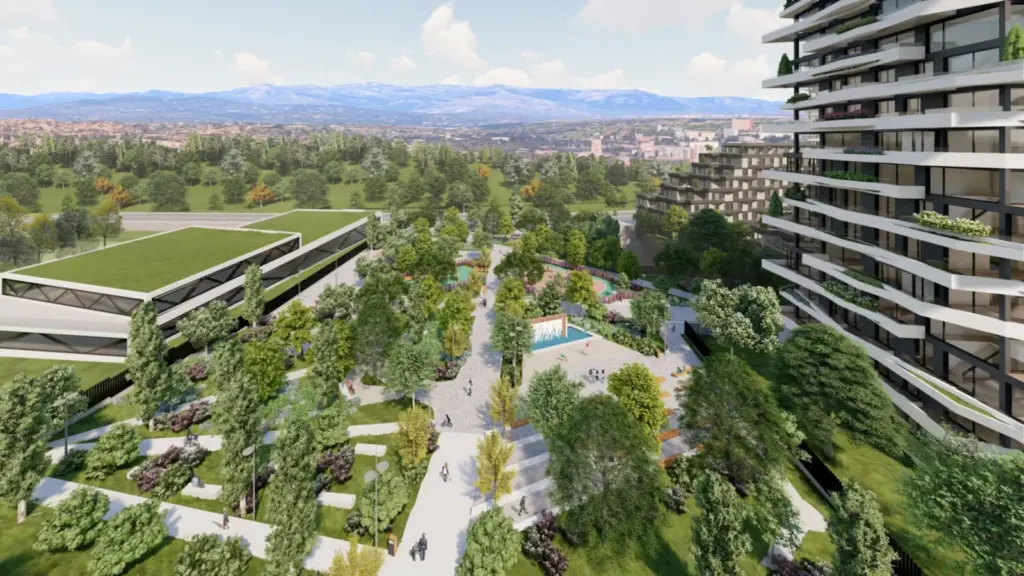
The government led by Almeida argues, on the contrary, that the development will allow urban stitching of a degraded plot and improve pedestrian connection in the area. The project includes a 60-meter-wide green corridor that will link the parks of La Ermita del Santo and Caramuel with Madrid Río, as well as nearly 11,000 square meters of rest areas — pedestrian squares, spaces with benches and trees, or promenades — and another 5,600 square meters of green areas. It also plans to preserve part of the existing trees and plant almost 300 new trees. The initial approval now opens a new administrative period before the final execution of the works.