





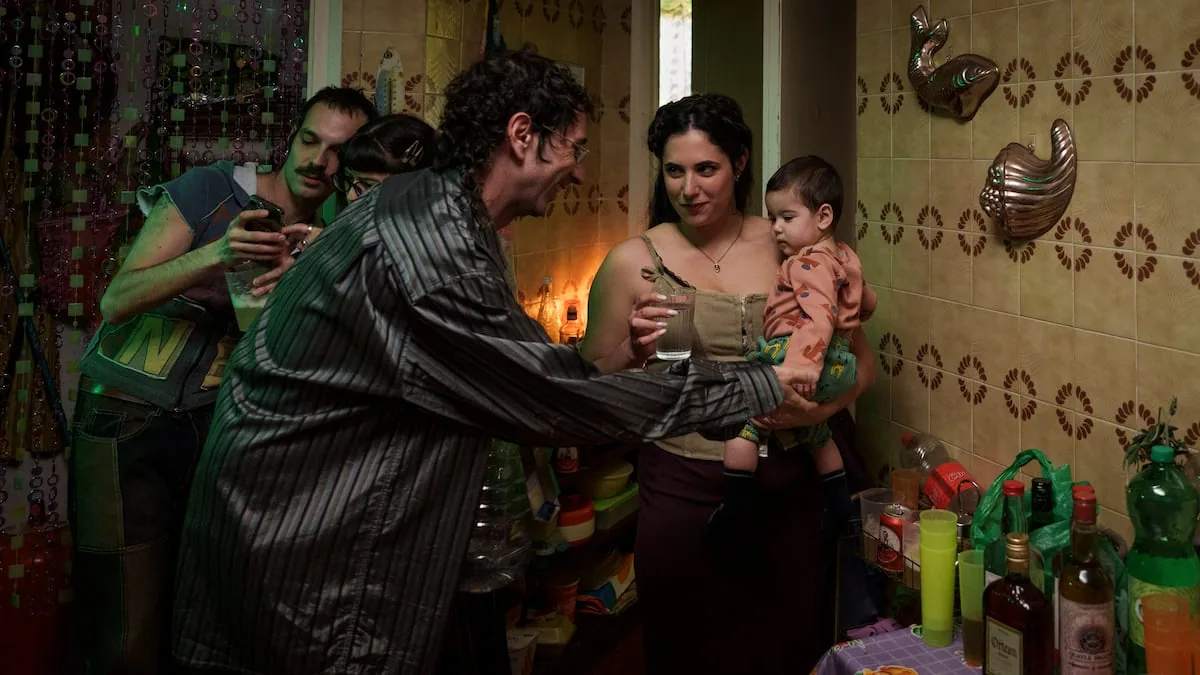
Their personal experiences were the basis of their project. Marta Loza (Gijón, 44 years old) and Marta Bassols (Barcelona, 45 years old) met through mutual friends; both have been performing various roles in the audiovisual world for years, from continuity and art direction (Loza) to scripts and acting (Bassols), and seven years ago they thought about telling the story of a mother facing the solo upbringing of her child. Their ideas have materialized in Yo siempre a veces (from April 23 on Movistar Plus+). “Things have changed; my grandmother had a child out of wedlock during the Civil War and practically raised him alone and in shame. My mother separated in the nineties, and there was something like ‘Don’t say it, what will they think at school,’ it was lived as a failure. Today it’s not a stigma; the problem is no longer that it’s shameful to be alone, but that society makes it very difficult for you,” Loza analyzes. That’s why in their series, Laura, the protagonist, addresses topics ranging from collective parenting to processed foods, work-life balance, or the desire to go to a rave in Barcelona.
Read more The CEO is content
Loza had been living abroad for a few years, had just separated, and was considering motherhood when she reconnected with Bassols. She had been a mother before 30 and had lived in Berlin, like the protagonist of their series. “There, people approach parenting differently because there are many subsidies and social aids; children are in parks, festivals, and bars. When I came back here, it seemed to me there was child-phobia. Raising children in a big city in this territory is tough; you experience many adventures,” she recalls. Those combined and fictionalized experiences were the genesis of the six chapters of their joint project.
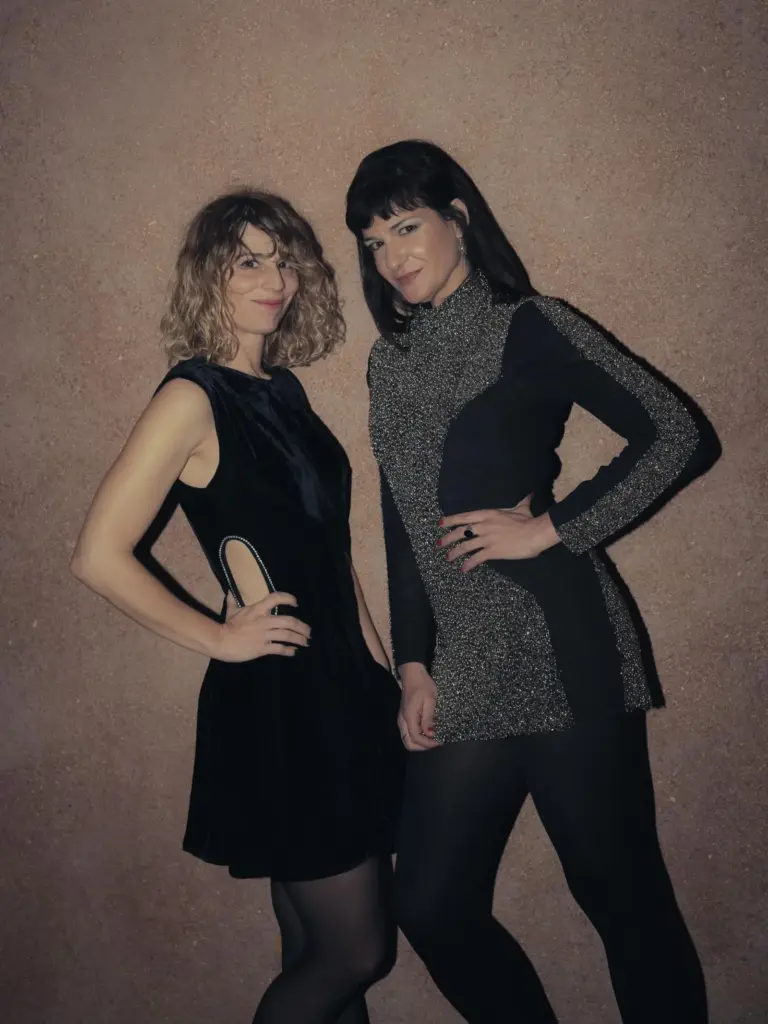
Los Javis, through Suma Content, have produced Las Martas in this generational portrait that doesn’t forget its message. “The fact that more than half of one’s salary goes to housing payments makes it difficult to start a family if one wants to,” they state, “precariousness is affecting everything; people are overwhelmed by rental prices and the increase in food prices without salaries having risen proportionally.” They wanted to talk about their own reality, the challenges they have encountered, and the doubts a first-time mother faces. “Motherhood is a solitary path. And this should be said more often,” Bassols points out, “it only happens in your body. And friends, even if they love you, if they have a concert, they won’t come to cure your mastitis. Either we learn to be more communal, or it needs to be said, because motherhood is always described by talking about how good the baby smells and how wonderfully it coos, because it’s true, but the shock of reality is very powerful, and we wanted to tell it.”
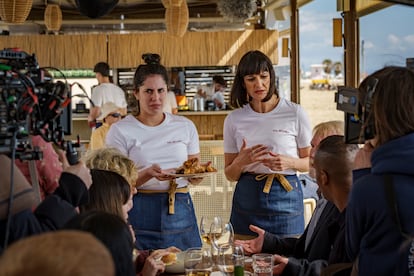
They have done it with humor, a predominantly female team, and from different perspectives, many based on their experiences as mothers and self-employed workers. “As a single mother from a working-class family, working on film sets, I have never encountered a woman with my characteristics; the hours are untimely, you have to ask for babysitters to stay with your children, and if you can’t afford them on top of that, it makes access to these types of jobs very difficult, and we wanted that barrier not to exist on our set,” Bassols states.
Read more Ecosocial transition and immigration: a little-explored opportunity
Their experience on other film sets over the years has helped them define how they wanted to be on the set of their most personal work. “We have spent a lot of time watching other people do things, working on other people’s projects, and you learn a lot that way; you see things you loved and things you would do differently if you ever directed,” Bassols points out, “we have put our soul into the project and how to do it, for example, on set we sought to provide many facilities for work-life balance, to have friendly schedules, so it wasn’t the steamroller pace that production usually is.”
The team includes female figures in many positions (screenwriters, directors, art directors, assistant directors) and also a coach for lactation and another for work-life balance. “We have been fortunate to have a female team with exceptional talent and to create a friendly atmosphere; we wanted the team to feel comfortable because, in the end, it’s a collective experience,” Loza indicates, “audiovisual technicians, and I am an audiovisual technician, we have lived hidden behind men in certain roles for a long time. We need to create space for women to hold positions of responsibility and design their own departments; it generates different energies on film sets.” And that different points of view are shown, they point out: “Until now, women had been portrayed by the male gaze, and now that we have more space and money to do it, we are going to tell things that were not told before, or that when they were done, went a bit unnoticed, because Cecilia Bartolomé made Margarita y el lobo, the first Spanish film to talk about divorce, very modern, avant-garde, in content and form, and then it hasn’t been championed much.”
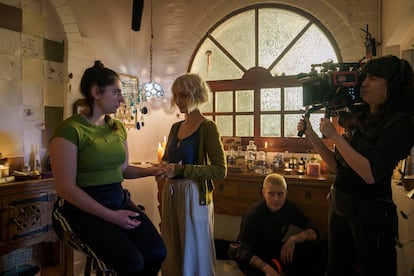
As the protagonist, they wanted a debut actress and soon found their Laura in Madrid-born Ana Boga. “We were looking for an actress who was a mother; we were going to do a street cast, from Movistar and Suma Content, they were betting on a new face. She did a self tape, and Claudia Costafreda [director of some chapters] was the first to see her and said it was her, there’s no one else,” they recall. In the series, Laura debates between several possible lives, different professional and romantic options, Berlin or Barcelona… “The idea was to explore the gray scale of motherhood, to see what happens in that middle ground, which is why there are doubts and contradictions,” Loza emphasizes. They haven’t forgotten issues such as the division of tasks and the difficulties of work-life balance. In the series, the protagonist maintains a good relationship with the baby’s father but faces the daily challenges alone, a reality they also wanted to portray: “There is a lot of work to be done in the distribution of parenting roles. Normally, school chats are managed by mothers, as are pediatrician appointments, anything that needs sewing or mending, preparing Carnival costumes…”
Read more Smoker’s empathy