








No other place from antiquity has been investigated as thoroughly as Pompeii, the Roman city in southern Italy destroyed by the eruption of Vesuvius in the year 79. However, many millennial mysteries remain: it is not clear whether the disaster occurred in summer or autumn (there is evidence to support both theses); nor is it known for certain how many people lived there at the time of the volcanic explosion (experts estimate a wide range from 15,000 to 30,000, including slaves); nor has the port, which must have been very important, ever been found. It is also unclear how many people died as a result of the eruption: so far 1,200 bodies have been found and, since two-thirds of the site have been excavated, it is estimated that about 2,000 people may have died, most of them in the second part of the eruption, which lasted for two days. However, a discovery made this week may change this account.
When Vesuvius awoke around one in the afternoon (on August 24, according to Pliny the Younger, author of the only direct account of the eruption in which his uncle died, although increasing evidence points to it possibly being in October), first an intense rain of rocks fell on Pompeii, especially pumice stone, a mineral deluge that slowly buried the city.
Hours later, around six in the morning, it seemed that Vesuvius had calmed down. Many people took the opportunity to escape, but then the worst came: a pyroclastic flow, gases and ashes at enormous temperature, struck the city. Until now it was thought that most of the victims occurred during those hours. “The second phase was the most dangerous,” wrote Gianni Gallello, an archaeologist from the University of Valencia who led an investigation, in collaboration with the University of Cambridge and the Italian Ministry of Culture, that studied the bodies of those who died from the eruption. It was the gases, not the stones, that killed in Pompeii.
This is a theory consolidated long before science proved it. The writer and Auschwitz survivor Primo Levi published in 1978 a poem titled The Girl from Pompeii whose verses read: “The poisoned air filtered in search of you through the closed windows / of your quiet house with sturdy walls.” But the managers of the Pompeii site published this week in the digital excavation journal the discovery of two new victims that cast doubt on this hypothesis.
“These are two men who were trying to reach the beach,” writes the director of Pompeii, Gabriel Zuchtriegel, in the E-Journal degli Scavi di Pompei. “The first probably died on the morning of August 25 [according to Pliny’s date]: he was found above the pumice stone layer, inside the volcanic ash,” writes the archaeologist, author of The Magic of the Ruins. What Pompeii Tells Us (Taurus). This means he died during the second part of the eruption and had survived the first part by taking refuge somewhere in the city.
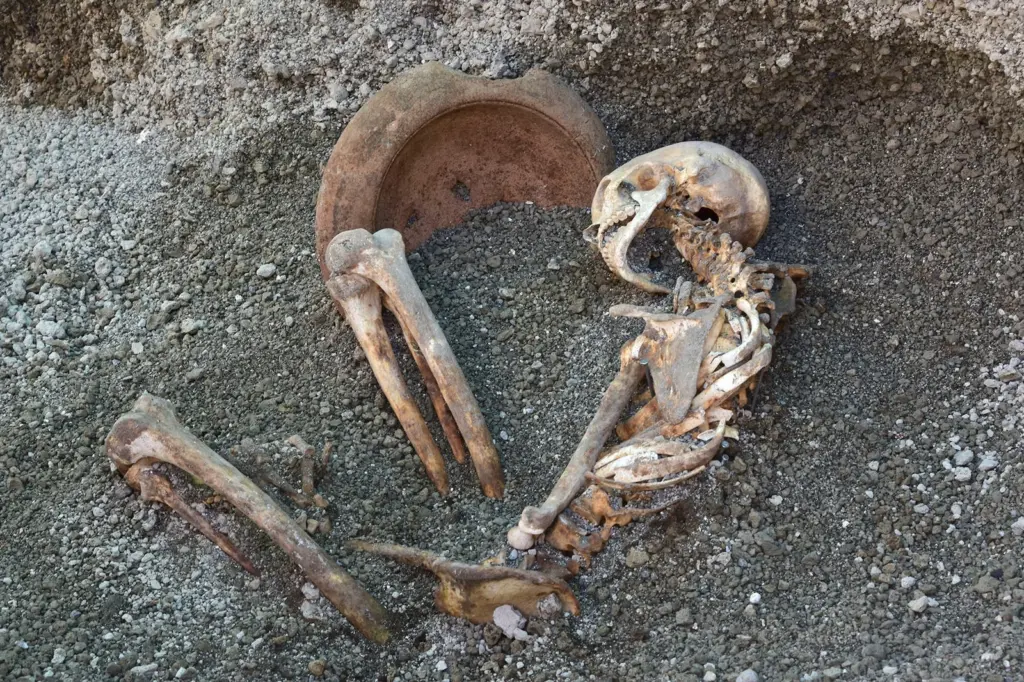
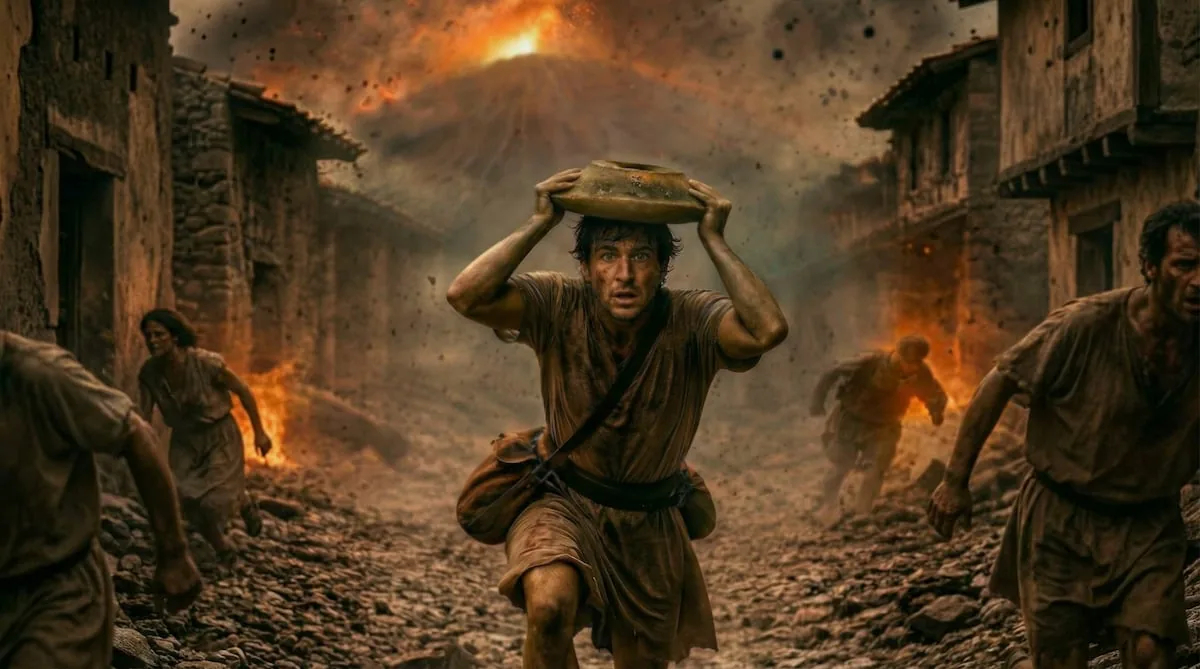
The second skeleton, on the other hand, belongs to someone who died under the rain of stones: “He was carrying a large terracotta mortar with which he covered his head, which shows obvious signs of fractures. This suggests that the lapilli rain that fell on the city between the afternoon of August 24 and the early hours of the next day could have been lethal due to the nature of the fragments. In fact, besides pumice stones, much denser and heavier lava fragments also fell on the city.” His body was found next to an oil lamp, which demonstrates the darkness that had fallen over the city at that time. In collaboration with the University of Padua, the Pompeii team has created with the help of artificial intelligence an image of this victim at the moment of death.
Read more Power struggles, greed, war, and ‘technofascism’: AI takes off its mask
Does this finding change the traditional narrative of the catastrophe? Does it mean that more bodies than expected may appear in unexcavated or deeper areas? It is almost impossible to know, but it raises some reasonable doubts. Determining the most dangerous moment for the city is not only an archaeological problem: Vesuvius remains an active volcano, threatening a very populated area, including Naples, a city of one million inhabitants. The last eruption took place at the end of World War II — described by Norman Lewis in his classic book about the capital of Campania, Naples, 1944 — but sooner or later a catastrophic explosion may occur again and it is essential to know which are the less dangerous moments — when the population can be evacuated — and the most dangerous — when shelter must be sought. In the new excavations being carried out in the city, which produce almost monthly extraordinary findings, not only archaeologists work, but also volcanologists seeking answers about the present.
Steven L. Tuck, professor of Classical History at the University of Miami and author of a fascinating investigation about the survivors of the eruption collected in the book Escape from Pompeii (Oxford University Press), relativizes the lessons that can be drawn from these two bodies, although he considers the finding undoubtedly interesting. “I receive daily news from the archaeological park because I am a real geek. I would not say that these two findings yet constitute a representative sample, but they do highlight the variety of dangers posed by the eruption. From the first threats, such as the fall of pumice stones or building collapses, to later dangers, such as gas asphyxiation. It was a complex eruption, and the remains found at different levels and times prove it.”
Tuck’s research points to there being quite a few survivors. The University of Miami professor has tracked Campania in search of Roman inscriptions reflecting surnames characteristic of the city or of people who, through archaeological findings, are known to have lived in Pompeii. “Thanks to being able to track surnames, we can know who survived, where they went, and in some cases, what their life was like after the eruption,” he notes by email. So far he has managed to identify 200 individual survivors in 12 different cities in the region.
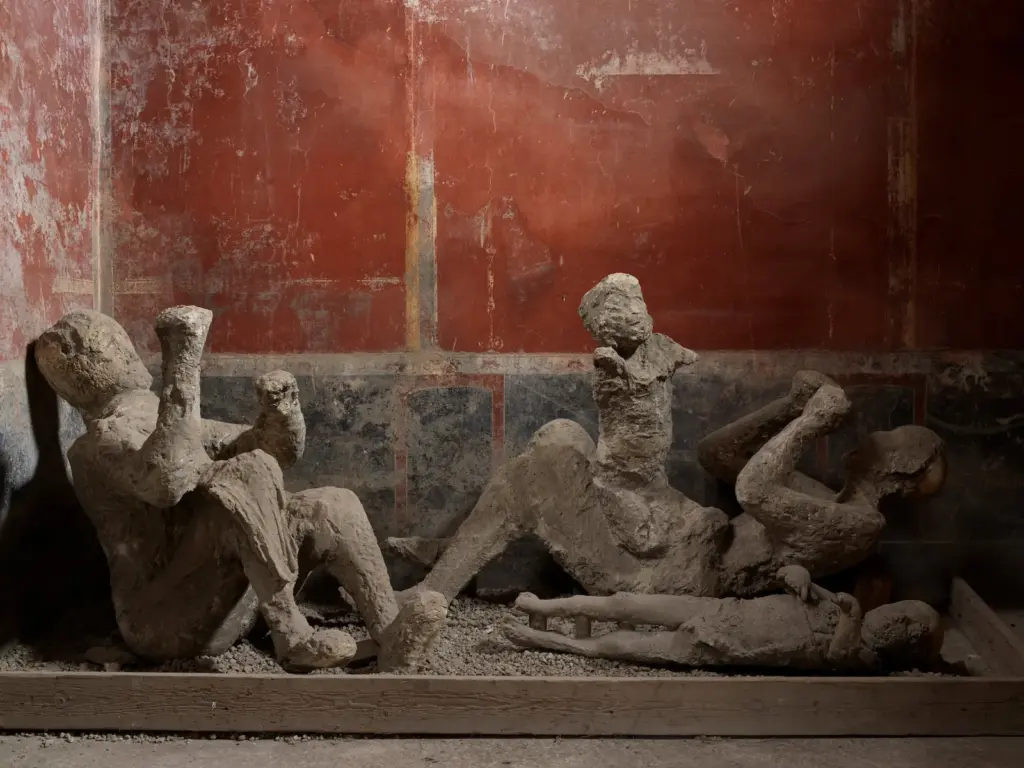
The dead of Pompeii will never stop telling stories, especially since the archaeologist who inaugurated the modern investigation of the city, Giuseppe Fiorelli, invented in the 19th century a brilliant technique: filling with plaster the cavities left by the decomposition of the bodies of the eruption victims to achieve a perfect mold of the Pompeians at the moment of their death. This is how the famous dog that died tied up unable to escape, the man sitting with his hands on his face, the lovers who died together, and many dozens of bodies have appeared. As Zuchtriegel explained: “Pompeii also represents a tragedy.”
Mary Beard, one of the best-known scholars of the Roman world and author of a book about the city — Crítica is about to publish her new essay, Classics Unfiltered — explains the inexhaustible fascination with the dead of Pompeii as follows: “I think we always want to look people from the past in the eye, imagine them alive. The bodies of Pompeii have something very special because (thanks to the way they were preserved) you can not only see their bones, but even an image or impression of how they were dressed. That makes them seem more human, more real.”