






Isak Andic’s medical history shows that he suffered from osteoarthritis in both knees, which had reduced his reaction capacity in the event of a fall. This circumstance explains, according to the defense of his son Jonathan Andic, who is under investigation for homicide, why no injuries were found on the palms of the hands of the founder of Mango during the autopsy. The Mossos d’Esquadra consider that, in the hypothesis of an accidental fall, Isak would have injuries on his hands because he would have tried to grab onto something to avoid falling down the embankment to a ravine nearly 100 meters high on the Montserrat mountain. For the defense, however, it is perfectly possible that, due to his condition, he did not have time to put out his hands because the osteoarthritis causes a “reduction in fall reaction times.”
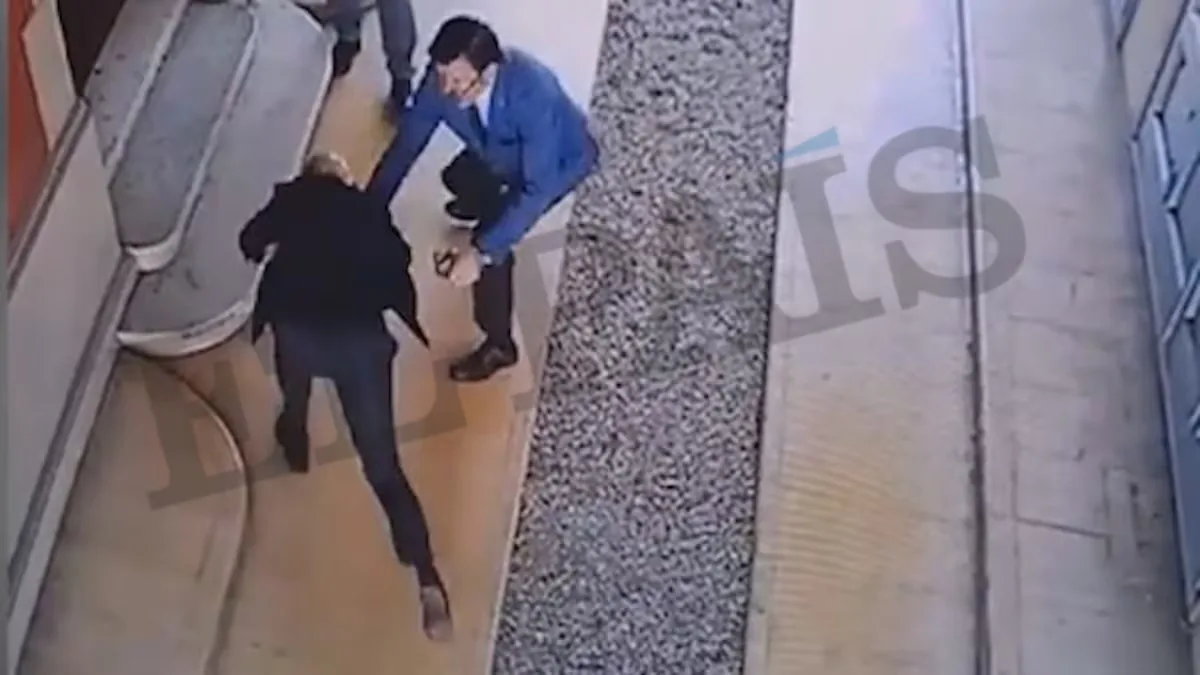
The defense does not propose this alternative in the abstract, but based on a specific fact: the fall that, on February 20, 2024 (that is, 10 months before the death) he suffered at the Mutua Universal headquarters in Barcelona, where he had gone to have lunch with a group of veteran businessmen. In the entrance lobby, Isak Andic tripped and fell without further consequences, as shown by footage recorded by surveillance cameras, which La Vanguardia revealed this Friday and to which EL PAÍS has had access. The video shows how, for no apparent reason, the founder of Mango loses his balance and stumbles, without fully extending his hands to avoid the fall, but is quickly assisted by an employee who prevents him from hitting his head on a protrusion.
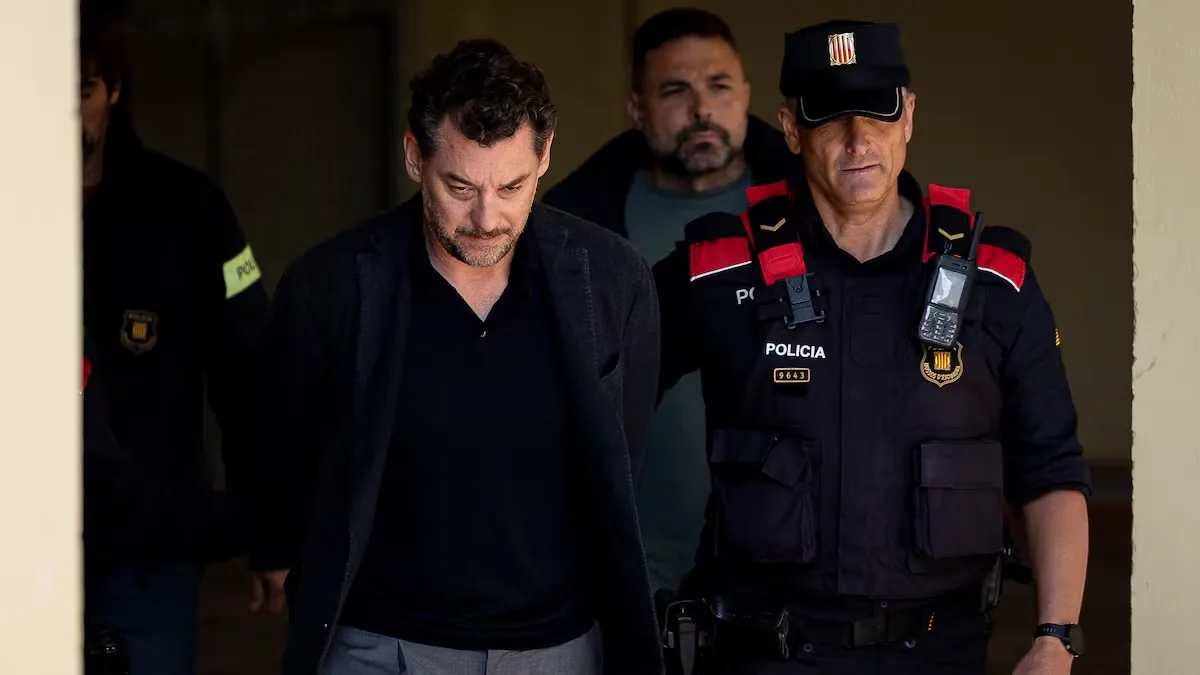
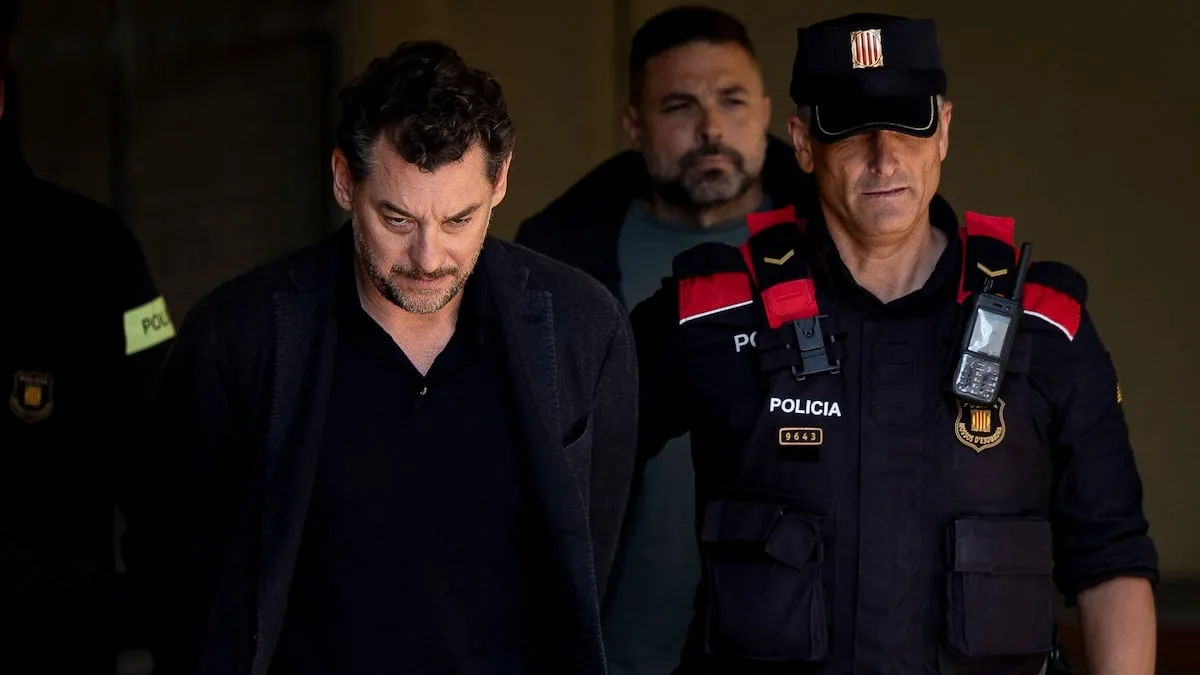
Jonathan Andic was arrested on May 19 and brought before the judge, who ordered his provisional imprisonment under a bail of one million euros. The eldest son paid it immediately and was released. In the order, one of the seven indications collected by the judge from the Mossos reports is the nature of the fall: Isak fell “feet first, as if he had slid down a slide.” And, since he did not have injuries “on the palms of his hands,” the judge concludes that a “slip on a stone or a forward fall” must be “ruled out.” This circumstance, in her opinion, reinforces the hypothesis of the homicide of Isak Andic, who was 71 years old.
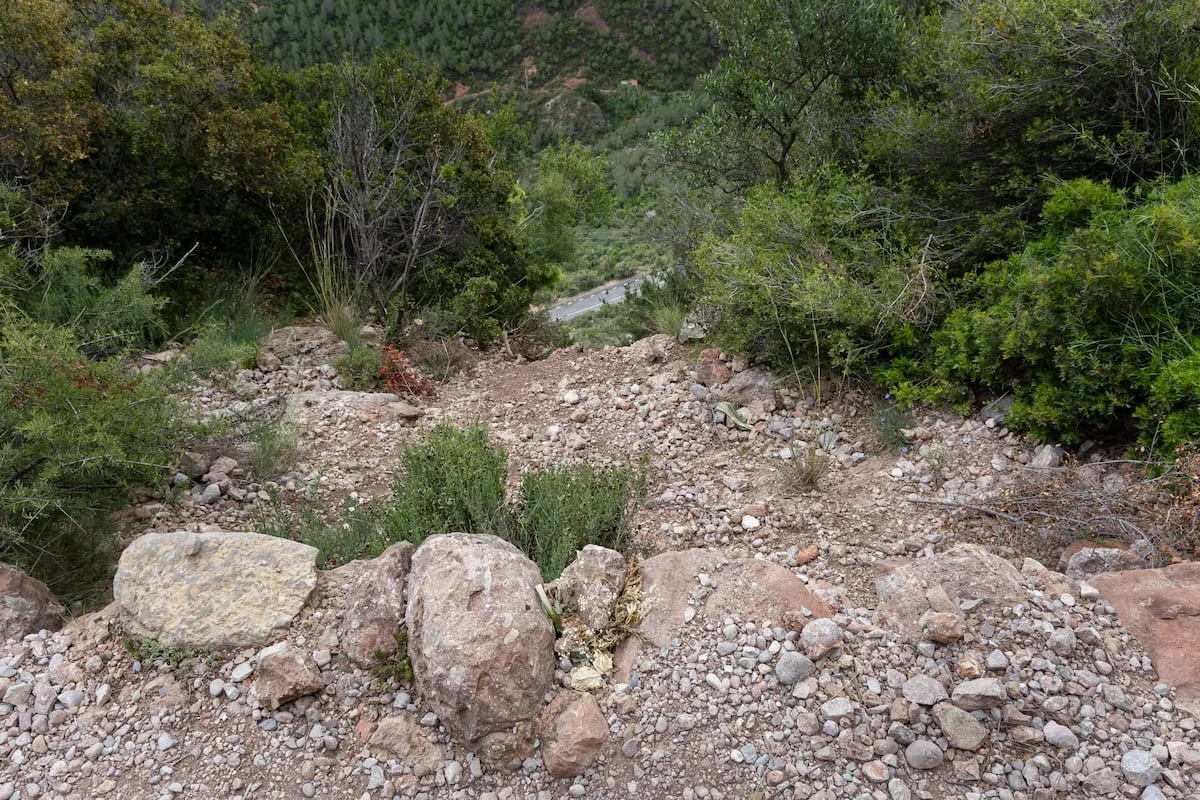
The “bilateral gonarthrosis” (that is, osteoarthritis in both knees), according to the defense’s statement, caused Isak to lose “defensive reaction” in case his body lost balance. Hence, without the hands appearing in time, the fall is “more vertical and less controlled.” And the fall at Mutua Universal “allows establishing a highly reliable expert thesis” if applied to the Camí de les Feixades of Montserrat, where the accident occurred. The “biomechanical reconstruction” allows concluding that, to explain Andic’s fatal fall, no “additional element (especially the intervention of a third party by pushing)” is needed, according to the appeal in which the defense asks the Barcelona Court to reverse the provisional imprisonment and precautionary measures on Jonathan.
An “accidental fortuitous fall”
The defense commissioned an expert report, which this newspaper has accessed, that analyzes in detail the 20 seconds of the Mutua Universal video and “transposes” that fall to the “physical scenario” of the Camí de les Feixades through two tools: a 3D biomechanical reconstruction and a field recreation, with a mannequin. That work “provides probative support” that is “exclusively compatible with the hypothesis of an accidental fortuitous fall” and that, consequently, “objectively weakens the hypothesis of third-party intervention,” according to the report, led by researcher Paco Marco.
The expert report points out that the “pattern” of movement in both cases (stumble, inclination, lateral drift, fall without protecting with the hands) is compatible with the injuries confirmed in the autopsy and, in particular, with their absence on the palms of the hands. That absence indicates, always according to the defense, the “neuromotor incapacity to activate the parachute reflex.” Between the two scenarios, however, there was a substantial difference: on the Camí de les Feixades, the outcome was fatal because he had no one to assist him and due to the terrain configuration: Isak Andic slid down a nine-meter-wide embankment and fell off a nearly 80-meter vertical cliff.
For the defense, Isak Andic’s medical condition is important because it helps build the accident hypothesis, as an alternative to that held by the Mossos, prosecutor, and judge: homicide. It is just one more element since, according to consulted sources, osteoarthritis (the chronic and progressive wear of the knee cartilage) did not prevent Isak Andic from exercising or going for walks. It can also be a double-edged sword in the hands of the Prosecutor’s Office, which can argue that, if the condition was so notable, perhaps planning a mountain excursion to Montserrat was not the most advisable.
Read more Alex Michelsen — Rafa Jódar, live; the Spaniard takes the first set in the tiebreak