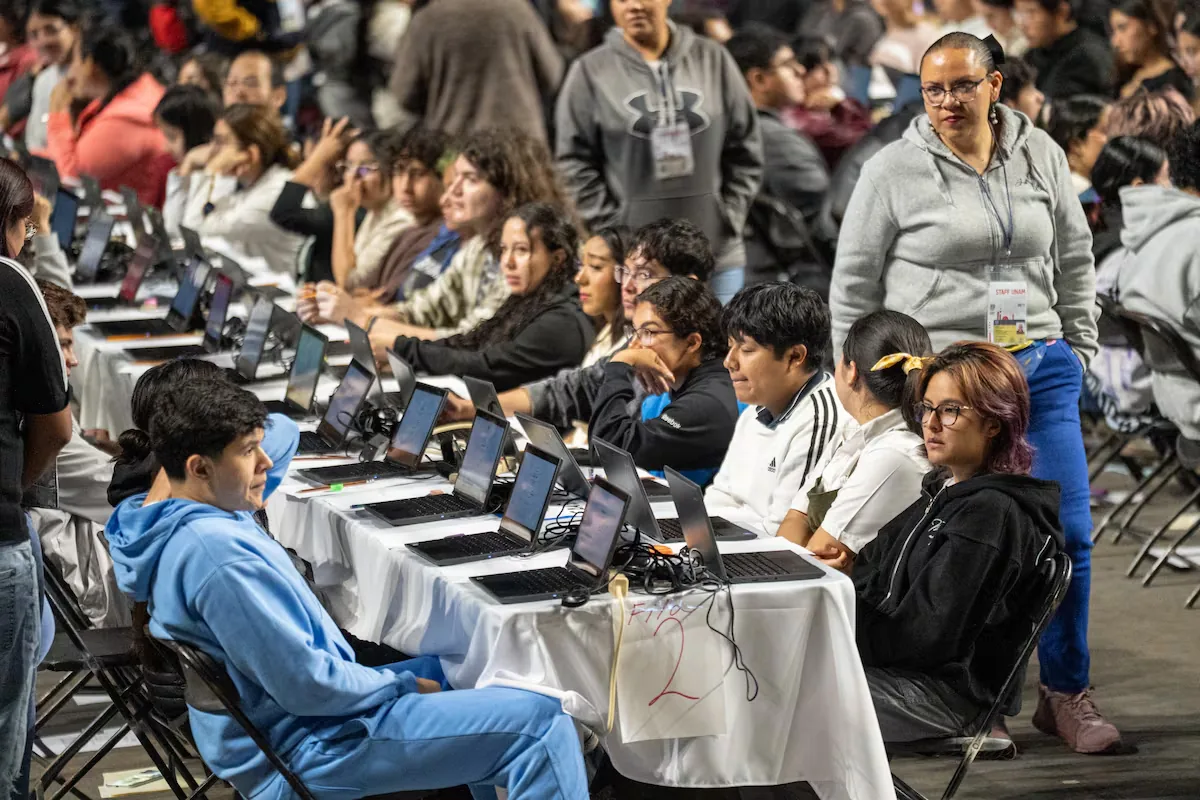
The experiment of jumping to the online and remote format in the entrance exam has involved a high economic and prestige cost for UNAM. The university wants to account for the massive fraud in the May and June test, in which irregularities and atypical results were detected. The scandal has led the institution to part ways this Wednesday with the Mexican company Territorium Life, responsible for developing the platform used for the undergraduate and high school entrance exams. The pressure to clarify the fiasco puts the company contracted by a million-dollar agreement in the spotlight, and forces a look at the exams that were previously conducted under that model.
The university’s decision comes after weeks of questions about the system’s security, after the commission of 16 experts recognized an anomalous increase in the highest scores. The question is whether there was a leak of answers or if cheating occurred under the supervision of the platform that uses artificial intelligence for monitoring. In the contract and its technical annex, UNAM established various measures, technological restrictions, and supervision processes to “ensure that the platform meets the highest standards of quality, efficiency, security, punctuality, functionality, and confidentiality.”
The relationship between UNAM and Territorium began in 2025, when the platform was used for the university high school entrance exams. A year later, the agreement was expanded for the exams of on-campus undergraduate and open and distance system. The contract of March 23, 2026, was signed with the argument that Territorium was the only company in the country with proven experience to administer more than 30,000 exams. The agreement contemplated a minimum of 154,000 and a maximum of 385,000 applicants. UNAM has paid 69 million 189,760 pesos for the services provided: 41.9 million corresponding to 158,558 undergraduate applicants and another 27.2 million for 103,221 candidates to the nine high schools and five Colleges of Sciences and Humanities.
The experiment to digitize the process with the aim of saving human and economic resources began with admission to high school. Unlike undergraduate, those results are not public as they correspond to the Secretariat of Public Education as part of the system to assign places to high schools in the metropolitan area of Mexico City. On that occasion, nine applicants obtained the perfect score of 128 questions, when the previous year, even in the in-person format, the highest result was 125 correct answers, achieved by only three students. In addition, the university boasted that the overall average improved by 10%, the highest increase in the last decade. The university has not commented on that test.
Some filters applied by the company during the exam were to validate identity by verifying that the examinee’s face is the same as that on an official ID. Applicants had to install software that locks computers during exams and only allows moving forward and backward, prevents access to other programs such as messaging apps, and copying, pasting, or screenshot functions are not possible. This was added to remote monitoring of one person for every 150 applicants.
On social media, offers circulated from people who offered to take the exam in place of the applicant. Among them, Lapasocon10, a TikTok profile, sold “real-time resolution” of UNAM and other public university admission exams. In his various videos, he explained that he could breach the systems and access as another person. It is impossible to know if this is real or a scam, although supposed testimonies of similar techniques with good results circulated in Facebook groups.
When the scandal broke, the company assured that its system worked correctly with the requested technical requirements. The problem, Territorium claims, was not the platform and maintains that the irregularities or cheating do not necessarily come from a technical failure or vulnerability in its software. UNAM published all the scores on July 17 without warning of the atypical increase in scores or considering fraud. The commission itself admitted that the accusations came from social media.
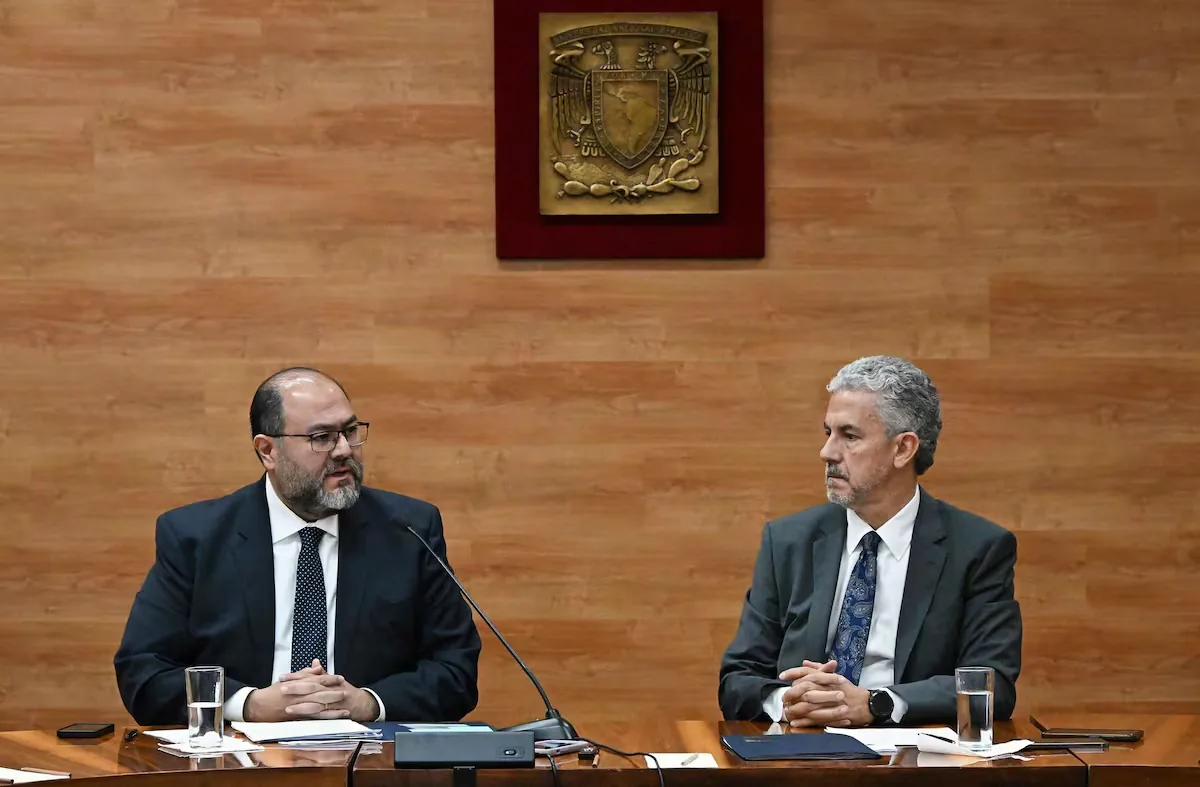
The cheating that has been confirmed in the failed undergraduate exam has led to the cancellation of the contract and the promotion of an investigation that the university will initiate with three processes. The institution’s general lawyer, Hugo Concha Cantú, announced this Thursday that Territorium agreed to undergo a technological audit with a specialized firm to review in detail the operation of the platform and its monitoring system. In addition, the rector, Leonardo Lomelí Vanegas, requested the intervention of the Superior Audit Office of the Federation to verify the legality of the contracting process and determine possible responsibilities. In parallel, the university’s Comptroller will carry out another audit, this internal, on the awarding and execution of the contract. “We have no interest in protecting the company, but also no interest in accusing without evidence,” said Concha. “Precisely for that reason, we have decided to carry out audits with specialists,” he explained.
While investigations progress, UNAM will apply the “control exam” between August 12 and 19 in four cities in the country to verify the results of 58,000 of the 158,000 applicants. The university will assume the total cost of the test, which will be financed with extraordinary income so as not to affect the budget of other academic areas. This second test, now in person, will be decisive to measure the extent of the problem of the first attempt. It will also be necessary to closely review this year’s high school entrance exams, which were also applied with Territorium Life and whose results are about to be published.
Read more The Mossos investigate the death of a man in Barcelona