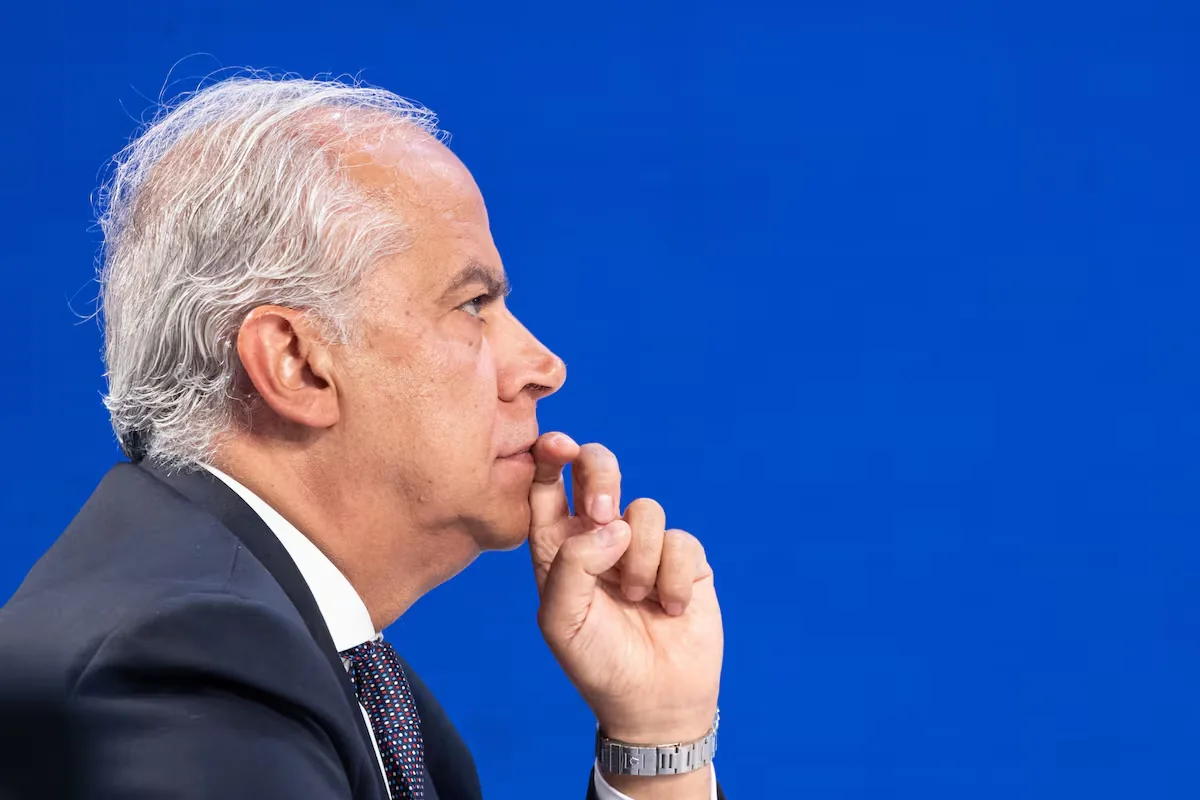







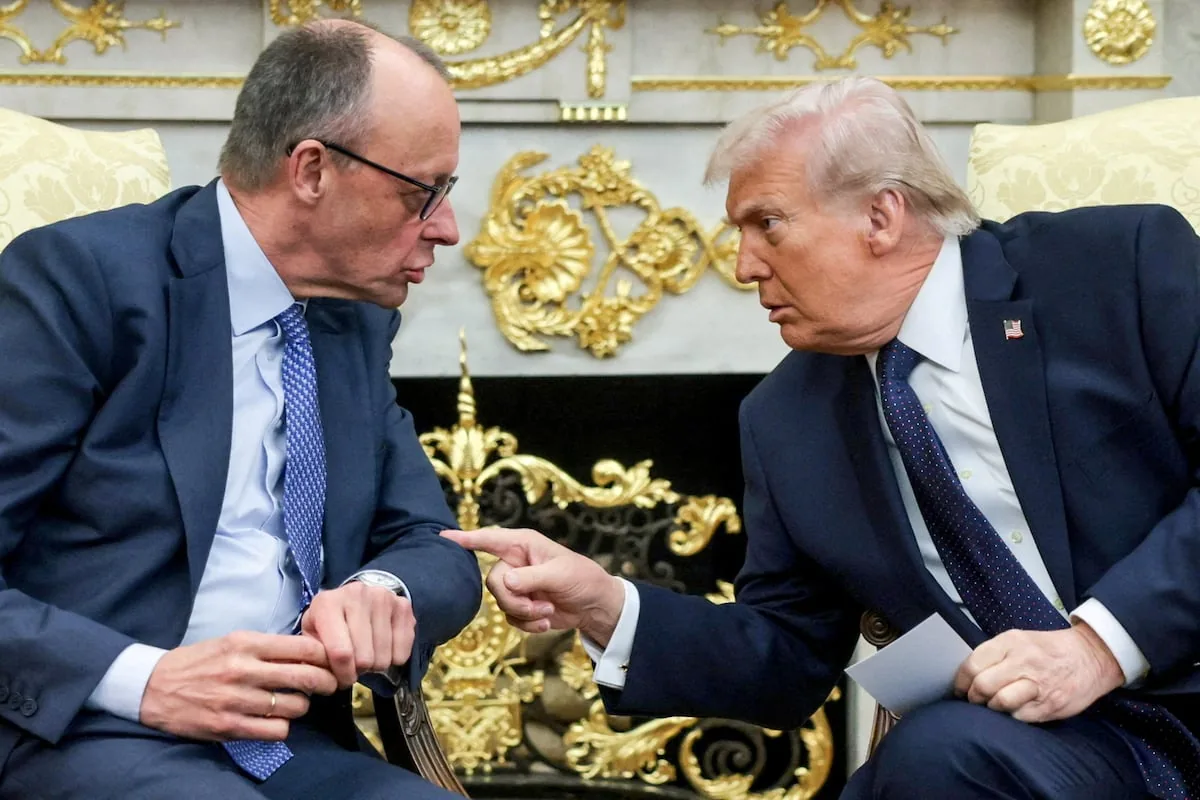
When, in June 2025, the newly elected German Chancellor, Friedrich Merz, visited the White House on his first official visit after his inauguration, he did so with the aim of reviving the transatlantic alliance between the two countries, aware of the importance of the United States for Germany, especially in terms of security. A year later, and after the U.S. president, Donald Trump, declared his attempt to annex Greenland, launched a trade conflict, and initiated a war against Iran without prior warning to his allies, the cracks in the bilateral relationship seem increasingly deep.
During three official visits to Washington, Merz avoided offending Trump, aiming to keep NATO alive and its support for Ukraine against Russia and, moreover, to soften the impact of the tariffs the U.S. president had been threatening for months. If that meant bowing his head when the Republican leader lashed out at European partners like Spain, it was seen as a lesser evil. All to avoid contradicting Trump in public and to prevent one of his well-known outbursts in front of the cameras. The president then praised Merz as “a man of great success” and a “great leader” who does a “magnificent job.”
The chancellor seemed to be consolidating himself as one of Trump’s favorite European leaders, especially thanks to the notable increase in Germany’s defense spending. His past as a Member of the European Parliament and his participation in transatlantic organizations—he was for a long time president of the Atlantik-Brücke association—probably gave him a different perspective from the often provincial German politics and allowed him to approach foreign policy with unusual self-confidence.
However, the war with Iran and the resulting energy crisis, which has hit Germany hard at a time of great economic weakness, seem to have exhausted Merz’s patience, who days ago, during a talk with students at a German high school, openly said that the U.S. “is being humiliated by Iran.”
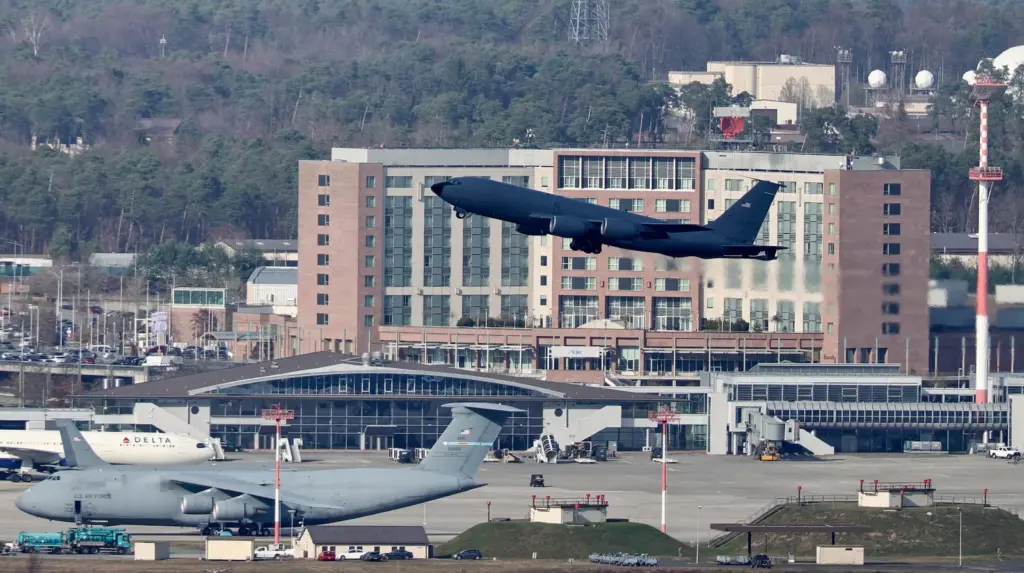
Those words unleashed Trump’s anger, who said the German chancellor “has no idea what he’s talking about” and that “it’s no wonder Germany is doing so badly, both economically and in other respects.” Shortly after, the White House announced the withdrawal of 5,000 troops stationed in German territory. Merz thus joined the list of leaders, like the British Keir Starmer or the Italian Giorgia Meloni, who for a time were Trump’s best friends… until they were not.
Many wondered in Germany whether those statements were a slip by Merz or part of a strategy to assert the importance of having a strong Europe, as he had already done at the last Munich Security Conference.
“First of all, one should not underestimate German students,” explains Jürgen Hardt, foreign affairs spokesman for the conservative faction in Parliament. In his opinion, the chancellor’s is “an accurate analysis of the situation, as perceived by many American citizens and many European citizens.”
According to the Christian Democratic MP, everything has been exaggerated in recent weeks. He assures that German parliamentarians still have “very good experiences with both Republican and Democratic deputies, as well as with representatives of the [U.S.] government.” “And I know there are also repeated conversations between the German chancellor and the U.S. president, at least by phone,” he states.
A “good conversation”
Something also noted these days by Merz himself, who has again highlighted the importance of these transatlantic relations and who on Friday reported having had a “good telephone conversation” about Iran with Trump during his return trip from China.
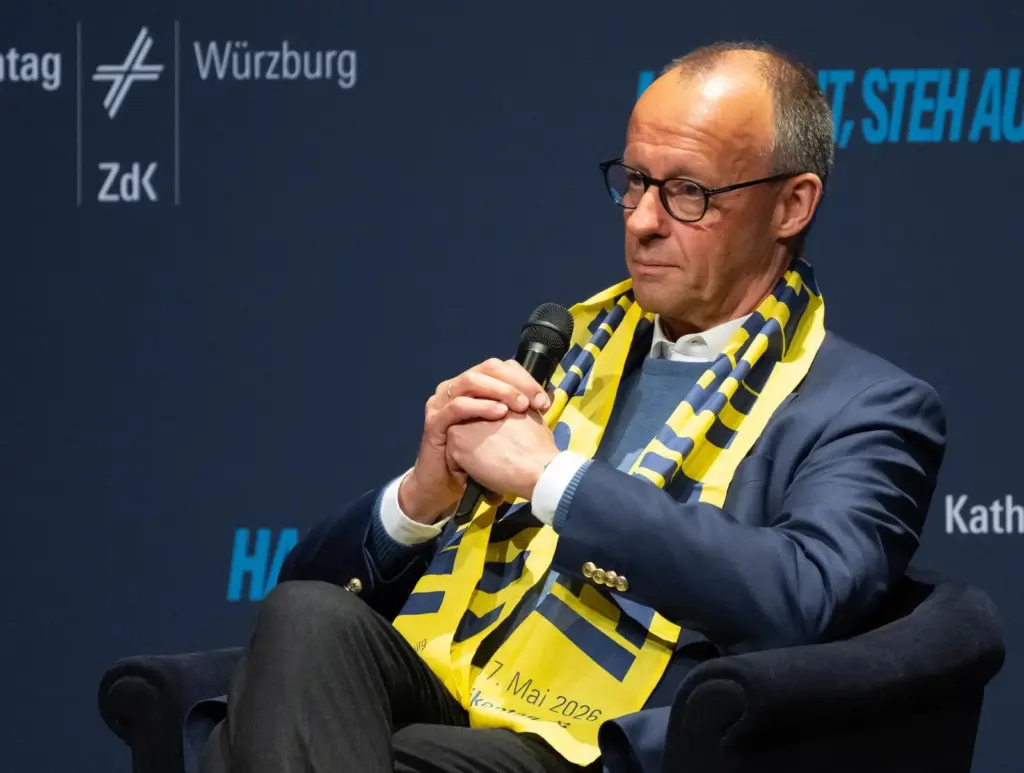
Paradoxically, that tweet came just hours after he acknowledged in a talk with young people during the Catholic Day in the Bavarian city of Würzburg that his admiration for the United States is not exactly growing, and stated that he “would not recommend” his children “to go to the U.S.” to study or work. “Currently, the best-educated in the U.S. have great difficulties finding work,” he concluded, then criticizing the “social climate” being generated in that country.
Read more ‘Anita the Fantastic’, Spain’s “biggest scammer”, goes on the run
The one once called “Foreign Affairs Chancellor”—a criticism of Merz’s tendency to avoid internal problems of a country immersed in a deep structural crisis—is now being reproached by many for not having acted with more diplomacy on the Iranian issue. Even former German Chancellor Angela Merkel called for calm this week. “We must look for common ground and, at the same time, act without fear,” she recommended in an interview with the German publication Focus. The conservative politician who governed Germany from 2005 to 2021, and who dealt with Trump in his first term in the White House, warned about the power of leaders worldwide. “Those who have reached these positions simply have incredible power. And that is why it must be taken very, very seriously.”
The mutual accusations recently exchanged by Merz and Trump express a disagreement that goes even deeper than the one that occurred around the Iraq war during the time of Social Democratic Chancellor Gerhard Schröder, which until now had been “the greatest crisis in transatlantic relations” between Germany and the United States, as the Frankfurter Allgemeine Zeitung wrote these days.
“At that time, at least, they were still together in Afghanistan, which gave NATO a purpose,” this media noted. Now the country and Europe must become independent from the former ally, who has become fickle and unreliable, but at the same time they fight to keep NATO.
For Dominik Tolksdorf, an expert in transatlantic relations at the German Association for Foreign Policy (DGAP) think tank, it should not be forgotten that Washington’s decision to withdraw troops is part of the U.S.’s strategic reorientation, although it is now seen as retaliation, and he acknowledges that relations will continue to be difficult on issues such as Ukraine and trade disputes.
“It was clear from the start that it would be difficult with Trump. Merz tried for a long time to appease him, but lately he has shown himself somewhat more self-confident in front of him. The change began after Trump’s statements about Greenland, and Merz had no choice but to show resistance, as Trump had clearly crossed a red line,” he points out.
Merz’s clear criticism of Trump, after having been accommodating in Washington, was “surprising,” although, as Tolksdorf explains, “he only said what all the other heads of government think.”
In this scenario, German Foreign Minister Johann Wadephul reminded journalists traveling with him to the U.S. a few days ago that the important thing is to remain calm, and pointed out that while the U.S. president’s statements must be taken seriously, it is also necessary to analyze “objectively what they concretely mean [for Germany] in the end.” “We don’t convene the Foreign Ministry’s crisis team every time a tweet is published,” he clarified.
Calm or not, the relationship has changed. Merz is no longer the same as when he started his term a year ago. “He used to be very cooperative. Now, naturally, faced with Trump’s chaotic policy and also the harm Germany suffers, he has become somewhat more cautious,” analyzes Daniel Goffart, author of a biography about the chancellor.
However, he believes Merz will strive to find a future relationship with the Americans, also because of the “fear” of the consequences of not doing so. “The question is how long this chaotic Trump policy, his threats, his insults, and all these economic disasters will be tolerated in some way. How long will his wars, his actions, which simply plunge the whole world into chaos, continue to be observed. And that is something that is now incredibly difficult to predict.”
Read more Trump fuels Christian nationalism with the celebration of a massive religious festival in Washington