




For years, the European Council operated under a repeated pattern of negotiation with Viktor Orbán. Diplomats and officials describe how they spent weeks anticipating the Hungarian prime minister’s position in order to act accordingly. Before discussing sanctions on Russia, aid to Ukraine, or the expansion of the community bloc, the political cost of negotiating with Budapest was assessed. With his constant veto on strategic foreign policy decisions, the ultra-conservative Hungarian prime minister blocked the European Union on key decisions.
And Europe ended up adapting to Orbán’s permanent blackmail dynamic. A boycott that today, for the first time in a decade, seems to have vanished with his defeat at the polls and his exit from government.
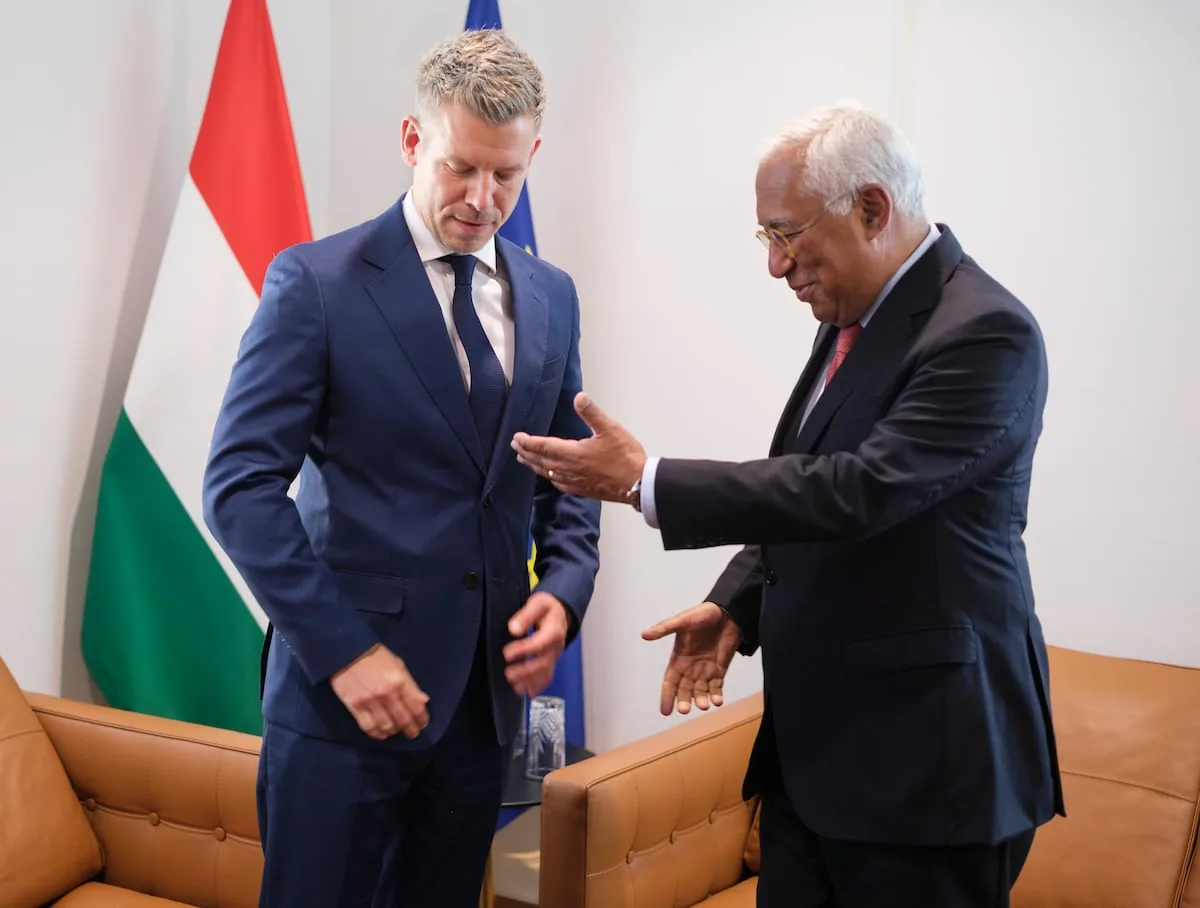
The arrival to power of the new Hungarian prime minister, Péter Magyar, after the victory of his party Tisza on April 12 has already had an impact on the EU, which received his victory (above all, Orbán’s defeat) with euphoria. Magyar’s arrival (from the European People’s Party family, as was his predecessor) has restored some agility to the community institutions. “The atmosphere has changed in many meetings, there is more institutional normality,” notes a European diplomat. In the jargon of the Brussels bubble, that means the Hungarian ambassador no longer constantly waves the veto.
Just take a look at the timeline. On April 23, still during the political transition period, Hungary lifted the blockade on the latest package of sanctions against the Kremlin orbit for its war against Ukraine — the twentieth since the start of the large-scale invasion, more than four years ago —.
At the same time, it gave the green light to the activation of a financial lifeline for Kyiv through a European loan of 90 billion euros. A key measure to keep afloat the country invaded by Russia, a candidate to join the EU, which Orbán had kept paralyzed for weeks.
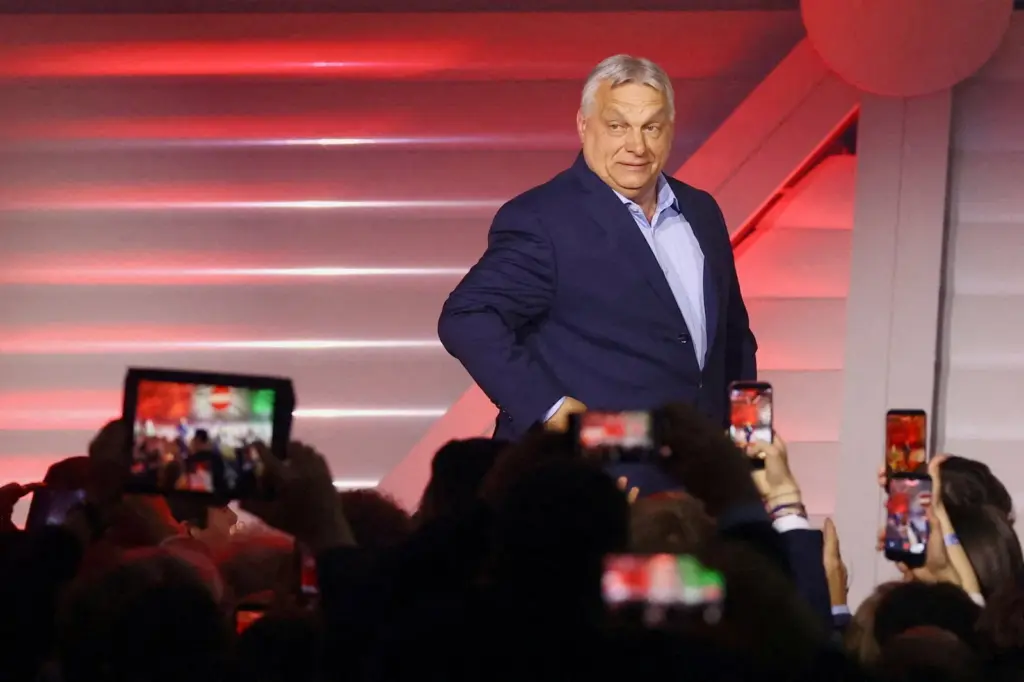
The Hungarian leader had used that loan as a pressure instrument against Brussels and the government of Volodymyr Zelensky, as well as a demonstration of his power to immobilize the system.
Additionally, according to community sources, tranches of funding from the European Peace Facility (EPF) will begin to be released, a mechanism that reimburses member states for military aid delivered to Ukraine; a tool that Budapest also blocked.
The change of government in Hungary has also unlocked the debate on eastward expansion to integrate Ukraine, Moldova, and the Balkan countries, several community sources indicate.
But the veteran Hungarian leader not only paralyzed European policy supporting Ukraine. Added to those files is another very sensitive one, the first to be unlocked with Magyar as prime minister: last week, at the first Foreign Council of the post-Orbán era, Budapest lifted its veto on sanctions against violent Israeli settlers. The Hungarian national-populist leader had been one of the main allies in the EU of the Russian Vladimir Putin, the American Donald Trump, and also the Israeli Benjamin Netanyahu.
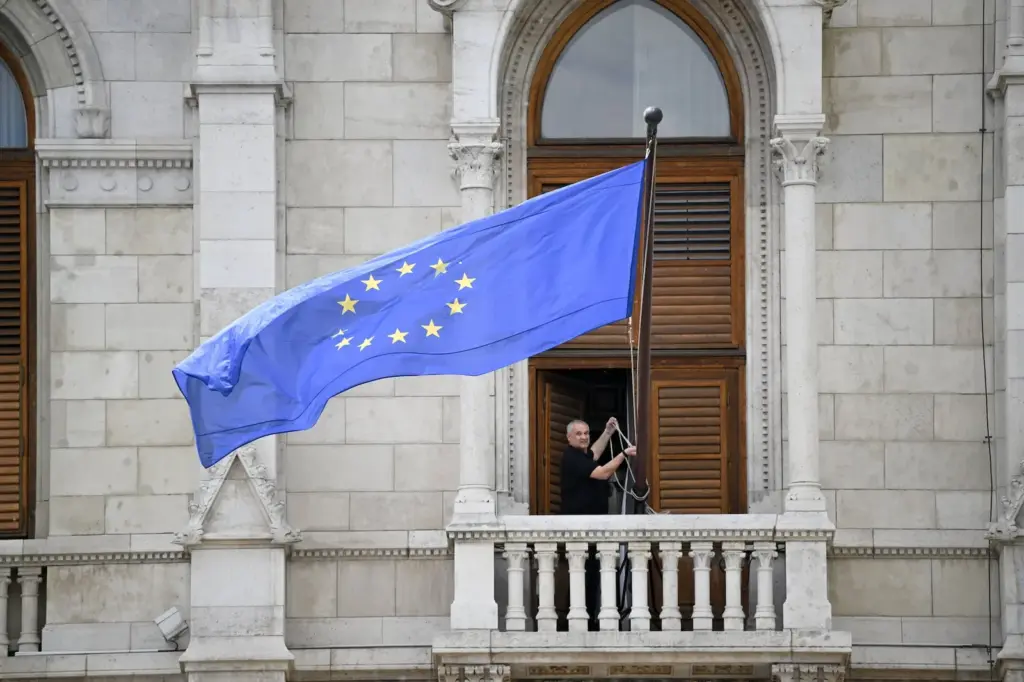
“The veto will not be used as a political pressure or blackmail instrument within the EU,” assured the new foreign minister and deputy prime minister, Anita Orbán, before the Hungarian Parliament, where the EU flag now flies. Budapest’s head of diplomacy has not ruled out that her government will veto decisions, but she assures it will not do so as blackmail.
Hungary became “too often an obstacle in European decision-making,” acknowledged the Hungarian foreign minister a few days ago, who has already given clear signs of a change in style compared to her predecessors, having met recently with the ambassadors of EU member states and summoned the Russian diplomatic representative to condemn Kremlin bombings.
“The change in Hungary shows that Europe is not on an inevitable path toward authoritarianism. And that change is seen in Brussels’ balance,” analyzes Piotr Burs, from the ECFR think tank.
Orbán’s departure has revealed another dynamic: that there are member states that hid behind the Hungarian veto and took advantage of it to avoid having to do so themselves and take a stand. A clear dynamic on issues such as measures against Israel or enlargement, where France is now making its resistance clearer. “In a way Orbán has done the dirty and ugly work for some,” says a diplomat.
Europe is alone
The transition in Hungary and its effect on the entire EU is happening at a particularly sensitive moment in Europe, with Russia’s war against Ukraine approaching its fifth anniversary without signs of a ceasefire. Also in a Europe caught in the middle of the rivalry between the US and China and in the midst of a transatlantic divorce due to Trump’s constant attacks on the community club.
On Thursday, in a solid speech in Aachen upon receiving the Charlemagne Prize, former European Central Bank president and former Italian prime minister Mario Draghi precisely diagnosed the reality of the EU. There is a great risk that Europe ends up becoming “a spectator,” in a world organized into blocks of economic and technological power, he warned in a solemn ceremony.
Draghi was blunt: “Europe is increasingly alone.”
With the departure of the Hungarian national-populist politician, a debate on the need for reforms to move toward qualified majority decision-making is also reopening in the EU. “So that a single veto cannot block the will of the majority of member states,” defended a few weeks ago the European Commission president, Ursula von der Leyen.
However, change is not easy. The paradox is that to achieve it generally — and without shortcuts for specific cases — unanimity is needed.
Discussions in Brussels are not limited to that reform (or hack) of the decision-making system. In Brussels, there is talk of a kind of political and institutional “antibodies” that the EU has developed after years of Hungarian blockage.
Defenses to prevent a single member state from stopping the entire EU, as Ursula Von der Leyen says. “Above all, it has been learned that one must act quickly and severely against breaches of the rule of law. And not let situations like those protagonized by Budapest fester,” summarizes a senior community source. “That lesson will not be forgotten,” she states.
Containment mechanisms
One of those containment mechanisms is the EU Court of Justice ruling on Hungary, in 2021, for violation of Article 2 of the treaties — rule of law, judicial independence, fundamental values — due to its migration legislation. Another is the conditionality mechanism, reinforced in 2022, which allows freezing European funds when risks to the budget or rule of law are detected.
Both were applied to Hungary, which has about 18 billion euros blocked in community funds, according to European Commission estimates. Money that is conditioned on various reforms (some related to anti-corruption efforts and others more on specific legislation) that Magyar is now negotiating against the clock to recover.
The conclusion is that, although the EU has not reformed the unanimity decision system, it has learned to make it more flexible. “Unanimity is the enemy of effective decision-making,” assures Sophie in’t Veld. “The Union cannot grow and remain hostage to unanimity in key areas,” emphasized the Dutch liberal politician, who was an MEP for years.
The truth is that Orbán’s blockages have sparked and encouraged alternative solutions to advance in the EU. Like the enhanced cooperation system, which allows moving and acting in teams or coalitions, and leaving behind the unruly partner. Josep Borrell, former High Representative for Foreign Policy and Security, defends that idea. “The time has come to create a federal vanguard of member states willing to move forward. That is how we created Schengen and the single currency,” demands the Spanish politician, now president of the CIDOB analysis center.
“This Union within the Union could be established through a combination of enhanced cooperations with a homogeneous composition, supported by an instrumental treaty that regulates decision-making and guarantees democratic accountability,” proposes Borrell along with other top figures, such as former Italian prime minister Enrico Letta, in a recent article published in this newspaper.
That idea is key as the debate on EU enlargement and the possible incorporation of Ukraine, Moldova, and the Balkan countries advances. Expanding the community club, absorbing more countries without reforming the decision-making system, warns Steven Blockmans, from the Centre for European Policy Studies (CEPS), can translate into a bigger but slower union and more “exposed” to blockages in foreign policy.
Thus, the European Commission is now studying introducing strong safeguards in the decision-making process that can be activated against non-compliant candidate countries and against current members. More direct, faster, and simpler brakes than the current ones if there are deviations in compliance with the rule of law.
Read more ‘Anita the Fantastic’, Spain’s “biggest scammer”, goes on the run