








This is a delivery of the weekly newsletter from Mexico, which can be followed for free at this link.
Read more The demanding bull of Pedraza de Yeltes
Ian Sinclair is a psychoanalyst of places, a mystical detective of lost London halfway between Dickens and Sherlock Holmes. In The City of Disappearances, a compilation of chronicles and essays from a decade ago, he draws through marathon and serene walks a map of the corners where some trace of the ancient world still survives — cemeteries, factories, churches — prior to the steamroller of contemporary urbanism. A “deep topography” marked by the lives that inhabited those places and whose memory seeps like a repressed force through the cracks of the new. Sinclair focuses, for example, on his neighborhood. Hackney, in the working-class east of London, was never the same after the real estate speculation of the 2012 Olympic Games. Beneath that entire block where there are now tourist apartments, fashion stores, and an organic vegetable market, he reminds us that the memory of a Victorian-era cemetery or a hospice for World War II veterans still beats.
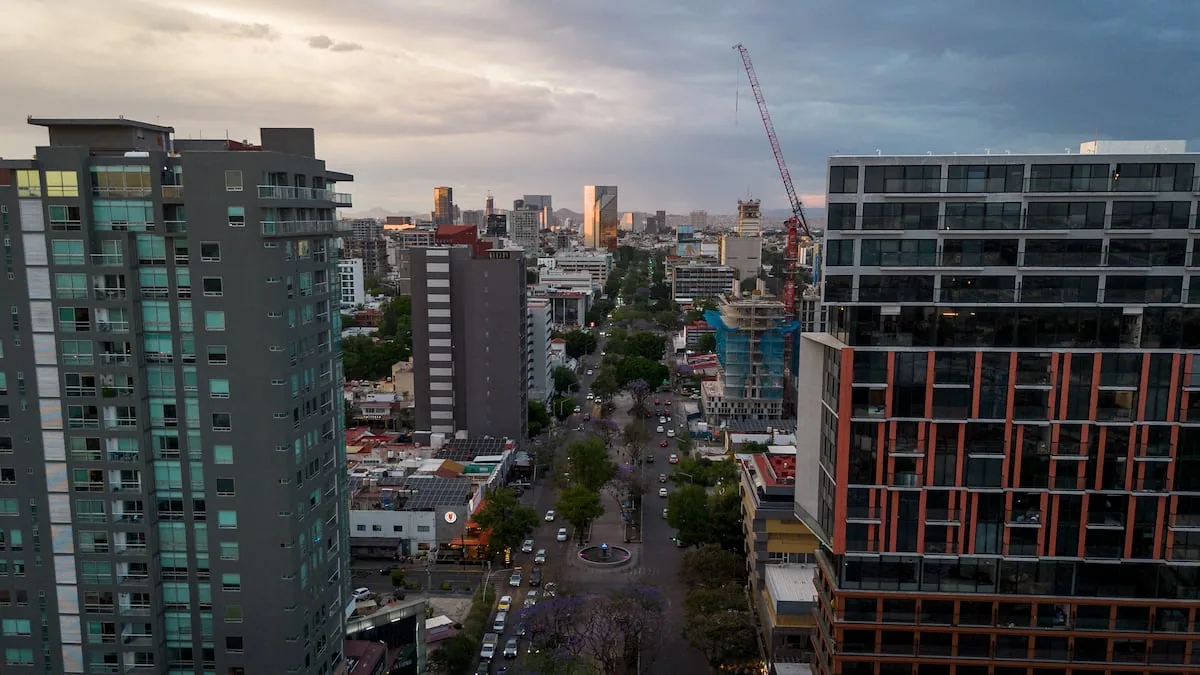
World Cups are usually not as mammoth as the Olympic Games. Even less so the one about to start, with three venues in Mexico, the United States, and Canada. But some Mexican neighborhoods have been feeling the blows of real estate speculation for some time. A neighbor and activist from the Juárez neighborhood, in the central area of the capital, accompanied my colleague Carlos Carabaña on one of those walks that Sinclair likes. Built at the end of the 19th century on a vast colonial estate, it is full of Porfirian mansions or Art Deco gems. During the walk, the neighbor pointed out buildings with hidden memories: family houses demolished to build seven-story blocks, violent evictions, and a few neighbors who resist in majestic ruined buildings. In total, he claims to have seen nearly 4,000 neighbors expelled from the neighborhood.
The arrival of the World Cup in Mexico is the final blow of a process that affected platforms and neighbors have been denouncing for years. Their neighborhoods are transformed by means of Temporary Tourist Stays. A model that reduces the available housing supply and drives up rental and purchase prices, causing the expulsion of local residents. Mexico City is the spearhead. The city has a total of 63,000 hotel rooms, which makes Airbnb, with its 24,000 offers of apartments and rooms, the landlord of more than a quarter of the total accommodation supply.
The business is dominated by real estate companies. Only 0.4% of the population owns three or more properties. Moreover, according to the research of my colleagues, among the 50 main hosts in the capital, who offer more than 5,000 apartments, there are only four profiles not linked to a company and that seem to be a real person. There are some boroughs, such as Cuauhtémoc, to which the Juárez neighborhood belongs, where between 11% and 20% of all its homes are rented on Airbnb, according to the book Airbnification in Mexico City, made by several academics from UNAM.
It is not possible to distinguish how many of those offers are owned by real estate companies and how many are dedicated to managing the property of another person or company. In that case, it is common for these intermediaries to charge a commission of between 20% and 30%. In practice, say the consulted academics, they are equivalent to hotel groups, but hidden behind the umbrella of the sharing economy.
One of the consulted academics points out that “real estate companies have realized that Airbnb is one of the best ways to make profits, since a two-bedroom apartment with a parking space, which previously earned 8,000 pesos, is now put on Airbnb and they rent each room several times and then separately the parking space, recovering the investment faster.” Cities also have memory and walking attentively through some neighborhoods is like visiting the psychoanalyst, with hidden stories seeking a place among the new.