








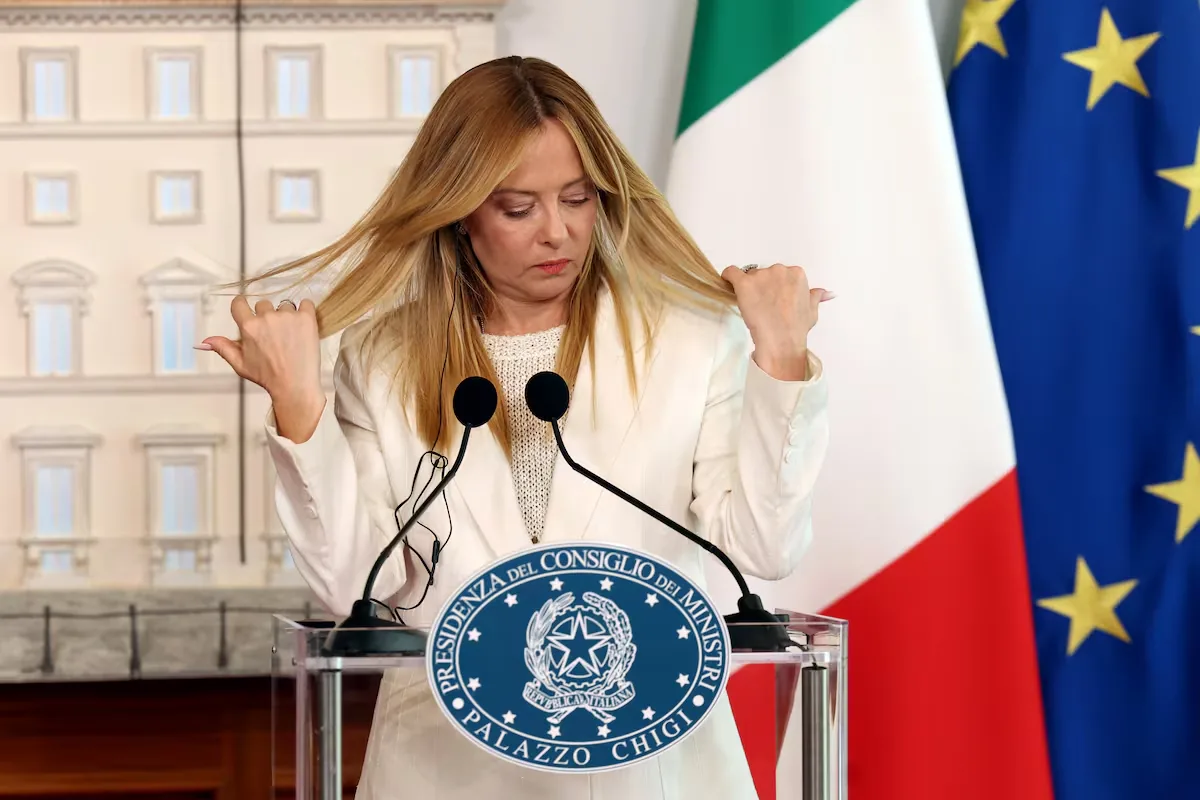
The diplomatic crisis between Spain and Italy is escalating: the Government has decided to raise the tone towards Rome after Giorgia Meloni’s Executive introduced border controls last week on citizens coming from Spain due to the massive entry of immigrants in Ceuta. The Spanish Executive now responds harshly and warns the Italian Government that if it does not lift these restrictions before this Sunday, “Spain will be forced to adopt proportional measures to protect the interests and dignity of its citizens.” Just last year, more than 11 million people traveled to Spain from Italy by plane, according to data collected by Aena.
On July 31, Italy announced that it was suspending the treaty of free movement of people in Europe, known as the Schengen Agreement. “This is an extraordinary measure to safeguard national security and prevent possible repercussions for our nation,” Meloni said at the time. In a statement published this Friday, the Executive points out that the measures taken by Rome have “no precedent in recent history,” were adopted “without prior notice, unilaterally and with spurious arguments that do not conform to either the Schengen Borders Code or the truth.”
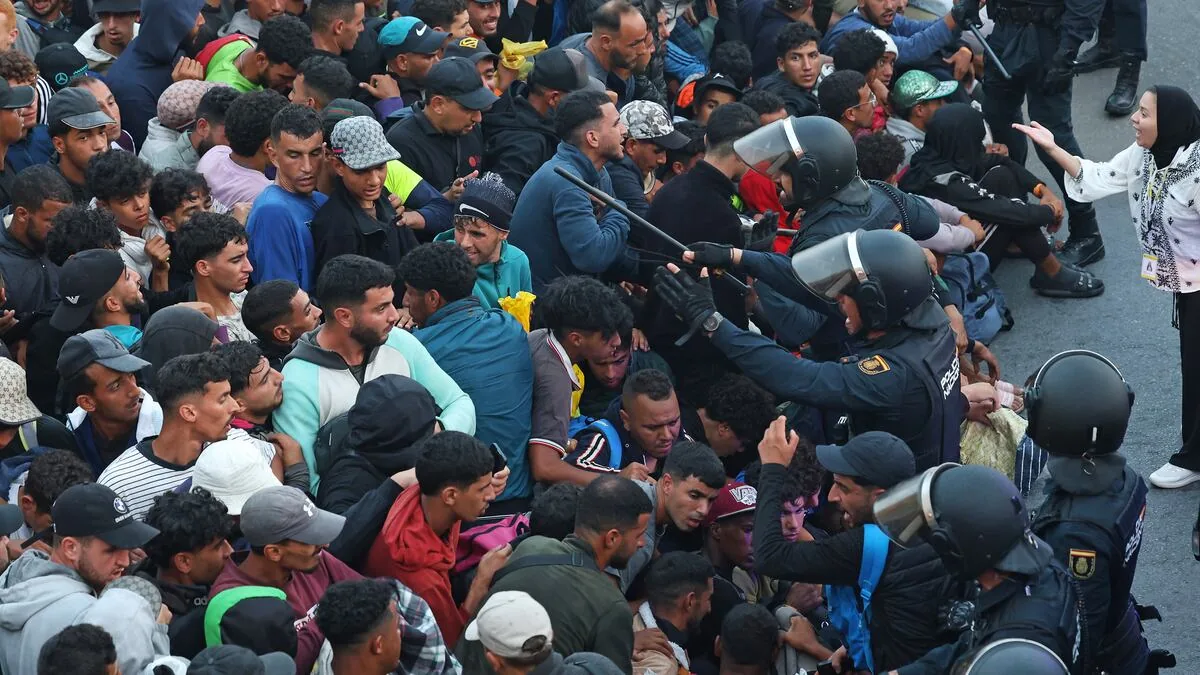
The Government points out, first of all, that “none of the migrants who irregularly entered Ceuta last week could or can freely enter the Schengen area because the autonomous city of Ceuta has a special regime within it.” And adds that “virtually all of them have already returned to Morocco.” According to Interior figures, presented this Tuesday by Minister Fernando Grande-Marlaska, about 72,000 people entered Ceuta irregularly last week, of which about 70,000 have already left.
But the statement does not stop there. La Moncloa intensifies the tone, after days of moderate reproaches — mainly sustained by the Foreign Minister, José Manuel Albares, who last Thursday summoned the Italian ambassador — and points out that Italy is, according to Frontex (the EU border agency), the member state that has registered the most irregular crossings in recent years, “with figures that have reached double those of Spain.” Furthermore, it emphasizes that since 2022, Rome has been violating the Dublin Regulation — which establishes which country is responsible for asylum requests — “generating an additional burden of migratory pressure on the rest of the member states.” “Despite the above, Spain has never introduced controls for Italy,” the Government stresses: “In fact, it has always shown solidarity with it, hosting part of the migrants who arrived in Lampedusa in 2023 and repeatedly opening its ports to migrants rescued on the central Mediterranean route.”
This Monday, Albares reproached Italy and other EU partners, such as Finland, for their response to the crisis: “There have been countries, states, and governments that have not been up to the task. The Italian Government is one of them.” The head of Spanish diplomacy recalled repeated crises on the island of Lampedusa and even stated that Italy had at some point been “absolutely flooded with irregular immigrants,” recalling that Spain “has always been politically and practically supportive.”
Read more Paula Echevarría’s birthday message: “I turn 49 at a difficult time and with much pain”
The Italian Foreign Minister, Antonio Tajani, then responded to his Spanish counterpart — although he said he was not responding to Albares, “but to the numbers” — in a post on the social network X. Tajani highlighted that irregular immigration in Italy has decreased by 60% since 2023 and boasted that the EU pact on asylum and migration has “a marked Italian imprint, following the teachings of Silvio Berlusconi and the governments he led.” In addition, the foreign policy head of Giorgia Meloni’s Executive defended the suspension of the Schengen treaty, a “correct” decision, “supported by 21 European countries” and “in line with the treaties.”
One day after this exchange, on Tuesday, the Italian Interior Minister, Matteo Piantedosi, tried to ease tensions with Madrid after the meeting of European Union interior ministers, assuring that the temporary reinstatement of controls at Italian air and sea borders is not directed against Spain but responds to security reasons and management of migratory flows. “This is a preventive and organizational measure, intended to safeguard national security and the robustness of the entire European control system at a time of great pressure, as has happened in many other cases,” he said at the meeting with his European counterparts. And he conveyed to the Spanish Government the “sincere solidarity of Italy.”
It has not been enough to calm the waters. “We trust that Europeanism, common sense, and good faith will prevail,” concludes the La Moncloa statement: “Governments are there to promote understanding between countries and the general interest of their populations, not to create fractures and sterile conflicts driven by internal electoral motivations.” Rome has until “the end of Sunday, August 9” to end the controls and treat “Spaniards like the rest of European citizens.”