




The central government has called on the population to protect themselves by staying indoors and wearing a mask when it is essential to go outside where there is smoke caused by the gigantic fires affecting the Sierra Oeste of Madrid and part of the province of Ávila, which have burned more than 25,000 hectares and forced 80,000 people to evacuate or confine.
Read more The flames fuel unrest in El Encinar del Alberche: residents feel abandoned by their mayor
The Madrid City Council has warned of an “episode of deterioration” in air quality due to the “increase in concentrations of particulate matter and other pollutants,” something that is evident with the persistent smell of burning and the orange haze dominating the capital’s sky. The city and Community monitoring stations began to notice the worsening from Friday night to Saturday.
Authorities recommend that citizens, “given the presence of smoke in the environment due to the fires,” remain indoors as much as possible and keep “doors and windows closed.” It is also important “that in air conditioning units, the ‘recycled’ option is chosen so that it draws air from inside the house and does not take it from outside,” highlights Ana María Aldea Reyes, from the multiple victim and disaster incident group of the Spanish Society of Emergency Medicine (IMVDES-SEMES). In no case is it recommended at this time to do sports or outdoor physical activities in the affected areas.
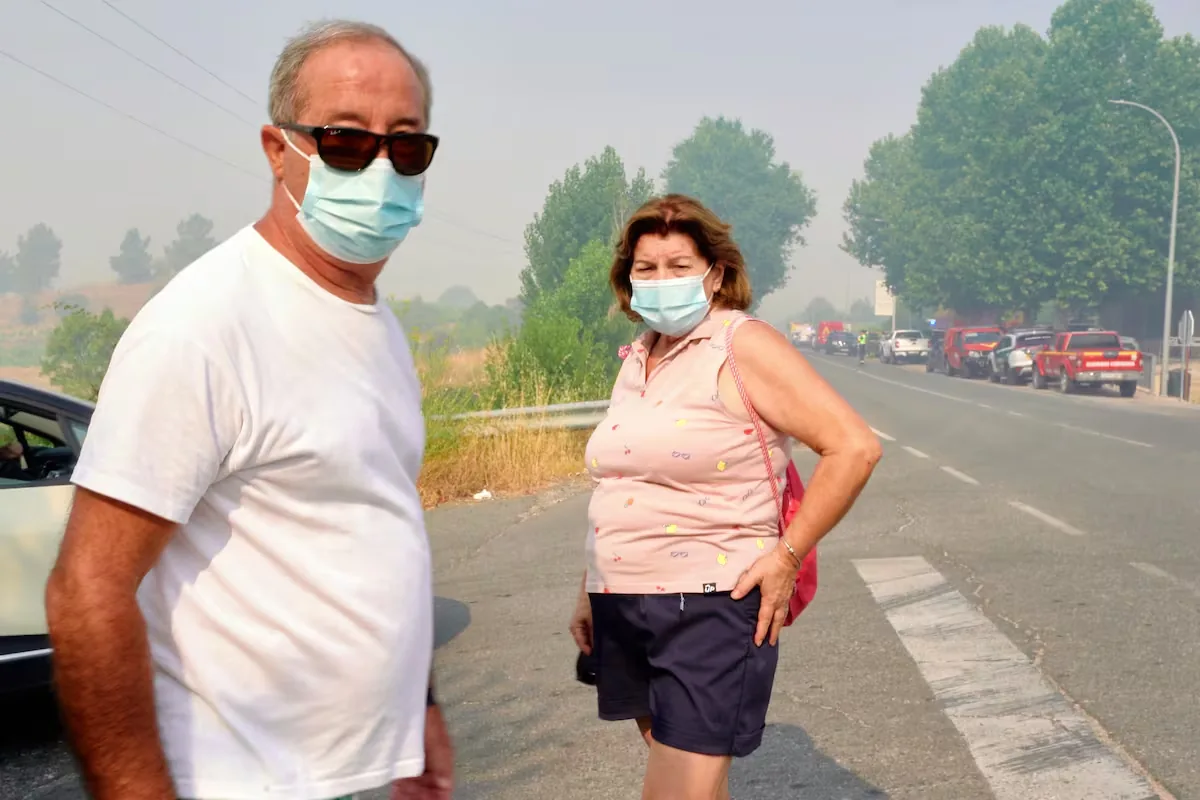
If it is essential to go out, the recommendation is to use an FFP2 or FFP3 mask if possible, especially for the most vulnerable people: the elderly, chronic patients—mainly with heart and respiratory problems—and pregnant women. “Surgical masks, which we are seeing many people use, do not protect against smoke. Only if nothing else is available and there are ash particles floating in the air can they offer some benefit,” says Juan Torres, head of the Internal Medicine service at Hospital Infanta Leonor de Vallecas (Madrid).
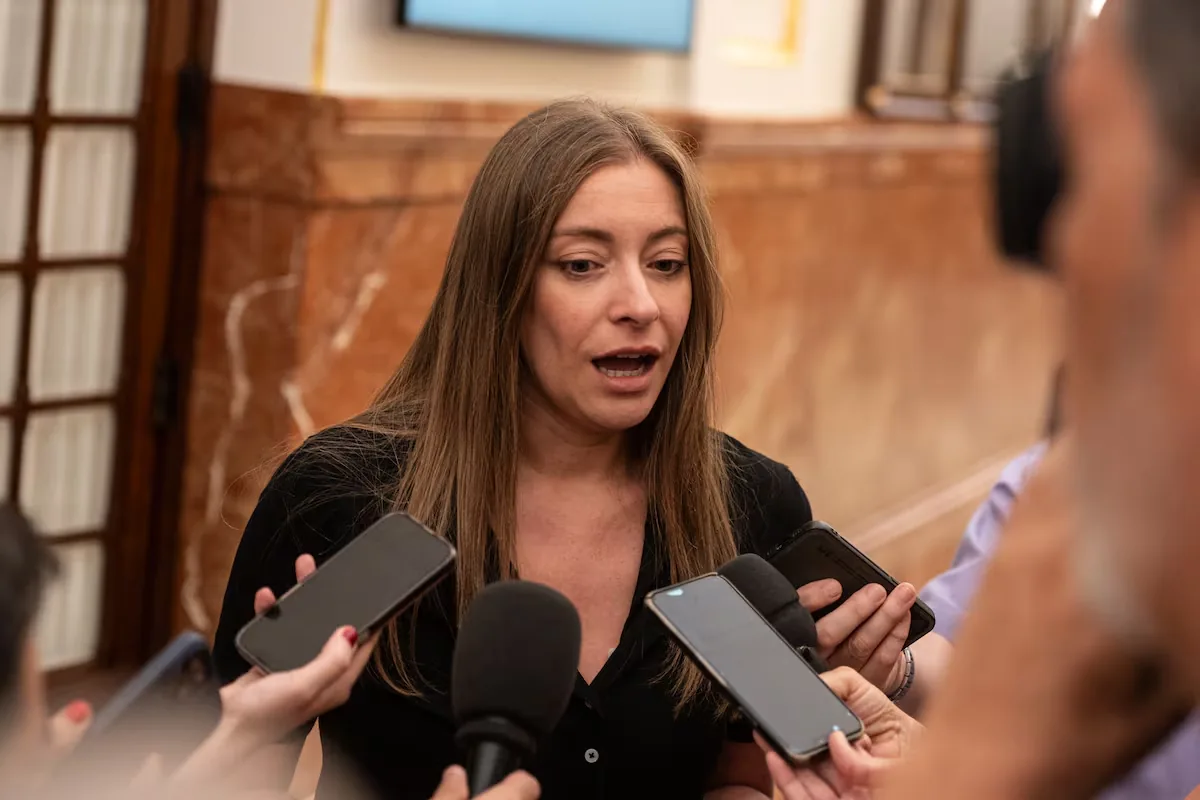
The Minister of Health, Mónica García, has asked people not to stay outdoors in areas near the fires because the air quality “is not good” due to high PM2′5 values (polluting particles suspended in the air with a diameter smaller than 2.5 microns). García stated in a post on her X social media account that these values are “well above those recommended by the World Health Organization (WHO)” and therefore asks people to use “FFP2/95 masks and glasses to protect their eyes if they leave home.”
Data from the stations consulted by EL PAÍS indicate a notable increase in concentrations of fine particles (those with 2.5 microns or less in diameter, known as PM2.5) and slightly larger ones, PM10. Both are usually related to forest fires and can cause short-term problems, especially in people who already suffer from some respiratory illness.
At noon, 12 of the 14 stations that measure particle concentrations in the air in the city of Madrid warned that the level was regular or bad. These exceedances of the recommended thresholds began to be detected from eleven o’clock on Friday night. There is no hourly limit for particle concentration in European regulations, which is what is shown in real time at the City Council’s stations. What the community air quality standard establishes are daily concentration values. And we will have to wait for this entire episode to pass to know if these thresholds have actually been exceeded in some stations in the capital, as seems to have happened.
Outside the capital, the situation is very complicated in several municipalities of the Community. At the Collado Villalba station, west of the Community, closer to where the fires are, the concentration of PM2.5 this noon is unfavorable. And during the night it has reached “very unfavorable” and “extremely unfavorable” levels, the maximum on the scale shown by the Community of Madrid on the website where it reports on air quality. The same occurs in the stations of other municipalities, such as Pozuelo, Alcobendas, and Algete, with particles.
As a general recommendation, and in a situation of high temperatures, it is also very important to stay well hydrated and drink water even if you are not thirsty. Alcohol and heavy meals should be avoided. Along with other vulnerable groups, young children should also prevent exposure to smoke.
Experts recommend calling emergency medical services if you experience difficulty breathing, chest pain, or persistent coughing. “Smoke damages the respiratory tract and causes inflammation that can hinder the necessary oxygenation. This poses a serious health risk, especially for people who already suffer from chronic cardiovascular and respiratory pathologies,” they add.
Aldea Reyes focuses on a key point that can complicate the management of these cases: “There are people who develop anxiety attacks because they face complicated situations with high uncertainty. Severe anxiety can cause a feeling of shortness of breath, respiratory difficulty, or chest pain without these actually existing. The role of healthcare personnel is very important, as from the coordinating center they can manage the situation by phone through questions and recommendations that allow determining whether it is an anxiety crisis or a respiratory pathology.”
The Spanish Society of Pulmonology and Thoracic Surgery (SEPAR) has published a statement warning of the negative health consequences for the population from the wave of fires. “The danger is not only in the flames. The smoke they generate contains very small particles that can reach the deepest parts of the lungs and worsen respiratory and cardiovascular diseases. Although it can affect anyone, the risk is greater in children, the elderly, pregnant women, and those with chronic diseases,” explains Javier de Miguel, coordinator of the Environmental and Occupational Pulmonology Area of the society.
“The increase in large forest fires derived from climate change represents a current health crisis,” concludes José Luis Ramón Trapero—a specialist in Family and Community Medicine at the Haro Health Center (La Rioja)—in an article about to be published in the journal of the Spanish Society of Family and Community Medicine (semFYC).
Read more Ibai Llanos’ ‘Velada’ once again fills La Cartuja and attracts millions of viewers online