





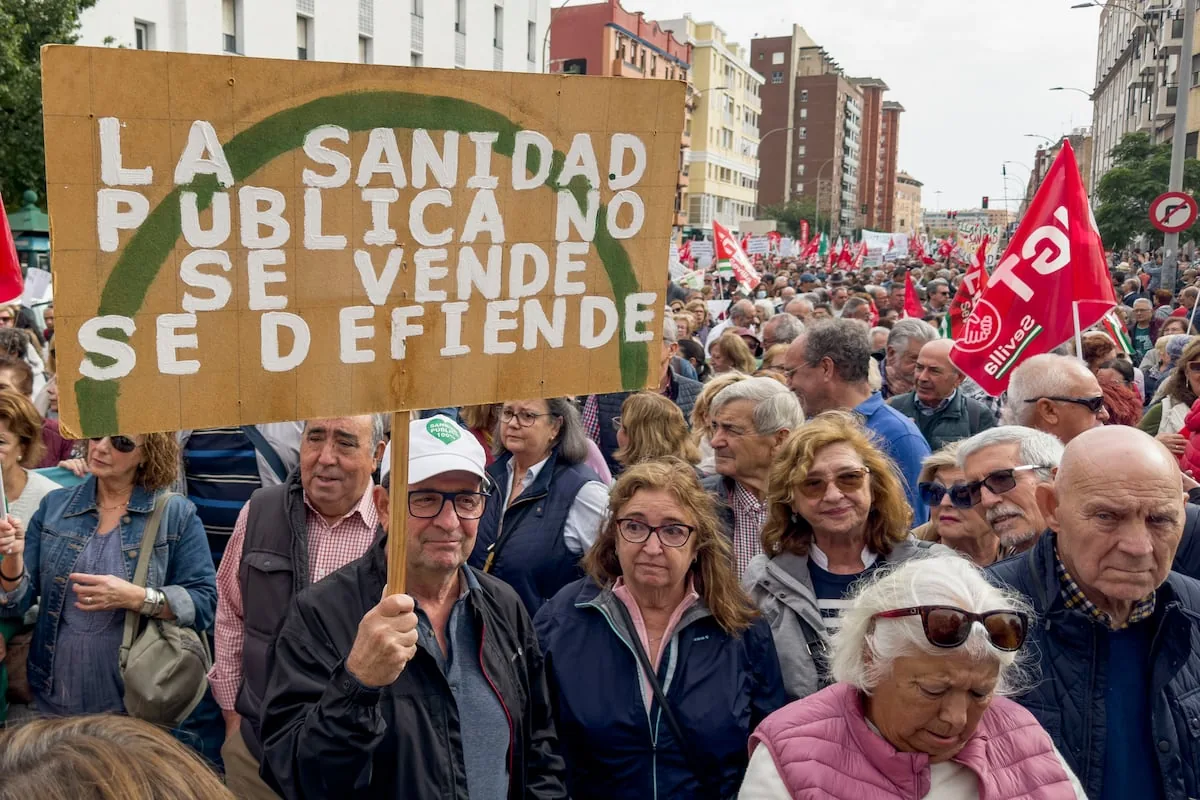
Andalusians are the ones who take the longest to undergo surgery in all of Spain, almost six months (173 days), and fourth, behind the Canary Islands, Navarre, and Aragon, who have to wait the longest to be seen by a specialist, four and a half months (136 days). In both cases, the waiting times are longer than six months ago (13 and 9 days). These data, related to the healthcare waiting lists across Spain from December 2025 published by the Ministry of Health, highlight the deterioration of Andalusian healthcare and provide more ammunition to the opposition to attack the public health management of the President of the Andalusian Government, Juan Manuel Moreno, against whom they want to hold a plebiscite on May 17. The autonomous government responds by referring, seven years after coming to power, to the legacy left by the Socialist Executives, seeking to wear down their candidate, María Jesús Montero, recalling that she was the Health Minister.
She was the first to react to the data published by the ministry, which conclude that more than one million Andalusians (12% of the total population of the community) are on a waiting list (852,889 to see a specialist and 199,950 to enter the operating room), three times more than the national average in both cases. “Andalusia is once again at the top in healthcare waiting lists, due to a failed government that cuts and privatizes,” said the Secretary General of the PSOE of Andalusia, who this weekend presented her plan to revive Andalusian healthcare and committed, as she recalled this Thursday, to ending the waiting lists within the first six months thanks to an annual investment of 3 billion from the 5.7 billion that would correspond to the community with the new financing model, pending support in the Congress of Deputies. The leader and candidate for the Junta of Por Andalucía, Antonio Maíllo, also attacked the Andalusian Government: “Moreno Bonilla should be hiding in shame today with the waiting list data, as we remain at the top, and with the medical care data, as we continue to be above the national average.”
Starting December 2, I will end the waiting lists.
— Juanma Moreno (@JuanMa_Moreno) November 19, 2018
🚑 60 days for a surgical intervention.
🏥 15 days for outpatient consultations.
👩⚕️10 days for diagnostic tests.
💉 Zero delay in oncology processes.#DebateCanalSur pic.twitter.com/HltW6GZqKP
During one of the electoral debates of the 2018 campaign, the then PP candidate also committed to ending the waiting lists: “60 days for a surgical intervention; 15 days for outpatient consultations; 10 for diagnostic tests and zero delay in oncology processes,” he stated in a tweet. In March 2019, shortly after Moreno formed his first government, the then spokesperson of the Junta, Elías Bendodo, assured that “there were 506,408 people who were not counted in the official waiting list statistics. Patients who did not exist for the previous Socialist Government.” Seven years later, Moreno’s promises are a mirage, and that half a million patients “hidden in a drawer” by the Andalusian Executives has been repeatedly used by the Andalusian president and his team to justify the inability to reduce skyrocketing waiting lists whose delays barely decrease.
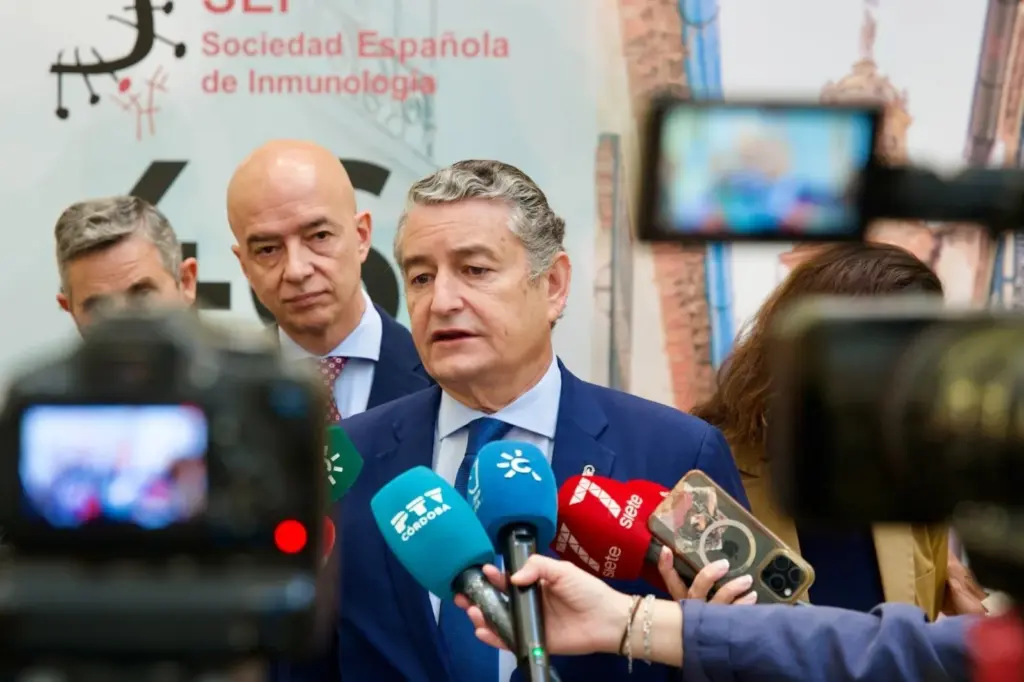
That is the argument that the current Health Minister, Antonio Sanz, used again when asked about the number of Andalusians on waiting lists and the time to be attended. “Andalusia has ceased to be the autonomous community where the longest wait to be seen by a medical specialist occurred; we have risen four places,” said Sanz, assuring that they have also managed “to reduce surgical waiting lists by almost that half a million that Mrs. Montero hid in the drawers when she was Health Minister,” he emphasized, referring to the socialist’s tenure leading that department between 2004 and 2013 — six years before the PP came to the Junta. The minister referred to Montero’s electoral promise to end waiting lists: “If what she is going to do is hide half a million, that’s how I will also end them.”
Read more More detentions and less oversight: a report warns of the increase in deaths in ICE migrant centers
Chronic problem
The PP’s formula to reduce them has focused on million-euro shock plans that included the handpicked selection of private clinics to refer patients, such as the one presented in February 2024, after a year without publishing data related to waiting lists, endowed with 283.3 million to reduce surgical waiting lists, especially those of patients out of term, of which 120 were allocated to private agreements without competitive bidding. This initiative, called the Health Guarantee Plan, was complemented in January 2025 with the specific outpatient consultation plan, designed to reduce the delay in the first appointment with the specialist and the volume of pending patients. These measures must be added to the activation of large-scale agreements with private clinics worth 231 million – for two years, extendable for another two, reaching a maximum of 533 million – to perform surgical procedures to attend to specialties with the longest delays, which began operating in September last year.
Waiting lists have become a thermometer for Moreno’s Government to gauge the effectiveness of these plans. The slight improvement – in terms of reducing patients waiting for surgery or to see a specialist – in June 2025 was then attributed to measures promoted by the autonomous administration. But six months later, the half a million patients that, according to the PP, the PSOE put in a drawer have been aired again. Healthcare unions have questioned this argument and point out that the underlying problem lies in managing a situation that has become chronic and whose solution, the Junta’s bet on privatization, has not worked.
“This administration has demonstrated an inability to manage waiting lists, betting only on outsourcing that we are seeing does not work, because our records are continuously worse than the rest of Spain, except for some specific moments,” says Daniel Gutiérrez, head of the Health and Social Health Sectors Federation of CC OO of Andalusia. “Bringing up again, seven years later, the PSOE waiting lists is a crude excuse,” says Rafael Ojeda, president of the Andalusian Medical Union, who, besides drawing attention to the fact that the waiting list problem is structural throughout the country, also focuses on the management of the Popular Government. “How is it possible that the huge investment, the enormous budget increase made in Andalusian public healthcare has not translated into a drastic reduction in patients on waiting lists? It is evident that there is a problem of mismanagement,” he specifies.
From UGT Andalusia, Antonio Macías, their health sector head, defends that public funds should not be diverted to private clinics, which is the model on which the shock plans approved by Moreno’s Government rely. “Private healthcare has a role, but it cannot be the solution for waiting lists; the solution is to strengthen the public health system and not dismantle it. With the shock plans, we remain at the bottom,” adds Victorino Girela, president of the Health sector of CSIF Andalusia, who, like the rest of his consulted colleagues, advocates allocating those amounts to “hire more staff in the public sector, improve the situation of healthcare professionals to prevent them from leaving and going to the private sector because they have better conditions.”