





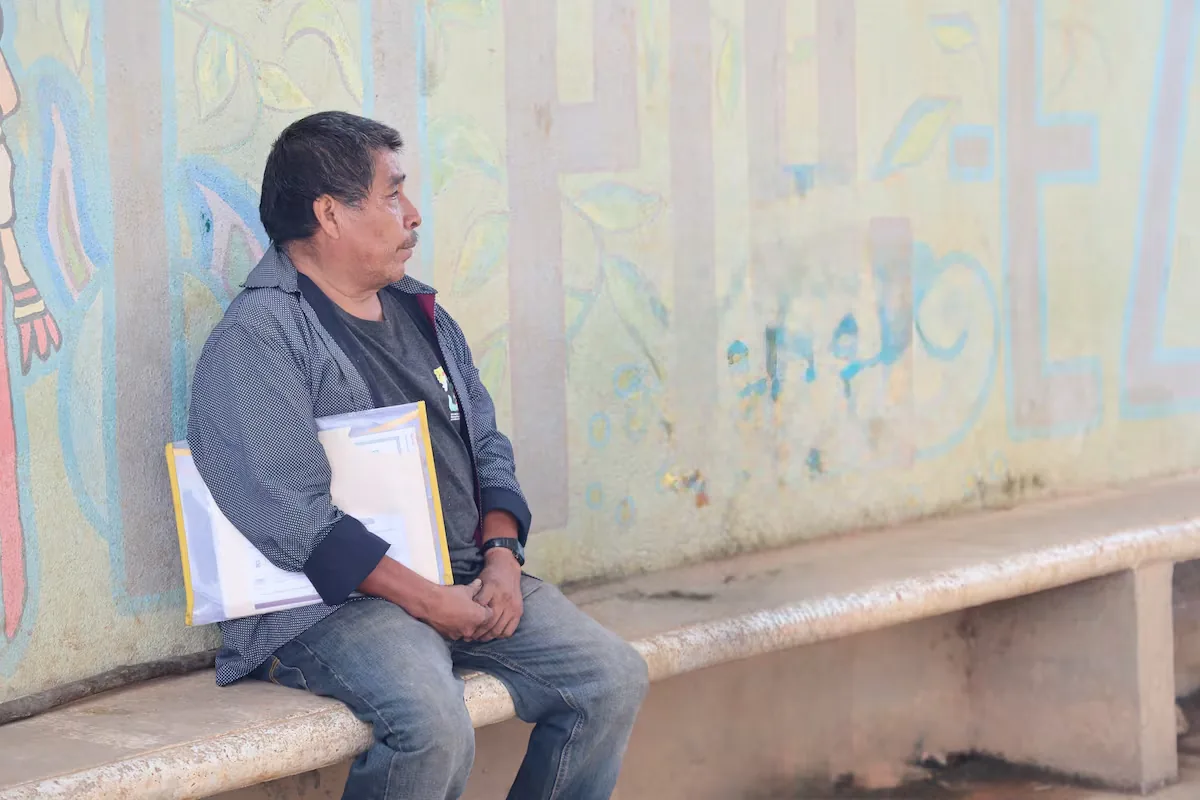
Marcos Hilario Rosario is the last man of his lineage in the Guerrero Mountain. He was the last guardian of Tula, a ghost town to which its inhabitants have not been able to return. And, between May 6 and 12, he endured for five days attacks with long-range weapon fire, grenades, and explosives launched by drones; on the sixth day, he fled. He was the commissioner of the town’s Community Police and the last inhabitant. He ran out of bullets.
Read more Endless chainsaw: Milei, forced to cut more spending to compensate for the fall in revenue
“They had some damn AK-47s and R-15s. They sounded really loud, they’re machine guns they carry. People came from other towns to support me in getting out, but they came with .22s and small shotguns. We barely managed to get out, because there were about 600 of them,” says Rosario while his granddaughter runs around next to him, in front of the Alcozacán police station, a town three kilometers from Tula, where almost all the displaced people arrived.
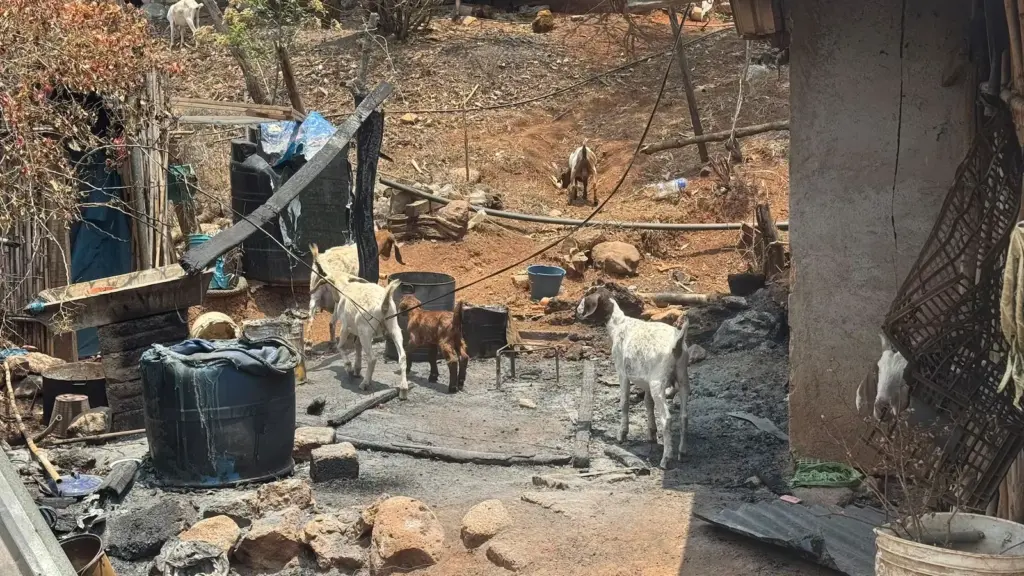
Almost three months have passed since the attacks on the towns of Xicotlán, Acahuehuetlán, Tula, and Alcozacán, the latter having become a stronghold and refuge for the other three. There are authorities from all three levels of government: municipal police, state police, National Guard, and Army, in addition to community police. But conditions are not suitable for the displaced to return to their homes. Therefore, they remain in this town, living in other people’s homes provided by supportive individuals. And their houses are still burned, down there.
“When I got here, my wife and daughters-in-law asked me what was happening over there that smoke was visible. Those are our houses, they’re burning, I had to tell them,” the man recalls.
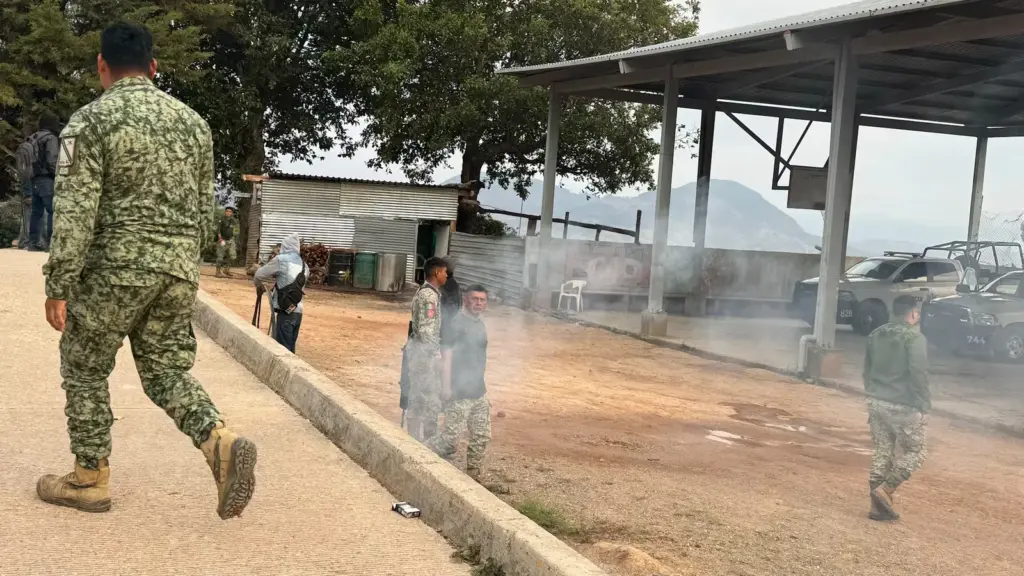
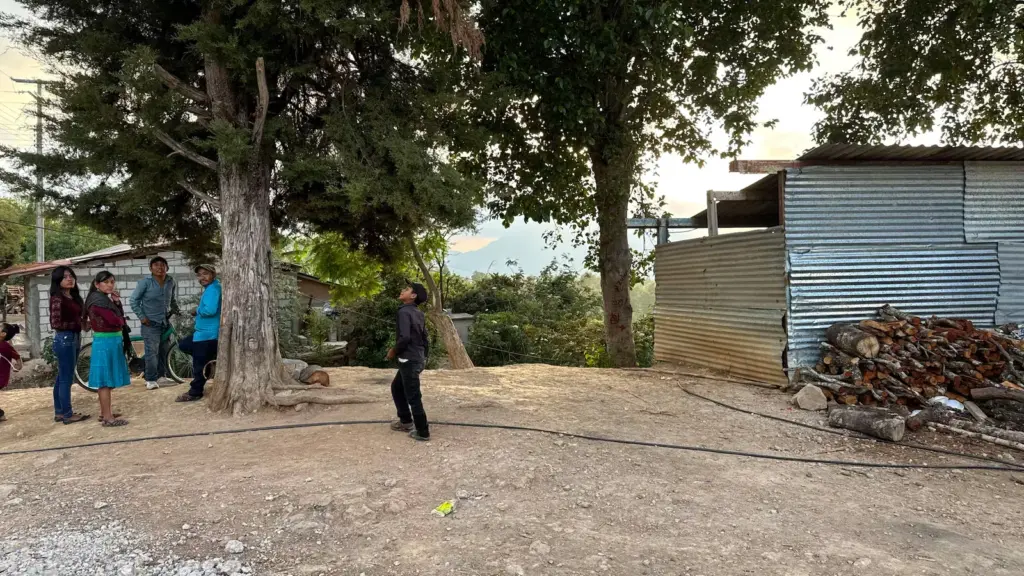
Of the attacked towns, Tula was the smallest and most isolated. Barely 30 inhabitants in total. It was also an easy target for the shots fired from the mountain. That mountain where the criminal group Los Ardillos hides, Rosario assures, and almost anyone asked who attacked them.
“In 2015, they sought us out, they wanted us to work with them, since we didn’t want to, the attacks began. We’ve lived like this ever since,” he says. In 2019, two of his sons were murdered, and in 2022, another, Guillermo Hilario Morales. All were community police officers and members of the Indigenous and Popular Council of Guerrero Emiliano Zapata (CIPOG-EZ).
Just one month before the attacks, on April 6 of this year, at 7:10 in the morning, four men working on the construction of a house in Xilotlán were shot from a white truck. All four died. Isaías Morales Lucas, Bernardino Hilario Ocotlán, Ernesto Hilario Ocotlán, and Isacar Villalba Rosario. They were also community police officers. All nephews and grandsons of Marcos Hilario Rosario, the last man of a lineage whose men, if not murdered, have fled Guerrero.
“We want to tell the bad government that it has failed again and again. To this day, entire families still cannot return to their homes, or have you already forgotten that a few months ago, between May 6 and 12, 2026, Los Ardillos displaced more than 2,200 people from the communities of Xicotlán, Acahuahuetlán, Tula, and Alcozacán? That violence is the same we have lived with for 10 years, and you, municipal, state, and federal governments, have allowed it. And each of our 84 murdered is your responsibility,” the indigenous council mentioned in a statement on July 18.
Los Ardillos
The criminal group Los Ardillos has grown from Quechultenango to Chilapa and from Chilapa to Chilpancingo, thanks to the formalization of its economic resources and its relationships and influence in political power, under the acquiescence of federal power, denounces Abel Barrera, director of the Tlachinollan Human Rights Center.
“Before, they were PRI groups linked to the greater cacicazgo of the Figueroas. Then there’s a political reconfiguration with the PRD when Zeferino Torreblanca wins, and so they go one after another, but the structure remains. Only the colors and characters change, but the structure is intact, and the ties with criminal groups as well,” he points out. The leader of Los Ardillos himself has boasted in interviews that his group has financed political campaigns of various candidates at different levels.
Read more Enjoy a free movie now (and effortlessly) on Rakuten TV, courtesy of Microsoft Rewards
Celso Ortega Jiménez, the main commander of the organization, and his family indeed have a history linked to local, state, and national politics. His brother Bernardo Ortega Jiménez was municipal president of Quechultenango between 2002 and 2005, the place that saw the birth of the criminal group under the command of both their father: Celso Ortega Rosas, a former rural police officer who started with poppy cultivation and was murdered in 2011.
The displaced priest
On October 10, 2023, two individuals on a motorcycle approached the car driven by Father Filiberto Velázquez as he was leaving a meeting at the Ayotzinapa Rural Normal School. The individuals shot at him several times, but the priest managed to stop the vehicle and duck in time to save his life and emerge unharmed. From that moment, he had federal escorts, but in January 2026, the escalation of threats against him led the Diocese to decide that it was best for him to leave the State.
From exile, he recounts how difficult it has been to abandon his life project in Guerrero: “I cannot, from my experience, be very objective because I myself am a displaced person, but I can tell of the damage organized crime has done to the State,” he says by phone.
“What happens here is that there is a self-defense component, and it is understood that they are an obstacle to organized crime, because they do not ideologically participate with them and they have no control over those towns. So, the attacks are aimed at dismantling community organization. Otherwise, there would be no need to attack them, because why would they just attack civilians, right? That is a reality,” says the priest, now prevented from exercising his ministry for security reasons.
The center of Alcozacán
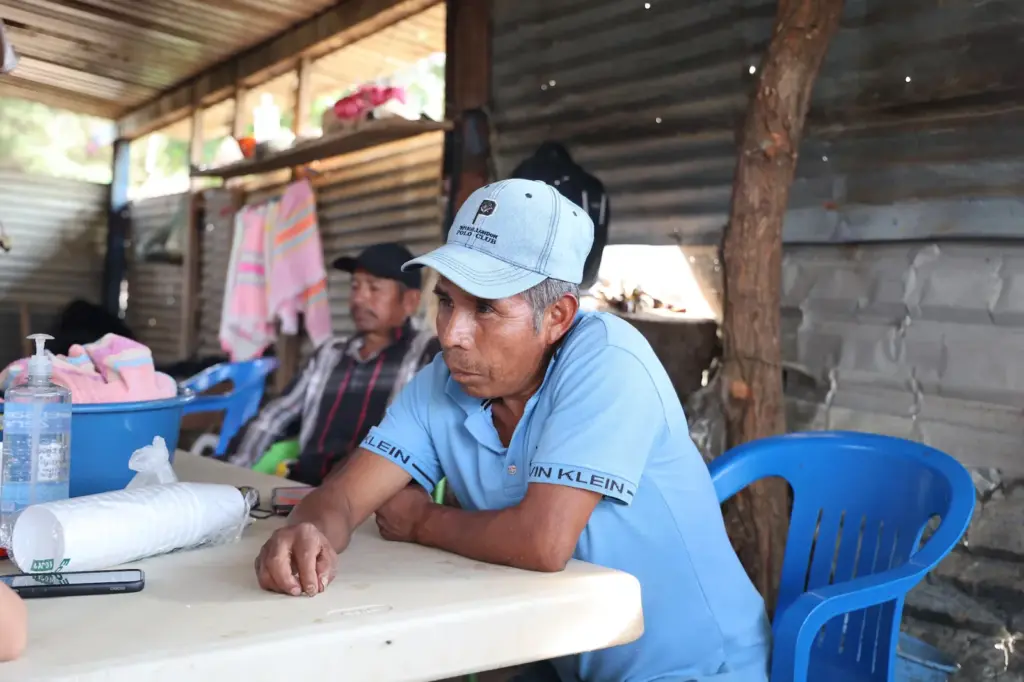
Next to the basketball courts, the inhabitants of Alcozacán improvised a community kitchen where there are always four women, out of eight, working in shifts to feed all the displaced people who remain in the town. There are about 30 of them, almost all elderly, women, or children.
“The kitchen is for displaced people but also for security personnel, we also feed them. It’s difficult, you can’t imagine, because the state police don’t have anything. We only give tortillas to the military, they prepare their own,” says Lorenzo Coxihuite, the commissioner of Alcozacán, while eating in the improvised tin shack where a wood fire is kept burning to feed dozens of people.
A week ago, the inhabitants of Alcozacán protested the arrest of community leader and member of CIPOG and other indigenous organizations, Jesús Plácido Galindo, an episode they consider an attack against their organization by the Government and a cruel paradox, when they demand that those responsible for the displacements be arrested.
Despite meetings with government officials, no plan has been determined for the displaced to return to their homes, which are still burned, nor have they been supported with food, they denounce.
Marcos Hilario Rosario is 63 years old, born in 1963 in Tula. His parents settled in that town in the early 1950s. “We are going to return. I do feel that we are going to return,” says the last man of his lineage in the Guerrero Mountain.
Read more It looks like a designer lamp, but it’s the fan that’s sweeping this summer