







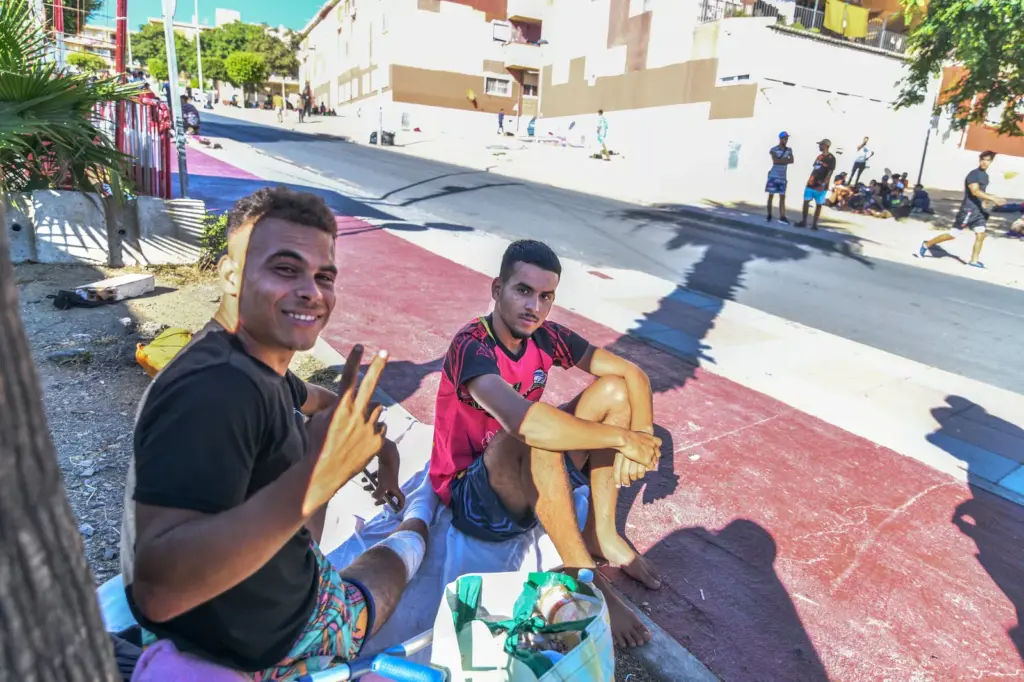
Aldellah Zahar poses for the photograph with a broad smile and the victory sign. “Why wouldn’t I smile, if I’m in Spain?” he reasons when a young Moroccan reproaches him for showing that energy, lying on a sidewalk, with his leg bandaged and wishing to access the largest emergency reception center for migrants in Ceuta, located in the Loma Colmenar neighborhood. Zahar, 21 years old and from Marrakech, about 600 kilometers southwest of the autonomous city, is one of the hundreds of Moroccans who have come in the last week to the sidewalks of this area dreaming that access to these spaces will improve their lives and lead them to stay in Spain. “Both I, and those of us here, would rather die than return to Morocco,” he summarizes when asked about the possibility of being expelled, as the government claims it will do. “I’d kill myself before going back, it’s like being stabbed in the back,” agrees his friend Otman, 18 years old, from Agadir, 800 kilometers southwest.
Read more Video analysis | The appointment of Graciela Domínguez in Sinaloa, far from Rocha Moya
The place he hopes to enter, located on the other side of a wire fence, is a large surface parking lot known as “the bottleneck.” Until this summer, this esplanade was used for vehicles waiting to cross to Morocco to wait for their turn and thus avoid causing traffic jams at the border. The facility has been adapted by the government so that migrants stop living on the street and can access food, water, or basic hygiene measures. Its first occupants settled there 10 days ago. They were migrants who had been living outdoors on beaches, such as El Trampolín, or in this same neighborhood, but there was a moment when the gate closed. There are about 1,300 people in the enclosure, but no one else has entered for a week, according to data from the Loma Colmenar neighborhood association.
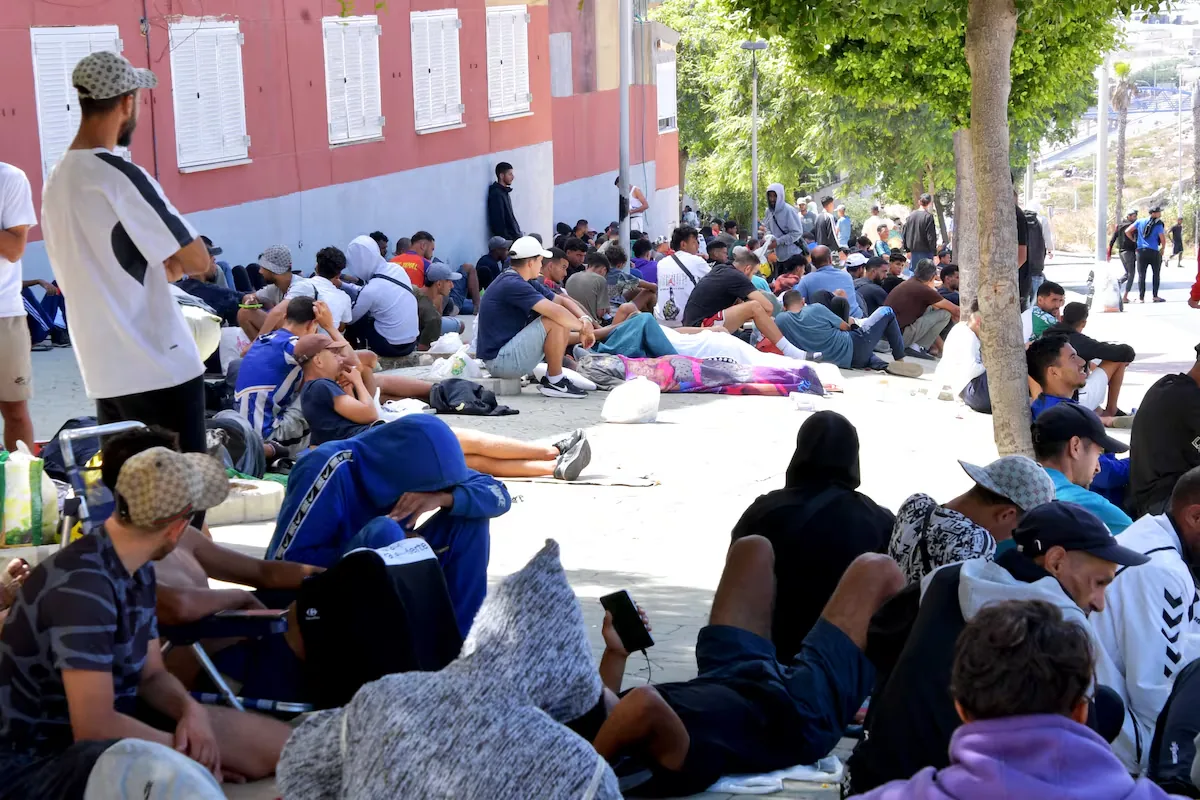
Rafael García, neighborhood president, believes there has been a call effect during this time and estimates between 4,000 and 4,500 migrants surviving on the streets of his neighborhood, including minors and women with children, as well as adults. “They fight over places, over food, among themselves, they throw stones at the road because of their own conflicts,” he describes. García complains that everything “is going very slowly” and that they have not seen changes in recent days. “More come every day, you can go through the neighborhood and see them (…) We demand that they be picked up and that they do with them what they have to do. We have more than 200 children, the children are on the street,” he denounces.
In the Loma Colmenar enclosure, there are more than twenty military huts, shaded areas, and toilets. On Saturday, various conditioning and expansion works were being carried out, including the construction of a large tent.
García was among the group of about 200 Ceutans who took to the streets to protest on Saturday and who did not reach the neighborhood, although it was considered. “We didn’t want to go up there; some from the neighborhood wanted to come down, but the police didn’t let them. It was a peaceful demonstration. We don’t want violence,” he assures.

Neighbors talk about a “call effect,” but about a dozen immigrants consulted say that the military are telling them to go there. What began as a long and crowded line of people on August 21 has grown day by day. Now it is spread on both sides of the sidewalk, although it is more numerous on the side next to the wire fence, or under the neighboring apartment blocks. Depending on whether there is sun or shade, they settle on cardboard, blankets, or mattresses. Some sell cigarettes, have set up a hairdresser with haircuts for five euros, and others simply pass the time looking at their phones or playing by stacking small stones.
Read more Iceland’s no weakens the EU against Trump and anti-European forces
“We’ve been stressed for a month. We don’t sleep, we don’t eat. Sorry I can’t attend to you on camera, daughter,” excuses a neighbor while scrubbing her doorway. “I have called their attention, telling them we have small children, because they shout at dawn making video calls, say bad words. I also ask them to pick up the mattresses during the day. They respond well when I warn them, but this is unbearable,” she says. Not far from the woman’s home, another neighbor sighs when asked, making gestures that they feel surrounded. “The first ones started coming in and they have all come here,” he describes.
The first three who will be able to enter, once the door opens, are Issam, 22 years old; Usiel, 25 years old; and Yahia, 23 years old. They have been there for more than a week, they say. They say the military kicked them out of the El Chorrillo beach and sent them here. They do not want to appear in photographs for fear of reprisals. “We don’t know when they will let us in, but we haven’t moved. If you leave, they take your place,” explains one of them. During this time, they have been fed by food brought by some women, but not by any association, they specify.
On the other side of the parking lot gate, Zahar continues telling his story, along with his friend Otman. He is not unaware of the protests that have taken Ceutans to the streets in recent days, fed up with thousands of migrants who arrived on July 30 and 31, between 7,000 and 10,000, according to sources, wandering for a month through an autonomous city of barely 19 square kilometers, occupying public spaces, such as playgrounds, beaches, or the very ground floors of their houses. He tries to put himself in the neighbors’ shoes and understand the fear they feel. “No Ceutan is a bad person,” he suggests. “They have the right to protect their sisters; I haven’t had a bad experience with any of them during this time,” he adds.
Like about ten of the migrants who ended up surrounding him, he maintains that the military told them they had to leave the place where they were sleeping, near the University Hospital of Ceuta, and stay there. “I already came to ask when they were setting it up and they told us to leave,” he says. “They told us that when the huts are finished, they will let us in.”
Zahar emphasizes that he arrived swimming to Ceuta because he wanted “to be European.” He begins to show his certificates, in photographs he keeps on his phone, and also shows images of himself in the jobs he describes: farmer, industrial machinery operator, or disc-jockey. To finish, he stops at a very different image from the one he had this Saturday. In Ceuta, he is sitting on the ground, wearing swim trunks and a t-shirt, and has curly, messy hair. On his phone, he looks just as smiling, but with combed hair and elegant clothes. “Would you say this guy is in Europe?” he questions, implying that he could fit in perfectly.