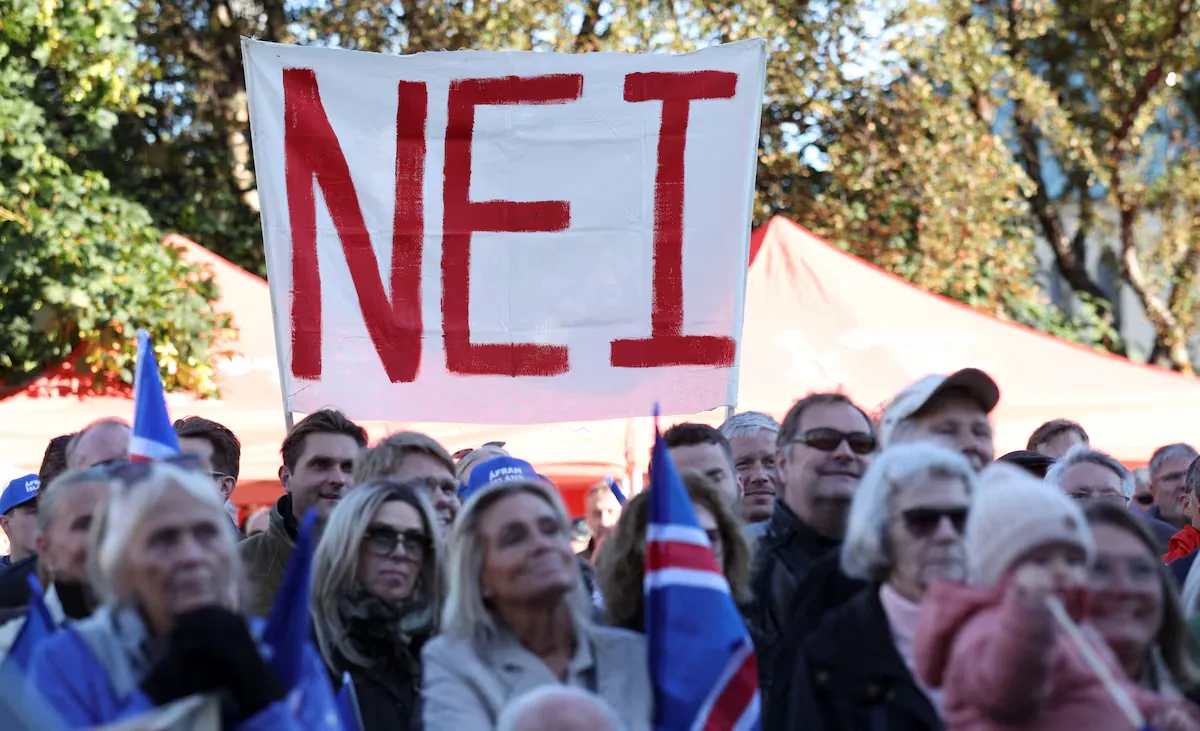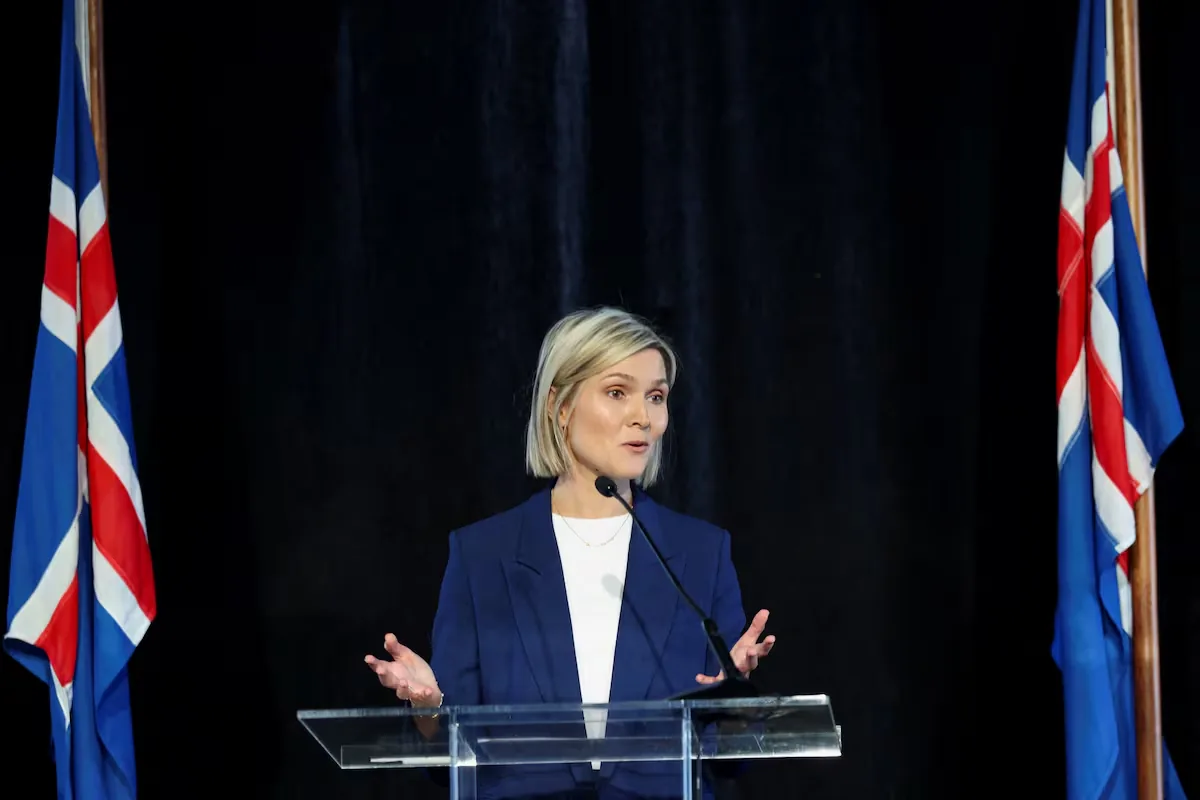
The European Union has said it “takes note” of Iceland’s decision, which, by a narrow margin, rejected on Saturday the resumption of negotiations for its full integration into the community area, to the delight of the most Eurosceptic forces of the Old Continent and, very likely, across the Atlantic. A decision that Brussels “respects,” emphasizes the European Commission in a very brief generic message sent by a spokesperson to journalists— not a single public statement or direct message from the top European officials on the matter— because it considers it will not change the current situation: “Iceland will remain a close ally of the EU,” asserts the European Executive.
Similarly, and also through his spokesperson, the President of the European Council, António Costa, has assured that the EU “fully respects the democratic decision of the Icelandic people” and that, despite their no, Iceland “remains one of the closest and most reliable allies” of the Twenty-Seven.
However, it is this sparseness of words—as well as the absence of a clear voice: despite their usual presence on social media, neither the Commission President, Ursula von der Leyen, nor Costa have spoken directly—and the time Brussels took to react to the Icelandic nei (hours since the results became official), that best shows the strong impact of the rejection expressed by the Arctic island that the EU hoped to avoid despite the tight polls.
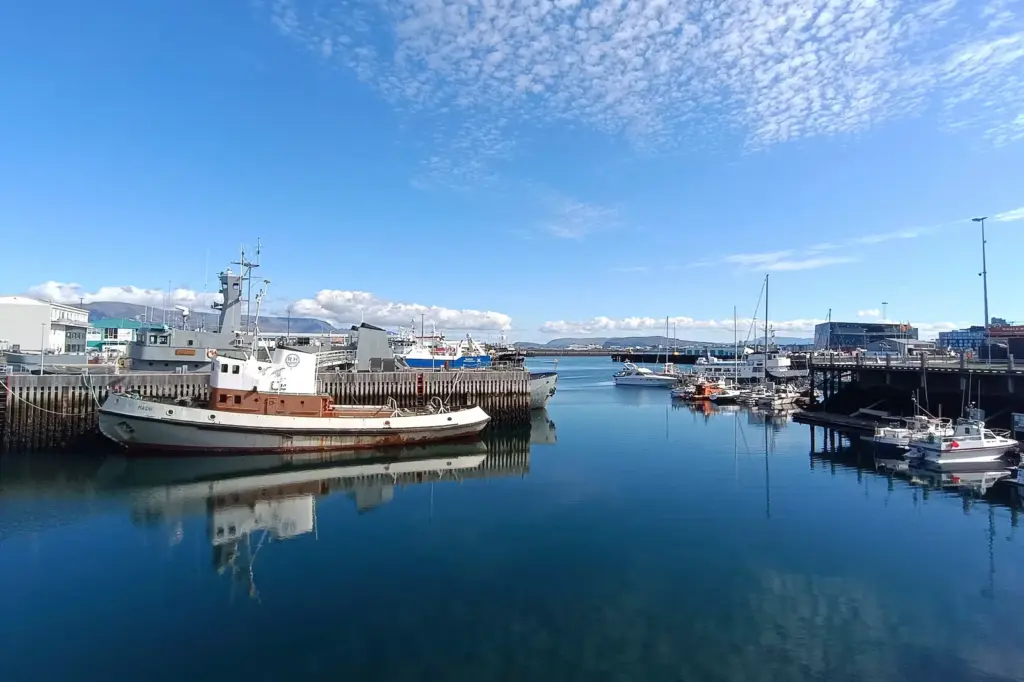
And indeed, although practically it does not change much in the relations, as both Brussels and Reykjavik have reaffirmed, the referendum no is considered a setback for the EU at a time when the community bloc seeks to reaffirm and strengthen itself against external blows, especially those from U.S. President Donald Trump. Even more so amid growing tension around the Arctic area, which Von der Leyen will visit next week to sign a significant joint declaration between the EU and Greenland. The possibility of extending her trip to Iceland is now ruled out.
Europhobic boost
Brussels also faces internal attacks, with increasingly strong ultra and Eurosceptic forces, from the French Marine Le Pen to the British Nigel Farage, who have not hesitated to publicly show their satisfaction with the Icelandic rejection, in which they believe their theses are validated. With their no, the Icelanders have reminded “an obvious fact: accession to the EU is not the national horizon of every European democracy,” said the leader of the National Rally and French presidential candidate in 2027.
For Le Pen, the Icelandic no sends a “clear message”: “Peoples must be able to decide for themselves their future, that of their institutions, and their ability to defend their national interests,” says the ultra leader, who considers that the referendum result strengthens the Europe of “sovereign nations” defended by the most ultra forces both in the European Parliament and in an increasing number of member states.
By rejecting by referendum the resumption of negotiations for accession to the European Union, the Icelandic people have reminded an obvious fact: accession to the European Union is not the natural horizon of every European democracy.
This vote delivers a clear message: the peoples…Read more Google folds to Trump and changes the name of Lake Ontario to America
— Marine Le Pen (@MLP_officiel) August 30, 2026
Also for the European Conservatives and Reformists (ECR) group in the European Parliament, Iceland’s result should make Brussels “reflect” to “address concerns about national sovereignty.” “If a prosperous, democratic, and outward-looking European country remains unconvinced that resuming negotiations for EU accession may be the right path, the European Union should ask itself how it can better respect sovereignty and subsidiarity, be more effective and competitive, and focus more clearly on areas where European cooperation brings real added value. The EU must reflect on this,” said ECR co-chair Nicola Procaccini, from the Brothers of Italy party of the ultra Italian Prime Minister Giorgia Meloni, who also faces the polls next year.
Shortly before the laconic official European reaction, at a press conference, Icelandic Prime Minister Kristrún Frostadóttir had assured she had been in contact with António Costa and conveyed to Brussels her desire to “maintain a strong relationship” with the EU.
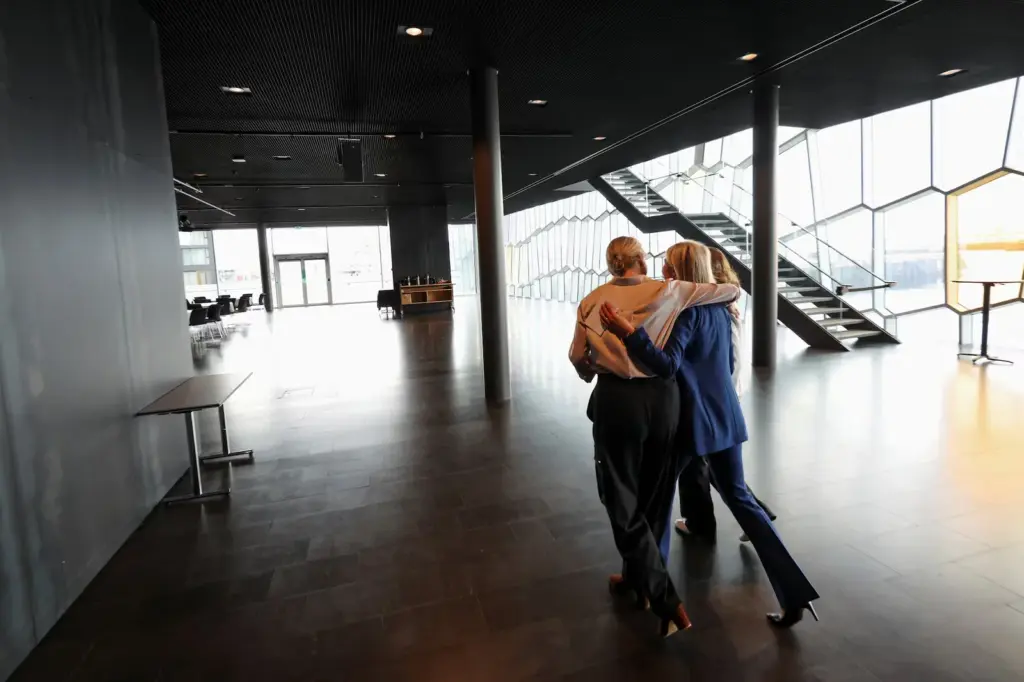
In fact, the referendum nei does not change, at least technically, the close relationship of the Arctic island with the European bloc: besides being part of the Schengen area, Iceland was and will continue to be part of the European Economic Area, along with Norway and Liechtenstein, which gives it access to the single market and obliges it to adopt much of the community legislation. However, without having, and without doing so in the future now that it has rejected renegotiating its entry, the right to vote in EU decision-making that affects it so much.
This has also been highlighted by the chairman of the European Parliament’s Foreign Affairs Committee, David McAllister (CDU). “The result changes nothing in bilateral relations,” said the German conservative in a statement, in which he also recalled that the island is a NATO member, the other flank that worries Brussels. “Iceland will remain a reliable partner with whom Europe shares democratic values and defends an international order based on rules,” McAllister states.
However, as also noted by MEP Sandro Gozi, the Icelandic rejection to reopen accession negotiations “is a warning that Europe should take seriously,” emphasized the Secretary General of the European Democratic Party and member of the liberal Renew group in the European Parliament. “The EU’s attraction power remains strong and has not diminished, but it should never be taken for granted,” warns the French politician of Italian origin.
Read more The best Bellingham is back and drives Real Madrid against Málaga